2021 CFP Sideline to Sideline: Michigan’s Offense
2021 CFP Sideline to Sideline: Michigan’s Offense
Pour yourself a glass of ice cold milk and toast Jim Harbaugh. After six season of missing the mark, the Khaki King and his wiry Wolverines are finally back on college football's biggest stage -- well the big stage before the biggest stage. And wouldn't you know it, the best Michigan offense in a decade gets the pleasure in facing off against a potential all-timer in Kirby Smart's defense.

If the hope is to capsize Georgia, victory won't happen unless the Wolverines can do some things of substance when they have the ball. Captain Obvious made sure that notion was said on the onset of this deep dive. While knowing basic figures can be helpful, they are ignorant. They lack context, situational outcomes, and simply cannot represent an offense's true might. And with a trip to the Nattie on the line, I'm sure Bulldog backers will be thirsty to gulp any valuable knowledge about the team standing in the way.

Instead of allowing games against lesser opponents skew the numbers, I scouted Michigan against its most challenging opponents according to ESPN's SP+. After all, we are about to see the sport's best of the best square off. Who gives AF what the Wolverines did against non-cons or programs like Maryland? While I will periodically mention comparisons to SEC vs SEC competition, the meat of Michigan's schedule held a considerable edge in degree of difficulty particularly thanks to the quality defenses faced. Their four strongest opponents were Wisconsin, Penn State, Michigan State, and Ohio State. So with that, let's check out the process that has produced Harbaugh's best offense at his alma mater.

Offense at a Glance
Michigan is a multiple-formation offense rooted in gap scheme designs. While it’s not quite of the mold of archaic, smashmouth attacks that littered the Big Ten for decades, the Wolverines very much prefer to slug it out with trench warfare. After all, their most repped concept against their four most challenging opponents was Counter, a classic, hard-nosed power run.
Blue has trotted out multi-tight end sets on nearly 40% of its snaps, which tracks as one of the highest marks in the SEC. But despite appearances and the perceived effect at wilting run defenders, 12/13 personnel hurt this offense’s efficiency in our sample. Modball and “three yards and a cloud of dust” delivered an underwhelming 3.9 Yards/Carry and 6.7 Yards/Pass. The Wolverines’ such Success Rate was five points below the average in SEC play with both facets respective clips souring.
On early downs, Jim Harbaugh’s horde established It on 57% of its early downs in those matchups. The average in SEC play this season was 50%. Compared to offenses from the Land Where It Just Means More, the Wolverines were the definition of an average offense in terms of Success Rate (45%) and Yards/Play (6.1). In these spots, their down-to-down explosiveness was akin to Texas A&M. The middling numbers unfortunately set them up for loads of 3rd down opportunities. Less than 61% of their conversions occurred on early downs – a threshold only LSU, Missouri, and Vanderbilt failed to beat in SEC play.
However, the conservative modus operandi consistently conjured manageable latter down chances thanks to hardly moving backwards. The Wolverines only tallied seven negative plays (including one sack) on 1st or 2nd down against their hardest opponents. By a rate basis, not even Georgia’s strong on-schedule steam engine bests Michigan’s 3.3% clip in this context.
The Wolverines averaged a mere 5.4 yards to gain on thirds versus their top foes, which facilitated firm figures in those spots. Their 43.9% Success Rate wasn’t far off from their cumulative clip in our sample nor their 45.1% figure across all of 2021, which is top25-worthy ahead of bowl season. The short porch tries also led to more aggressiveness from the Khaki King in terms of going for it on 4th downs. On the year, Michigan has attempted the 19th-most such attempts with 24. Ten of them occurred in our four game sample; seven worked out for the Wolverines. Again, this offense has no issue playing small, getting gritty, or testing the fortitude of opposing fronts.
And while the run-heavy style theoretically presents possibilities to pummel itchy defenses with deception tactics, only about a tenth of Cade McNamara’s attempts used play action. While there’s a point of not giving iffy passers too many instances of taking their eyes coverages before firing a downfield strike, this is a concerted effort by this staff’s part. And looking at the production, fading play action was justified. Michigan’s Yards/Pass and Success Rate both worsened on play fakes. Plus, this staff noticeably had an aversion for RPOs. Even the Air Raid’s Will Rogers targeted RPO designs at a higher rate than his 4.1% clip. Overall, the Wolverines only logged 17 (5.4% play share) in our parameter despite nice upticks in efficiency. Furthermore, only three true screens were targeted across our four matchups.
Despite the meat and potatoes facade, Michigan regularly has displayed flair with trick plays. Looking specifically at scripts in our sample, the Wolverines have dialed up a Flea Flicker at least once in every game. And while Bash runs, end arounds, reverses, fake screens, and Utah/tap passes all have been featured, Harbaugh even stabbed Ohio State with a sly Statue of Liberty design.
The Wolverines’ panache also shows up with how they utilize at-the-snap motion. “Shoot”, or escort, motion has been a budding novelty within the SEC the last couple of seasons. Instead of asking a motioner jetting across the formation to function as simple eye candy or as a quick pass outlet, this subset of motion calls for these dudes to be key blockers. Formations create advantageous pre-snap angles, motion affects the numbers at the point of attack, and the timing element allows for positive blocking inertia. Plus, it allows offenses to run multi-headed run looks from 2x2 or trips. When not using shoot motion to help set up an RPO outlet, SEC offenses have primarily used it on split zone designs with tight ends mostly being the shooter. But, others like Tennessee and South Carolina have dabbled with Counters and Inserts.
No SEC offense comes close to matching Michigan’s affinity for this tactic. A tenth of the Wolverines’ snaps used Jet motion; and of those 28 plays, 24 were categorized as shoots. Plus, Blue’s receivers periodically get in on the action, which has expanded the potential offerings. Michigan has repped Split Zones, “double bluff” Zone Reads, Double Traps, Off-Tackles, and Counters when shooting either a wideout or a tight end. The Wolverines have only tried two passes with this tactic; both were successful Flea Flickers. And while a 3.7 Yards/Carry won’t excite, the versatility fueled a 50% Success Rate against Michigan’s hardest foes.
Additionally, Harbaugh and Co. use just enough ordinary pre-motion to prevent offerings from becoming too stale. Deployed on 14.3% of snaps in our sample, only four SEC teams finished under that benchmark in league play. Yet like shoot motion, reconstructing formations on the fly resulted in some of Michigan’s best outputs. The Wolverines’ Yards/Play increased to 6.5 with 61.0% and 52.6% Rushing and Passing Success Rates, respectively.
Cade McNamara
McNamara is not an impressive passer, and his arm talent hardly pops on tape. He’s clearly second fiddle to Michigan’s ground game, but he knows his role and rarely breaks his lane. Even though he’s lost his fair share of battles, McNamara avoids mistakes and can find consistent completions. Despite not being able to make all the throws with ease or produce crazy plays outside of structure, he’s a sound enough athlete to man the helm.

The traditional metrics portray a serviceable thrower. McNamara’s TD:INT ratio is almost 4:1 and he's nearly completed two-thirds of his passes. His 77.4 QBR sits inside the nation’s top20 and only a dozen Power5 passers accumulated more Expected Points Added according to cfp-graphs.com.

Judging his advanced numbers against his hardest opponents, however, McNamara was overly a pedestrian passer relative to his contemporaries from the SEC. Or in other words, instead of being near the bottom of the top, he’s much closer to that endless middle. His Success Rate, Explosive Pass Rate, Interceptable Pass Rate, and Uncatchable Pass Rate all hit the conference mean. But, the Reno, Nevada product yielded a concerning 40.4% Depth Adjusted Accuracy% and a First Down+TD Rate that easily would have placed inside the SEC’s bottom4 in league play. Considering Georgia’s defensive resume, dull downfield precision and bland bottomline hardly stokes McNamara’s hype train ahead of the Capital One Orange Bowl.

Again, Michigan’s scheme isn’t designed to give its passers many gimme completions via screens or RPOs; nor is it one to counterpunch backenders with play action. McNarmara’s such rates would have largely represented the SEC’s floor if sustained over the course of ten games. Still like a good amount of modern offenses, Michigan sought a “dink and chuck” passing spray by focusing on short and deep targets. Over 60% of McNamara’s attempts traveled between zero and ten yards downfield. Vanderbilt’s Ken Seals was the only SECer to compose such a makeup. Nearly 30% of these targets went outside the right hash, which has been a clear methodology for giving their passer some layups.
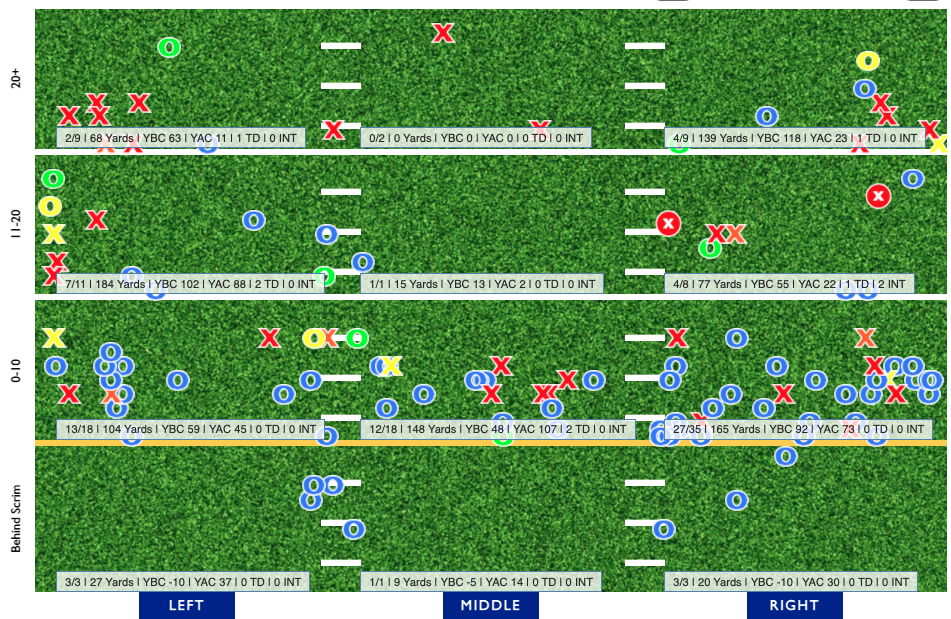
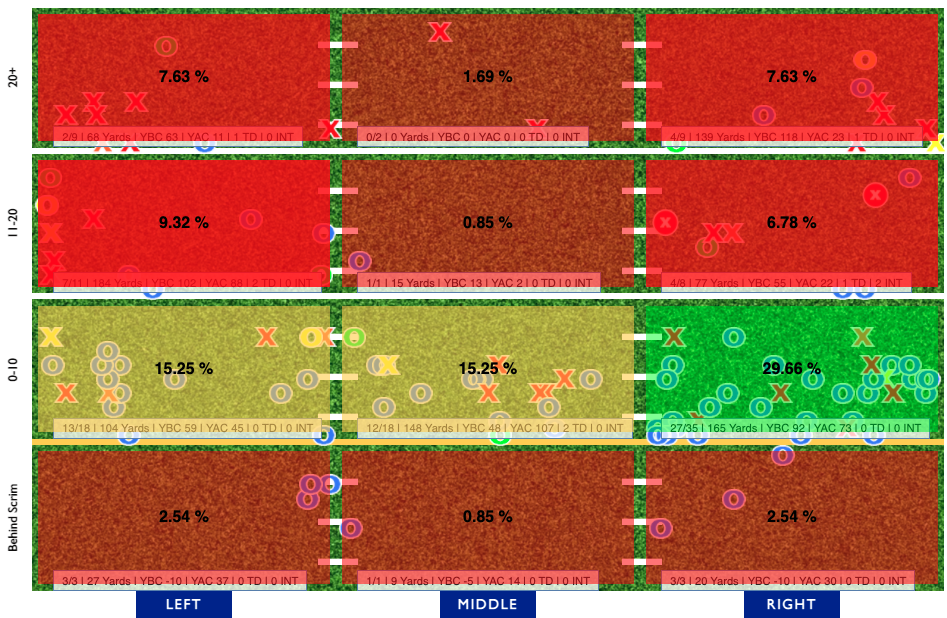
Cade McNamara's pass chart and target heat map vs Wisconsin, Michigan St, Penn St, and Ohio St
In our sample, Michigan has kept foes honest by throwing deep every sixth pass on average. With vertical passing down this year within the SEC, McNamara’s Deep Pass Rate easily topped the field. But rationing passes in such a fashion resulted in the Wolverines featuring midrange attempts and throws behind the line at a poor rate. In fact, his makeups in both areas would have ranked dead last within the SEC.

Despite the prevalence to push the ball deep, his accuracy on throws 20+ yards beyond the line of scrimmage hasn’t been sturdy. Unquestionably this shortcoming hurts his profile. Against his top foes, McNamara was only on-target on a quarter of his deep attempts and only completed 6/20 chances. As a result, his 10.4 Yards/Attempt was decidedly subpar. Yet, he posted strong midrange returns. His ball placement was still shoddy compared to most, but he found completions without too many risky chances. Despite a third of his targets traveling over ten yards downfield, McNamara’s 7.5% Interceptable Pass Rate on such throws would have been top5-worthy within SEC play this season.

McNamara’s middling output was on display when broken out by early and 3rd down opportunities; as was his dissatisfying accuracy. His such clip on 1st and 2nd downs, was nearly ten points below the SEC average. Avoiding the do or die down is hard enough. No doubt the ante gets upped with that level of wayward throws and halfcocked heaves. And it’s understandable why this scheme has preferred to favor the run game in those spots all else considered. But McNamara has stood out when disadvantaged by down and distance; even if he has been a mediocre money down QB. Among SEC starters, only the Heisman and Tennessee's Hendon Hooker sport a preferable Success Rate behind the chains than his 47.2% clip.

Though Georgia failed to log a sack in the SEC Championship game, its pass rush has been dastardly and disruptive all season. But even against quality blitzkriegs, Michigan’s line has done a wonderful job keeping McNarama clean. Along with surrendering only a pair of sacks in its four hardest games, the Wolverines’ 24.6% Pressure Rate is significantly better than the SEC standard. But even when conditions were close to perfect, he failed to elevate his passing ceiling beyond the so-so showings hinted by his overall figures. Sure, McNamara boosted his scores with fine marksmanship under the gun. And, that’s not totally dismissible. But considering the natural volatility of pressured attempts, statistical expectations are far less stable in comparison; and hence less reliable. Though not an outright liability, McNamara’s passing ceiling is fairly moderate.
Because of that bittersweet bottom line, wildcard and backup QB JJ McCarthy can’t be ruled out from making an appearance. Though a more mobile option that allows the Wolverines to feature Bash (back away) designs and Q-runs, he’s chipped in four passing TDs on a 9.2 Yards/Attempt this season.
Pass Catchers
Michigan’s mostly safe passing game makes a living picking apart the underneath areas of coverages, and the read-based designs allow for a considerable level of balance between receivers. The Wolverines have seven pass catchers that have amassed over 200 receiving yards. Four have hauled in at least 20 passes. And, everyone seems to have at least one splash gain to buoy their totals. I mean, over a half dozen dudes have a 50+ yard catch so far this year.
That said, this offense still has a top wideout, which happens to be Cornelius Johnson. The 6’3 junior has logged a team-high 38 catches, 609 yards, and 3 TDs. In our four game sample, no other Wolverine topped his 27 opportunities. About 56% of his targeted routes were slants, goes, and outs. But despite his billing and averaging an explosive catch every game, Johnson turned in as many drops as conversions against Michigan’s most challenging foes (5). Another handful of targets were deemed uncatchable, which forced him to finish with a toothless 37% Success Rate and 6.7 Yards/Target.
Roman Wilson also experienced a half-dozen duds and saw over half of his targets end in failure. But he snagged all but one of his catchable targets as well as 3/5 deep balls. Over a quarter of his attempts generated a 20+ yard gain. Plus, he was the only Wolverine to create multiple catches for himself against Michigan’s top adversaries. Both occurred on targets beyond 15 yards downfield. Wilson balled in these matchups, and could become a key factor as a field stretcher if Johnson continues to stink. Still considering he only averages two catches a game, it’s hard to put much faith in his potential.
Tight end Erick All has carved out a niche as this scheme’s tertiary target. Like most folks that play his position, All tends to work close to the line of scrimmage when he’s not busy blocking. In our sample, nearly three-fourths of his chances occurred less than ten yards downfield. But he’s more than just a stationary safety valve. Michigan regularly looks to him to make plays in space or after the catch. Along with having one of the highest averages on the team when facing top foes, 55% of his production has come after the catch with no one else topping 100 such yards in those games. That said, All can work downfield when asked. He hauled in 5/6 wheel+seam targets in our sample.
Other names to watch out for are slot receiver Mike Sainristil and freshman Andrel Anthony. These two were the only Wolverines to boast a double-digit Yards/Target and +50% Success Rate against Michigan’s four hardest opponents. Despite combining to account for about a sixth of the team’s targets in those matchups, that produced 27% of the team’s receiving yards.
Running Backs
Naturally, Michigan's pugnacious playing style has needed a couple of ball carriers to fuel its efforts. Hassaan Haskins and Blake Corum have combined for over 2,000 yards and 31 scores on the ground. But against premier competition, Haskins was clearly this offense’s lead back.
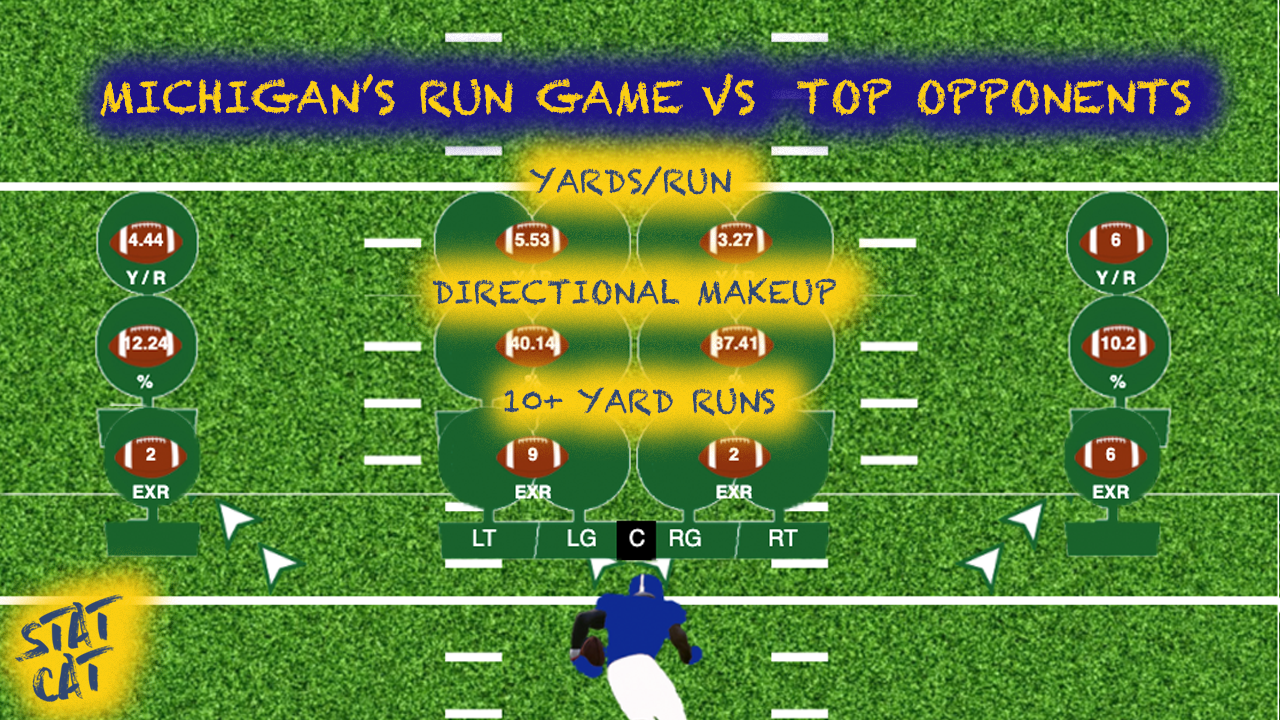
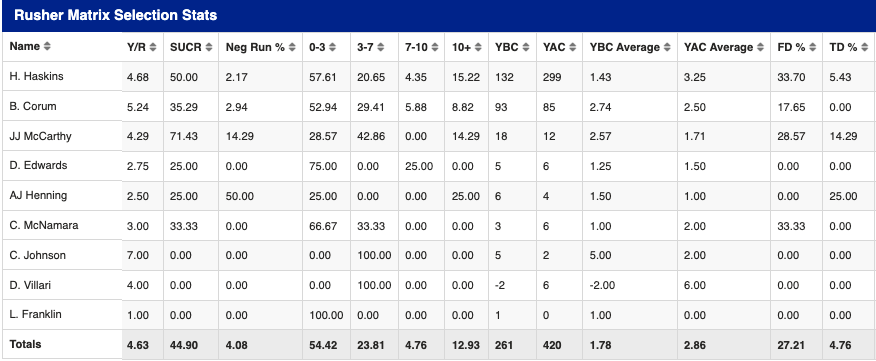
Accounting for roughly 63% of Michigan’s rushing game, he out-touched his backfield mate by 58 attempts against its top opponents. Plus, he was undeniably more efficient. Haskins managed to see half of his runs end in success with a commendable 39.1% First Down+TD Rate. His 31.5% Broken Tackle Rate was serviceable, but his 3.25 YAC average would have ranked top10 when stacked up to SEC backs in league play.
The deliberate straight-forwardness of Michigan’s offense entices defenses to crowd the line and dig their heels in; and fittingly, Haskins logged a burdensome 1.43 rush yard before contact average, which equaled Florida’s beleaguered NaQuan Wright’s clip. But hinted by the team’s excellent 4.1% Negative Run Rate, only about a tenth of his carries experienced contact behind the line of scrimmage; that tracks to be one of the lowest clips by SEC standards. Haskins might not be the swiftest or strongest rusher, but he’s a disciplined ball carrier with a great burst after first cuts that tend to put him in good positions to seize extra yards after engagement.
Including all games, Haskins has accumulated college football’s 4th-most Expected Points Added by a running back according to cfp-graphs.com. And, Corum chimes in ranking 35th.
But while Corum’s slashing style sliced Michigan’s lesser adversaries, the sophomore was overly quieted in our sample. Despite averaging 1.3 more rush yards before contact than his running mate, Corum generated a lousy 35.3% Success Rate, 17.7% 1D+TD Rate, and 8.8% Explosive Run Rate. In terms of YAC and Broken Tackle Rate, his figures tracked to place within the SEC’s bottom6 and bottom10, respectively. He might have championed a preferable Yards/Carry to Haskings (4.7 vs 5.2), but he was noticeably unable to make a difference in these matchups beyond a few flashes.
RUN SCHEMES
Counters (+Read): 32 attempts, 5.5 Y/A, 37.5% Success Rate
Michigan’s favorite concept and backbone of its entire bloody approach is the good, ole Counter. Over 14% of the Wolverines’ early down play calls against their top foes have been that look; no other concept cracks the double-digits. Plus, it accounted for nearly a quarter of UM’s 1st and 2nd down yards in those matchups.
Harbaugh has gone galaxy-brained featuring numerous wrinkles in an attempt to stay one step ahead of combatants. In our sample alone, this offense has called six different renditions of the tried and true misdirection. Along with the basic guard+tight end combo, the Wolverines have pulled the center+tight end, backside tackle+center, backside guard+tackle, two “fullbacks”, and shooting receivers+tight ends. And, that’s not including the Bash designs this lot likes to lean on when JJ McCarthy gets reps.
Despite the smorgasbord of variants, Michigan tends to focus on the common form of pulling the backside guard and off-set tight end. Of the 32 Counters, 20 have been that design. And at least in these matchups, tries from the shotgun have been way better than attempts from the pistol or undercenter. Gun Counters – no matter the subconcept – don a 50% Success Rate and 8.8 Yards/Carry compared to the remnants’ 31.8% and 4.0 clips. Since the majority of Counters haven’t been out of the shotgun, the concept’s overall numbers are pretty sour for a playoff offense’s lead look.
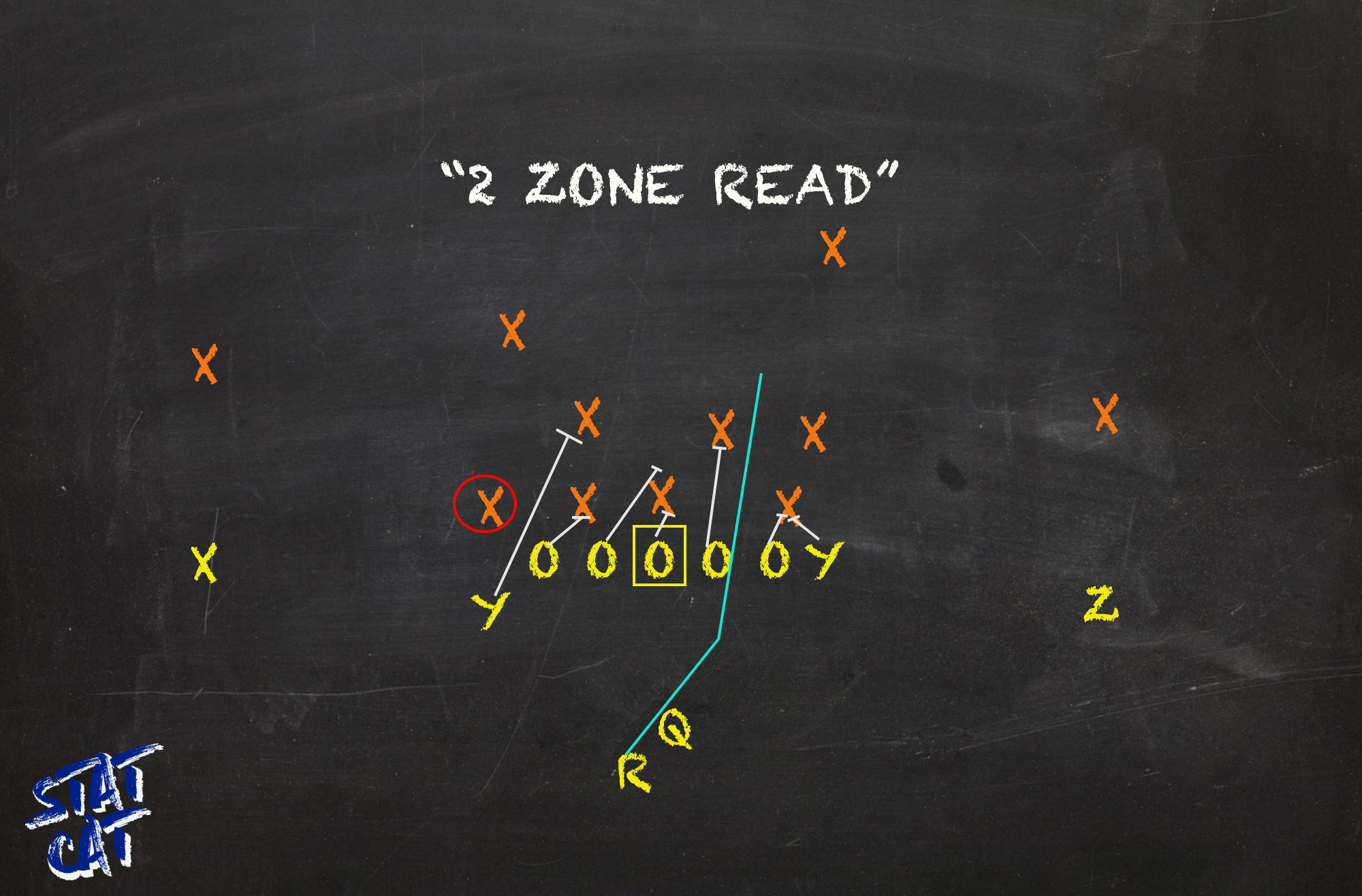
Inside Zone Bluff Read: 24 attempts, 2.8 Y/A, 29.2% Success Rate
When looking at any one subconcept, the Bluff Read is Michigan's most repped look. The action of this zone design is a perfect compliment to many forms of Counter that ask off-set tight ends to fire against the base run flow. Instead of working with the zone combos like on IZ Slam Reads, that position aims towards the backside of the play. On reads, these dudes can become personal protectors for QB keeps or set the all-important cutback alley for the running back.
But despite the splendid blend the Bluff Read has on paper with Counter, the Wolverines have sucked repping it; especially to start a set of downs. On firsts, exactly zero of the 12 attempted Bluff Reads have worked across a miserable 1.3 Y/A, which is somehow worse than 14.3% Success Rate and 2.2 clip from non-shotgun Counters in these spots. Yikes. With only three later down tries, those snaps obviously ruin this concept’s outlook. Even having two arc blocks – or “bluffers – with shoot motion or otherwise failed to produce consistent gains. Still, based on the overall philosophy of this offense, the Bluff Read should be seen plenty vs UGA.
Inside Zone Slam Read: 15 attempts, 3.3 Y/A, 33.3% Success Rate
No play is as featured across college football as much as the Slam Read. Either as a foundational platform for RPOs, a way to get QBs involved on the ground, or gambit for a perfect zone flow, this play is seen in virtually every level of football. It’ simplicity makes it an easy one for any offense to adopt. Michigan has used it as a changeup look to counterbalance the eye candy of its top-two runs. With no divergence upfront, the Slam Read is much more of a blunt design.
But despite the no-nonsense, the Wolverines failed to provide significant gains on this look. Michigan’s normally thin cushion was particularly petite on Inside Zones. Including Bluff Read attempts, the Wolverines averaged 0.9 rush yards before contact. And fitting the pattern found with their other favorite rushing concepts, only 2/10 of the Slam Read’s early down snaps found success. Overall, only one try topped ten yards.
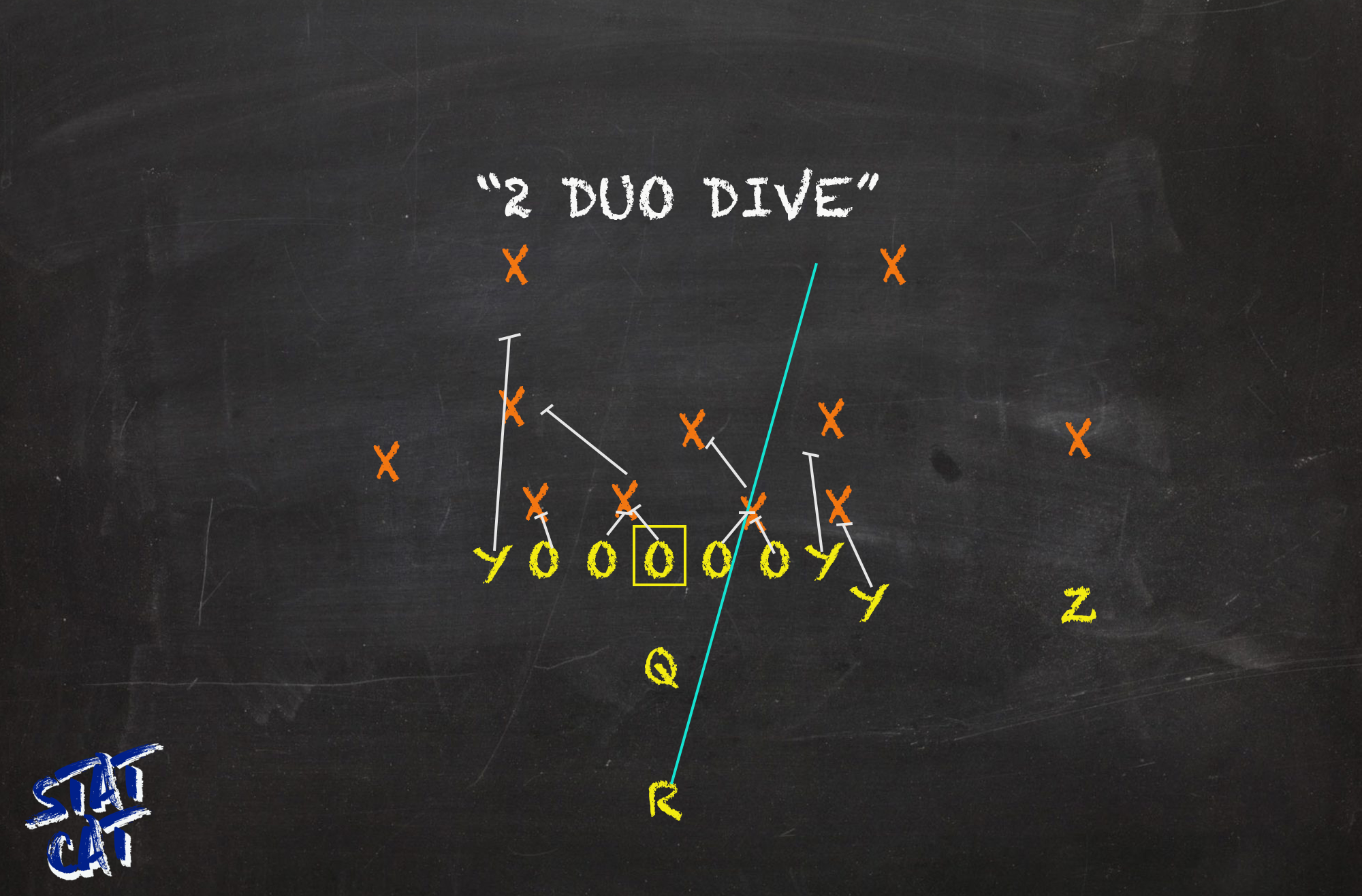
Duo Dive: 12 attempts, 2.3 Y/A, 66.7% Success Rate
Michigan’s complimentary run game also enjoys the north-south dynamics the gap play Duo Dive shares with the Slam Read. Some sickos even treat the two concepts as the same thing. Really, the only difference is in the orientation of the blocks upfront. But since Duo is a power play without pulling someone, double teams and hard edge form rather than a coordinated flow combination. It was overly Michigan’s battering ram in short yardage situations. Of the 12 reps in our sample, 8 took place on either 3rd or 4th down; you’re not running this puppy when behind the chains in those spots. Furthermore, 6/8 such tries moved the chains despite a 2.0 Y/A.
Y-Insert: 12 attempts, 5.9 Y/A, 66.7% Success Rate
This look has become a gem for many multiple 11p offense’s and adds another bothersome wrinkle for defenses to worry about. To recap, off-set tight ends fire opposite the play design and seal the edge on both split zones and counters (aka “trap” technique). But, Y-Inserts ask for them to snake through the line and become a lead blocker (aka “wrap” technique). With a double team and some high walls, the back can choose to follow the tight end or attack light elsewhere along the line. Think of it as a modern form of the old school “Iso” play from the I-formation.
Though Counter and Bluff Read each delivered plenty of biffs against premier competition, Insert was arguably this offense’s best run play. Y-Insert was only responsible for a pair of explosive runs, but it delivered chunk gains (ala the Ohio State game).
Other Runs:
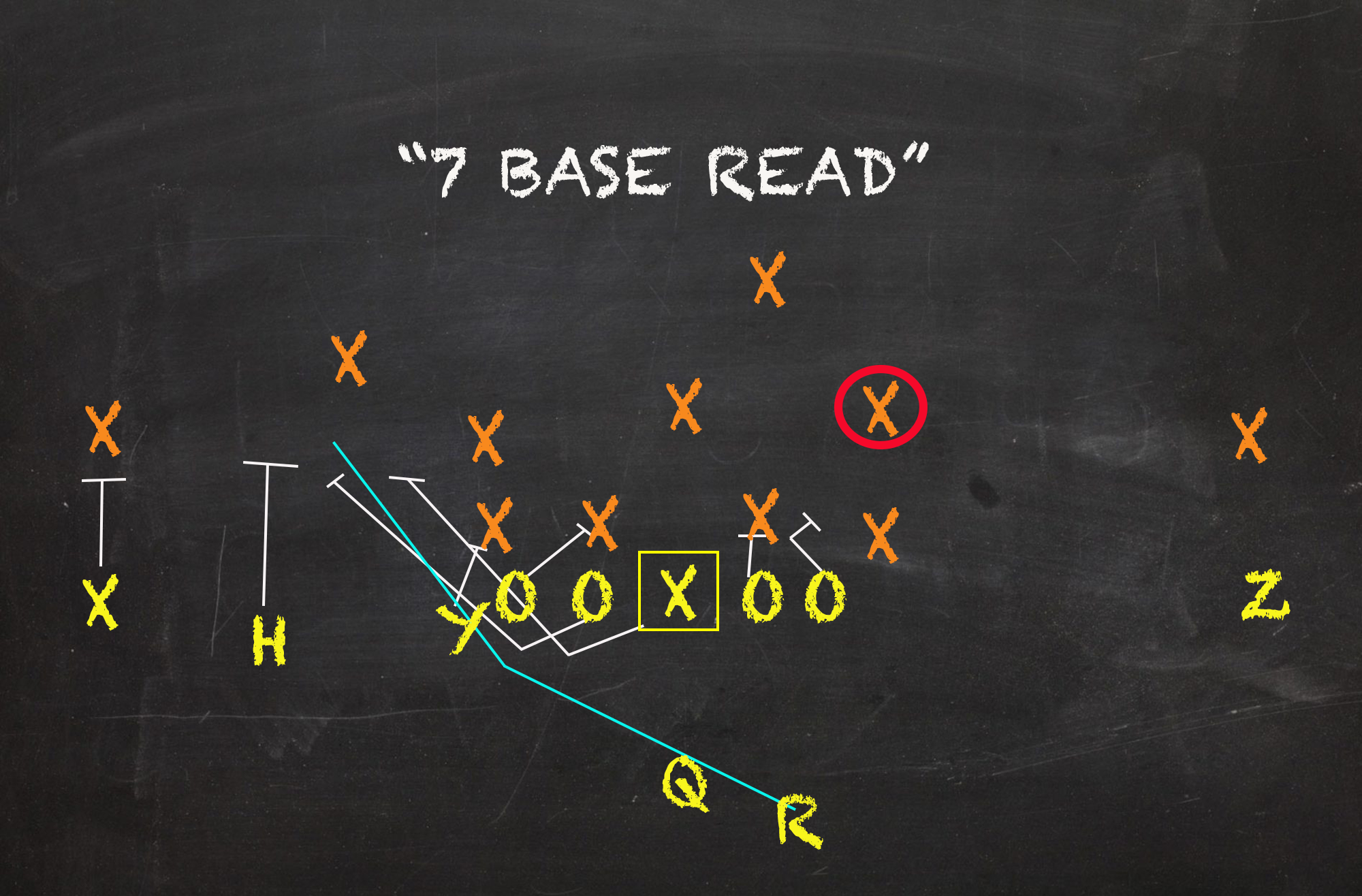
Though a large portion of Michigan’s run game is designed to take care of business inside the bookends, the Wolverines have logged a handful of quality carries with its top perimeter run. Unsurprisingly from an offense that pulls at least one player on roughly 40% of its carries, that concept is a Pin/Pull Base – or in other words the playside blockers towards the edge wedge inward and the adjacent guard and center loop around as lead blockers outside. It’s nothing crazy. But thanks to the high volume of inside runs, Michigan has produced a 57.1% Success Rate and 5.7 Y/A on its limited tries in our sample.
One-puller Power has also averaged two reps per game against Blue’s best. But the Wolverines have wilted attempting to push fronts around in this manner per a 27.3% Success Rate.
But for someone who charts north of 12,000 snaps each fall, the most unique design that Michigan features was its Double Wham design. Due to the speed and odd front alignments typically seen in the SEC, TE traps are virtually extinct in the SEC. But, Harbaugh has been ballsy enough to thwap not only Big Ten big boys but backers as well. That said, only four Double Whams were seen in our sample; and all of them occurred vs Wisconsin. But considering only Georgia sports a better defensive SP+ score than the Badgers and Michigan saw all tries work across a 6.3 Y/A in that matchup, maybe Michigan can land a few body blows against the Bulldogs.
PASS SCHEMES
Shallow: 19 featured snaps, 9 outright targets, 7.0 Y/T, 33.3% Success Rate
This QB-friendly concept was easily Michigan’s most featured look through the air against its four hardest opponents. Shallow was incorporated on about 14% of the Wolverines’ dropbacks and was a staple to get the Wolverines back on schedule. All but two of its 19 featured snaps occurred after 1st down with a distance to gain of at least six yards. But, the concept didn’t really bring about much consistency. Despite two explosive completions, Shallow’s net results were dissatisfying and fell below the team’s average output.
One way Michigan maximized this concept is a basic pattern consisting of the core shallow+dig combo with complimentary routes on the outside. These are usually mirrored routes (aka both guys run the same thing) like verts, curls, or outs. Shallow is an excellent concept versus 2-high coverages, but those routes are handy man beaters for when defenses try out one safety alignments. With the ideas merged into one play, the QB theoretically will always have a place to go with the ball. Of the five targets to complimentary routes paired with Shallow, three were caught including two verticals for 94 yards and a TD against Wisconsin.
The other coupling occurs with a slot Dagger look from trip sets. This is also a pretty common pairing. And frankly, the only thing that makes this different from a normal Shallow concept is just a seam/bender operating from the same side as the dig. But while most call Daggers for outside receivers, Michigan tweaked this pattern to really attack the middle of the field. Even though the QB’s rules are mostly the same for this look against 2-safeties, the wrinkles versus one-high defenses are a little different. There still is an outside curl for sagging deep-third zones or lazy man coverage, but the middle bender has been a fruitful target in those instances. At about 12 yards – or the area beyond the four underneath defenders and single middle of field safety – he has the freedom to snap off his route towards space (or if his man is playing off). This maneuver can make this pattern resemble a double dig or even a form of the Cross concept. All in all, these Daggers saw 4/5 targets find the mark across a 12.2 Y/A.
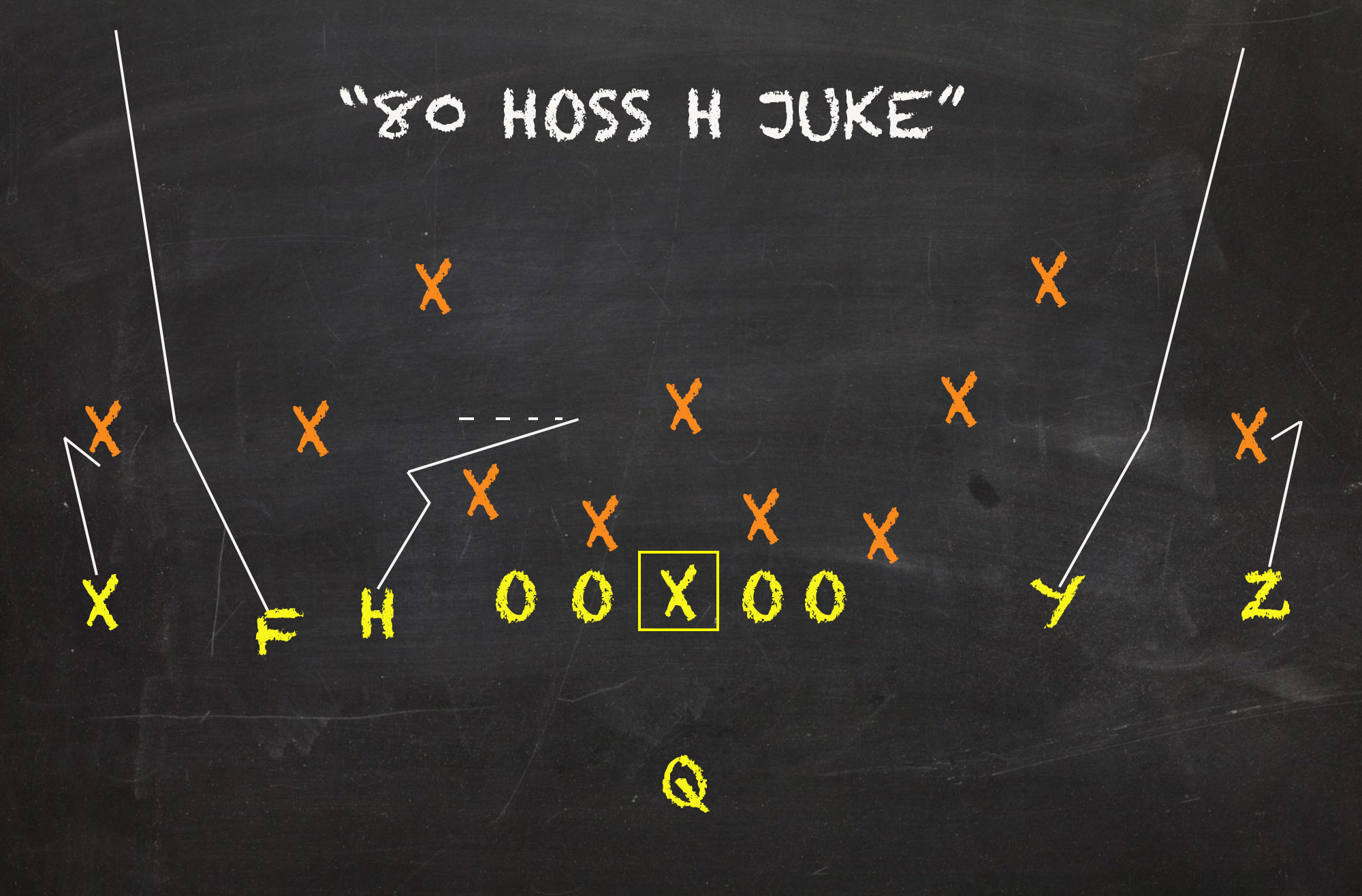
Hoss (Curl+Seam): 11 featured snaps, 9 outright targets, 6.8 Y/A, 40.0% Success Rate
Hoss also combined for 9 outright targets against Michigan’s hardest foes but also begat a blah bottomline. About 16% of the Wolverines’ dropbacks occurred from empty sets, and this curl+seam classic was their most targeted look out of those formations. Like many offenses that feature Hoss from 5-wide, the No. 3 receiver runs a multi-breaking “juke”/option route. But those snaps largely were responsible for the concept’s underwhelming returns. Only 1/6 reps worked.
This pattern is a matchup creator and does best against single-high defenses. One deep safety cannot cap two verticals evenly, quick hitches tend to find room to win against off-ball corners, and the aforementioned juke can be a pain in the ass for linebackers to neutralize. But when an offense fails to have threatening weapons, Hoss can be an easy stop. As is, the returns reflect that reality in regards to the Wolverines’ pass catchers.
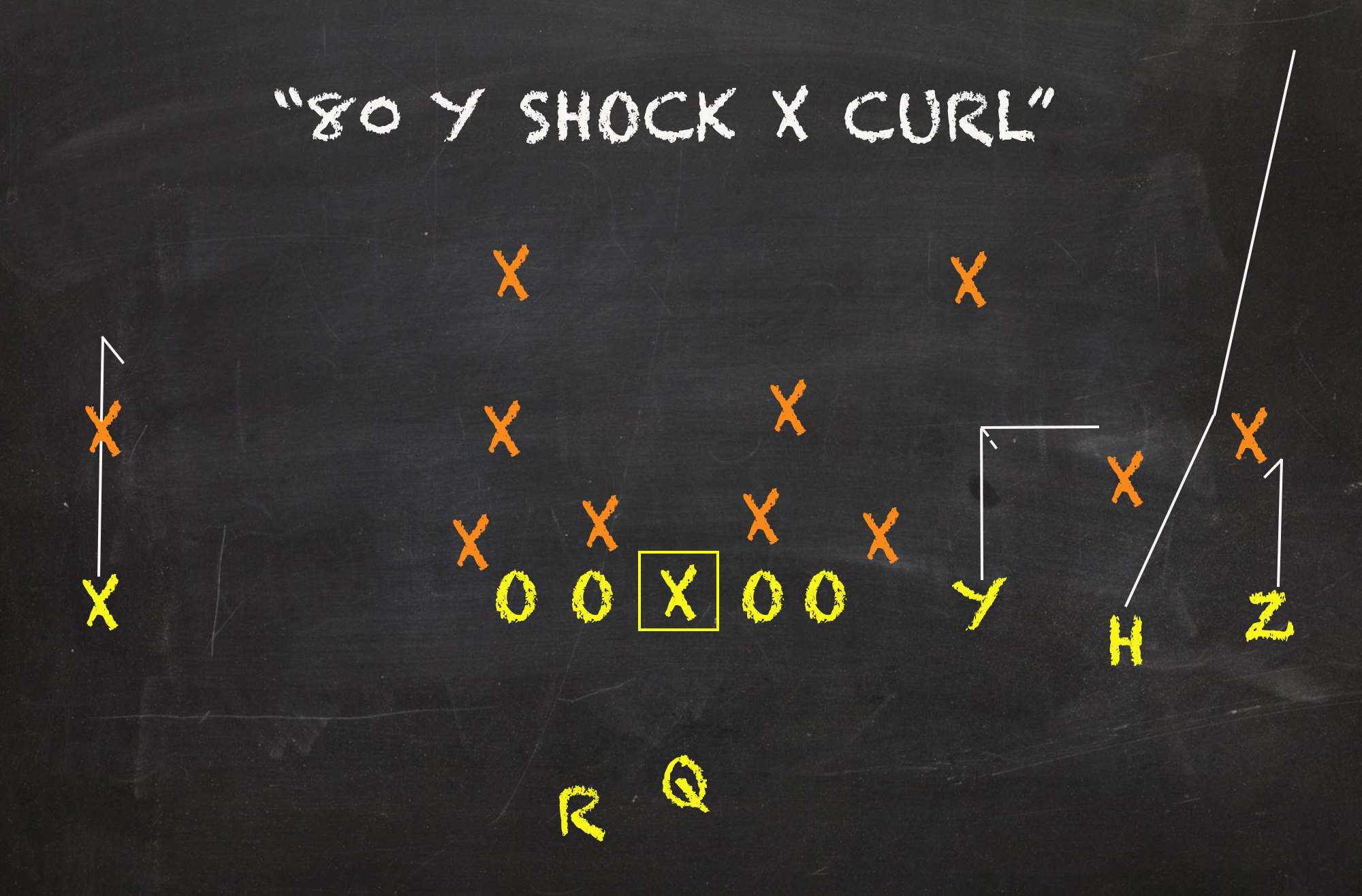
Stick Variations: 15 featured snaps, 7 outright targets, 3.1 Y/A, 42.9% Success Rate
As a pass game that feasts on short attempts, the Stick concept is an obvious inclusion for Michigan. Built to snatch an easy pitch-and-catch to space, this low-floor play is a favorite drive-starter for many. But in Harbaugh’s run-first scheme, this look was the Wolverine’s most targeted pass on 2nd downs. Rather than start a set of downs with an easy throw, Blue opted to use it to gain real estate in order to set up manageable 3rd down tries.
Inverted Stick – or “Shock” – as well as two-man combos were the two primary varieties of Stick the Wolverines utilized in our sample. Some designs even saw the two paired together on the same play. But, Michigan also overly paired slants and Smash Variants with Shock. Still no matter how it was presented, no form of Stick produced worthwhile numbers.
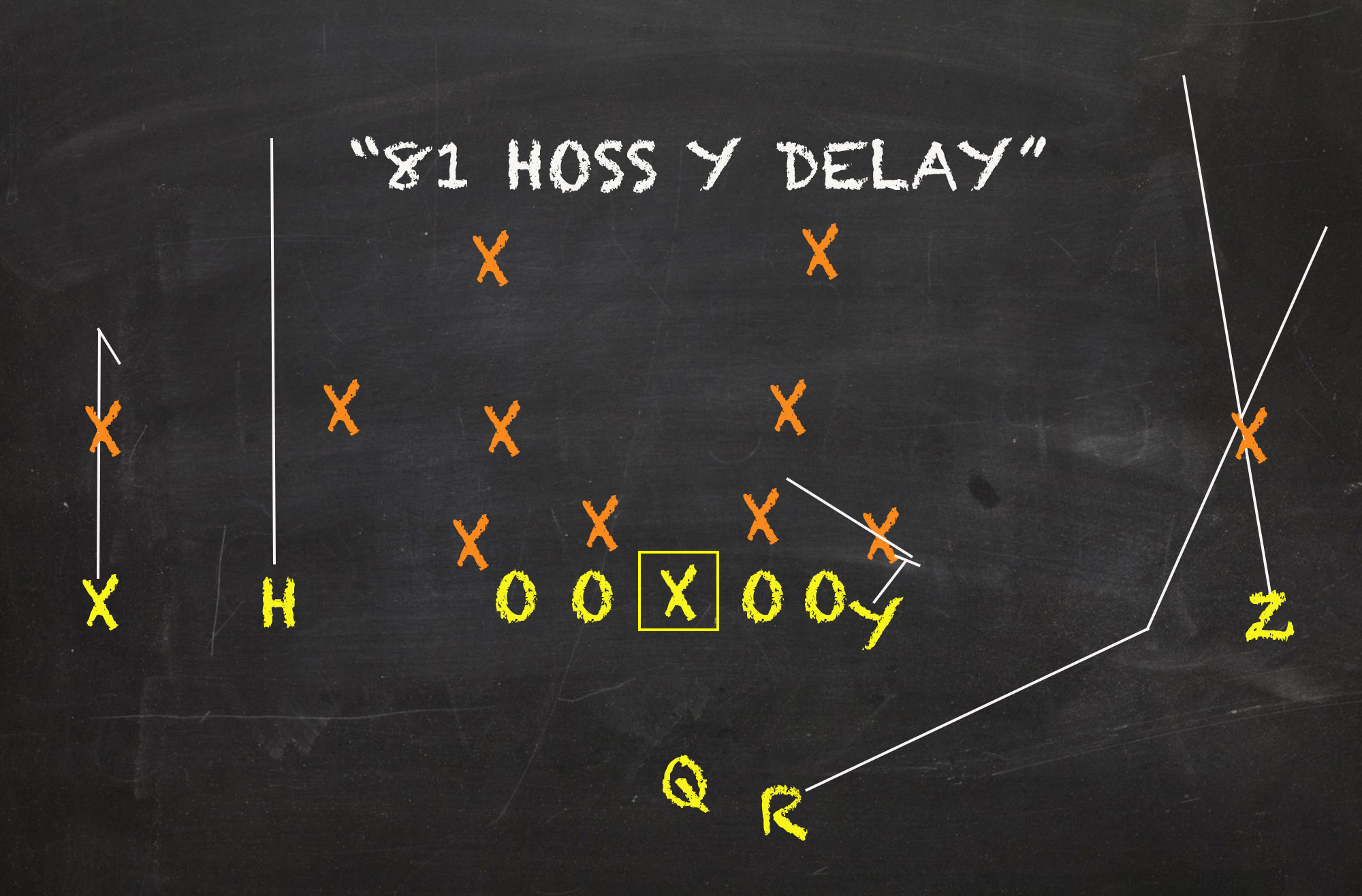
Y-Delay: 7 featured snaps, 7 outright targets, 6.7 Y/A, 42.9% Success Rate
Michigan didn’t desire dialing up many screens, but this designed checkdown was a recognizable element in its passing game. And honestly, it’s a certified stat padder. After pretending to block for a beat or two, the tight end releases slightly upfield into the vacated void left by dropping linebackers. On account of a couple of vertical routes and a running back wheel, their attention is naturally directed elsewhere. Every time the Wolverines called this pattern against its top opponents, the primary receiver was thrown the ball.
Other Passes:
Smash Variations and quick-out patterns have combined for 17 targets. And based on McNamara’s M.O. these concepts cannot be entirely dismissed. Additionally, Floods, Rubs, and All Verts all received a half-dozen chances in our sample. But thanks to Blue’s inconsistent execution on those looks and Georgia’s iffy record defending Switches, I feel Michigan’s wheel designs deserve a bit of spotlight. Of the nine featured snaps, eight were either a play action or a flea flicker. Half of the designs called for a block feign either through or across the line before continuing the wheel downfield. With the amount of pullers seen in this offense, it’s just another way Harbaugh seeks to set up adversaries with complimentary football. The results, however, were mixed. Both flea flickers wound up as 30+ yard completions with one securing points. But, only 2/6 dropback Wheelie Switches found success.