2020 Offensive Play Calling: Mississippi State
2020 Offensive Play Calling: Mississippi State
Going from a spread-run scheme littered with RPOs to the poster child of pass-first offenses hardly presents an opportunity for a smooth transition. Insert a global pandemic and two passers unfamiliar with the scheme and the ante certainly gets upped. 2020 was far from an ideal launch for the Air Raid in Starkville, but that didn’t stop the program from taking positive steps towards its new identity. Still, it’s difficult to ignore the sputtering performances.
Despite a soaring start to the season, the Air Raid hardly experienced clear skies as 2020 progressed. The Bulldogs totaled 15 pass plays that generated 20 or more yards in Week 1, but only logged 19 others the rest of the year. Though Leach and Co. teased that the Air Raid could immediately be high-octane, MSU’s pass game soon became muted, methodical and on the wrong side of mediocre. The Air Raid finished inside the SEC’s bottom3 in Yards/Game, Yards/Play, Explosive Play Rate, Success Rate, Sack Rate, Points/Play, Touchdown Rate, and rush yards before contact. Thanks to their passers constantly trying to find their footing in this scheme, Mississippi State’s quarterbacks both finished with double-digit Interceptable Pass Rate, which helped the Bulldogs locked down the SEC’s worst Turnover Rate.
Though the results sucked, I admire Leach for sticking to his guns. Most passing games in this conference are wishy-washy. Rather than believing in a core set of plays through the air, most play callers change their go-to concept week-to-week, which is hardly the case when it comes to their run looks. I constantly am wondering, “Why not show the same amount of trust in a sturdy pass design that you’re showing to a play that averages five yards per pop?” Teams could run a particular pass pattern a half a dozen times one week before outright ignoring it the remainder of the year. Maybe it’s because I am a child of the Air Raid myself (well, technically the BYU spread — a two-back offense that was the precursor of what the pass-happy scheme ultimately became). But, good pass designs deserve equal love on the script. I get being prudent and saving a certain look that could swing a ballgame, but sometimes play callers overthink themselves into being toothless. Some can call Leach stubborn for not deviating from his plan of attack, but his track record speaks for itself. Once his offenses get past that first, rocky year, it usually doesn’t take long for them to take off.
Leach played the hits in 2020. A good portion of Mississippi State’s script were composed of his Air Raid staples. So dropback disciples probably won’t find anything revolutionary from this report. That said, I found a number of fun wrinkles. To get a better idea of how this offense liked to function, I looked at snaps when MSU was either up or down 18 points. That way, less garbage time snaps skewed the output and gave us a better depiction of their true play calling in the heat of battle. With that parameter applied, I examined this offense’s favorite run and pass plays, the looks that gained the most yards, and the Air Raid’s most successful concepts from 2020.
MOST FEATURED PASS CONCEPTS
Mesh: 12.3% Play Share, 5.82 Y/A, 41.5% Success Rate
A good portion of the Air Raid offense is designed to eviscerate zone coverages. But for years, this manbeating concept has been Mike Leach’s favorite pattern. Over the course of 2020, this Rub Variation was featured on 112 snaps and targeted outright 87 times. For the laymen, that means Mesh was seen about ten plays per game; or one out of every seven plays on average. The Bulldogs had numerous Mesh patterns that paired core intersecting drags with vertical complimentary routes such as posts, corners, digs, and fades. Plus, MSU coupled Mesh with other standalone concepts like Dagger, Hoss, Wheelie Switch, and Mills. With the main combo working short, those provided other ways to attack opponents in the midrange game. And to keep up with the recent fad in college football, the Bulldogs were not immune from repping the Kelly Mesh. Known as the Spot Mesh by some, it’s a variant I named for Chip Kelly who ran this particular pattern into the ground. Along with the pair of drags, this calls for a playside running back wheel and sit hook from an outside receiver overtop the primary combo. Kelly left such a lasting imprint on his former employer that his successor used his design to pants Bill Belichick in the Super Bowl. After that, the Kelly Mesh’s usage has skyrocketed across all levels of football.
In our sample, all the different varieties of Mesh combined for 82 targets and delivered very mediocre returns. For whatever reason, 44% of its attempts occurred on second downs. (Usually lead concepts log the most of its plays on firsts). The look’s general ordinariness was greater thanks to how Mesh was executed in these spots. In fact, this Rub Variation’s Success Rate waned with each passing down; starting at an admirable 55.6% on firsts to a forgettable 38.9% on seconds to an inadequate 26.3% on thirds. By the way, no other concept saw as many tries in our sample as Mesh did on the money down. Looking at all snaps, this concept started the year strong, but thanks to the aforementioned so-so stat line, usage peaked after a month of play. Mesh registered double-digit attempts each of the first four games of the season. But, only two games after that would meet that criteria.
2. All Verts: 7.63% Play Share, 5.49 Y/A, 29.4% Success Rate
Like Mesh, All Verts has become synonymous with the Air Raid offense, but that always wasn’t the case. Y-Cross was the original field-stretcher for this scheme. As time and Leach’s QBs continued to pass, however, good ole “99” started to be used more and more as an every down play to overload the backend of coverages. Though Leach’s teams haven’t been immune from turning to this concept when behind the chains or needing a conversion on later downs, All Verts is much more than a desperation design for the Air Raid. Naturally with an abundant amount of looks aimed to carve up the underbelly of coverages, this scratches the Sword Swinger’s itch to constantly attack the most vulnerable areas of the defense. When opponents crowd up to hinder the short stuff, Leach gladly looks for a big gainer overtop with this simple pattern.
Over the course of the season, All Verts was featured on 85 snaps and outright targeted 59 times, which was the most in the SEC. Only seven of those attempts fell outside of our parameter. Though it was one of the looks that helped the Air Raid take flight in Week 1, this concept experienced plenty of turbulence in 2020. After logging three explosive completions against LSU, the Bulldogs would go another six games without a gain of at least 20 yards on All Verts. Once the Bulldogs got that monkey off their collective backs against Ole Miss, this offense would go the remainder of the season without a single explosive All Vert rep. Since throwing deep isn’t Will Rogers’ strength, failing to generate downfield throws prevented this concept from providing desirable efficiency. By year’s end, MSU finished bottom5 within the SEC in terms of Y/A and Success Rate targeting this look.
Mississippi State distributed All Verts around on all downs, but nearly two-thirds of the ones repped in our sample occurred on first or second. The plurality of its plays were on the latter where All Verts delivered a more-than-serviceable 44.4% Success Rate and 9.61 Y/A. In fact, no other concept out-gained this concept in these spots in our parameter. Though its figures slipped a bit on the money down, its rate of return was preferable to most of the conference’s other offenses. While a Success Rate in the 40’s doesn’t sound sexy in the slightest, you have to remember the increased degree of difficulty involved with deep passing concepts. Last year, only two SECers put up a clip past that threshold with one of them being LSU’s historic offense.But, the Air Raid only mustered a combined 9.52% Success Rate and 1.38 Y/A across its 18 such snaps on first or fourth down in our sample. If we were to exclude those tries, MSU would have been one of the best teams around executing “99” rather than one of the conference's worst.
3. Checkdowns: 6.29% Play Share, 3.40 Y/A, 21.4% Success Rate
Dropping eight men into coverage in order to slow down the Air Raid is a pretty common tactic defenses utilize. Though Leach likes to attack the most vulnerable spots of the defense, that’s hard to accomplish against three-safety looks with only a trio of pass rushers. In theory if the offense only sends out four receivers, the defense can double each one. In short, most passing windows are tight when the defense drops eight. Mississippi State’s passers received a baptism by fire to both Leach’s system and SEC defenses in 2020. The general unfamiliarity and inexperience simply led to more checkdowns. Dumping it off to a back with the defense dropping at least provided completions albeit the terrible returns. Regardless of what concept they originated from, checkdowns accounted for MSU’s 4th-highest play share of any look in our sample. Still, a 3.40 Y/A and 21.4% Success Rate is fresh horseshit. Since the Air Raid presented plenty of opportunities to checkdown, no other SEC offense matched their 50 attempts with none sporting a worse Y/A or Success Rate. That crap obviously started to pile up and ultimately stunk up this offense.
As an indirect way to get backs involved in the passing game, MSU’s checkdowns further progressed the notion that targeting them in remains to be overly inefficient. Opportunity costs say throwing the ball to other positions is much more consistent and fruitful. And, this isn’t just Miss State — same goes for the NFL as a whole. Since third down passes were loaded with short looks, All Verts, or Inside Zone Slam, checkdowns were predominantly an early down occurrence for this offense. In theory, checkdowns are supposed to deliver their best figures on first downs. But, the Bulldogs stunk it up in those spots with a lousy 3.22 Y/A and 17.4% Success Rate. Just inexcusably bad. A third of these tries worked on second down. But, that still sucks considering the Bulldogs’ backs tackle breaking skills. Barely an eighth of these attempts gained a first down despite Miss State passers combining for a 84.4% Completion%. None resulted in an explosive gain.
4. Convoy Screen: 5.24% Play Share, 4.23 Y/A, 42.9% Success Rate
The Convoy — or “jailbreak” — Screen has always been a part of the Air Raid and has mostly operated as an extension of the run game. That last part has basically has become cliche thanks to the wide adaption of these looks. But when Hal Mumme and his sidekick brought this scheme to the Bluegrass, it was far from commonplace in college football; certainly in the SEC. Now, plenty lean on Convoy to take advantage of sagging coverage, get the ball to a playmaker in space, or help manage down and distance (sadly most folks still call this concept on the money down when odds are stacked against it). On average, the Bulldogs called about three per game. Only the Arkansas and Tulsa games saw Convoy less than twice. A third of this screen’s reps came in the two week stretch against Vanderbilt and Georgia where it rocked a 53.8% Success Rate but only gained one first down.
Sure, the Air Raid had other screens too. But, most of them were Convoys. All in all over the course of the season, Mississippi State called ten more screens than the next SEC offense in line with only arch-rival Ole Miss sporting a better overall Success Rate. So while they might have led the way in volume while representing the conference floor on checkdowns, the Bulldogs were a relatively elite screen team situationally. Leach used this concept as an instrument to gobble up easy yards on the perimeter. Though always dreaming of his receiver busting a big one, he had to settle for plodding production.
Over half of the Convoys were repped on first downs, where it put up its best numbers. Often called when defense sat back in a two-high shell, Leach was obliged to take what he was given. The concept put up a 57.9% Success Rate in those spots, but its returns soured with each passing down. Its clip on seconds dropped to 33.3% before delivering a cool 0% on the money down.
5. Trail: 4.04% Play Share, 6.26 Y/A, 44.4% Success Rate
Though checkdowns became impromptu ways to get the ball to backs in the passing game, Leach initially wanted to accomplish that with a unique tweak to a Trail design. “Arches” is a three-man combo that typically is run from stack or bunch sets -- as is custom with Trails. Number one, the outside receiver, will be the hot outlet and run a drag. Number two, the middle man, will run a corner. Number three, the inner-most target, will run an angle and bend back towards the middle of the field behind the drag creating the “trail” action. The Magnolia State Madman’s spin on this pattern certainly swapped around a few things. First, the inner-most receiver, now coming out of the backfield, acted as the hot route that initially enticed the defense. Second, the outside receiver became the trail. But in order for the timing to work out, he's asked to run a multi-break juke route before continuing towards the middle of the field. The middle man’s job remains the same. For the Football Freddies, this pattern can be interpreted a couple of different ways. Outside of the wrinkle to Arches that I described, others are convinced that this is a counter play to the Spot concept. The juke can be seen as a Spot-and-go with the running back angle playing off his usual flat route. For what it’s worth, MSU targeted Spot 19 times in 2020. So, there’s credence to that argument. That said, I still view it as a fun wrinkle to the Trail concept. A Smash concept or an isolated corner were exclusively paired opposite this pattern.
Either way, this play presented a painless way to get Bulldog backs involved in the passing game…until Kylin Hill left town. Half of the play’s targets occurred in the first three games. And though other routes found success when targeted, the initial hot route over the middle often set up their best attempts. Of the three explosive gains, all of which went to receivers, two occurred with Hill in the lineup. In our sample, most of this concept’s attempts took place on second down. There, it was its worst self with a 3.5 Y/A and 42.9% Success Rate. Trail’s first down numbers were about the same but certainly more preferable in comparison. Despite limited tries, two of the four Trail targets worked on the money down with one of them being a 24-yarder.
6. Cross: 3.89% Play Share, 6.15 Y/A, 50.0% Success Rate
Though its role has changed a bit over the years, Cross remains an Air Raid staple to this day. While strongside Sails were shoved down MSU’s script, Leach still showed plenty of love for this weakside flood in 2020. The Pass-happy Pirate toyed with a few complimentary designs opposite the main Cross combo. With Dagger, “Fox” (fake tunnel screens), slot fades, “Slice” (quick out+vert), and flair swings drawing attention elsewhere, MSU kept opponents from keying in an any one Cross design. Though its no longer this scheme’s go-to to produce a big gainer, it’s still a tried and true concept for working zone coverages. Perhaps more ehhh than electric these days, this look still saw half of its tries work. Only one other pass play amongst the Air Raid’s favorite looks can make such a claim based off its numbers from this pas season.
Naturally, half of Cross’s targets were directed to inside receivers running the titular route. The same figure — regardless who was thrown the ball — resulted in a fresh set of downs. Only three reps produced an explosive completion. Blossoming from the slot, Jaden Walley finished as the concept’s most productive target even though he only hauled in half of his opportunities. Along with a team-high 70 yards, eight targets, and four catches, all of his connections gained a first down with two of them going for 20 yards or more.
7. Shallow: 3.89% Play Share, 7.96 Y/A, 42.3% Success Rate
Shallow is another concept that traditionally has helped make up the Air Raid’s blueprint. Named for the titular drag, it aims to get a speedster the ball with some lateral inertia in the underbelly of coverages often littered with slow footed linebackers. If those guys start to bite, they’ll be smacked by the overtop dig coming from the other side of the formation. Because of that, this concept is a natural pest to two-deep coverages that commonly ask three linebackers to defend from the numbers to numbers. All four receiver positions ran the drag at least once over the course of the season. Along with that variability, Leach changed around the other complimentary routes paired with Shallow. Mills, “Doubles” (asking both outside receivers to work the same vertical stem), and Wheel Switches were the most common this past season.
This concept showed up every week and usually averaged three reps per game regardless of the point margin. That said, it’s usage was up-and-down. Though the final five games featured Shallow 17 times, almost half of its targets came the first three weeks. In our parameter, this play sported its best figures on second downs. Of its 12 such snaps, seven worked while averaging 12.5 Y/A. But thanks to being overly forgettable on first downs (37.5%) and utterly terrible on thirds downs (0%), Shallow ended up as a rather ho-hum play despite producing some nice gains.
8. Stick: 3.29% Play Share, 6.77 Y/A, 63.6% Success Rate
Though a low-floor play, Stick was a consistent winner for this offense. The Air Raid leaned two main renditions, which was often dictated by MSU’s formations. The first is a very common variant seen in practically every college offense. This “balanced” design came exclusively from 2x2 sets with the playside inside receiver and back running the core concept. The outside receiver to that side would get vertical, and either Tosser (dual slants) or Slap (a slant+flat combo) would work the backside. The other pattern came from trips and commonly presented a four-man surface to one side of the formation, which made it “unbalanced” to defend. The same two dudes ran the Stick as before. But the two most-distal receivers would run a Wheelie Switch — or a wheel + post/dig combo -- as the lone backside target ran a solo slant.
Regardless of the type of Stick, this concept was primarily used on early downs to help manage down and distance. In that way, it was no different than the majority of this offense’s short schemes. But, no other look matched its efficiency situationally. Stick was easily its best self to start a set of downs. While logging over half of its tries in our parameter in those spots, this look sported a laudable 75% Success Rate and 7.08 Y/A. Only two of its 22 total reps in our parameter took place on third down where both ended in failure. Jaden Walley and Austin Williams combined to account for 70% of the concept’s targets and 80% of its yards when MSU was either up or down 18 points.
MOST FEATURED RUN CONCEPTS
Inside Zone Slam + Read: 13.3% Play Share, 4.57 Y/A, 53.9% Success Rate
When the Air Raid wanted to hit the ground, Mike Leach’s go-to run concept was the basic Inside Zone Slam. Combining both straight give reps as well as attempts off of read options, Slams actually owned the highest play share amongst Mississippi State’s favorite plays in our sample. To be honest, I should’ve just charted them all as non-read reps. In our sample, KJ Costello nor Will Rogers attempted a keep even if there was a clear read going on. This plays’ production was solely off its line and backs. Since zones aren’t predicated on blowing defensive fronts off the ball, it allows smaller, more athletic hogmollies to win battles in the trenches. Unlike gap schemes that primarily want to play bully ball, zones more malleable for OLines post-snap. Reaching and sealing playside is the name of the came. And if you get stymied, the ball carrier should have a cut back lane assuming the backside combos don’t get stuffed as well. Plus, Slams are simple to learn and to execute in the wild. For a team that aimed to throw the ball on damn near every play, it checked a lot of boxes for the Pass-happy Pirate.
Miss State predominately rocked spread formations like 2x2 or trips. With the box count a little thin, Slams operated as a quick hitter to snatch a few yards when the defense was napping. Obviously only calling this play in advantageous spots, the Bulldogs boasted a 53.9% Success Rate — one of top marks in the SEC. MSU was, however, just as likely to sport an attempt of three yards or less as win situationally off these looks. Only about one in 13 on average went for a gain of at least ten yards.
2. Forward Pitch: 1.65% Play Share, 6.00 Y/A, 54.6% Success Rate
As you can see, there was a noticeable drop-off in usage from Mississippi State’s favorite run to other ground looks. By volume, the Bulldogs ran 78 more Slams than the other two concepts that made this list. In our sample, neither logged more than a dozen reps. Not to beat this into the ground, but the Slam was overly this offense’s run game. Early on with the returns being halfcocked, Miss State was starving for another way to feed their backs. In Week 4, the Bulldogs debuted a “Forward Pitch” design that's essentially a Utah/tap pass to the running back.
The ever cunning Leach asked his backs to take pitch towards the line of scrimmage rather than from a typical flat path. Why do this? One, it eliminates the threat of fumble. Since it’s a forward exchange, this design is technically a pass; and if dropped would result in an incompletion. Two, the aggressive angle gave ball carriers positive inertia. With the poo-poo blocking, Miss State rushers often had to brace for early contact. The Forward Pitch’s north-south path helped them hit the hole hard and take it to would-be tacklers. Three, it further pads passing stats. That should speak for itself ( side note: some official book keepers incorrectly mischaracterized a few reps and counted them as runs). But since it's practically an outside pitch in every other way, here it is in MSU’s favorite run section.
3. Draw: 1.50% Play Share, 3.40 Y/A, 10.0% Success Rate
Draws are natural compliments to a pass-happy scheme. The inverse to the play action game, these delayed handoffs hope to steal yards on the ground once backers make their drops. Despite the Air Raid’s modus operandi, Draws were a dud. And I’m talking about the good, old-fashioned rendition of Draw. Not the modern age ones with dash action. This play was the only other run look with double-digit reps in our parameter besides Slams (remember the Forward Pitch is technically a pass). In case you were curious, other sparingly-utilized run concepts MSU featured this year included Sprint Draws, Power, Duo, and Power Toss Read.
Though some offenses are cavalier with Draws, the concept is mostly trotted out as a desperation play. MSU typically used it in tough spots and wasn’t presented the red carpet unlike MSU’s other favorite ground looks. Because of that, Draws really struggled to provide much value and were quickly faded from Leach’s script. After logging eight straight unsuccessful reps the first three weeks of the season, the concept was only seen twice the rest of 2020. Due to the unfavorable circumstances surrounding most of its reps and Mississippi State’s lackluster line, only one try found success all season. That attempt also happened to be the look’s lone explosive carry. Before that ten-yard scamper in Week 12, the Bulldogs didn’t have an attempt top seven yards.
TOP YARDAGE GAINERS
Mesh: 477 yards, 5.82 Y/A, 41.5% Success Rate
As the pass-happy offense's most-repped play, this Rub Variation unsurprisingly finished with the most of Air Raid's yards. Cutting the crap, Mesh’s best day occurred in Week 1 when LSU refused to get out of man coverage. All year long, this concept only generated six explosive passes and four of them occurred in Death Valley. Despite composing a mere 5% of this look’s targets in our sample, these splash gains made up nearly 39% of its total production. From that point on, Mesh cooled off and damn near froze. From Week 4 until the bowl game, the Bulldogs failed to see a single attempt net at least 20 yards. But, that lacking wasn’t just isolated to this Rub Variation. Across all aerial looks, only Kentucky’s hapless passing game donned a worse Explosive Pass Rate than MSU’s 5.55% clip within the SEC this year.
2. Inside Zone Slam + Read: 407 yards, 4.57 Y/A, 53.9% Success Rate
In case you forgot, Mississippi State’s bowl win saw the ground game have its best day of the year. Looking specifically at the Inside Zone Slam, that play logged almost a quarter of its reps and 30% of its yards against Tulsa. In that game, the Bulldogs doubled their season-long Explosive Run Rate of 7.41% but put up a rather muted 38.1% Success Rate. On the year, Jo’quavious Marks was responsible for over half of the concept’s yards and the bulk of its tries. Plus, his 11.1% Explosive Run Rate obviously buoyed the team’s overall figure. This was largely aided by his team-best 2.31 yards before contact average. However, he was just as likely to suffer a loss as log a ten-plus yard carry. Moreover, Marks was the only carrier with at least six attempts to finish below a 50% Success Rate. Dillon Johnson was much more of a bruiser, which helped him win situationally. Probably anxious to earn a reputation for himself as a physical runner (or to show gumption to secure future carries), the freshman often sought contact and ended the year with the SEC’s 4th best Broken Tackle Rate. He only averaged 1.5 yards before contact on Slams but generated a Success Rate equal to Kylin Hill (55.5%).
3. All Verts: 280 yards, 5.49 Y/A, 29.4% Success Rate
All Verts was repped 51 times in our parameter, and the Bulldogs generated eight gains of at least 20 yards off this look. Sporting a 15.7% Explosive Pass Rate certainly is praiseworthy on its face; but the truth is skewed by the numbers. Nine games failed to log a single such All Vert try. But thanks to those two afternoon’s of splash plays, All Verts managed to finish among this offense’s top yardage gainers. Of the 280 yards in our sample, those eight explosive completions accounted for 221 of them. Parameter or no, All Verts was seen at least five times in all but one game in 2020. Though okay in some spots, this look was far from consistent. Again, MSU finished in the bottom5 in both Success Rate and Y/A executing it within the SEC.
Taking out sack, scramble, and throwaway attempts, Bulldog passers combined to be 15/35 for 325 yards (notice the large amount of sack yardage) on a 41.2% Success Rate. Freshman Jaden Walley emerged as MSU’s favorite target on this concept. While logging over a third of the team’s such attempts and 40% of their such yards, he was the only Bulldog with double-digit targets and triple-digit yards. His seven catches off All Verts more than doubled the next man in line. Plus, he was on the receiving end for three of the design’s eight explosive plays, all of which occurred in the Egg Bowl. Both of the concept’s touchdowns took place in Week 1. The first was a 31-yarder to the now departed Tyrell Shavers with the other being the 24-yard game-capper to Osirus Mitchell.
4. Shallow: 207 yards, 7.96 Y/A, 42.3% Success Rate
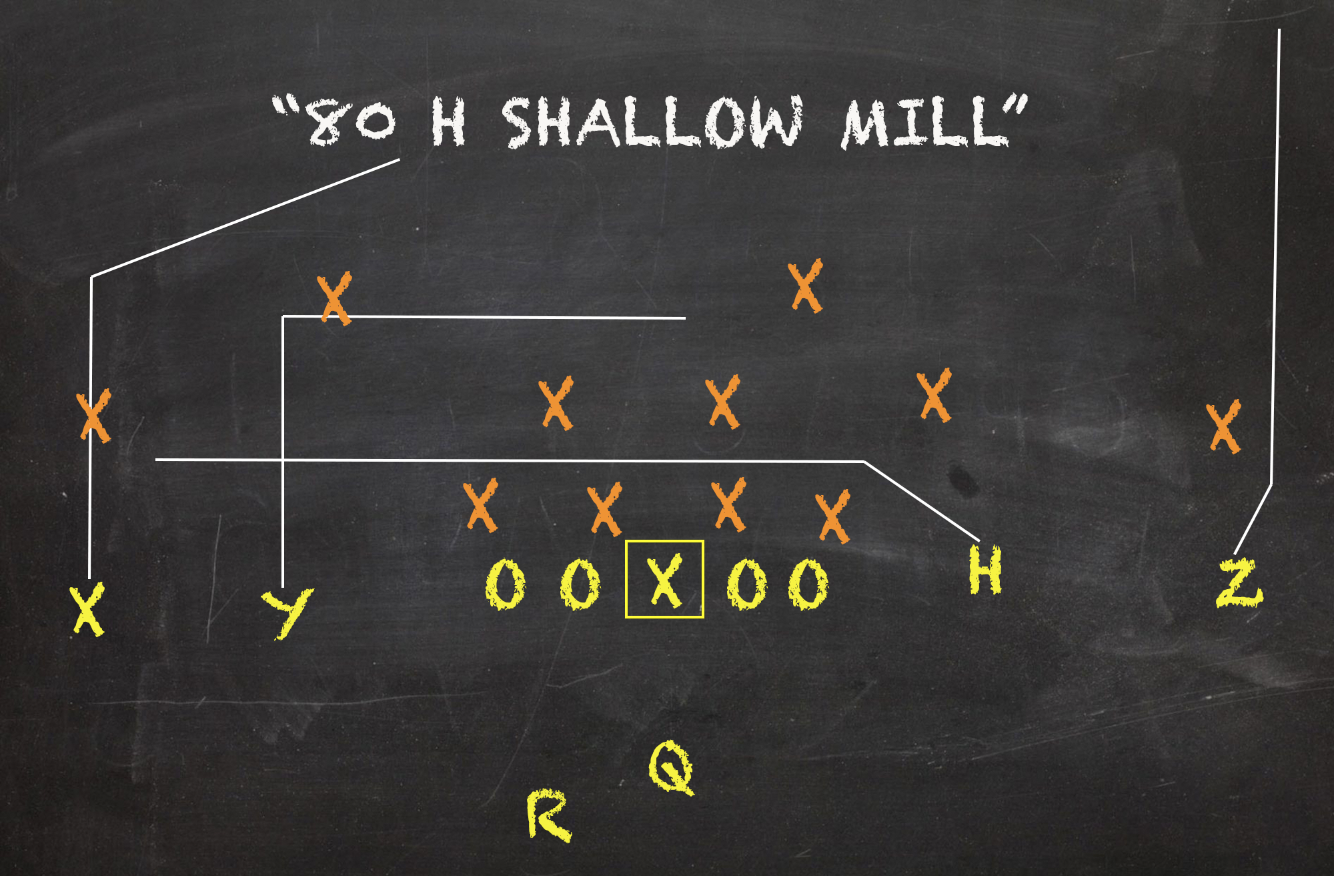
Of the 25 targets this concept received in our parameter, the titular Shallow was thrown the ball 17 times. Like the large majority of this passing offense, this concept’s best reps took place against LSU. Of the three explosive passes off of Shallow, two occurred against the Bayou Bengals. Moreover, those two connections made up just under 31% of this concept’s output in our parameter. For what it’s worth, all three of this concept’s 20+ yard gains came hitting the drag. All in all, Austin Williams was the Bulldog’s most productive target on this look. Though Osirus Mitchell saw just as many attempts with all but one being on the drag, Williams snagged all five of his chances and for 64 yards. Four of his chances resulted in success with three securing a conversion.
5. Trail: 169 yards, 6.26 Y/A, 44.4% Success Rate
With its usage heavily weighted by the first three games, the inclusion of this concept on this list might not be a completely fair depiction of its top yardage gainers. But then again, the Air Raid was so starved for splash plays, only four other looks manage to top their wrinkle to the Trail concept. Of the play’s 169 yards in our sample, 56% of them came from its three explosive gains. Again, two of those big gainers occurred in the first two weeks when Kylin Hill was locked and loaded in the lineup. When his playmaking disappeared, the design naturally became less dangerous. All in all, Trail’s most productive week was against Arkansas. The pattern was featured seven times, targeted six, and totaled five completions for 61 yards — or 36% of the concept’s total output.
6. Convoy Screen: 148 yards, 4.23 Y/A, 42.9% Success Rate
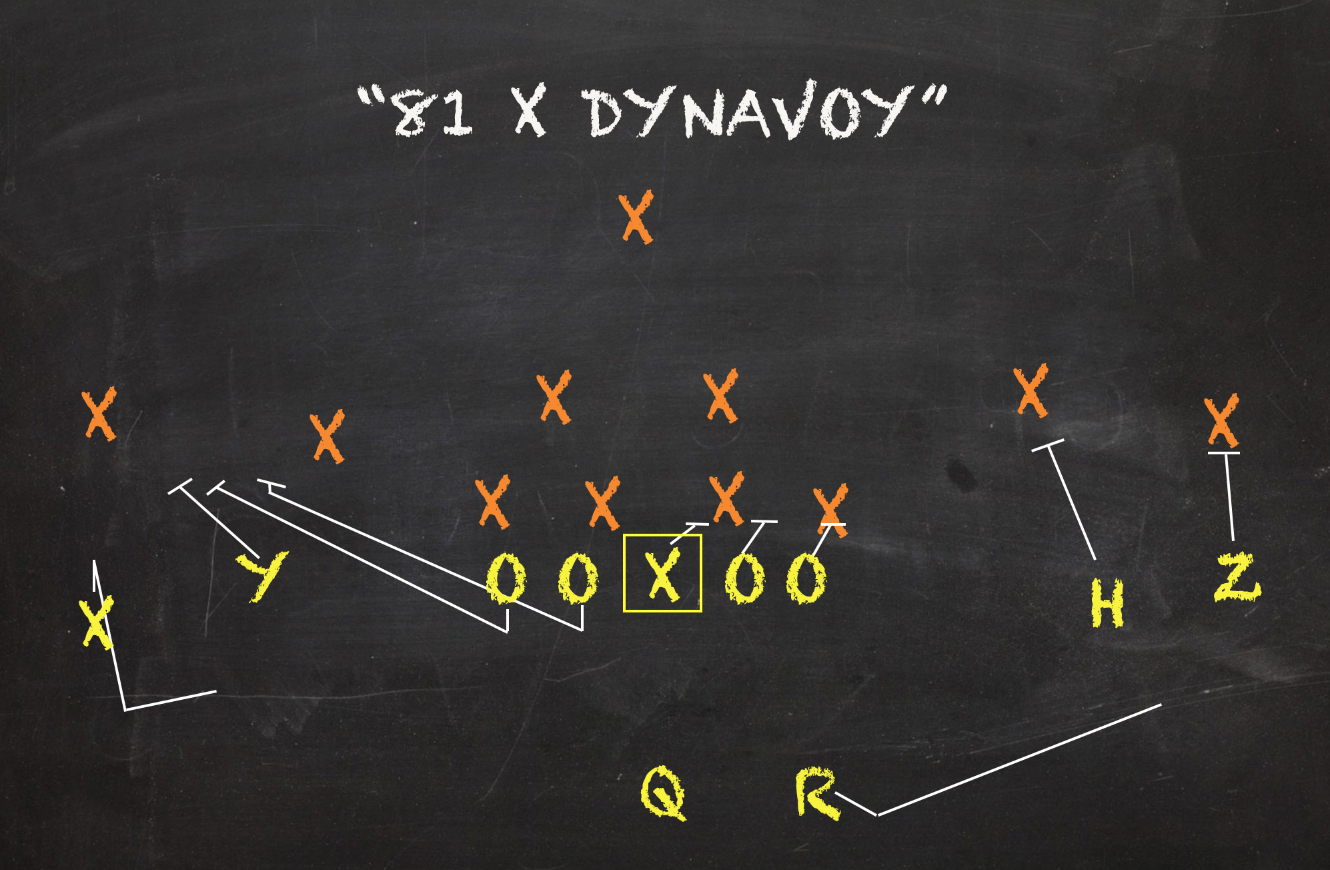
If you haven’t picked up by now, the Air Raid overly operated as a voluminous attack rather than a potent one. After the fireworks in Week 1 where the Bulldogs put up a league-best 23.1% clip, their clip cooled to a 5.55% Explosive Pass Rate by year’s end — the 2nd-worst in the SEC. The Convoy Screen with its assuming gains helped MSU march methodically down the field. And while this offense was relatively efficient with this concept, let’s not pretend that stat line above is what play caller’s strive for from a top passing look. As you might guess, its lone 20+ yarder was against LSU. In fact, it was on the concept’s very first rep of the season. After that, only a mere four reps went for ten yards or more.
Malik Heath and Osirus Mitchell were the primary benefactors of this concept. The pair logged nine and eight attempts, respectively, over the course of the season. The latter experienced better results. Only one of Heath’s Convoy targets worked in 2020. On the other hand, Mitchell secured the look’s lone aforementioned explosive rep and rocked a 62.5% individual Success Rate. All of his screens were rightward with Heath’s being leftward. Interestingly enough, Lideatrick Griffin —who started to receive reps at that X-spot on the left as the year progressed — had four of his five Convoys find success.
MOST SUCCESSFUL CONCEPTS
1. Stick: 3.29% Success Rate, 6.77 Y/A, 63.6% Success Rate
Though a humble pattern, Stick is an excellent combo with which to pick on linebackers. Either aiming to take advantage of them laterally with a flat from a speedy back or slot poking unoccupied spots with a quick hitch or out, this short passing staple was this offense’s most successful concept. Though there was some cognitive dissonance with MSU’s passers learning this scheme on the fly, Stick’s simplicity and pre-snap dictation cut through the noise and yielded consistent completions. The inside “sticker” was overwhelmingly the target on theses attempts. Of the 20 non sack or scramble reps, only six were directed towards the back’s flat route. All in all, only three attempts wound up as incomplete. As a ball-control pass pattern, Stick was instrumental in helping the Bulldogs nickel and dime. Though only one attempt resulted in a gain of more than 20 yards all season, about 41% of its completions generated a conversion.
2. Follow: 1.98% Play Share, 4.23 Y/A, 61.5% Success Rate
Off one of Leach’s interesting trips patterns, the Follow concept helped provide big bullseyes for Mississippi State’s passers. And with the easy completions, Bulldog receivers frequently won situationally. I’m sure you noticed, however, this look failed to put up a gaudy Y/A. Only one attempt managed to gain over ten yards all season. But, let’s remember the Air Raid was forced to operate as a methodical, ball control offense this past season. The Follow concept is typically a two-man combo consisting of an inside drag and outside dig. Its kinda like a Drive and kinda like a Trail. Either how you look at it, Follow was exclusively targeted from trips with the look coming from the slot. Almost always, the back would run a swing/wheel opposite it. If that sounds confusing, watch the vid above.
3. Under: 2.25% Play Share, 6.53 Y/A, 60.0% Success Rate
In the most common form, the Under concept is a three-man combo consisting of a swing, corner, and quick-in. It’s a member of the China family, which generally are less-static Smash/Spot wrinkles. Under was this offense’s favorite member of that concept group largely thanks to its consistency. Like most of the Air Raid’s pass designs, the Under concept was frequently coupled in a complimentary fashion with another pattern. Like how Mesh was paired with Dagger, Follow was married with a RB wheel, and Stick was matched with slants, this look operated nicely along side the Scissor Switch. It showed up in every game except against Missouri, which capped the SEC regular season. With the added post creating extra stress on backend defenders, a decent amount of room opened up underneath. Still, Under was another look that struggled to provide much potency. Only six snaps all season gained more than ten yards, and one of them was a scramble; none went for more than 16.
4. Forward Pitch: 1.65% Play Share, 6.00 Y/A, 54.6% Success Rate
The Forward Pitch is a curveball of a concept in a repertoire of a coach who likes to stick to his script. Again, this glorified running back tap pass logged less than a dozen tries all season. Yet, all of them fell inside our sample. The concept debuted in Week 4 vs. TAMU where logged four tries — half of which were successful — and cranked out 32 yards. The blue moon play would only be seen seven more times the remainder of the year. Like Slams, it was overly used in instances with low thresholds for success. Plus, the play didn’t deliver any explosive attempts. But thanks smart play calling, the Forward Pitch helped the Bulldogs snatch modest gains and inch downfield.
5. Inside Zone Slam + Read: 13.3% Play Share, 4.57 Y/A, 53.9% Success Rate
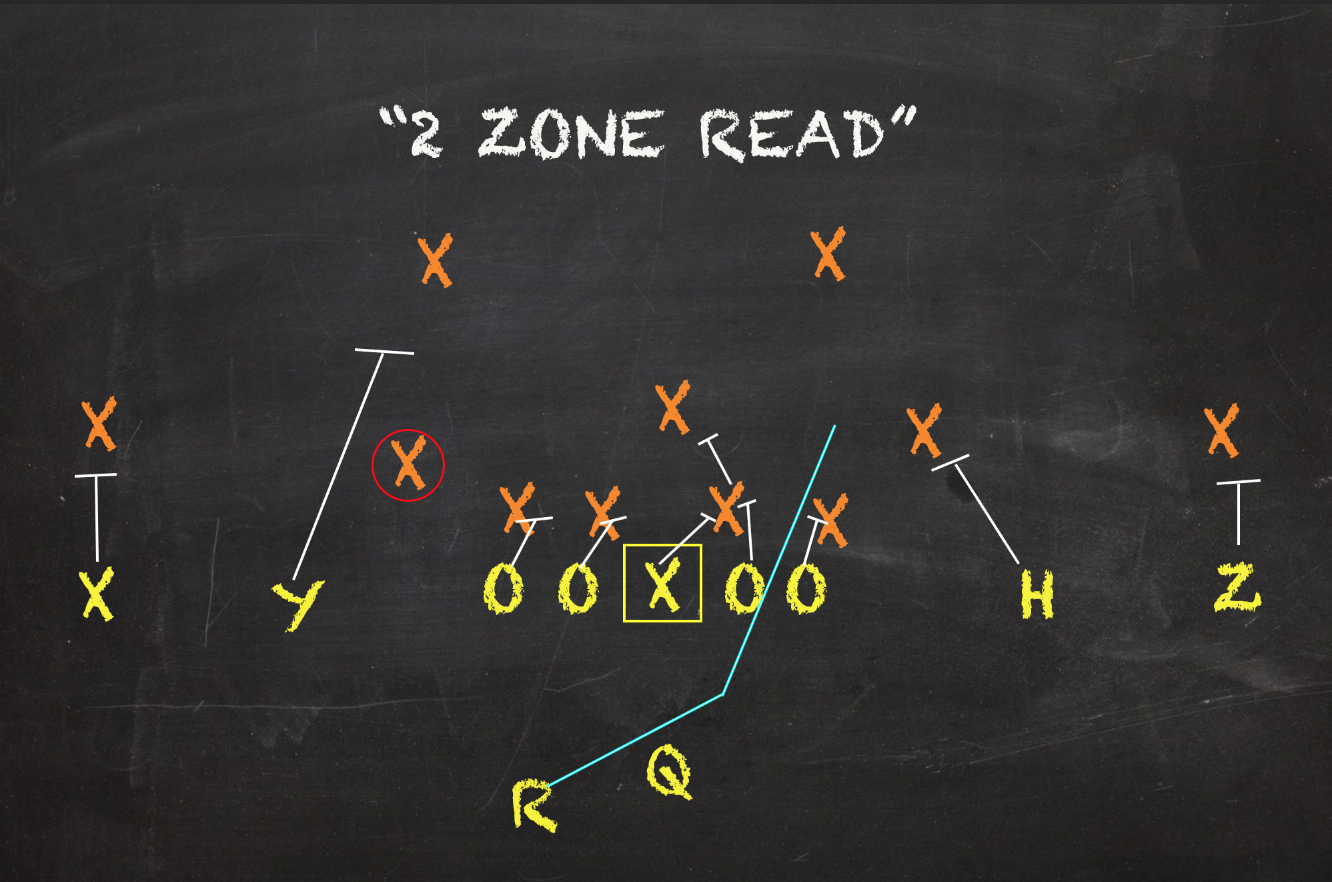
With Leach being prudent on when to jab opponents with Inside Zones, Slams weren’t meant to bail this offense out of jams. Again, it was quite the opposite. They were predominately called on 1st and 10 when defenses sat back in two-high or in short-to-medium distances on later downs. As this offense’s favorite run, Slams saw half of its reps in our parameter on first downs — a common tactic throughout the SEC when it came to utilizing go-tos on the ground. There, Slams worked on half of its tries. In terms of moving the chains, these Inside Zones were at their best on seconds with the aforementioned short porches. Both the “read” and straight versions logged 11 reps in those spots. Despite combining for a 63.6%Success Rate, each of their Y/As fell under 3.8. Only Mesh out-repped Slams on thirds. Though better than most of Miss State’s pass patterns on the money down, a 41.2% Success Rate is far from what you want out of a run that was overly gifted a low bar. All in all, Slams were a very important cog in the Air Raid. With explosive gains being seldom, the Bulldogs were relegated to having to nickel and dime down the field. This plug and chug zone certainly helped accomplish that. To reiterate, Leach called Slams more than his beloved Mesh was targeted on the snaps in our sample.