2020 Offensive Play Calling: Texas A&M
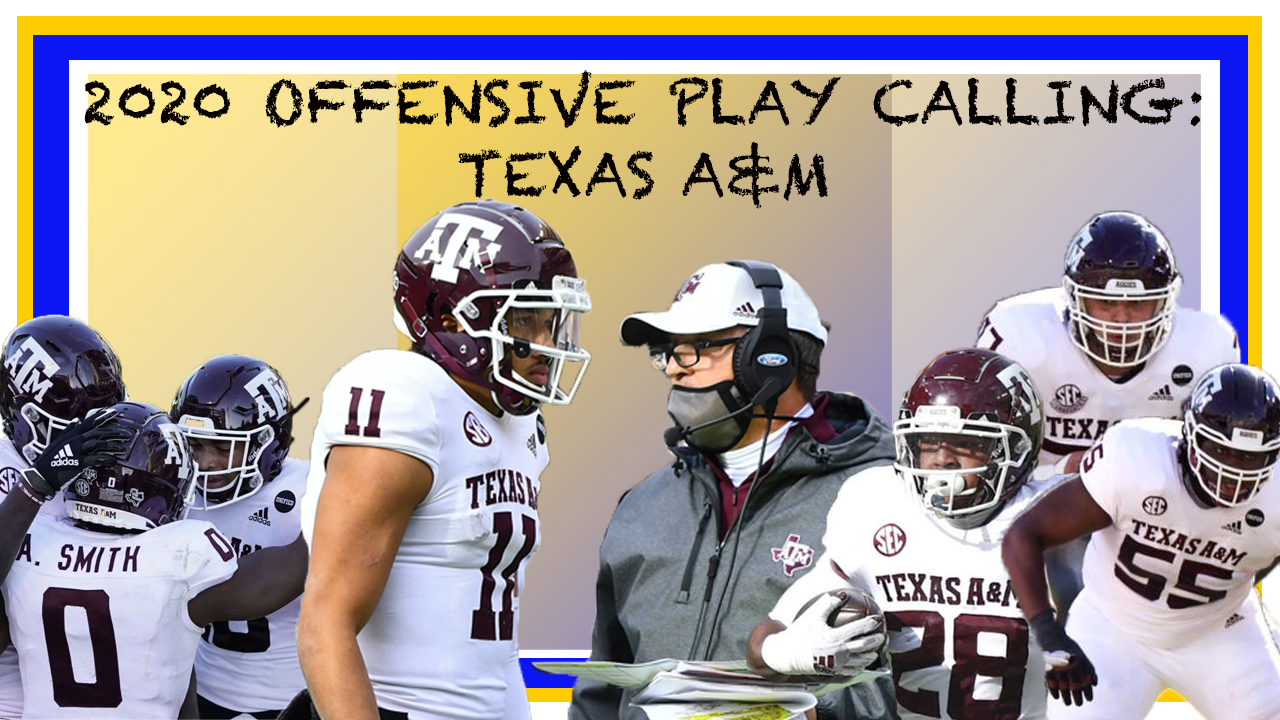
2020 Offensive Play Calling: Texas A&M
Texas A&M was the worst among the nation’s best teams in 2020. Though better than the rest of the second-tier squads who were kept out of the College Football Playoff, there was a noticeable gap between the Aggies and the true title contenders. From where I sit, they basically were the exact same team as the Fighting Irish. Both Notre Dame and TAMU were units with experienced, mobile passers whose scheme overly leaned on its veteran O-Line and breakaway run game to play gritty. That singular debate is rather pointless and moot at this point. But when measuring itself against the blue bloods, TAMU just wasn’t up to the level of Clemson, Ohio State, or Alabama.
Last year, TAMU was just okay offensively. In 2020, the Aggies took it up a notch and would better be described as good, not great. Riding the typical nickel-and-dime passing game with plenty of zones, a lack splash gains — specifically through the air — capped this offenses potential. Even though TAMU finished as the SEC’s most potent rush attack this fall, their failure to flip the field with their pass game lost the Aggies loads of style points. It didn’t matter that TAMU finished with Florida and Alabama as the only conference offenses with a Success Rate of at least 50%, this offense just wasn’t sexy.
That aid, they limited mistakes and dictated their situations as good as anyone in the nation. Along with surrendering single-digit sacks — the only SEC team to do so — TAMU’s 1.05% Sack Rate finished as one of the lowest in the country. Moreover, the Aggies finished with the conference’s best Negative Play Rate, HAVOC Rate Allowed, and rush yards before contact. With the Maroon Goons showing their age and finally displaying savvy in the trenches, TAMU transformed from the most pass-happy to the 2nd-most ground-oriented team in SEC play year-over-year. Their Pass Rate dipped about 14 percentage points year.
While you can get a decent idea of how the Aggies operated by cherry-picking stats like that, I like to take things further. To get a better idea of how this offense functioned, I looked at snaps when Texas A&M was either up or down 18 points. That way, less garbage time snaps skewed the output and gave us a better depiction of their true play calling in the heat of battle. With that parameter applied, I examined this offense’s favorite run and pass plays, the looks that gained the most yards, and TAMU’s most successful concepts from 2020.
MOST FEATURED RUN CONCEPTS
1. Inside Zone Slam Read: 10.8% Play Share, 4.90 Y/A, 50.8% Success Rate
The Aggies were far from the best running team in 2019. The Slam Read accounted for about an eleventh of its plays with no other concept sporting a play share over 6%. The concept was responsible for a good amount of the Aggies mediocrity even if it allowed Kellen Mond to show off his legs. It was much more consistent in 2020. Thanks to that, the Slam Read helped TAMU play more effectively balanced. The Aggies passed less year-over-year in part because their favorite concept allowed them to stay ahead of the chains more often than not. Unlike the previous year, TAMU’s backs and OLine managed to overly take care of business themselves. Over half worked situationally in our sample as its Y/A improved by about a yard year-over-year. Mond only accounted for six such carries in 2020. Only two ended in success. But at least, those also went for ten-plus yards and secured a fresh set of downs.
As the top concept on TAMU’s script, it was the Aggies favorite play to start a set of downs. Half of its reps were seen on firsts in our parameter. The look’s output remained on par with its overall clips for the most part. Though shoved down the call sheet on latter downs, the Slam Read saw its longest carry along with three successful tries on its four third down attempts. The Aggies were one of the few SEC offenses to not dedicate at least a sixth of their offensive plays on Run-Pass Option designs. But, Jimbo commonly used the Slam Read as a base concept when he was in the mood to do so. Over 40% of this concept’s reps were RPOs — where TAMU saw both its metrics improve to 5.04 and 55.6%, respectively.
2. Counter Read: 6.67% Play Share, 7.59 Y/A, 48.7% Success Rate
Texas A&M’s ground game was predominately made up of zone run concepts. Regardless of parameter or orientation, these looks combined together to account for two-thirds of the Aggies rushing attack. Furthermore, four of its five favorite run concepts were Inside Zones. With the vast majority of TAMU’s runs using the same basic principles and heading toward the same gap, a misdirection was needed to keep defenses from keening on the concept group. The Aggies liked the traditional form of Counter and incorporated read elements just in case the defense failed to respect Kellen Mond’s legs. Of the 52 Power Read designs across 2020, 44 were the look in question. On this design, the frontside downblocks initially play like a typical zone flow before a backside guard trapper (edge setter) and tight end lead blocker (wrapper) set our new hard-nosed hole. Since it’s meant to take advantage of defenders who are out of position or anticipating another look, the Counter Read generated plenty of splash gains for this offense. Only two of TAMU’s other favorite concepts — run or pass — bested its 7.59 Y/A when the Aggies were either up or down 18 points or less.
As a changeup concept, the Counter Read appeared between three and seven times a game across as an early down look Texas A&M’s slate. Only two of its 39 tries in our parameter occurred on third down. This concept’s best output took place on first downs where its Y/A and Success Rate rose to 7.52 and 52.3%, respectively. With the Slam Read being this offense’s main RPO design, not too many of this concept’s reps had route tags on them. Moreover, the Counter Read functioned better without them. Three-fourths of its attempts were “straight up” as these snaps put up a 8.5 Y/A and 53.1% Success Rate.
3. Inside Zone Slam: 5.81% Play Share, 7.38 Y/A, 67.7% Success Rate
Losing a potential ball carrier just didn’t matter when the Maroon Goons were in their zone. Pun intended. Though you’d think adding a QB run element via read options would help the Inside Zone Slam maximize numbers in the run game, TAMU was much better executing the concept from the pistol in the traditional fashion. Unlike running from the shotgun that can tip a rush concept’s orientation, pistol attempts have a far greater poker face in comparison. Since the defense has to respect that element presnap, diagnosing a design can take a beat longer, which can be the the difference a stuff and an explosive carry. Jimbo often turned towards the non-read Slam as a method to punish a portion of the defensive front or ice games away. Of the 34 called in our sample, 23 were repped in the second half where its Y/A and Success Rate improved to 8.78 and 73.9%, respectively.
In addition to late game reps, the majority of Slams came from 12 personnel sets (or formations with 2 tight ends). Almost 80% of its attempts were from these sets. A common tactic the Aggies leaned on called for both tight ends to lineup off ball, which accentuated the element of deception. That opened the possibility of Bluff, Counter, or slide/flat RPO action to both sides of a balanced formation. When the defense became too preoccupied with the straightforward Slams, TAMU often hit them with one of those other wrinkles and visa versa.
The Florida game made up a large chunk of this concept’s bottomline. The Slam saw its first tries of the season in that Week 3 tilt, all of which were logged after halftime. The Slam was seen seven times across 14 snaps in the 3rd Quarter with only a single failed attempt. All of these tries were from 12 personnel. All in all, that game accounted for about a quarter of the Slam’s reps in our parameter.
4. Inside Zone Blast: 3.76% Play Share, 2.82 Y/A, 45.5% Success Rate
The Blast is an Inside Zone Slam with a lead blocker. To facilitate that blocking scheme, The Aggies exclusively repped it out of the I-Formation. Unsurprisingly, TAMU turned towards this design frequently in short yardage or goal-to-go situations. Including its three reps outside of our sample, 14 of Blast’s 25 attempts over the course of 2020 took place in those spots. Thanks to the ample tries into crowded boxes, this play didn't generate a lustrous Y/A. But at least, this concept’s short porches lowered the necessary threshold for success and performed adequately. Still, Blast’s 45.5% Success Rate was the worst clip among TAMU’s most featured run looks.
The Aggies faded this look year-over-year thanks to its middling returns. Though turning towards the I-Formation isn’t a very “spread” thing to do, Blasts made up almost 5% of TAMU’s offensive snaps in SEC play in 2019 while logging a 5.2 Y/A and 51.2% Success Rate. Dedicating an extra box blocker was sometimes needed with the Aggies average ground attack; and it certainly helped accomplish the goal at hand. With TAMU able to run the ball effectively without the help of that archaic, smash mouth set in 2020, it obviously lost its role within the scheme. Moreover, the Aggies only dialed up three Isolation runs — ala the gap version of Blasts — in our sample.
5. Inside Zone Bluff Read: 3.42% Play Share, 5.00 Y/A, 50.0% Success Rate
To round out Texas A&M’s heavy Inside Zone scheme, the Bluff Read logged 20 reps in our sample while delivering a cool 5.0 Y/A and 50% Success Rate. This concept was even-steven and a general reflection to what its brother concept, the Slam Read, in terms of output. But while the arc path commonly deployed by the Aggies’ tight ends flowing against the zone aimed to facilitate QB keeps, Mond didn’t log a single such attempt in our parameter.
A quarter of TAMU’s total offensive calls hinged off its four Inside Zone wrinkles. Including the 10 IZ Triple Options and 58 various Outside Zone wrinkles, zone designs made up 70% of the Aggies’ runs. Though a couple just missed the cut for this most-featured list, I’ll talk about some Outside Zone stuff in a sec. Circling back to Inside Zones, the Triple Option look with the base Slam Read saw half of its tries work while averaging 9.5 Y/A. All three Inside Zone concept groups met the criteria of rocking at least a 50% Success Rate.
Since Slam and Bluff Read essentially delivered mirrored metrics, let’s take a quick look at this concept group as a whole. Disregarding our sample, the Aggies were better running leftward on their IZ Read Options in 2020. Both quadrants averaged at least 5.2 Y/C with the mid-right and outside-right spots donning clips of 4.4 and 3.9, respectively. That said, eight of the 13 explosive carries went rightward. Only about a tenth of TAMU’s Inside Zone Read tries gained at least ten yards. Less than 30% gained conversions. Though consistent at helping manage down and distance with occasional breakaways, over half of these attempts went for three yards or less.
MOST FEATURED PASS CONCEPTS
1. Slant Variations: 4.10% Play Share, 5.46 Y/A, 58.3% Success Rate
Though Jimbo hardly deviated from his zone stuff on the ground, he certainly spread the wealth around with his pass concepts. In our parameter, eight separate concept groups logged between 13 and 25 reps. No single subconcept was targeted more than 15 times. You and I both know Aggie Land was starving for big plays through the air. It’s been a problem for the past two seasons. But thanks to TAMU’s apparent lack of playmakers, Mond and Co. have been relegated to orchestrating methodical drives via short to intermediate passes. And if you went to the site to see all their pass concepts broken down, you wouldn’t come across many deep passing concepts. This staff has showed it was more than happy to work West Coast staples versus underneath defenders rather than overly test secondaries downfield.
Since Slant Variations combined to total 24 targets, let’s start there. A good amount of TAMU’s most featured pass patterns were seen opposite each other in designs; none more than Slants. As manbeaters, they are easy inclusions on RPOs, compliments to zone-beating combos, and relatively easy targets for passers. The two primary Slant patterns that logged the most attempts in our sample were Tosser — or dual slants — and Slap — or a slant+flat combo. The latter was the better of the two and finished among this offense’s most successful looks. But, I’ll focus on that a little later. Together, half of their reps took place on third down. Though Slap saw half of its tries convert while receiving the team’s 2nd-most calls in those spots, Tosser floundered. Only one of its tries worked and its Y/A was a dismal 0.25.
As the quickest Aggie running downfield, Ainias Smith saw the plurality of Slant Variation’s chances in our sample with six targets. Despite half of his tries missing the mark, his three such catches and 36 such yards were team bests. Plus, all three of his snatches went for first downs. Caleb Chapman secured both of the Slant TDs. Meaning after his injury, the concept group failed to produce a single point. For what it’s worth, four snaps resulted in a sack or scramble. Captain Obvious wanted to chime in and remind us that Slants are used to work the middle of the defense. Regardless of parameter, 60% of Slant Variations’ targets and yards came between the hashes.
2. Smash Variations: 3.59% Play Share, 6.48 Y/A, 47.6% Success Rate
Traditional Smash, Corners, and Bench each logged seven targets in our sample. Combined, their results were rather modest to say the least. This ancient concept group is all about creating a hi-low read along the sideline. Smash — an outside hitch, inside corner combo — is basically as old as the passing game itself. So due to its longevity, defense improved at curbing opponents’ outputs on the design. Offenses had no choice but to evolve and present the look differently. Corners is an inverted Smash. Thanks to the tweak in orientations, the outside and inside men have to adjust their techniques a bit in addition to just switching routes. In order to deliver the desired combo outside the numbers, the distal option has to run a “C” — or circus — corner to buy himself some real estate along the sideline. Couple with that, the inside man then sprints to the flat. The remaining variant, Bench, was the best of the bunch. Usually from stack or tight sets, it calls for the outside receiver to run an out rather than a hitch or curl. It aims to feast on slow-footed coveragemen assigned to stop the outbreakers. In case you were unaware, stationary routes aren’t the best manbeaters.
Smashes were early down plays for this offense. Only two reps occurred on third with the most taking place starting a set of downs. In those spots, Smashes were at their best. While still rocking equal targets with four a piece, our three variations sported a 58.3% Success Rate and saw its Y/A tick up a whole yard compared to its overall clip. But on the eight remaining chances on other downs, Smashes only mustered three successful attempts.
3. Spot/Triangle: 2.56% Play Share, 8.47 Y/A, 60.0% Success Rate
If you need to manifest easy completions off easy reads, look no further than the Spot/Triangle concepts. These West Coast staples have been used on all levels of football since Bill Walsh was winning Super Bowls. For Texas A&M’s dink and dunk pass attack, both were perfect patterns. Each are three-man combos that utilize the back as a hot horizontal outlet. Spot, which consists of a spot/sit hook, corner, and said RB flat, received the vast majority of the concept group’s targets. Triangle, which subs a dig for the No. 2 receiver, was used much more sparingly. But again with only 15 targets as a group in our parameter, we can’t forget that no looks were starkly favored in TAMU’s pass attack.
This concept’s reps were well-distributed across the three downs. All saw between four and six reps. Spot/Triangle was best on the money down where it logged three successful reps on four tries. The concept was one of a dozen different looks that was repped between four and seven times on third down in our sample. Only two other plays topped its 10.5 Y/A in those spots.
For whatever reason, Spot/Triangle was predominantly featured on the left side of the formation. Regardless of parameter, 12/17 targets were directed outside the left hash. Jalen Wydermeyer, who mostly ran a corner on Spot plays, was TAMU’s most fruitful target. He caught all three of his chances while securing both of the concept’s scores along with a pair of created receptions. All in all, this concept did its job of presenting manageable completions. Outside of a couple of drops, only one pass attempt fell incomplete in our sample. Since these patterns are meant to slice zones based on their drop, Spot/Triangle is commonly paired with backside manbeaters like slant combos. Over the course of the season, the patterns opposite Spot/Triangle were targeted a third of the time. These included Snags, Smash, out+vert, Cross, Levels, and the aforementioned Slant Variations.
4. Levels: 2.56% Play Share, 6.80 Y/A, 60.0% Success Rate
Levels has consistently been one of TAMU’s most featured pass concepts since Jimbo came to College Station. The concept certainly fits the bill of being a short pattern keen on carving up underneath defenders. Including snaps where the look wasn’t targeted, it was seen on over 6% of the Aggies offensive plays in 2020. But of course, it only logged 15 tries in our sample. Thanks to LSU’s ability to kick ass with this concept in 2019, plenty have rushed to copycat the Bayou Bengals. But while the Tigers honed in on a few specific patterns, Jimbo utilized it on about a dozen different designs. The ones that saw the most snaps paired Levels with Corners —ala LSU’s former fancy —, put it opposite Spot/Triangle, or coupled the concept with a very neat pattern that I drew up in a video further down the page.
With TAMU’s lack of team speed, Levels hardly generated any yards after the catch. Across its 11 completions in our parameter, the concept produced a grand total of 11 YAC. Because of that, Levels failed to generate a single explosive completion in our parameter. Mond gave equal chances to both the underneath ins as well as the overtop dig. While the an in route was responsible the look’s lone TD, about 70% of the concept’s yards came from dig targets. Thanks to being this offense’s best route runner, Smith once again saw the plurality of this look’s attempts. He caught all four of his chances for 39 yards. Two of his catches resulted in a first down with another being Levels scoring play. Though fairly balanced with its tries across all downs, its best figures came on seconds. Of its six such tries, four found success as its Y/A climbed to 7.67 in those spots.
5. All Verts: 2.56% Play Share, 9.00 Y/A, 40.0% Success Rate
Based on the Aggies aforementioned modus operandi, I’m sure you don’t need me to tell you that TAMU used All Verts as a desperation play rather than a cog in its normal scheme. Though it cracked this list, it wasn’t really one of Jimbo’s favorites. Disregarding our sample, Texas A&M finished in the SEC’s bottom5 in terms of All Vert reps. Meant to overload the backend of coverages, this concept saw most of its reps come on third down. Thanks to Mond’s legs, All Verts bottomline is sugarcoated a bit. In fact including all of its snaps, no conference offense topped TAMU’s 40% Success Rate. Only South Carolina and LSU bested the Aggies Y/A. When taking our sack and scramble plays, however, the returns were much more muted. Only 4/12 All Verts were completed with none resulting in points. Due to A&M receivers' lacking ability to create separation and/or Mond's disbelief in his guys to win deep, most of these attempts traveled less than 20 yards downfield. Moreover, Mond only connected on one of his four deep All Vert throws.
6. Play Action Bootleg: 2.22% Play Share, 7.00 Y/A, 69.2% Success Rate
Floods actually logged the most tries of any pass concept group in our parameter. But, the Play Action Bootleg was noticeably Jimbo’s favorite subconcept of the bunch. With that being the case, much of this look’s production buoyed the rest of TAMU’s Flood Variations. That said, PA Boots only received about a rep or so a game. Generally speaking, the Aggies used a below-average amount of play action relative to the rest of the conference. Roughly 18% of Mond’s attempts utilized that tactic. His 25.5% total Action Rate, which includes meshes off RPO attempts, was the lowest of any of the SEC passers who started at least nine games. So with them being largely overlooked, these weak Flood patterns were able to do far more good than bad in their limited reps.
Play Action Bootlegs were largely an early down play. Since the Aggies liked to establish the run, play fakes were naturally used in spots when opponents suspected TAMU to turn towards the ground. Only a couple of its tries in our sample took place on the money down, but both resulted in success. When the threat of the run was at its greatest on firsts, PA Boots certainly didn’t disappoint. Across its six such chances, four worked as its Y/A improved to 8.33 in those spots.
TOP YARDAGE GAINING CONCEPTS
1. Inside Zone Slam Read: 309 yards, 4.90 Y/A, 50.8% Success Rate
Relative to the rest of the conference, the Slam Read was a good source of potency on the whole. But when you dig a little deeper, you discover the top-end runs off of this look were much more volatile. The Aggies failed to generate a single ten-plus yard carry the first three games and only totaled one the last two of the year. The rest of its nine explosive carries occurred in the remaining six contests. Compared to TAMU’s other run concepts, it was a little bit of a letdown. Not that a 16% Explosive Run Rate is bad, but the team’s cumulative clip was an SEC-high 21.2% in our parameter. In the grand scheme, this was a plug and chug look to get the Aggies ahead of the chains. But, there's no denying these splash gains were a nice bonus. Thanks to a 52-yarder and a pair of other explosive runs, the Slam Read’s most potent day came against South Carolina. Those big-gainers accounted for over a quarter of the concept’s output for the season.
2. Counter Read: 296 yards, 7.59 Y/A, 48.7% Success Rate
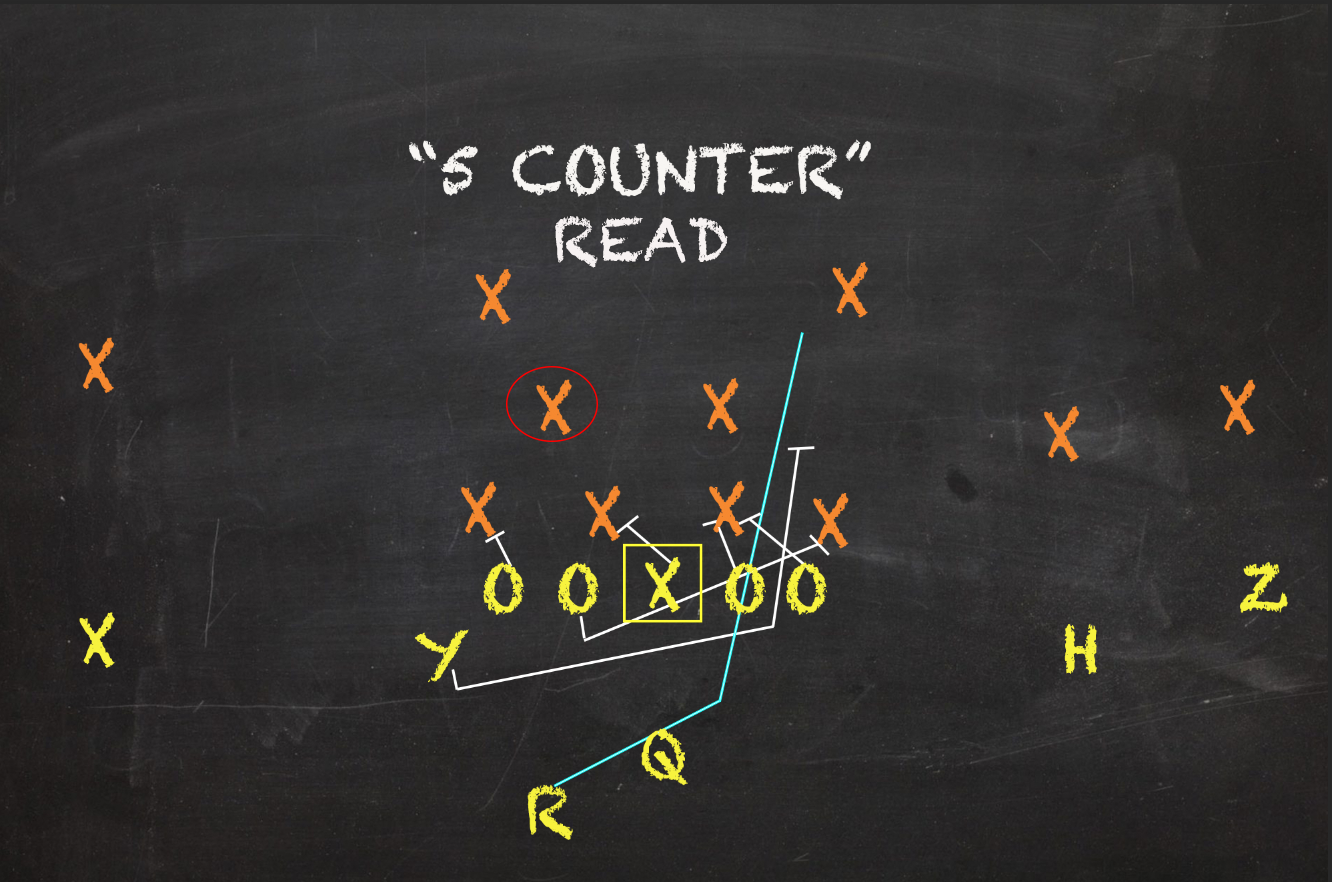
The Counter Read earned just under 300 yards in our parameter. Over the course of the season, 11 reps went for ten yards or more, which translated to a clean 25% Explosive Run Rate. As this offense’s main misdirection that looked to sucker punch defenses expecting a zone look, it wasn’t an every down play. But, it was seen in every contest a least a few times. The most the Counter Read was featured came versus Auburn where about 27% of the concept's output occured in our sample. Five of its seven attempts found success. Though Isaiah Spiller was the lead man on this look like most of TAMU’s run concepts, freshman Devon Achane was the most potent. On all Counter Read tries — both traditional and Tackle Counter designs -- he totaled 144 yards on just seven carries.
3. Inside Zone Slam: 251 yards, 7.36 Y/A, 67.7% Success Rate
No upsets so far on this list. The top3 run concepts from the conference’s most explosive rushing offense finished one, two, three as its top yardage gainers. Slam was overly TAMU’s most well-rounded run play. As the only look to own a Y/A over 7.0, a Success Rate over 67%, and play rate over 3.0% in the Aggies' arsenal, the Slam started 2020 with an immediate bang. Though Jimbo avoided calling one the first 2.5 games, the concept’s first carry on the year went for 23 yards. Regardless of parameter, this look would tack on eight more explosive attempts, which translated to just under a quarter of this play’s reps going for at least ten yards. The Aggies opted to be advantageous with Slam and not press the issue. Meaning, TAMU overly picked its spots when to ride this Inside Zone. Half of the concept’s reps took place in the two game stint against Florida and Mississippi State.
4. Outside Zone Off-Tackle: 167 yards, 11.1 Y/A, 60.0% Success Rate
Along with Counter Reads, Outside Zones were secondary looks in Texas A&M’s run game. While general usage was about the same year-over-year, three of the Aggies’ five most repped runs in 2019 were Outside Zones. Again, none made the cut this year. Still, Outside Zone Reads, Stretch Options, and Off-Tackles all complied between 14 and 17 reps in our parameter. So in laymen’s terms, all three averaged a try or so a game in meaningful minutes. Despite not being written about much earlier, these concepts had a major role in this offense to gash opponents outside the bookends when they peaked inside or failed to respect the edge. Though Outside Zone Reads’ returns were nothing but sour, its non-read counterpart, the Off-Tackle, ending up gaining the most yards of the bunch while touting a 60% Success Rate, which was the concept group's best in our parameter.
The Off-Tackle was used sporadically. Four games, including the final three, didn’t call this concept once. Only 14 were repped in our sample total. Nine came in the two week stint against Mississippi State and Arkansas. Versus the Bulldogs and Hogs, four Off-Tackles eclipsed the ten-yard threshold with the longest such attempt capturing points. Half of the concept’s yards in our parameter came from those explosive attempts.
5. Smash Variations: 136 yards, 6.48 Y/A, 46.7% Success Rate
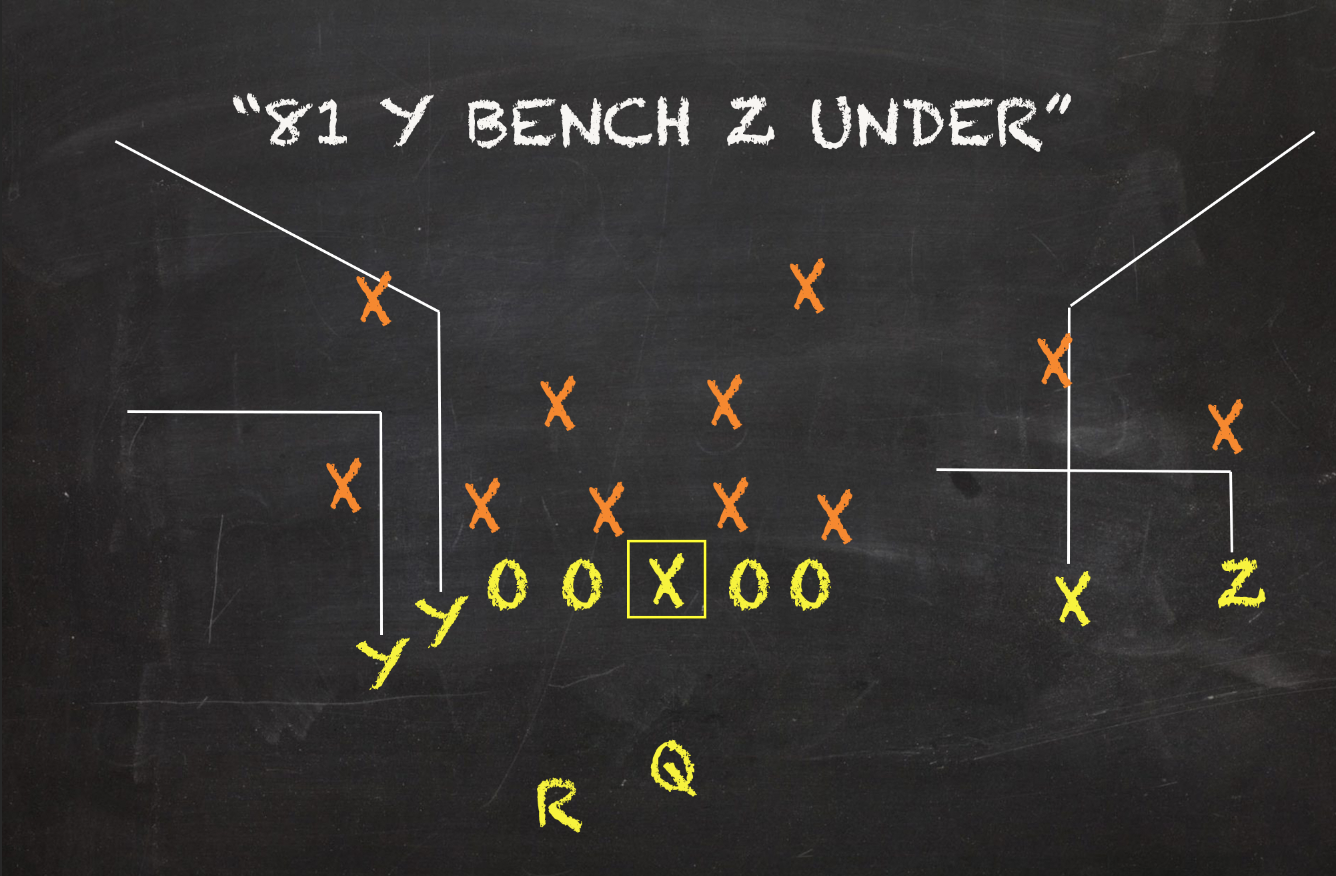
Thanks to modest gains, serviceable consistency, and plenty of targets, Smashes combined for the most yards of any pass concept in TAMU’s sample. Like the Aggies’ passing product as a whole, the major theme was all about taking what the defense gave you. While each subconcept saw the same amount of targets, Bench was the only subconcept to see over half of its tries work and led the way with a 7.57 Y/A. All in all, 70% of these targets were caught thanks to focusing short. Only one attempt went for at least 20 yards. With the equal share amongst the looks, the group doesn’t really pop off the screen in our sample. But I feel I should say, the best Smash rep was a 52-yard strike to Devon Achane on a Bullet wrinkle. Excluding that garbage time gem, Ainias Smith did the best in our parameter. He caught all four of his chances for 47 yards and a score.
6. All Verts: 135 yards, 9.00 Y/A, 40.0% Success Rate
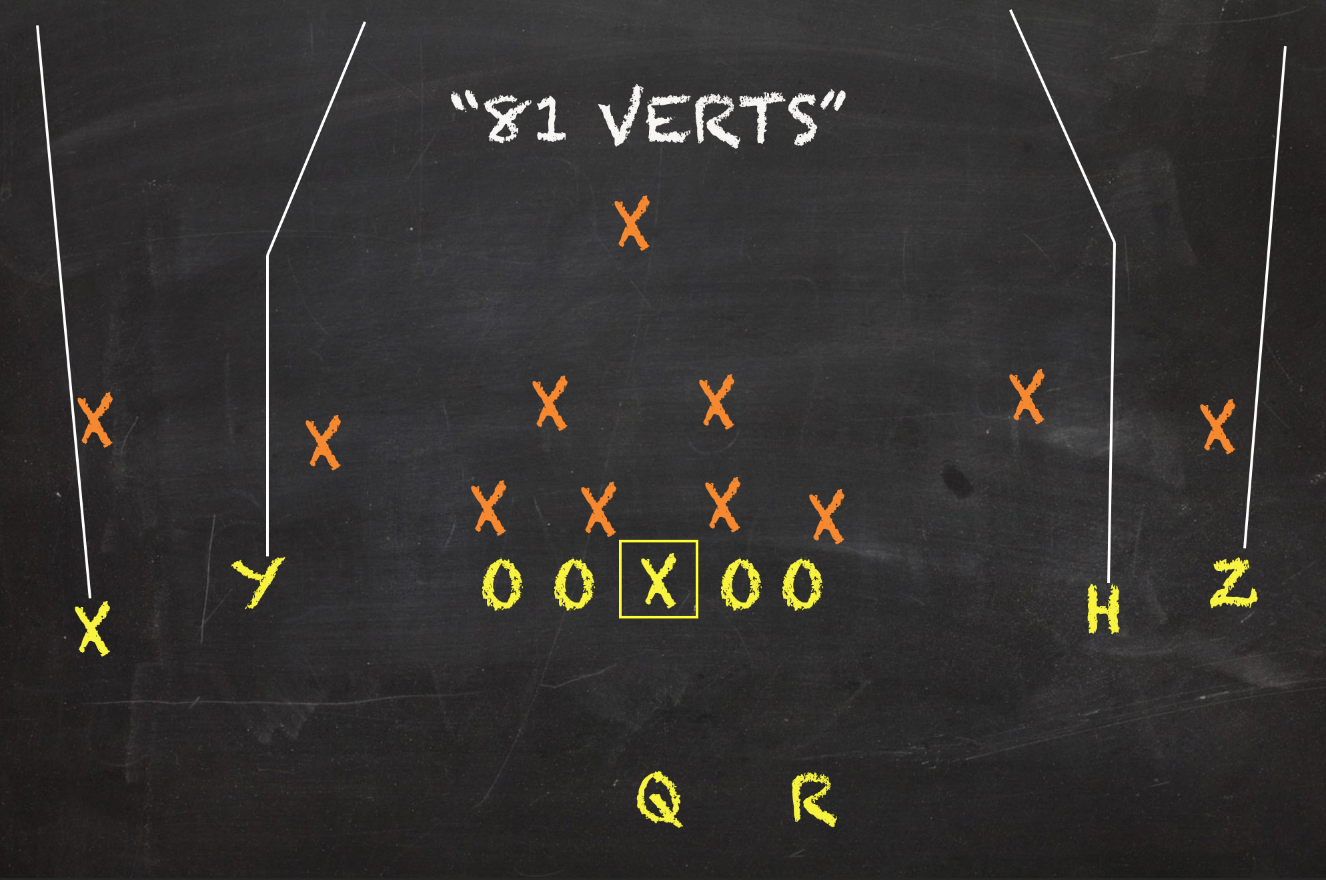
Thanks to the downfield nature of this concept, it didn’t need to many completions in order to finish among this offenses top yardage gainers. But with only one deep completion, All Verts didn’t really wow Aggie Land even if TAMU proved to be the SEC’s most successful team executing this look situationally. Again, a good deal of this concept’s positive plays were thanks to Mond’s ability to win on the ground. On his two scrambles, he racked up just under 24% of All Verts yards in our parameter. Ainias Smith hauled in the lone deep completion, but Chase Lane ended the year with the most such catches (2), yards (45), and Y/T (15.0).
MOST SUCCESSFUL CONCEPTS
1. Mesh: 1.71% Play Share, 9.80 Y/A, 80% Success Rate
Despite matching Jimbo Fisher’s passing philosophy to a T, Mesh wasn’t featured too much by the Aggies in 2020. Yes, it works underneath defenders with a core combo of intersecting drag routes that facilitate creating space against man coverage. But for whatever reason, this Rub Variations only logged ten targets in our parameter. Like most conference offenses, TAMU focused on the Kelly Mesh design. Along with the core combo, the back will run a playside wheel with an outside receiver having a sit hook in front of the QB’s face. The Aggies swapped the draggers and the tertiary routes complimenting the main design at times. As a counterpunch, TAMU even had a few “return” renditions that turned the drags into multi-break twigs to further keep foes on their collective toes. But overall, Mesh was mostly a straightforward concept. In our sample, half of its targets occurred on third down. Only All Verts and the slant+flat combo logged more attempts. There Mesh’s Y/A shot into the double-digits and sported a 12.0 clip.
2. Play Action Bootleg: 2.22% Play Share, 7.00 Y/A, 69.2% Success Rate
TAMU overwhelmingly preferred Waggles as the design of choice on their Play Action Bootlegs. These patterns send a backside receiver across the formation an a slide route underneath the play fake. Most times, these dudes are the hot outlet and are targeted once the QB whips his head around playside. Though most Waggles utilize tight ends feigning a split zone flow, the Aggies were more partial to using wideouts or slots in those spots. With these guys being faster, it accentuated the mismatch and stressed opposing linebackers laterally. It’s become all the rage to isolate a speedster to the flat with motion, eye candy, or what have you. This was Jimbo’s go-to in order to accomplish that goal. Outside of a few late season reps that utilized power play action, every PA Boot was a Waggle.
3. Inside Zone Slam: 5.81% Play Share, 7.38 Y/A, 67.7% Success Rate
Often hammered when the defense was gassed or on its heels in the second half from two-tight end sets, the Inside Zone Slam rarely disappointed for the Aggies. No other run concept with at least six tries tops its sturdy 67.7% Success Rate. In our parameter, this was a natural drive starter. Almost two-thirds of the Slam’s reps were logged on first down. While its results there were more than serviceable, three-fourth’s of the look’s attempts on later downs worked. The Slam was its best self on seconds. There, the Inside Zone averaged just under ten yards per pop on its eight tries. Three of those wound up as explosive including the concept’s longest attempt of the year: a 4th quarter 38-yard Devon Achane scamper against Tennessee.
4. Slant+Flat Combo: 2.05% Play share, 7.08 Y/A, 67.7% Success Rate
Though they certainly were apart of TAMU’s RPO game, Slants overly were used to work underneath defenders on dropback designs. To reiterate, Jimbo sprinkled these routes on top of copious amounts of concepts in 2020 sometimes as a backside compliment and others as a primary outlet. The Slap — or slant+flat — combo proved to be the group’s best look. The look’s first target occurred on the first snap against Alabama. That rep was a Slap RPO, which used Orbit motion to fill out the combo. This look was certainly used in creative ways. Along with that try that was good for 14 yards, its next three targets would earn first downs. In addition to the pattern in the video above, TAMU liked to couple Slap with a China Trey concept. China Trey is a direct compliment to the Levels concepts (But instead of the deep dig, the inner-most man will run a corner). In case you ignored those section, the Aggies were all about that in-breaking hi-low that somewhat mirrors the breaks of slants.
5. Ohio/Slice: 1.54% Play Share, 8.00 Y/A, 66.7% Success Rate
Look, this concept is far from complicated. Lots of offenses lean on quick-outs to pick on sagging zones or underneath defenders. But since that’s what TAMU’s passing game was overly trying to do, Ohio/Slice made sense on the call sheet. But at the end of the day, it barely logged enough reps to qualify for this list. Six of its eight chances resulted in a completion; one of its failed tries was a drop. Like Spot/Triangle, the Aggies found themselves predominantly calling this out+vert combo towards the left of the formation. Regardless of the parameter, 9/14 targets were directed that way. Shocker, Mond mostly looked short on these snaps. Tight End Jalen Wydermeyer was the beneficiary of half of its attempts. He finished securing the team-high in catches (3), yards (29), and first downs (3). But Mond’s lone deep attempt in our sample, a 25-yard strike to Hezekiah Jones, found the mark.