2020 Offensive Play Calling: Florida
2020 Offensive Play Calling: Florida
In case you forgot, Captain Obvious wanted me to remind you Florida had one helluva offense in 2020. But thanks to three-straight losses and being overshadowed by Alabama’s awesome assault, the Gators lost some of their shine by year’s end. Florida and the Crimson Tide were 1-2 in basically every efficiency metric I track. And in a pandemic year, Alabama’s stats kept a responsible social distancing depth between them and the Gators. That said, Florida’s offense was certainly better than most. ESPN’s SP+ apparently thinks so as the multi-faceted metric tabbed the Gators as the 4th-best in the nation.
Taking a cue from their offense last year, Florida went all in on the pass like never before. And yes, I am including those Spurrier Fun N’ Gun teams. Only Mississippi State’s Air Raid finished with a higher Pass Rate within the conference than Florida’s 61% clip. The Gators saw about a seventh of its offensive plays come empty. No other conference offense had a respective play share over 9%. For the Forgetful Frankies out there, Kyle Trask broke essentially every single-season school passing record despite an All-SEC slate and truncated schedule. Through the air, the Gators saw year-over year gains in Success Rate, Explosive Pass Rate, and TD Rate. Though the run game remained muted, it was at least more consistent than 2019. The Gators doubled their rush yards before contact in SEC play and saw their Rushing Success Rate jump from 37% to 48%. With those gains along with the increased potency throwing the ball, Florida saw its 3-and-Out Rate literally cut in half from last year’s clip.
To get a better idea of how this offense predominately functioned, I only looked at snaps when the Florida was either up or down 18 points. That way, less garbage time snaps skewed the output and gave us a better depiction of their true play calling in the heat of battle. With that parameter applied, I examined this offense’s favorite run and pass plays, the looks that gained the most yards, and Florida’s most successful concepts from 2020.
MOST FEATURED PASS CONCEPTS
1. Hoss: 5.42% Play Share, 14.4 Y/A, 66.7% Success Rate
This Curl+Seam combo anchored Florida’s mismatch-oriented passing game. Though Hoss is a simple pattern, its set up to damage plenty of zones. And when you have two premier weapons in the likes of Kadarious Toney and Kyle Pitts, lines on a whiteboard can transform into points on the scoreboard pretty easily. Mullen moved them all round the formation. Sometimes he aligned them next to each other to performed the Curl+Seam combo. Other times, they’d be on opposite ends of the formation each running the vertical. But primarily, one of them would be the innermost receiver running that bloody juke route. Regardless of parameter, Hoss was seen on 58 snaps — or 7% of UF’s total plays — 45 of them utilized that slot juke route. But as far as outright targets, this concept logged 39 attempts in our sample. Other looks might have edged out its 66.7% Success Rate; but considering the volume of reps and sustained excellence, good luck finding a more worthy concept for this honor.
Despite being one of this offense’s favorite plays, Hoss barely cracked the Gators’ top5 to start a set of downs in our sample. Still as Florida’s dependable rock, this look earned its metal by taking care of business in the clutch. On third down, Mullen trusted Hoss like no other concept. Half of its reps took place there and it averaged 16.6 Y/A in the process. Those plays accounted for a sixth of this offense’s third down snaps in our parameter. No matter the down, Florida flayed opponents with this look. Each down sported at least a 61% Success Rate.
2. All Verts: 4.59% Play Share, 7.24 Y/A, 39.4% Success Rate
By volume, no SEC passer tossed more than Kyle Trask’s 62 deep attempts. All but five occurred in our parameter. And of those 57 such throws, 23 targeted All Verts. When including sacks, scrambles, and throwaways, this deep pass pattern was repped 33 times. Without those wasted snaps bringing down the concept’s overall figures, Florida was one of the best offenses on this concept in 2020. Only Myles Brennan topped Trask’s 52% Completion% and 24% TD Rate targeting All Verts within the SEC. While attempting to overload the backend of coverages, this was another simple mismatch creator for Mullen to unleash his weapons. Some of Florida’s patterns utilized a slot juke like Hoss and others called for underneath option routes. Occasionally, verticals were paired with complimentary concepts like Smash, Scissor, or Slap (slant+flat). But, most of the Gators’ All Vert designs were the standard variety from 2x2, trips, or empty sets.
Though some offenses turn to All Verts as a desperation play to help bail itself out on later downs, the plurality of this concept’s tries took place on firsts. Rather than letting down and distance dictate when the Gators would try this deep look, they often were the aggressor taking it to opponents. No other pass concept in our sample out-repped its 15 attempts in those spots in our sample. Including all snaps —broken ones and all — that down saw the look don its best figures with a 43.8% Success Rate and 8.06 Y/A. For what it’s worth, four of its ten third down chances ended up working.
3. Corners: 3.06% Play Share, 10.9 Y/A, 63.6% Success Rate
Mullen’s offenses usually feature a form of the Smash concept. Used to either pick on bailing DBs with hitches or routes to the flat or to test the high-lo along the sideline with a corner, these patterns have been a source of dependability. Since 2018, Smashes have combined for at least a 52% Success Rate and the concept group’s play share has increased each subsequent season. Regardless of parameter, Smashes accounted for over 5% of Florida’s plays while posting a 62.8% Success Rate. The Corners variation, which some call an inverted smash, received the most love on the call sheet among Smash’s three main wrinkles.
In our sample, Corners was predominately an early down pass concept. Of its 22 reps, 17 took place on first or second down. Since these composed the majority of its chances, these snaps carried a lot of weight regarding Corners’ bottomline. Simply, Florida took care of business on this look. Though its Y/A remained unchanged from its overall clip, the concept’s early down Success Rate crept over 70%. And while Corners didn’t live up to its lofty stat line on later downs, a 40% clip is pretty serviceable.
4. Mesh: 2.36% Play Share, 6.53 Y/A, 47.1% Success Rate
Plenty of offenses turn to Mesh patterns to help whip man coverages or work underneath defenders. Due to their mismatch nightmares and accurate passer, this was an easy inclusion on the call sheet when situations presented themselves. Like the most of the conference, Florida overwhelmingly featured the Kelly Mesh as its primary design of the concept. Along with the main route combo of intersecting drags, a running back wheel and spot hook are tagged play side. In addition to those, Mullen also dialed up a couple of “RB” meshes where the back runs one of the primary drag routes. Both went gained more than 20 yards. In fact, all of Florida’s big Mesh completions came targeting its backs.
As a tertiary pass concept in this offense, its usage was sporadic. Regardless of parameter, Three games featured the look only once; three more didn’t bother to try it at all. But it got some chances down the stretch as each of the last three games targeted it twice a piece. Over half of its reps occurred in the stretch from the Texas A&M to the Georgia game. That stint housed both of the concept’s two 30-plus yarders.
Mesh really wasn’t a good early down look for this offense… well at least the Kelly Mesh variety. While averaging less than 5.0 Y/A, its Success Rate was a lousy 33.3%. These attempts accounted for half of the concepts total tries in our sample. But the other examples kept the look’s figures respectable in those spots. This flipped on third down. Half of the Kelly Meshes secured a conversion and the others went o’fer.
5. Convoy Screen: 2.36% Play Share, 8.59 Y/A, 47.1% Success Rate
Mullen has always been a believer in screens as an extension of his run game and as easy avenues to get his play makers the ball in space. And while the Gators’ Screen Rate dipped considerably in 2020, the Convoy Screen still manage to log enough tries to be considered on of this passing game’s favorite looks. Florida had a few different ways to get a jailbreak going. Outside of traditional reps, they used common dual-heading design that pairs Convoy with a running back Swing Screen. Another functionally did the same thing but swapped the Swing for a slot Bubble. But, the one that stood out to me came from empty and feigned a QB power action.
Though this offense wasn’t afraid to call this screen no matter where they were on the field, the Gators certainly weren’t dying to feature this design in each game. Four failed to log a single rep. Regardless of parameter, the concept’s most fruitful afternoon game against Big Orange. All four of the targeted Convoys found success and totaled 49 yards and two first downs. When in the red zone, it was responsible for two scores in addition to a rep in the bowl game that set up a 1st and Goal from the one-yard line.
6. Spacing / Curl+Flat: 1.94% Play Share, 10.4 Y/A, 71.4% Success Rate
While Slant Variations were very much part of this offense, no one subconcept combined to amass as many targets as Curl+Flat combos in our parameter. Dual-slant “Tosser” and Solos on the backside each cracked double-digit targets, but both were left looking up to these patterns in both usage and output. Curl+Flat combos only averaged about a rep per game in Florida’s meaningful minutes. But as horizontal stretch combos, these provided Mullen and Co. another way to work single-high coverages. Florida mostly rode the conventional style of Curl+Flat combos by calling a mirrored design with an inside sit hook. A few times they extended the concept’s verticality and called it at a deeper depth. Only a couple of its targets came via a secondary look tagged on top of another design.
Despite the conservative nature of this concept, it was a very productive look. With Curl+Flat combos largely being pre-snap decisions based off initial defensive alignment, it was a play the Gators turned to in order to steal yards on first downs. Of the 14 repped in our sample, 11 occurred in those spots. But, those modest intentions birthed extraordinary returns. Only one rep failed to gain at least five yards as the concept donned a 91% Success Rate and 12.3 Y/A. None of Florida’s other favorite first down plays came close to matching those clips. Curl+Flat combos production, however, was exclusive to firsts. All three of the look’s targets on other downs failed to muster a single successful try.
MOST FEATURED RUN CONCEPTS
1. Outside Zone Read: 6.53% Play Share, 4.45 Y/A, 36.2% Success Rate
Florida joined Alabama and Arkansas as the only conference offenses that refused to let a single concept obtain over a 7% play share in 2020. For the Gators, an overly inconsistent run game was to blame for their “balanced” play sheet. It’s no secret Darth Gator faded his ground game the past couple of seasons in lieu of Florida’s blossoming pass attack. Dan Mullen is a smart play caller and usually avoids looks that don’t provide much value. And despite having a spread-run background, vets upfront, and a topnotch aerial assault that lightened box counts, the Gators’ ground game was average at best relative to others in the conference. Again, it didn’t make much sense for Florida to pursue a less efficient way to play when it commanded one of the best pass games in the country.
All in all, the Outside Zone Read earned the top play share in meaningful minutes. It even outrepped, the Gators’ beloved pass pattern Hoss+Slot Juke. This was a tweak in strategy year-over-year. In 2019, Florida joined the majority of SEC offenses by featuring the Inside Zone Slam Read more than any other look by a considerable amount. But that designed birthed a dismissible 28.6% Success Rate and averaged less than 4.0 Y/A in SEC play. So, it was replaced by the Outside Zone Read. That said, it’s not like our look deserved the extra attention. It itself posted nearly identical returns to the Slam Read yet saw its usage almost triple against conference foes in 2020. With that information, it shouldn’t be a total shocker that the Outside Zone Read finished with the lowest Success Rate among the Gators’ favorite run concepts.
Though the top concept in terms of play share, the Outside Zone Read’s usage was as inconsistent as its bottomline. Some games saw this look log over a half-dozen reps and others only saw it once. Regardless of parameter, the largest portion of the concept’s tries occurred during the three game stint from Weeks 7-9. Just under half of its reps took place in those games with 12 coming against Georgia. In our sample, the Outside Zone Read was largely seen on early downs. Only three of its tries occurred outside first or second down. Of course, most of them started a set of downs. Over 70% of them were repped as an RPO. But no matter when or how the look was called, its stats reflected its unsatisfactory cumulative bottomline.
2. Power Read: 4.58% Play Share, 4.27 Y/A, 39.4% Success Rate
Florida’s box of chocolates run game attempted kept opponents off-kilter even if their results were subpar. Since the Gators couldn’t bash and gash at will, Mullen had to display prudence calculating which run concept to lean on any given week. Again, the Outside Zone Read was predominantly a letdown for this offense. But thanks to Florida’s affinity to attack the edge, opponents took notice, widened their splits, and anticipated carries towards the perimeter. With them “set up”, Mullen turned to a number of inside gap schemes to forge hard-nosed run lanes. The remainder of Florida’s favorite run looks all were power designs.
At year’s end, the Power Read was this offense’s 2nd-most favorite run and 3rd-most featured concept in our sample. Unfortunately, its output was just as forgettable as the Gators’ lead look. Meant to test box defenders and backends, all but one of this concept’s tries were off an RPO design. Florida mostly rotated between Bubble and Tunnel screens in addition to Slant Variations as its route tags. When the Gators were in the mood to run, the Power Read logged half of its reps on first down. Though its output was basically the same as its overall figures, the look managed to sport slight improvements in both Success Rate and Y/A. Still, it was nothing to get excited about. In fact, they remained overly mundane.
But unlike the Outside Zone Read that delivered some splash plays, the Inside Power Read was mostly a method to get a few hard-earned yards. Though its results were mostly on par with 2019’s numbers, there was a noticeable lack of chunk runs despite the concept’s usage nearly doubling in 2020. Only three carries topped ten yards all year, and two of them occurred in the bowl loss. The highlight carry came versus Kentucky via a 38-yarder from Pierce after the game was already decided in the 4th quarter. But due to its spot on the call sheet, ample chances allowed the Power Read to finish as this offense’s 3rd-best yardage gainer on the ground with 141 yards in our sample.
3. Power/Q-Power: 4.17% Play Share, 6.20 Y/A, 56.7% Success Rate
One-puller Powers were the significantly Florida’s best rushing concept. The reason being the Gators commonly played the numbers to their advantage. Most of these designs were QB powers that had RPO route tags on the perimeter. Now freed up, the running back became an extra blocker in the box. Those designs gave the Gators the best of both worlds (forgive the crappy cliche). It allowed them to test potentially outmanned defenses on the edge while helped formationally to win with numbers on its Power run. Regardless of parameter, 27 of the 41 non-Read Powers were of the Q-variety. Both passers were used in this fashion. And honestly, Emory Jones and Kyle Trask were more than serviceable ball carriers. In addition to both their Success Rates topping 60%, a sixth of their carries went for at least ten yards with only one negative attempt. The duo clearly buoyed this concept’s output. Not that undercenter powers totally sucked. But there’s no denying they were far less incendiary.
When pulling the two variants together, it produced its worst results on first down. On the ten reps in our sample, only three gained at least five yards. But, the numbers element naturally aided most of these designs. As the threshold for success diminished on each passing down, the Gators win rate inflated more and more. Florida’s Success Rate jumped up to 58.3% on second and flew up to 83.3% on third. Considering this offense also averaged 9.33 Y/A on the money down in our sample, it’s no wonder Power logged the most tries of any run in those spots.
4. Counter Read: 3.06% Play Share, 4.18 Y/A, 40.9% Success Rate
Outside of the volume of reps, there really wasn’t much separation between Florida’s two primary Inside Power Reads. Though the Power Read averaged more Y/A, Counter Read had the preferable Success Rate. And the gaps between the two were marginal. Half of this look’s attempts featured RPOs. But again like its brother concept’s figures, the remained relatively unchanged. It too only had three explosive carries. The first two both came versus Texas A&M on back-to-back plays; but the best came on the second drive versus LSU. In addition to being the concept’s longest attempt, that 24-yarder helped set up a goal-to-go score.
The Counter Read logged the majority of its reps on first down. Yawn, I’m sure you probably could’ve predicted that. But, what is surprising is the fact that the concept sported its best returns in these spots. Averaging just under 5.0 Y/A, it donned a 46.7% Success Rate; more than acceptable numbers for a struggling run game. But when Mullen turned to the Counter Read on other downs, the Gators only mustered a single successful rep in our sample.
5. Duo Dive: 2.78% Play Share, 3.85 Y/A, 50.0% Success Rate
Whether it be Jabs (Counter Duo) or Dives, Duo has received a fair amount of love from Mullen since he returned to the Swamp. The north-south Dive design rounded out their five most favorite run concept. Though sometimes relegated to multi-tight end sets and short yardage situations, this gap scheme took on a few forms for the Gators’ offense. Yes, they called it from bunch sets undercenter. But, Florida also called a number from the gun and even incorporated the look into its RPO attack. They did the LSU thing of pairing a glance post or tunnel screen isolated on the other side of the formation opposite the run flow. The most reps for that rendition and the concept as a whole came against Vanderbilt. With the Commodores being oversized, Mullen didn’t really overthink how to push around Vandy’s puny front.
Duo Dive was largely an early down look for the Gators’ despite being a late down, short-porch specialist. But on its handful of such chances, they converted three times. Most of these attempts used were QB Dives from empty. The only down where the concept failed to see half of its reps work situationally was second. Despite being a dependable play to help manage down and distance, not one carry went for more than nine yards the entire season.
TOP YARDAGE GAINERS
1. Hoss: 562 yards, 14.4 Y/A, 66.7% Success Rate
Good things happened when Florida called Hoss (with a slot juke). Taking out sacks, scrambles, and throwaways, the Gators were 26/32 for 562 yards and 3 TDs. Only three of its completions failed to secure either a first down or a score. On average, every third completion resulted in a gain of at least 20 yards. Despite Kyle Pitts acumen for dominating one-on-one, Kadarious Toney was the lead man on this look. He was responsible for half of the concept’s catches, 47% of its yards, and logged five of the nine explosive catches with all three tuddys. No other Gator topped five targets and only Jacob Copeland cracked the triple-digit yard barrier. Toney did most of his damage running that tricky little juke route. All in all, that route commanded a third of this concept’s targets and just under 31% of its yards no matter who was on the receiving end.
2. Corners: 240 yards, 10.9 Y/A, 63.6% Success Rate
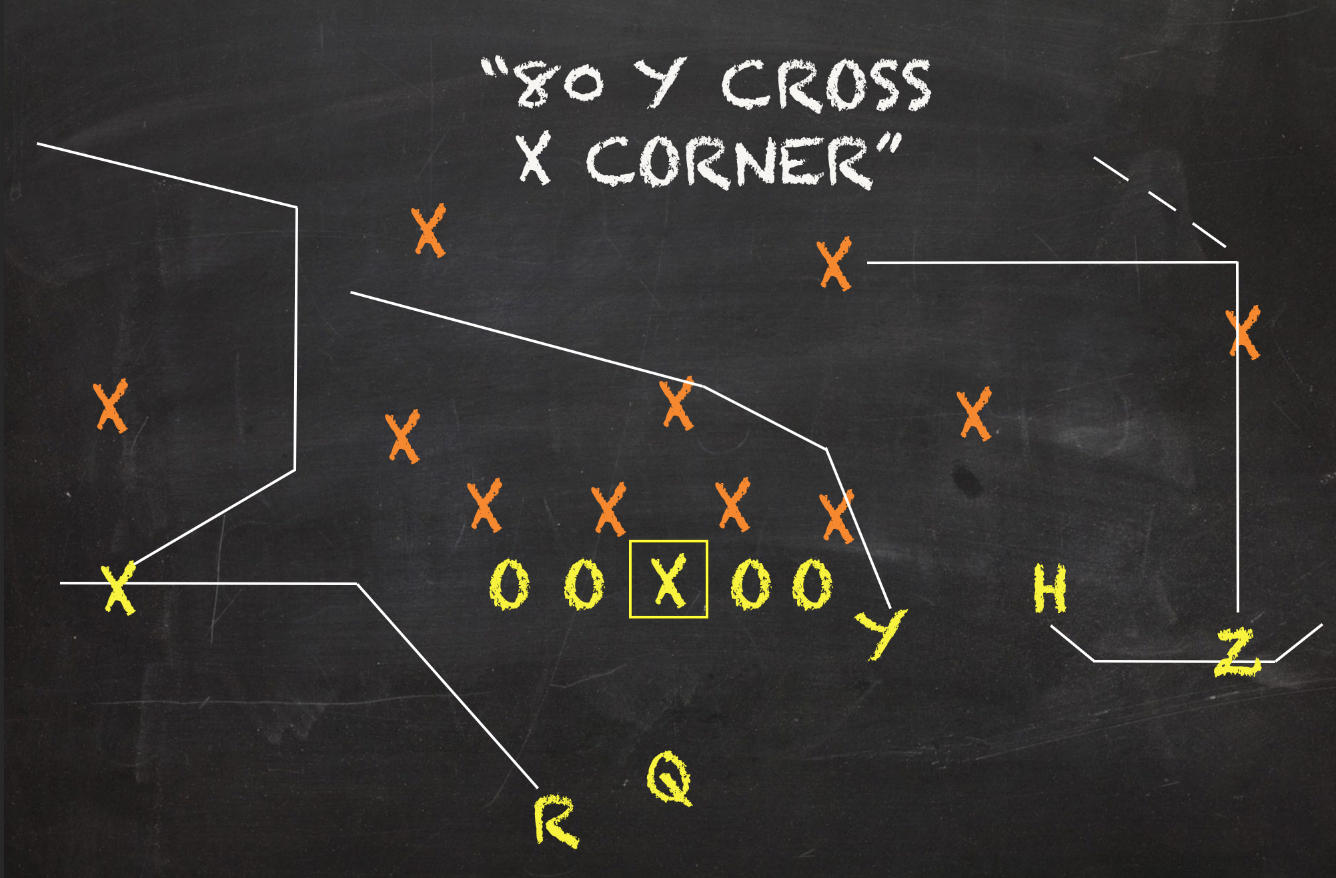
As a tertiary element to Florida’s passing offense, Corners’ usage was wishy washy. Over quarter of its chances occurred in Week 1 versus Ole Miss, where the look had its best afternoon producing results. Granted, Ole Miss’ defense usually allowed most SECers to have its best outings. But, Florida teased what its 2020 offense was all about in its opening romp against the Rebels. Though Florida tagged Corners opposite Floods, Verts, and other concepts, the Gators rode a singular design that afternoon. Known as “Shakes” by some, Mullen called a mirrored Corners concept to both sides of the formation and asked his inner-most receiver to run a post. Rest in peace Cover 2 truthers. Sometimes Florida’s back would stay in and block instead of running towards the flat, but every one of these calls resulted in a completion. By game’s end, its Success Rate was 83.3% and averaged 23.3 Y/A. In our parameter, half of this concept’s yards came versus Ole Miss. But despite kicking the Lane Train’s caboose with this look, I want to stress Corners’ usage was up-and-down. It was only called once over the course of the last three games of the season.
3. All Verts: 239 yards, 7.24 Y/A, 39.4% Success Rate
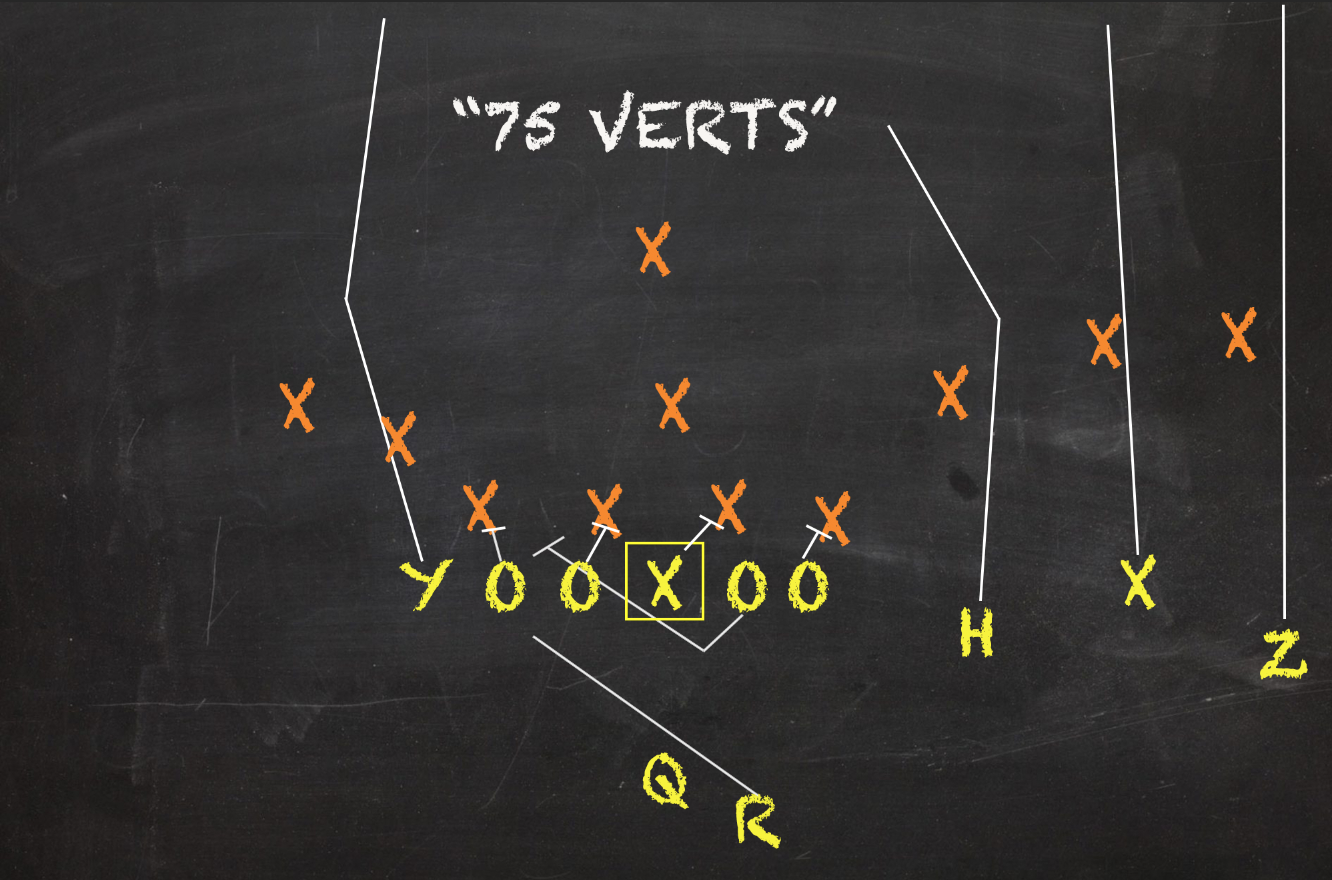
Thanks to the vertical nature of All Verts, the concept easily finished among Florida’s top yardage gainers. But despite being the poster child for deep passes, All Verts logged more attempts in intermediate areas of the field than any other when disregarding our sample. Florida only sent it deep nine times compared to its 13 chances between ten and 19 yards. That said, most of the value this concept begat came from those homeruns. While going 5/9, all but one of Florida’s deep All Vert targets resulted in a TD. Those four such completions doubled the number of tuddys the midrange targets generated. Though a natural source for big completions, only the Tennessee game saw this concept gain more than 40 yards. In our parameter, Kyle Pitts was this offense’s go-to on this design. Along with commanding a third of Florida’s All Vert targets, he led the team in yards (81), catches (4), and first down+TDs (4).
4. Wheelie Switch: 238 yards, 19.8 Y/A, 83.3% Success Rate
Though this Switch Variation failed to finish among Florida’s most repped concepts, it was their best look in 2020. Florida dialed up a Wheelie Switch 28 times over the course of the season, but only outright targeted it 13; all but one of those fell inside of our parameter. This combo has seen a decent increase year-over-year within the SEC in usage for a number of reasons. One, wheel routes are always open. I say that facetiously, but over half of this route’s targets conference-wide resulted in either a first down or a score with an Adjusted Completion% of 64.2%. Two, Switches are great at confusing match-pattern assignments and two-deep coverages. While its always cool when you can run a boring-ass play and allow your talent to beat their talent, I prefer designs that can scheme dudes open. Three, its more malleable than other rigid deep passing concepts and can be a nice look to isolate on one side of the formation.
Not that this concept ran the risk of becoming stale for the party involved, but Mullen constantly wanted to present Wheelie in a variety of ways. Across those 28 featured snaps, I caught 15 different designs. This Switch was coupled with other concepts like Bench, Drive, Verts, Bubble Screens, Dagger, Shallow, Sticks, and Cross to mention a few. The Gators even got crafty with a number of running back renditions.
5. Outside Zone Read: 209 yards, 4.45 Y/A, 36.2% Success Rate
Thanks to being this offense’s most repped play, the Outside Zone Read used its ample chances to crack the 200 yard barrier in our sample. As the only rush concept to do so, it made up over a sixth of Florida’s rush yards. A quarter of its tries went for a least seven yards with about a seventh of them being categorized as explosive. No SECer topped Dameon Pierce’s 20 such attempts. Only Najee Harris outgained him in our parameter and only Jerrion Ealy broke more tackles. He and Trelon Smith were the only dudes in the conference with double-digit Outside Zone Read carries to not log a single negative attempt. Over the course of the year, two-thirds of this concept’s attempts were directed leftward and for good reason. The Gators saw seven of Outside Zone Read’s ten explosive runs come outside its left edge. Along with the potency, that’s also where it was its most consistent. When excluding rightward runs, this concept rocked a 50% Success Rate, 5.6 Y/A, and saw almost a fifth of its attempts gain at least ten yards.
6. Checkdowns: 200 yards, 10.5 Y/A, 65.4% Success Rate
With defenses attempting to keep Florida’s mismatch machines in front of them, this offense was often gifted with underneath dump offs to backs. Though some of this offense’s designs used them on dropback patterns, the Gators’ backs were largely safety valves. But despite their unsuspecting nature, nearly two-thirds of these attempts worked situationally while averaging over 10 Y/A. How funny is it that a look like All Verts netted such a blah bottomline and bailout Checkdown sported such laudable stats? But wait — there’s more. Florida was so efficient on these attempts that no other SEC offense bested their Success Rate when targeting Checkdowns. Across our sample, the Gator backs all saw about an even “workload” on these tries. But, NaQuan Wright has a claim to be the Florida’s most prolific receiver in these spots. While logging a team-high seven targets, he caught all of his chances, totaled a share of the team-high in yards, and posted a 71.4% Success Rate.
MOST SUCCESSFUL CONCEPTS
1. Wheelie Switch: 1.67% Play Share, 19.8 Y/A, 83.3% Success Rate
Both potent and rocksteady, this Switch was easily this offense’s most successful look in our sample. I mean, come on. It averaged basically an explosive completion each rep while putting up a red-hot Success Rate. In case you forgot, its most productive outing came against Georgia. Across its five chances that afternoon, all of Wheelie’s tries resulted in either a first down or a score while averaging a laudable 23.2 Y/A. Though the Wheelie Switch was often the source for a successful wheel target, Florida had a few other designs that allowed the route to frolic against opponents. The main two that stand out were both Rub Variations. Running back wheel rubs (“Icepick”) and slant+fade/wheel designs (“Pickaxe”) each boasted a Success Rate of at least 62% and a 13.0 Y/A in meaningful minutes. Across the season, no SEC passer could match Kyle Trask’s production targeting wheels. As if the returns from these concepts weren’t telling enough, Trask doubled up the next man in line in terms of completions, total yards, and first down+TDs.
2. Bench: 1.53% Play Share, 10.9 Y/A, 72.7% Success Rate
Smashes were very kind to this offense. Though the Corners pattern led the concept group in tries and yards, Bench finished with the best Success Rate even if both ended the year with the exact same Y/A. Bench was coupled with numerous concepts like Cross, Drive, Spot, Hoss+Juke, and Double Posts to mention a few. Its best outings on the year came in the Georgia and Vanderbilt games. Each contest featured this Smash Variation three times and all ended successfully. For good measure, these games experienced a Bench that birthed a 30-yard completion. If we were to take out those snaps, this look still would have seen half of its reps work situationally.
3. Spacing / Curl+Flat: 1.94% Play Share, 10.4 Y/A, 71.4% Success Rate
Certainly not as sexy as other designs Mullen leaned on, but Curl+Flat combos were unequivocally valuable for this offense to stay ahead of the chains. With Curl+Flat combos providing easy completions, Kyle Trask displayed nice accuracy securing successful gains. For the most part, Florida honed in on the curls or sit hook on its chances. The Gators only targeted the flat once. Again, all of this concept’s production came from its first down output. Only one of its 11 such targets failed to work. All in all, eight of its completions resulted in a first down or score. Since his destination was mostly determined pre-snap based on how the defense lined up, no one Gator commanded the lion share of this look’s targets in our sample. Eight different receivers were targeted with none logging more than three tries. All but two finished with a perfect Success Rate.
4. Play Action Bootleg: 1.40% Play Share, 5.70 Y/A, 70% Success Rate
Though Mullen is a believer in play action whether or not his offense can actually run the ball effectively, Bootlegs have been overly faded since he returned to the Swamp. In 2019, Florida only logged eight such tries all year by my count. In our sample this year, they at least cracked double-digits. Four appeared in the first three games with all of them getting the job done. But from Week 4 until Week 11, the Gators only logged one in meaningful minutes. (To be fair they logged three failed reps in the second half against Vandy but for our purposes those don’t count). The bare-bones usage continued down the stretch with the concept only seeing three reps the final four games. At least, all three of these weakside flood play fakes found success.
5. Hoss: 5.42% Play Share, 14.4 Y/A, 66.7% Success Rate
When the Gators had their backs against the wall or found themselves in a crunch, odds are Hoss wasn’t too far away from being dialed up. It’s tough to pick out this concept’s best moment. But unfortunately Hoss might have shined its brightest in Florida’s back-to-back losses to close out SEC play. In the LSU and Alabama games, it was targeted 15 times for 245 yards and a score. Disregarding sacks, scrambles, and throwaways, Hoss’ Success Rate skyrocketed to 91% in these games. Four completions in that stint went for 40 yards or more. Potent and steady across the whole schedule, no opponent that defended Hoss more than once prevented it from sporting at least a 50% Success Rate.