2020 Offensive Play Calling: Georgia
2020 Offensive Play Calling: Georgia
Much of Georgia’s recent offensive modus operandi has functioned under the assumption it fields far better talent than its opponents. With the ‘Dawgs being overly bigger, stronger, and faster, the thought process was UGA didn’t need to get too cute to succeed offensively. Of course, that line-em-up+knock-em-down philosophy worked quite well against most of Georgia’s defensive foes. But its stale, predictable scheme prevented the program from taking a leap and maximizing its talent when playing against other elites.
While defense will probably always be this team’s backbone as long as Kirby Smart is in charge, this program has historically shown its on the outside looking in despite plenty of laudable seasons and standout players. Like his mentor, Smart knew changing course offensively was vital in the neverending arms race that is college football. Though the steps Smart took to reinvigorate his offense weren't exactly the same measures Nick Saban took at Alabama, bringing in a respected mind from the spread world in Todd Monken helped establish the ‘Dawgs’ new offensive identity.
Year-over-year in SEC play, Georgia improved its TD Rate, 3-and-Out Rate, Explosive Play Rate, and overall Success Rate. Monken called less runs from undercenter or the pistol and the Dawgs’ RPO Rate nearly doubled against conference opponents. Despite being thought to have less talent in its 2020 run game, UGA’s Y/C and rush yards before contact both improved by a half yard. But, the most noticeable impact Monken had on this offense was his belief in stretching opponents vertically. In addition to numerous deep passing looks littering Georgia’s script, both Stetson Bennett and JT Daniels finished with the two highest average depths of target in the conference. Trust me, it's not just the chicks that dig the long ball.
To get a better idea of how this offense predominately functioned, I only looked at snaps when the ‘Dawgs were either up or down 18 points. That way, less garbage time snaps skewed the output and gave us a better depiction of their true play calling in the heat of battle. With that parameter applied, I examined Georgia’s favorite run and pass plays, the looks that gained them the most yards, and their most successful concepts from 2020.
MOST FEATURED RUN CONCEPTS
1. Inside Zone Slam Read: 15.7% Success Rate, 5.16 Y/A, 53.3% Success Rate
Todd Monken had a discernible impact on Georgia’s play calls in his first year at the helm of the ‘Dawgs’ offense. But, he overly stuck with the Inside Zone Slam Read to act as UGA’s lead concept. Like last year, this look composed about a sixth of the Dawgs’ snaps in SEC play. But despite averaging less yards per carry, the Slam Read’s Success Rate increased over five percentage points. No conference offense that dedicated at least a 5% of its plays to this look bested UGA’s 53.3% clip. And with Georgia’s situational dominance on the look, it maintained its top spot on its script. The Slam Read was the only concept that was repped on over 6% of this offense’s snaps in 2020. And like you’d suspect, it received the top play share on first, second, and third downs. Plus, the Slam Read was a steady freddy design. The concept averaged at least 5.0 Y/A in each spot.
As the bread and butter concept, it saw heavy usage on firsts. Over half of the Slam Read’s reps in our parameter took place on that down. Though its metrics took slight dings, both still topped 5.0 and 50%, respectively. On seconds, however, less than half of them worked. The concept was its best self on the money down in the eyes of Success Rate. Of the look’s nine such tries in our parameter, only two failed to move the chains.
2. Inside Zone Bluff Read: 3.85% Play Share, 4.59 Y/A, 31.8% Success Rate
Behind its brother concept, the Inside Zone Bluff Read was a distant second on Georgia’s run play pecking order. But while there was a lot of distance in volume of calls, this look saw increased usage year-over-year. That said, I can’t say the results justified its increased reps. Less than third of them wound up as successful. Though Monken tagged a route or two on over half of his Slam Read’s reps, only five of the 21 Bluff Reads in our sample met that criteria. Just one of those attempts ended in success. So, you don’t need a lot of guesses why UGA disproportionally favored the non-RPO designs. All but two of this concept’s reps occurred on early downs.
Sure, the Bluff Read was overly a dud for this offense in 2020. Nearly 60% of its total tries failed to crack four yards. Only three carries topped ten yards. Strangely enough, they all came in consecutive games against Alabama, Kentucky, and Florida. What’s even more peculiar is the fact that this concept overly disappointed despite the fact straight up Split Zones finished as this offense's most successful run looks. Plus even though the Bluff Read predominantly came from 12 personnel sets, the extra beef didn't muster much value. All but six reps occurred from this grouping in our sample.
3. Outside Zone Off-Tackle: 3.32% Play Share, 3.11 Y/A, 47.4% Success Rate
For this offense, the Off-Tackle was a low-floor play. Though the Dawgs had capable backs, Georgia’s speedsters just couldn’t manufacture many significant gains on this concept. Only two attempts logged more than ten yards all year. Yet, the modest chunks helped UGA manage its down and distance even if half of its reps failed to win situationally. In the grand scheme of things, its usage was sporadic. Regardless of parameter, six games featured the Off-Tackle either once or not at all. In our sample, nearly half of its tries occurred facing Kentucky.
Like most of Georgia’s favorite run concepts, the Off-Tackle was largely an early down look. But, it was terrible to start a set of downs. For whatever reason, the Dawgs’ sported a dismal 1.63 Y/A and 25% Success Rate in those spots. But, the Outside Zone faired much better on seconds where two-thirds of its tries worked. Similar to the Bluff Read, UGA really struggled to take care of business executing this look from multi-tight end sets. Only a third of this look’s such reps found success.
4. Tackle Counter Read: 2.62% Play Share, 6.47 Y/A, 60.0% Success Rate
Georgia’s offensive personality the past few seasons has certainly hinged on its ability to play physically in the trenches. Despite the hard-nosed mindset of Establishing It, the Dawgs rarely called power plays. Excluding pin-pull techniques you frequently see on Toss Sweeps, UGA pulled at least one lineman on a mere 25 plays from 2018-19 — or 1.4% of its offensive snaps. Though effective, Georgia opted to use Jet Sweeps, Bash (Nakie) Reads, and Draws as its misdirections in lieu of Counter designs. That was another element that changed in 2020 for this offense. Either straight up or with a read element, Monken called more Counters this fall than the Dawgs logged the previous two years combined. Counter Reads came together to total 22 reps in our sample alone.
The Tackle Counter variant experienced the most love and wound up being one of the Dawgs’ best looks on the ground. Unlike the traditional Counter that sends the backside guard and tight end/fullback act as the respective trapper and wrapper on the design, the tackle takes on the role of the latter on this play. Obviously with the tight end staying put, that allows this play to hit either side of the formation. But with only 15 reps over the course of our parameter, it was seen sparingly. When it was seen, there was a very good chance it was on a first down. The look’s 4.2 Y/A on those snaps is whatever, but at least half of its reps won situationally. The Tackle Counter kicked ass on its five second down tries. There, its Y/A jumped up to 11.0 and only one attempt failed. But honestly, that was heavily inflated by a 36-yard Zamir White sprint against Missouri. That game along with the contest against Kentucky accounted for nearly 70% of the concept’s attempts for the season.
5. Toss Sweep: 2.27% Play Share, 5.00 Y/A, 69.2% Success Rate
Toss Sweeps are natural compliments to Inside Zone schemes. With the ground assault primarily being directed between the tackles, defenses typically adjusted to stop those looks by reinforcing the inside. When they peak, they can be reached. Plus, UGA’s Duo designs played a role in facilitating the Dawgs’ proclivity to win on the perimeter even though they didn’t log enough tries to crack this list. Since most were called from stack/bunch sets, defenses often condensed inward in preparation of the north-and-south gap scheme. Again when they peak, they can be reached. Though categorized as an Outside Zone, most of this concept’s tries used a pin/pull action to get its best blockers on opponents' most vulnerable defenders. In addition to these Sweeps, UGA attempted a “Nakie” Toss that feigns a zone flow a half dozen times.
Most of its tries were logged in Georgia’s last two games. Still, none of UGA's other favorite run concepts in our sample topped this look’s 69.2% Success Rate. Monken tinkered all year with various plays to best test his foes on the outside. And at the end of the day, this look certainly allowed Georgia to close strong. Like the rest of the Dawgs’ go-to run plays, the Toss Sweep was overly seen on first down. It was more than serviceable with a 55.6% Success Rate in those spots. But, its Y/A was a mere 3.11 yards. This sideline snatcher was significantly better on second and third where all of its reps ended in success while averaging 9.0 Y/A.
MOST FEATURED PASS CONCEPTS
1. Flood Variations: 5.42% Play Share, 10.6 Y/A, 67.7% Success Rate
While Todd Monken brought in a new element of verticality to Georgia’s dropback game, no pass concept group felt his presence more than Floods. In 2019, these patterns made up less than 3% of Georgia’s offensive calls. The Shaolin Monken almost doubled their usage primarily featuring “weak” Flood designs like Play Action Bootlegs and Cross. Though effective, “strong” Flood patterns like Sail were pushed down the script. Whatever rendition this offense fancied in the moment, Floods were a consistent mainstay. Only the Kentucky and South Carolina games failed to log at least three targets regardless of the score.
Taking out sack and scramble plays, Georgia’s passers combined to complete 22/26 of their attempts for 312 yards and a 73.1% Success Rate. Only four of its connections failed to either capture a first down or a score. Almost a quarter of these chances went for 20 yards or more. Kearis Jackson was the team’s most productive receiver on these patterns. He caught all seven of his targets for 129 yards and a tuddy. No other Dawg finished with more than five catches or 50 yards in our parameter. Jackson totaled four and 74, respectively, when targeted specifically running a cross route alone.
2. Vertical Shots: 4.90% Play Share, 9.07 Y/A, 28.6% Success Rate
Various Shot plays centered around deep routes like gos or fades combined together to be UGA’s second most favorite concept group through the air. Though these looks saw a healthy number of tries in the past, Monken's dropback doctrine believed in testing and isolating a DB against his talented receivers. In our sample, almost one in 20 snaps on average were considered a Vertical Shot. Sure, the results were below average relative to the rest of the conference. But thanks to UGA's quality pass catchers, no one could let their guards down when the Dawgs were eyeing a big play. Among SECers, only Tennessee logged more Vertical Shot targets by volume over the course of the season. The Dawgs honed in on four subconcepts: Solo, smash fade, goal line fade, and Divide/989. Though there were some nice results from the other two, the Fade designs went of’er in our parameter.
It wasn’t a well kept secret Georgia’s passers struggled to connect with their receivers deep prior to JT Daniels being inserted into the lineup. With their overall ineptitude slinging it over 20 yards downfield, Monken was forced to sit on these looks more than he would have preferred. But once Daniels became QB1, Vertical Shots logged 44% of its total targets the last four games of the season. In that span, Daniels connected on four of his ten opportunities and accounted for over half of the concept group’s yards in our sample. Before moving on, Captain Obvious wanted me to remind you that George Pickens was this offense’s go-to deep target. He was on the other end of 70% of Daniels’ Vertical Shots and over 50% of the team’s chances. In our parameter, he accounted for six of UGA’s eight catches and two of the Dawgs’ four such scores. For good measure, half of his catches were categorized as “creations” where he went above and beyond hauling in his target.
3. All Verts: 2.97% Play Share, 6.41 Y/A, 23.5% Success Rate
After Floods and Vertical Shots, there was a considerable gap between Georgia’s next favorite pass plays. But at the end of the day, All Verts secured the 3rd-highest play share. In terms of usage, there really wasn’t too much movement year-over-year in SEC play. In our sample, this simple, yet effective pass pattern made up nearly 3% of Georgia’s plays. Only two games failed to see it log an attempt. Unfortunately for the Dawgs, most of this concept’s tries didn’t go as planned. More than half of them resulted in either a sack or a scramble, which really curbed its output. Taking those snaps out, UGA’s passers combined to complete three of their eight tries. Though Vertical Shots helped account for four TDs, All Verts didn’t log a single score in our parameter. But like its fellow deep pass concept, its results tremendously improved once Daniels became the starter. Targeting All Verts, he went 3/4 for 109 yards.
The concept put up its best numbers on first downs when the Dawgs didn’t have their backs against the wall. Over half of its targets won situationally and averaged nearly 17 Y/A. But when the desperation element kicked in on the other downs, UGA was downright dreadful. None of the remaining downs logged a single successful rep in our parameter across 12 chances. Disregarding our margin, this concept’s worst day was also the one where it saw the greatest number of tries. All seven of the All Vert plays against Florida were unsuccessful including two sacks, a 0-yard scramble, and a throwaway.
4. Mesh: 2.08% Play Share, 4.33 Y/A, 33.3% Success Rate
Again, a good portion of Georgia’s pass attack was about stretching opponents vertically. But when the Dawgs wanted to win underneath, no short concept logged as many targets as Mesh. Granted, it only saw about one rep per game. But, this manbeater had a noticeable role in UGA’s script. Mesh had a few different renditions in this offense, but the “Kelly Mesh” was the predominant favorite pattern. Along with the main route combo of two intersecting drags, this version of the pattern also incorporates a play side running back wheel and sit hook.
Mesh sported its best results on later downs. On third and fourth downs, two-thirds of its opportunities moved the chains. That’s also where it logged most of its targets. But since all five of its early down tries didn’t work, this concept only saw a third of its tries end in success. Kenny McIntosh and Kearis Jackson were the only Dawgs who finished with multiple catches and double-digit yards off this look.
5. Spacing/Curl+Flat: 1.92% Play Share, 6.55 Y/A, 36.3% Success Rate
Even though Curl+Flat combos are rudimentary designs that help passers across all levels of football work zone coverages, these patterns hardly provided value for Georgia’s offense. While Spacing and Curl+Flat designs are great at stretching defenses to their horizontal breaking points, that really wasn't Monken's style. Not to beat a dead horse, but he overly preferred to try foes vertically. Like much of its secondary passing game, this concept’s usage was sporadic and depended on the context of the game. Of the 11 featured in our parameter, eight occurred in the first or last game of the year. With that in mind, I have a hard time labeling these patterns among Georgia’s favorites. But all in all, it out-repped plenty of pass concepts by year’s end.
Only one Spacing/Curl+Flat combo in our sample resulted a scramble (for what it’s worth, it was successful). Six of its ten attempts were completed; three of its four incompletions were drops. The design did its job manufacturing easy throws, but the Dawgs just couldn’t consistently execute. Pickens was the most productive target this concept. He totaled over half of the team’s yards, first downs, and catches. No. 1 also accounted for the look’s lone explosive catch off an overtop post in the bowl game.
6. RPO Bubble Screen: 1.92% Play Share, 4.64 Y/A, 45.5% Success Rate
This is kind of a cop out, but RPO Bubble Screens logged the 5th-most targets from this offense in our parameter. It just edged out dropback design Levels to close out this list. Though some UGA supporters don’t think of the Dawgs as an RPO offense, it’s trending that way. Georgia’s RPO Rate is up to 19.9% from 13.5% in 2018. Even last year, no pass concept group topped RPO Outlet Screens in play share. As easy throws to the flat, UGA's passers managed to complete all of these attempts, but only one resulted in a fresh set of downs. Despite being designed to help an offense gash opponents on the edge when a numbers advantage is present, Bubble Screens weren’t entirely consistent at accomplishing that. The Dawgs finished well-below the conference average Y/A and Success Rate even though they targeted the 4th-most Bubbles in the SEC.
Over the course of the entire season, a Bubble Screen was tagged onto a read option 70 times. All in all, these snaps made up over 10% of UGA’s offensive plays. Since these were naturally paired to Georgia’s run game, most of these were targeted on first down. In those spots, RPO Bubbles did most of its damage. Half of its total early down chances found success in our parameter. As the main slot receiver, Jackson was gifted the lion’s share of the team’s Bubble targets. But, the Dawgs’ most efficient outlet was Jermaine Burton. Despite seeing less than half of the Bubble Targets Jackson received, Burton led the team in such yards, secured the look’s only conversion, and saw all of his tries end successfully.
TOP YARDAGE GAINERS
1. Inside Zone Slam Read: 464 yards, 5.16 Y/A, 53.3% Success Rate
With the Slam Read almost tripling the next closest concept’s calls on Georgia’s script, it was hardly any trouble for the look to accomplish that feat in yards. Though overly dependable, the Slam Read wasn’t prone in producing big gainers. At least, that was the case for the first half of the season. Regardless of parameter, the Dawgs amassed 19 explosive carries on this concept; 14 came after the Kentucky game. Since you don’t have the numbers right in front of you like I do, that translated to a carry of at least ten yards on every fourth attempt on average over the course of the ‘Dawgs last five games. Despite missing out on a pair of 20+ yarders courtesy of Daijun Edwards, 15 of those carries fell inside our sample. When combined, those explosive carries accounted for over 47% of the concept’s total yards in our parameter.
2. Cross: 165 yards, 13.8 Y/A, 75.0% Success Rate
Floods were this offense’s most featured pass concept group, and Cross was the subconcept that fielded the most reps. But while getting plenty of reps played a part in this look cracking this list, it still had to produce. Cross was a very valuable pattern for this offense. With UGA’s passers being pre-inclined to test the middle of the field, this concept thrived in Monken’s first year in Athens. Including all snaps, about a quarter of targeted Crosses resulted in a gain of at least 20 yards. Plus, this weakside Flood was responsible for a pair of scores. Play action was used on half of its featured snaps. The idea being once linebackers were drawn up by the fake there would be a nice pocket over their heads. The Dawgs were so good at carving up defenses with this look that they leaned into a few Yankee Shot designs that paired the Cross as a “sucker” concept with an overtop peak post.
3. Vertical Shot Solo: 170 yards, 14.2 Y/A, 50.0% Success Rate
Whether tagged next to a Spacing or Stick concept, operating as an RPO outlet, or as a fade opposite a design in trips, the Solo concept was Georgia’s favorite Vertical Shot. Like the concept group’s usage as a whole, this look really took off once Daniels won the starting QB gig. Of the 15 Solos targeted across our parameter, seven occurred in the last three games. George Pickens' three catches off of this look in that span made up almost half of its yardage gained. The other large chunk came on a single James Cook reception against the eventual national champs. Thanks in large part to Pickens’ ability win one-on-one, Solo helped buoy Vertical Shot’s Success Rate. It’s not every day that an offense sees half of a deep concept’s reps work.
4. Dagger: 152 yards, 16.9 Y/A, 44.4% Success Rate
Dagger was another intermediate-to-deep concept that helped the Dawgs find identity in its vertical passing game. All four of its completions in our parameter were explosive plays; three of them gained north of 40 yards. The look’s most productive day came in JT Daniels’ first start against Mississippi State. In addition to all three targets being completed, Dagger complied over 100 yards (no other concept topped 50) and was the call on the eventual game-winner. About 60% of the look’s yards in our sample came versus the other Bulldogs. Cumulatively, Kearis Jackson was UGA’s best receiver on this look. In most cases, the inside vertical intends to push the coverage back before the dig breaks through the vacated void; basically acting as a functional decoy. But fortunately for Jackson, safeties’ attention was focused elsewhere. All three of Jackson’s catches were instances of him blowing by defenders deep. He doubled the next Dawg in line in number of yards and catches on this concept. Plus, he hauled in both of the look’s two tuddys.
5. Outside Zone Read: 123 yards, 9.46 Y/A, 46.2% Success Rate
The Outside Zone Read was a moderately successful look for this offense. But, the reason this play finds itself on this list is thanks to its big gainer to start the game in Jacksonville. That lone Zamir White carry accounted for over 60% of the concept’s total yards in our parameter. Coming off a unique shift from a singular set, that was the concept’s only attempt that busted the ten-yard threshold. So, its 9.46 Y/A is pretty misleading. While the Toss Sweep was one of the plays that helped this offense close the year out strong, the Outside Zone fizzled down the stretch. The look’s last three carries on the year each gained zero yards.
6. Yankee Shots: 114 yards, 22.8 Y/A, 60.0% Success Rate
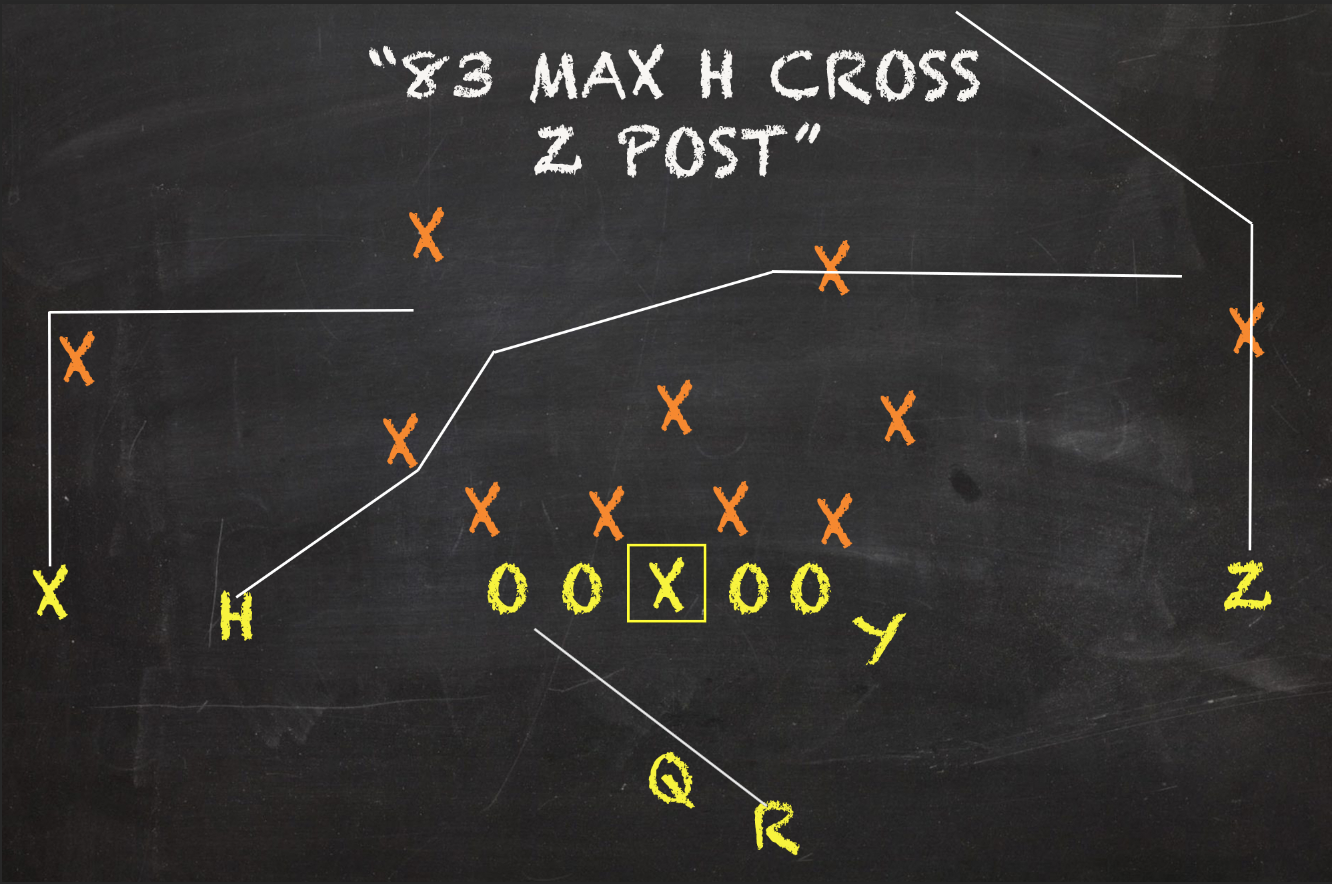
With aforementioned affinity for Cross patterns, Yankee Shots provided the Dawgs’ some wrinkles to prey on over-anxious safeties looking to come downhill and rob Floods with a deep post. In addition to the conflict-creating deep route combo, these designs always feature some form of play action whether it be off bluff, power, or traditional eye candy to further entice defenders towards the line of scrimmage and pull them out of position. In our sample, Georgia only targeted five Yankee Shots. At least, they connected on three of them; two came in the bowl game. And since the pair against Cincinnati each topped 50 yards a piece, the concept helps round out this offense’s top yardage gainers.
MOST SUCCESSFUL CONCEPTS
1. Hoss: 1.40% Play Share, 13.6 Y/A, 87.5% Success Rate
Both of UGA’s most successful concepts only saw eight targets in our sample. Since Hoss earned a slight edge in Y/A, it starts us off. In years passed, this rudimentary Curl+Seam combo has been a mainstay in the Dawgs’ 2-minute offense. In 2020, half of its targets occurred in those spots. Every single one of its completions generated either a first down or a TD. But if I had to criticize anything, I guess I’d point out that only one of Hoss’s targets produced an explosive gain. The concept’s best outing took place against Missouri. All three of its attempts worked while totaling 34 yards in the process.
2. Sail: 1.40% Play Share, 13.4 Y/A, 87.5% Success Rate
Despite Cross and Play Action Bootlegs logging more targets, Sail was Georgia’s best Flood Variation and one of its best overall plays. Across its eight tries in our parameter, Monken dialed up five different designs. A two-man version anchored three of its tries paring the strongside Flood with backside Levels, Snag, and solo dig. The Dawgs even dabbled with the “Skipper” design that initially window-dresses itself up as a Cross before morphing into a Sail. the only failed attempt of this concept was a scramble. The look was its best self on first down where it averaged just under 18 Y/A in our sample.
3. Cross: 2.10% Play Share, 13.8 Y/A, 75.0% Success Rate
No matter the down, Cross proved to be a very effective pattern for the Toddfather’s first offense. On early downs, it averaged over 9.0 Y/A on a sturdy 60% Success Rate. Though a bottomline most would be more than happy with, this weakside Flood really shined on the money down. In our sample, all five found success and averaged just under 20 yards per pop in the process. No other concept gained as much yards as Cross’s 99 in these spots. It’s long came in JT Daniels’ first start via a Demetris Robertson 31-yarder. Though a good amount of this concept’s targets were directed towards the main route combo, a few chances were given to the vertical route opposite the flow. Robertson’s big gainer just so happened to be one of those connections.
4. Inside Split Zone: 1.40% Play Share, 6.25 Y/A, 75% Success Rate
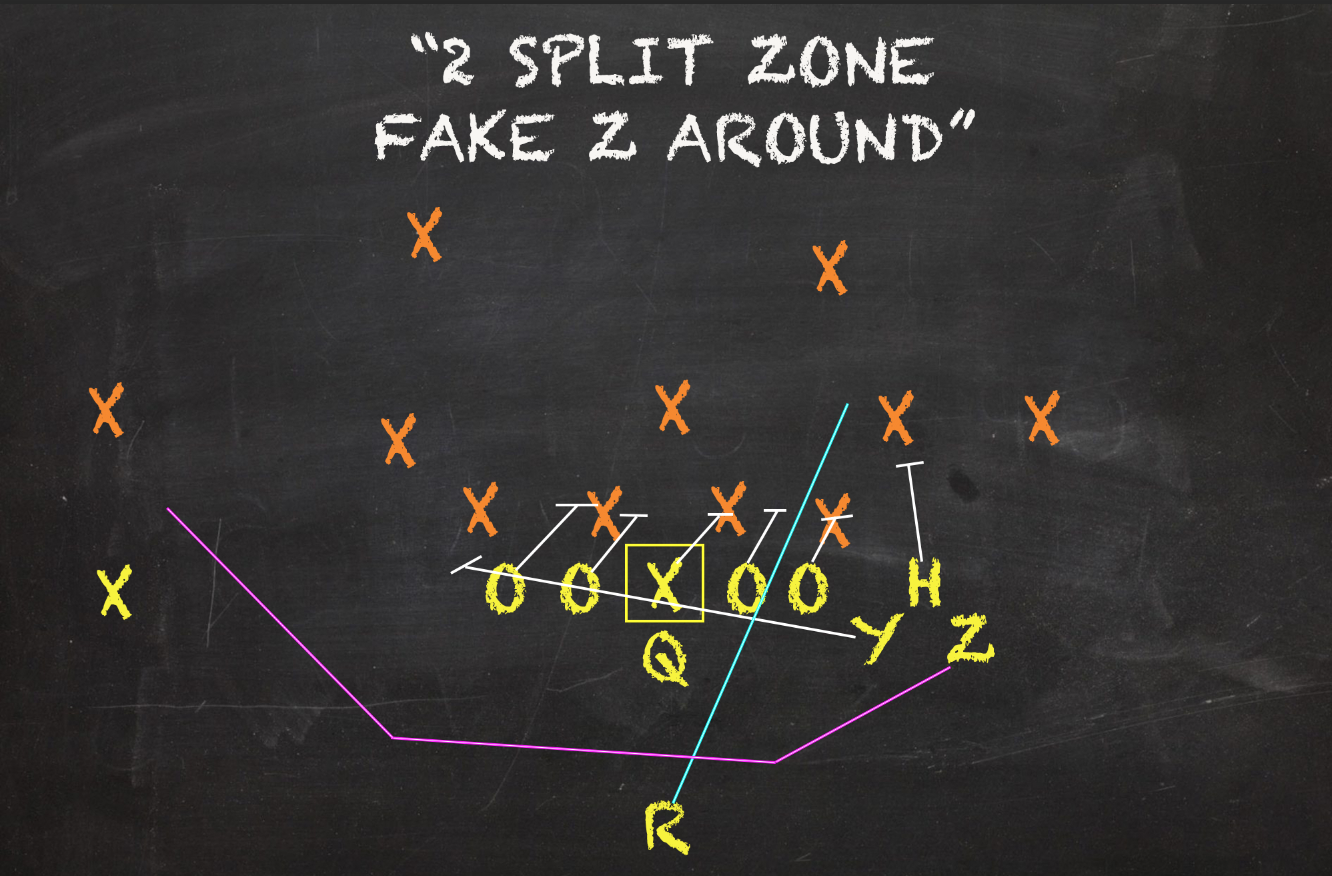
Calling Inside Zones from undercenter used to be a pretty run-of-the-mill thing for Georgia’s offense to do. Hell, any ground concept for that matter. That’s used to be the way everyone did it; no questions asked. But, Monken’s spread influences guided more handoffs to come from the shotgun in 2020. Year-over-year, the number of runs from either the pistol or undercenter has been cut in half by volume and lost ten points in play share. Inside Split Zones in this context have suffered similar cuts despite maintaining a high level of excellence. Improving from a mark where it saw two-thirds of its reps in SEC play work last year, Split Zones boasted a 75% Success Rate this past fall. Half of this concept’s tries utilized a fake end around from a bunch set to help distract defenders. Plus, a number of UGA’s most effective play actions used “Bluff” of split zone action in its design. As far as setting up other run looks, the Dawgs uncorked a Split Counter as a compliment. But outside of a goal line TD and another 43-yard scoring scamper, that wrinkle didn’t produce much else. Circling back to the concept in question, the Split Zone was pretty stable in helping UGA manage its down and distance. But, it spawned just as many explosive carries as negative attempts (2). At least those TFLs were its only unsuccessful tries.
5. Toss Sweep: 2.27% Play Share, 5.00 Y/A, 69.2% Success Rate
Again, this looked turned out to be a nice closer in the waning moments of the 2020 season for Georgia’s offense. Over half of its attempts came in the last two games. There, the Toss Sweep helped the Dawgs capture three first downs and three scores. If you wanted to go back a game further, you could throw in its TD in that one too. Though successful, this design can be thought of as a low-floor play. Sure, it logged an explosive try in the first game of the year; but it wouldn’t be unit the SEC finale that the look would be responsible for another ten-plus yard carry. It was much more of a tool that helped the Dawgs manage down and distance and thwap opponents who were preoccupied with inside runs.