2020 Offensive Play Calling: South Carolina
2020 Offensive Play Calling: South Carolina
On the whole, The Will Muschamp Era at South Carolina was Jeff Fisher mediocre. If you know anything about the former Titans and Rams head coach, you know he’s the personification of good, not great football teams. Despite doing some things very well, the overall package generally is something slightly below average. After all, Fisher coined the phrase, “I’m sick of this 7-9 bulls***.” And despite donning a career record slightly above .500, Fisher shares the most regular season losses in the history of the NFL.
Certainly a gifted defensive mind, things just largely failed to materialize for the Gamecocks under the Muschamp for them to escape mediocrity. Though the Spurrier years showed SCar could win with a good offense and on the recruiting trail, that brief sheen this program displayed has long worn off. Muschamp’s teams followed a basic bell-curve pattern through the eyes of the SP+. Inheriting a bad deal, his first team finished ranked 85th. The middle three years were his best. The Gamecocks finished 41st, 20th, and 47th, respectively, from 2017-2019 despite a good amount of variance on both sides of the ball. The defense was at its best in year2 with a 22nd final ranking; the offense peaked the year after with a 21st rating. But when adversity hit in 2019 and 2020, this program showed it didn’t have the capability to rise above the challenges at bay. For the first time in his tenure, his defense finished in the SP+’s bottom half by the end of 2020. And for the fourth time in five years, Muschamp’s offenses finished in the back half of college football.
This offseason, Mike Bobo was brought in to help save Muschamp’s job. Since SCar ended the year with a cool 2-8 record, we know that didn’t work out too well. Sure, the Gamecocks found increased efficiency in spots thanks to a more consistent passing game. But moving from 98th to 89th in the SP+ is hardly the movement Gamecock hopefuls craved. No team suffered a higher Negative Play Rate in the conference. Only Arkansas surrendered a higher HAVOC Rate, and only Vanderbilt posted a worse overall Success Rate.
Some macro tactics changed with his leadership, but the offense was still largely West Coast, screen-heavy, and struggled to develop a downfield passing threat. Their motion usage was about average in all forms, but the operation was overly dismissible. Thanks to Bobo’s desire to live through the run game, SCar’s Pass Rate year-over-year went from inside the SEC’s top4 to a bottom5 clip. Despite that, RPO usage dropped by about six percentage points. Even though the team’s TD Rate increased from 2.7% to 4.2% in league play, the ‘Cocks still finished bottom5 in Yards/Play with the 2nd-worst Points/Play clip in the SEC.
To better get an idea of how this offense functioned as designed, I omitted snaps when South Carolina was either up or down by more than 18 points. Rather than letting desperation calls skew their “normal” plan of attack, taking out those plays presents a better depiction of what South Carolina’s offense was and how it wanted to function. I looked at their most featured runs and passes, the concepts that gained the most yards, and their most “successful” looks across these meaningful minutes.
MOST FEATURED RUNS
1. Inside Zone Slam Read: 9.66% Play Share, 5.75 Y/A, 41.7% Success Rate
Mike Bobo shuffled around South Carolina’s favorite run concepts from 2019. Though he stuck with the past modus operandi of balancing out his script with plenty of looks, the Inside Zone Slam Read was promoted from a secondary concept to the look that owned the top play share. It’s usage almost doubled year-over-year. During our applied parameter, it logged 48 reps; no other play topped 15. The majority of Slam Read’s reps were of the non-RPO variety. Sure, this look often anchored plenty of South Carolina’s RPO game; but far more of its attempts were of the basic variety. For what it’s worth, the ‘Cocks were very meh executing Slam RPOs (35.3% Success Rate, 4.0 Y/A).
Like a good amount of lead concepts, this play saw most of its tries on first down. There, this Inside Zone Read delivered terrible returns with a measly 29.2% Success Rate and 4.21 Y/A. With half of the concepts attempts occurring in those spots, it’s overall numbers soured and South Carolina commonly played second downs behind the chains.
The most it was featured in a game was against Auburn where it logged 15 reps — or 22% of South Carolina’s offensive plays that day. In our sample, a fifth of its carries went for 10 yards or more, which bests the team’s 15.8% Explosive Run Rate. Plus for good measure, the Slam Read was responsible for three scores. Looking at all Inside Zones Reads, it was certainly a boom or bust concept group. Though SCar averaged 3.10 rush yards before contact on these looks collectively, 56% of their tries went for three yards or less.
2. Outside Zone Blast: 3.02% Play Share, 9.67 Y/A, 73.3% Success Rate
For modern spread offenses, the I-Formation is as foreign as the wishbone. Though usage is still healthy in the pro ranks and dudes like Kyle Shanahan have shown it can still be quite effective at exploiting mismatches in the box, it’s not part of many college offenses’ main methods of attack. Yet, South Carolina found themselves into this minority of schemes that held a soft spot in its heart —or game script — for the I-Formation. Overall, over 8% of the Gamecocks’ plays and 12% of their yards came from a form of that set in 2020.
Though SCar had a toss sweep on occasion, the Outside Zone Blast was the most featured I-Formation play. This Outside Zone with a lead blocker may have been a tertiary concept, but its consistency was prime. No other run look can challenge Blast’s 73.3% Success Rate or 9.67 Y/A. It sported the second-highest number of first down reps and posted a 62.5% Success Rate in those spots. Though the best down for a couple of other South Carolina’s rush looks, that’s where the Blast displayed its worst results even with a 9.00 Y/A. On second and third, the play delivered a robust 85.7% Success Rate and averaged over ten yards per pop. Since the I-Formation’s usage ebbed and flowed from week to week, so did Blast’s. All in all, this Outside Zone accounted for about a third of the set’s plays and yards.
3. Buck Sweep: 3.02% Play Share, 6.27 Y/A, 33.3% Success Rate
The Buck Sweep was South Carolina’s most featured play in 2019. Despite the old two-guard puller posting a 51.8% Success Rate and 7.82 Y/A a year ago, Bobo’s bunch were less keen on the Vince Lombardi favorite in 2020. Its play share was cut in half and its Success Rate plummeted 35.1%. Still, the play averaged about two reps per game and was seen in every contest when disregarding the margin on the scoreboard. The Buck Sweep still delivered a few big gainers, but it was hella-inconsistent. Other Outside Power Reads (Pin/Pull Base, Power Veer, Power Toss) generally were not on Bobo’s radar this fall. Like its group’s brother concept, the Pin/Pull Base was all but scrubbed from South Carolina’s script — even though the look itself put up a 12.3 Y/A with four of its six tries resulting in success.
The Buck Sweep experienced most of its attempts on first downs. The look shared the honor with Duo Dive for the third-most featured concept on the down in our parameter. On firsts, the concept was its best self as it boasted a 57.1% Success Rate and 11.0 Y/A. Regardless of down, four of its 15 carries birthed a gain of at least 13 yards, which further cemented South Carolina’s run game as all or nothing. But, the action of pulling both guards did more than just produce occasional splashes for this look. The ‘Cocks also generated a 47-yard reverse and two explosive RPO targets with the Buck Sweep in the play design.
4. Duo Dive: 3.02% Play Share, 3.93 Y/A, 40.0% Success Rate
The Duo Dive was not among South Carolina’s most called run concepts in 2019. But despite forgettable returns, Bobo allowed this concept to log his offense’s second-highest play share. As many Dives were dialed up as Buck Sweeps in our parameter. Though more consistent at beating situational goals than the Outside Power play, this Duo certainly had a lower ceiling. Disregarding scoreboard margins, only three of its 25 reps went for more than ten yards. Plus, the concept was used based on matchups rather than doctrine. Of those 25 snaps, 19 took place in three games.
In our sample, Duo Dive put up its best figures on first down. While averaging 5.29 Y/A, it donned a 57.1% Success Rate. Again, the likelihood of a big gainer was small. But considering the high floor this concept offered to start a set of downs for a struggling offense, it’s easy to see why Bobo used it sparingly. Outside of these picked early down matchups, however, the gap scheme hardly provided value. Only a pair of Dives found success on second or third down as it averaged a mere 2.75 Y/A in our applied parameter.
5. I-Formation Iso: 2.62% Play Share, 2.69 Y/A, 61.5% Success Rate
While the largest chunk of South Carolina’s plays from the I-Formation were lead tosses or Outside Zones, the inside gap scheme Iso also provided valuable carries for this offense. Though its best attempt — an 88-yard bend-back Iso that went for a score — occurred in garbage time, this concept just missed being among SCar’s most successful looks despite its dismissible 2.69 Y/A. With that kind of clip, it should be apparent that this was a late-down, short-yard specialist kind of play made for moving the chains. Though most of its reps took place to start a set of downs, only a third of its reps found success in those spots compared to six of its seven remaining reps on the other downs. Regardless of scoreboard margin, Iso made up a quarter of South Carolina’s I-Formation plays and just under 30% of its yards.
Like most gap schemes, Iso is composed of downblocks, double teams, and a lead blocker. Though the responsibility of the edge setter can vary based on the formation, that role is typically undertaken by the end man on the line. With most of everyone else washing their guy down and that dude kicking out and creating our gap, the lead blocker from the backfield heads through our formed hole looking to engage with a linebacker. He will use the defender’s inertia to let him go where he wants to before sealing him. The back simply reads the flow and does the rest.
MOST FEATURED PASSES
Screens: 6.64% Play Share, 2.76 Y/A, 21.2% Success Rate
Bobo diversified his on-field pass patterns as well as anyone in the SEC. Actually considering how meticulously he spread around calls amongst his copious concepts, you might say he donned the most unpredictable script in the SEC. He littered various subconcepts with a dozen or so reps without favoring any one look too predominantly. In the end, I decided to merge their concept groups for this analysis to simplify the presentation.
You’d be correct in your assumption that most of these puppies were dialed up on third down. Screens were the Gamecocks most targeted concept in those spots; only four of the 13 tries moved the chains. Even on first downs when opponents should have been more ill-prepared to defend Screens, South Carolina just couldn’t do jack on this concept. While being the Gamecocks 3rd-most favorite play to start a set of downs in our sample, Screens delivered a dispiriting 12.5% Success Rate and 0.38 Y/A.
Screens have consistently been apart of South Carolina’s offense the last few seasons. Ryan Hilinski, Colin Hill, and Luke Doty all had double-digit Screen Rates as starters. A West Coast scheme through-and-through, Screens obviously are a direct way to get your playmakers the ball in space. In our parameter, SCar featured four separate kinds of Screens: Convoy, Swing, Slip, and Middle. None received more than eight tries or less than four.
Much of the concept group’s crappiness was on this offense’s total ineptitude when it came to executing Convoy Screens. Also known as Jailbreaks, this design asks a few lineman to lead the way for a perimeter receiver after a beat of selling a pass action. The Gamecocks failed to log a single successful rep across its 11 attempts. That’s indefensible. Slip Screens were almost as disastrous. Box player dump offs are usually go-tos for plenty of play callers who want to help isolate electric backs on the edge with an escort of big bodies. But despite Harris’ and Fenwick’s acumen for splash plays, the Slip Screen donned 2.00 Y/A and a 20% Success Rate. Swing Screens had slightly better numbers; but no one is jumping up and down over a 3.17 Y/A and 33.3% Success Rate. Mid Screens — deep angle screens towards the middle of the formation for the back — saw half of its targets meet situational goals. Its 7.00 Y/A was the best of the concept group.
2. Flood Variations: 4.43% Play Share, 5.91 Y/A, 50.0% Success Rate
Floods are pass patterns that try and overload a side of the defensive formation. In our charting, we have three major kinds: Cross, Sail, and Play Action Bootlegs. Now, inside of those subconcepts are plenty of interesting wrinkles and renditions. And like I hinted at in the section above, South Carolina showed off numerous Flood designs with no one look receiving the bulk of the calls.
Of the three subconcepts, PA Boots totaled the most targets in our sample with 11 and buoyed the concept group with a 63.6% Success Rate and 8.09 Y/A. Per my charting, I caught five major PA Boot patterns: Waggle, Boot, Sprint Waggle, Z Waggle, and Waggle Sail. Waggle is our term for a Y-Slide opposite the play fake. Strongside Flood Sail was next in terms of reps and value. It chipped in seven targets, a 42.9% Success Rate, and 4.43 Y/A. South Carolina had a Sail from max protection, a pattern with a backside Dig+Go, a couple of rollout renditions, and a “Skipper” Sail (a very crafty design that initially looks like a deep cross before bending back into a corner). Cross was this offense’s least efficient Flood in our parameter. Only one of the four worked and the look put up a poor 2.5 Y/A.
While Screens collectively saw their highest usage on the money down, Floods logged most of their tries on firsts. Over half of the Floods in our sample were repped in those spots and two-thirds of them resulted in success. None of South Carolina’s other favorite first down concepts cracked the 60’s in that regard. With the lower porch and the added benefit of play action, Floods averaged 7.5 yards per pop. But on latter downs when the team needed the pattern to come through and get a conversion, the concept group went o’fer.
3. Smash Variations: 3.82% Play Share, 8.32 Y/A, 78.9% Success Rate
Smashes were South Carolina’s best pass concept. These sidelined-oriented hi-lows provided another way for Colin Hill and Co. to pick on linebackers in the short passing game. Regardless of scoreboard margin, Nick Muse and Kevin Harris totaled half of the group’s targets and only six of the 23 Smash targets traveled over ten yards downfield. Across the 19 in our sample, Bench (8) and Corners (7) received the most tries with the standard outside hitch+inside corner design bringing up the rear (4).
Bench, commonly featured from stack sets, was mostly seen in two forms: mirrored to both side of a balanced formation and opposite a Cross concept. Three-fourths of its attempts worked out favorably for the Gamecocks. The Corners — or inverted Smash — was outright this offense’s most successful look. This too was seen in a mirrored pattern and opposite Cross. Plus, the ‘Cocks had a rollout play and a combo with a Drive concept. Corners was also paired with Levels; a recent trend heightened by LSU’s 2019 offense. Three of the four standard Smashes met situational goals despite putting up a group-low 4.75 Y/A. Smash Variations were equally distributed across the three downs rather evenly. No down logged more than seven tries or less than five. Likewise, their collective Success Rate hovered around 80%.
4. Vertical Shots: 3.22% Play Share, 3.27 Y/A, 25.0% Success Rate
Though most of South Carolina’s passing game emphasized throwing short, YAC-oriented patterns, sometimes they had to orchestrate a shot to take advantage of an overcrowded box. But like last year, this wasn’t exactly their personnel’s strong suit. Year-over-year, Vertical Shots received about the same amount of looks by volume. But with a more refined passer, its Success Rate doubled. So…progress! But still, only a quarter of the Gamecocks’ Vertical Shots worked. And Despite the downfield nature of the concept, it owned the worst Y/A amongst this offense’s most favorite plays with the exception of the short-yardage run Iso. The only deep completion came on a Divide/989 pattern against Ole Miss (who weren’t exactly the best defensive unit) to Jalen Brooks. Divide was also responsible for the other explosive rep amongst this group: a 32-yarder to Nick Muse down the middle. Outside of those, the remaining three successful reps were Goalline Fades, two of which resulted in points.
Like most of its pass concept groups, Bobo did a good job balancing out reps amongst the subcategories. Solo/Fades combined for eight targets in our parameter but failed to produce a single successful try. Half of the team’s Divide and Goalline Fade targets got the job done (I already mentioned how each provided value in their limited stints on the script). Despite SCar's intentions to dial up a connection deep, this concept group failed to produce over 100 yards in our sample. The highest usage Vertical Shots received was the two-game period against Ole Miss and Missouri where it was targeted ten times, or half of its yearly total regardless of parameter. Those games still saw an inadequate rate of return per a 30% Success Rate. But at least, one of its two explosive plays and TDs occurred in those spots.
5. Vertical Switches: 2.21% Play Share, 8.27 Y/A, 45.5% Success Rate
Though the Gamecocks had trouble hitting an isolated man deep, this offense found moderate success targeting Vertical Switches. This concept groups is all about confusing two-deep assignments or match-pattern rules by asking the inside receiver to work his route outward and visa versa for the outside man. Like the rest of the conference as a whole, the Wheelie Switch was this squad’s most repped Switch over the course of the season. But under our parameter, Bobo once again showed nice balance between looks. Scissor Switches lead the way with four targets with Wheelie and Vertigo getting three a piece.
Regardless of parameter, Scissor — a post+corner combo — saw its highest usage in two the Gamecocks’ last three game against Georgia and Missouri. And sticking true to his wishy-washy coordinating, each game featured two distinct Scissor designs only seen in those particular games. Against Mizzou, Bobo opted for a Scissor from a stack set with a solo corner to the other side of the formation. Its only successful rep was a scramble. Versus UGA, SCar got into the “dash” schemes a bit. Though seen with some Sail patterns across the SEC this season, Bobo orchestrated a delayed rollout for a Scissor three times against the Dawgs. None worked as designed as the only successful rep was a checkdown.
Wheelie might have helped other conference offense’s find good gains, but it hardly did much for the Gamecocks’ muted pass attack. Sure, the look accounted for the concept group’s lone explosive gain. But the rest of its reps were mostly a waste. Outside of its 21-yarder against Vandy, this wheel+post/dig combo didn’t log another completed pass in our sample.
Vertigo, a big favorite of mine, calls for two intersecting verticals. Though it can be confused with Wheelie by some, this look is as aggressive as a two-man pattern can be. But unfortunately for Scar, this homerun play only generated a 13-yard completion, it’s lone successful rep.
In our sample, about half of these Switches were targeted on third down. There, the concept group was one of four other passes to log five reps (sharing the 3rd-highest by volume). Though relatively okay, both its Y/A and Success Rate in those spots fell below our sample’s cumulative output.
6. Mesh: 1.60% Play Share, 6.13 Y/A, 62.5% Success Rate
Despite South Carolina’s affinity for short-oriented route combinations and concepts in the pass game, Mesh barely logged enough targets to finish among this offense’s most repped looks. Eight targets across our sample is all the concept needed to qualify. I told you Bobo hates playing favorites. Even though the intersecting drag design finished among the ‘Cocks most successful looks both in and outside of our applied parameter, it averaged less than a try per game.
The most featured design was the version plenty of honed in on as of late: the Kelly Mesh. Named for the coach that helped popularize this particular pattern on the big stage, Chip Kelly’s version commonly comes from flanked or wing sets and calls for a play side HB wheel and outside sit hook in addition to the main concept. South Carolina frequently tagged a backside corner on top of the Kelly Mesh. When accounting for all snaps, two-thirds of its targets found success. Plus, it birthed a pair of explosive catches; both went to TE Nick Muse.
TOP YARDAGE GAINERS
Inside Zone Slam Read: 276, 5.75 Y/A, 41.7% Success Rate
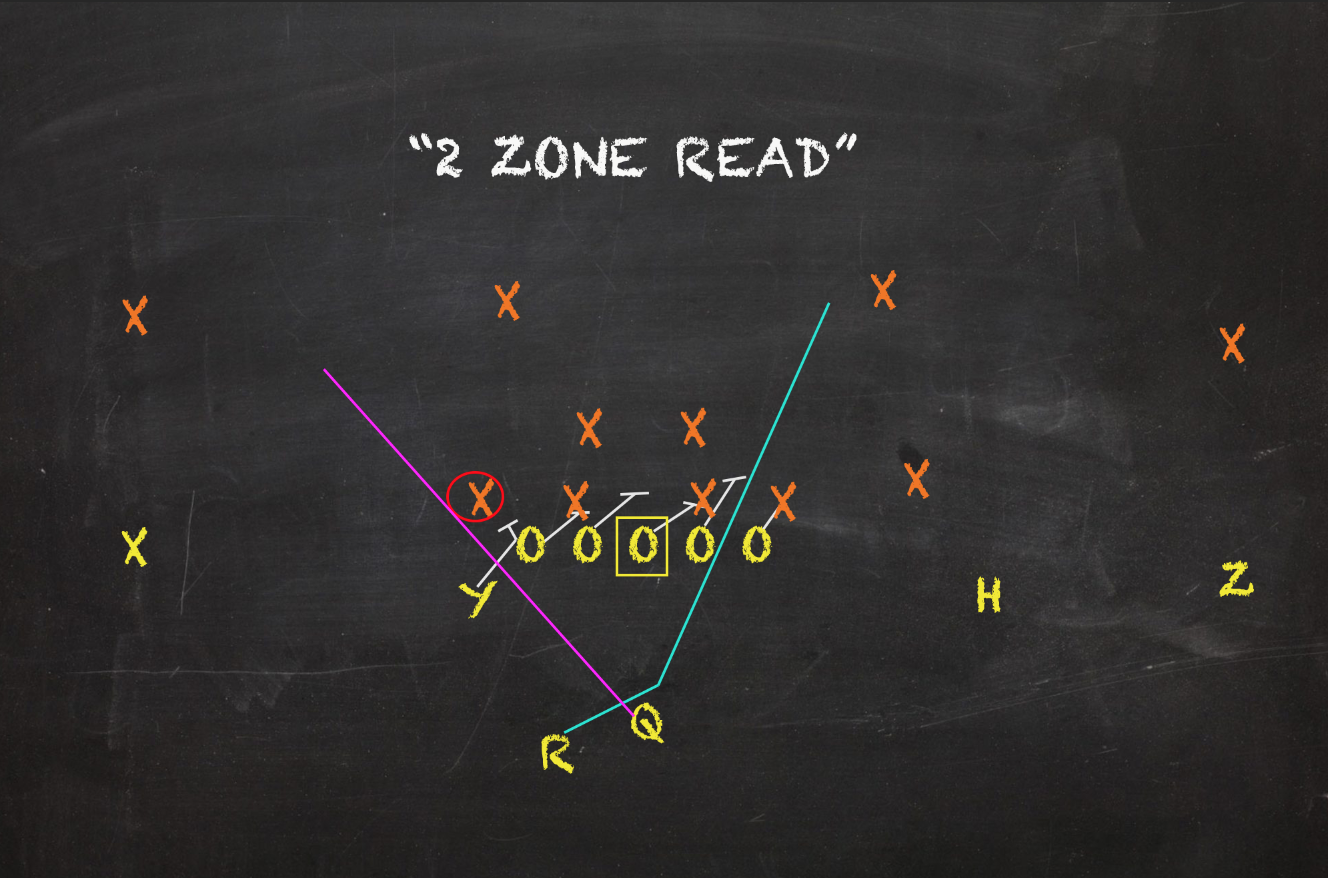
Since it led South Carolina’s script in reps, it had a pretty good chance to top the rest of the team’s concepts in output. But, most of its production came via its splash plays. About 80% of Slam Read’s reps only popped out 27% of its yards. Of the Inside Zone Slam Read’s 276 yards gained in our sample across its 48 attempts, over 200 came on its ten explosive carries. Again, this was overly a boom or bust look for this offense. Despite the play’s design asking the QB to be a runner, Gamecock passers rarely kept the ball on Inside Zone Reads this season. Across the concept group’s 92 reps, QBs totaled only seven carries for six yards. As you might surmise, Kevin Harris was fed with this concept quite often. Almost 32% of his attempts and 29% of his yards came via Inside Zone Reads.
2. Smash Variations: 158 yards, 8.32 Y/A, 78.9% Success Rate
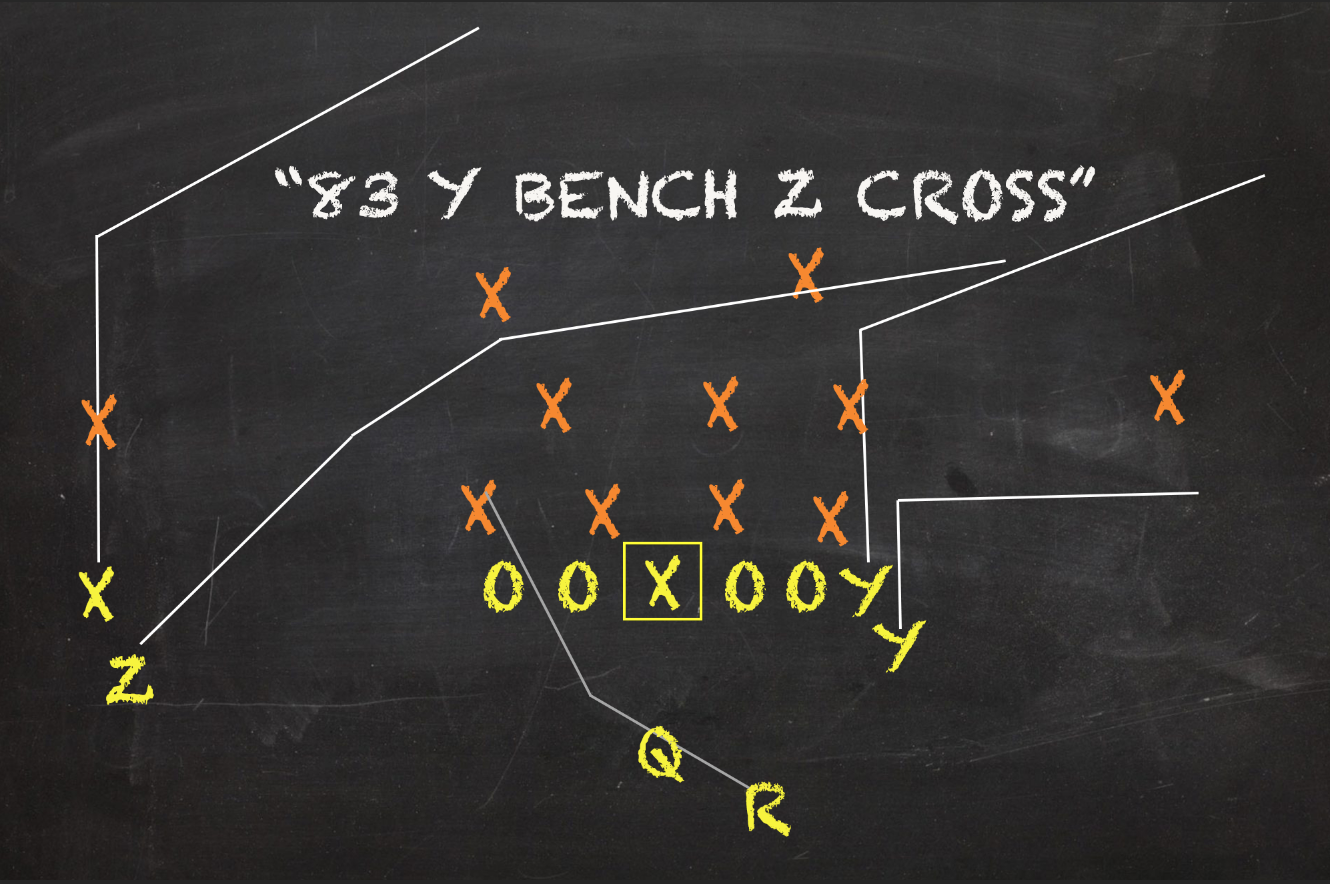
Even though Smash plays totaled the offense’s 4th-highest play share, the concept group racked up the second most yards during snaps when South Carolina was either up or down 18 points. Regardless of point margin, only one Smash went for more than 20 yards. That attempt also so happened to be the only completion with a depth of target over ten yards. 80% of these looks’ yards came on throws less than seven yards downfield; this look was a bit of a complier thanks to consistent pass catching and modest gains. In our parameter, the Corners concept was responsible for 83 of the group’s 158 yards.
3. Outside Zone Blast: 145 yards, 9.79 Y/A, 71.4% Success Rate
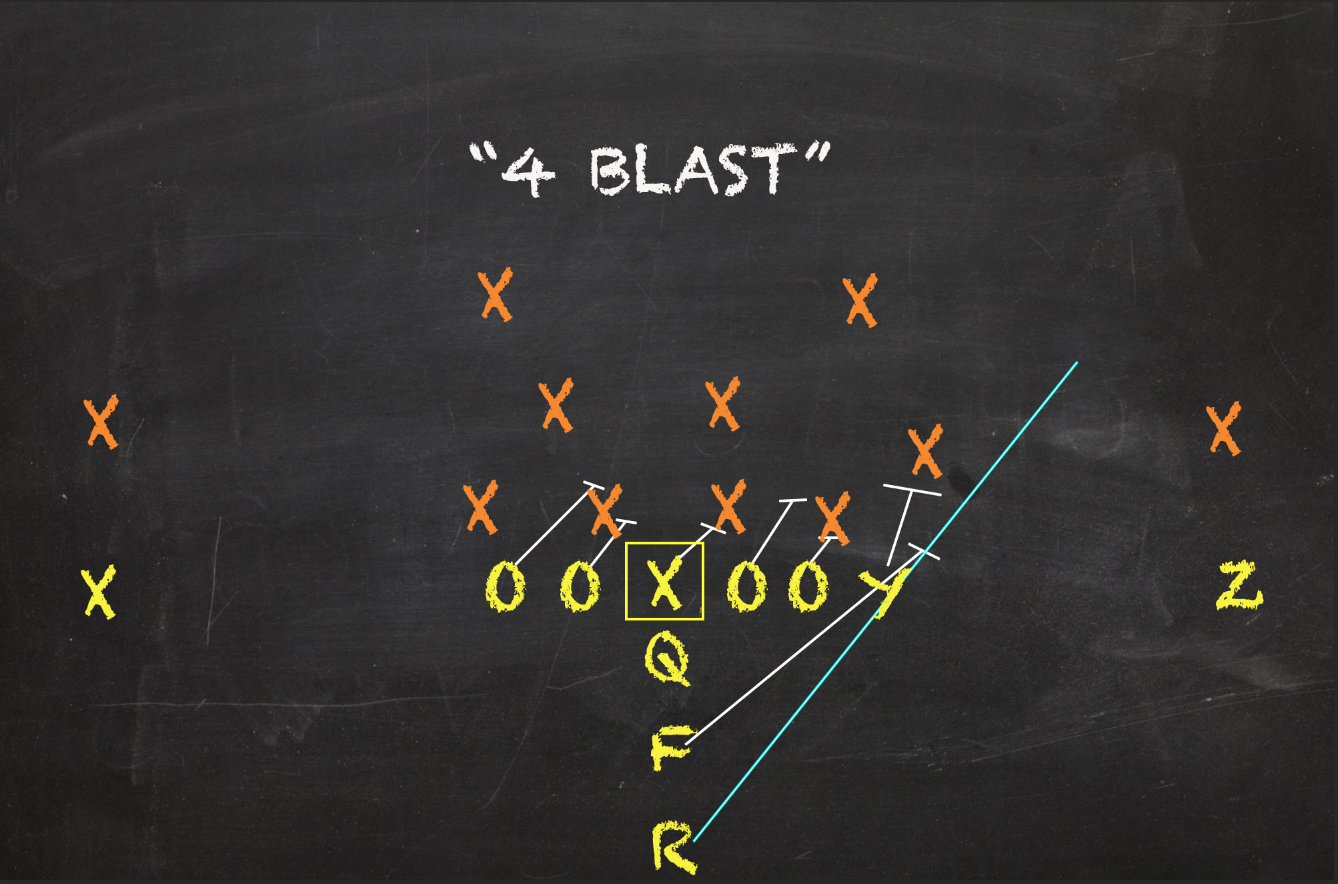
The Outside Zone Blast was one of this offense’s best overall plays. Both dependable and potent, it showed the I-Formation can still forge fruitful gains on the ground in the SEC. Despite ending as the poster child concept for that set, it only logged two reps over South Carolina’s 26 I-Form snaps the first four games. Blast’s major coming out party was in Week 8 against Ole Miss’s putrid defense. In that one, over 29% of the Gamecocks’ snaps came from the I-Formation as this Outside Zone led the way in calls (9) and total yards (120). All four of its explosive carries occurred against the Rebels. After that performance, the look would only log four more reps the remainder of the season. When Muschamp was dismissed, SCar didn’t call a single I-Formation play its last two games of 2020.
4. Flood Variations: 130 yards, 5.91 Y/A, 50.0% Success Rate
Play Action Bootlegs, Sails, and Crosses combined together to amass the fourth most yards for South Carolina’s offense in meaningful minutes. Like most of South Carolina’s pass game, Shi Smith was the primary recipient of this look’s targets. Disregarding the margin on the scoreboard, he finished with 75 yards across his 11 tries. With other offense found chunk gains with this concept group, the Gamecocks only produced a single explosive rep on a Flood. That rep, which also scored a tuddy, occurred in the last game of the year against Kentucky. Off power play action, Luke Doty connected with Dakereon Joyner on a Cross from trips that incorporated a TE wheel that helped created a bit of a rub action.
5. Duos (Dive+Jab): 103, 4.12 Y/A, 40.0% Success Rate
When combined, Duo Dive and Duo Jab accounted for about 4% of South Carolina’s yards in meaningful minutes. Since the Dive variety totaled more tries, it out-produced its misdirection counterpart. Jab averaged more yards per pop despite it only being responsible for a single carry over ten yards. Still, both Duos donned exactly a 40% Success Rate. Since its a hard-nosed gap scheme that aims to win with double teams at the point of attack, Duos frequently come from two-tight end sets. South Carolina was no exception to this notion. Of the combined 25 reps in our sample, 18 occurred from 12 personnel. Only 20 yards came from other groupings.
6. Buck Sweep: 94 Yards, 6.27 Y/A, 33.3% Success Rate
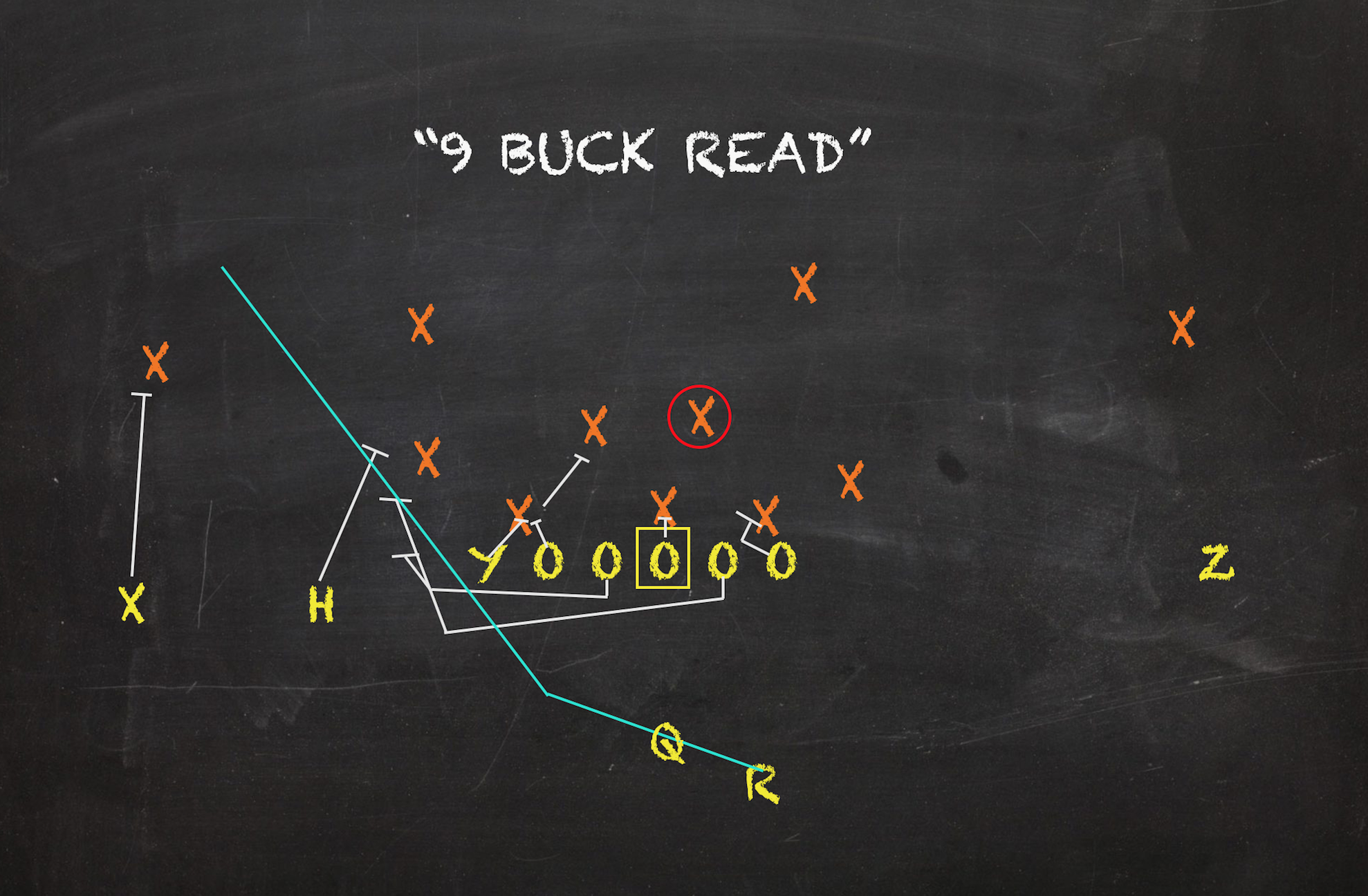
With South Carolina distributing reps across numerous concepts, few complied enough to be among their top yardage gainers in our applied parameter. I mean, here’s the Buck Sweep at No. 6 and it failed to crack the triple digits in yards. The look’s four explosive carries were responsible for all but seven of its yards. The Ole Miss game was its most productive outing. Along with its best attempt — a 46-yard Kevin Harris TD run — the Buck Sweep generated 64% of our sample’s yearly output.
MOST SUCCESSFUL CONCEPTS
1. Corners Smash: 1.41% Play Share, 11.9 Y/A, 85.7% Success Rate
Even though this Smash variant had a very limited sample in South Carolina’s meaningful minutes, it would be stupid to ignore its bottom line. No other of the Gamecocks most repped or successful plays best its 11.9 Y/A. Only one of its repped failed. Plus, it was responsible for the lone 20-plus yard completion amongst the Flood Family. By itself, Corners totaled the 6th-most yards of any look for this offense regardless of margin all year. Though it was commonly paired opposite floods and its never wise to press, I’m sure Gamecock supporters are a little frustrated to see how well this concept worked when targeted despite its low play share.
2. Bench Smash: 1.60% Play Share, 7.00 Y/A, 75% Success Rate
The out+corner combo was a stable design that tested opponents’ underneath defenders on the perimeter. Again, this concept was all about serving up decent gains and provided a very high floor. None of its reps logged an explosive attempt, but only two failed during our sample. The first was a 4th and Goal sack that capped a behemoth 17-play 7.5 minute drive against Florida. The second was an incomplete red zone pass after a false start on 1st and 15 versus Missouri in the 4th quarter. Outside of our parameter, Bench finished with a 53.9% Success Rate; still good, but clearly not up to the same standard.
3. Outside Zone Blast: 3.02% Play Share, 9.67 Y/A, 73.3% Success Rate
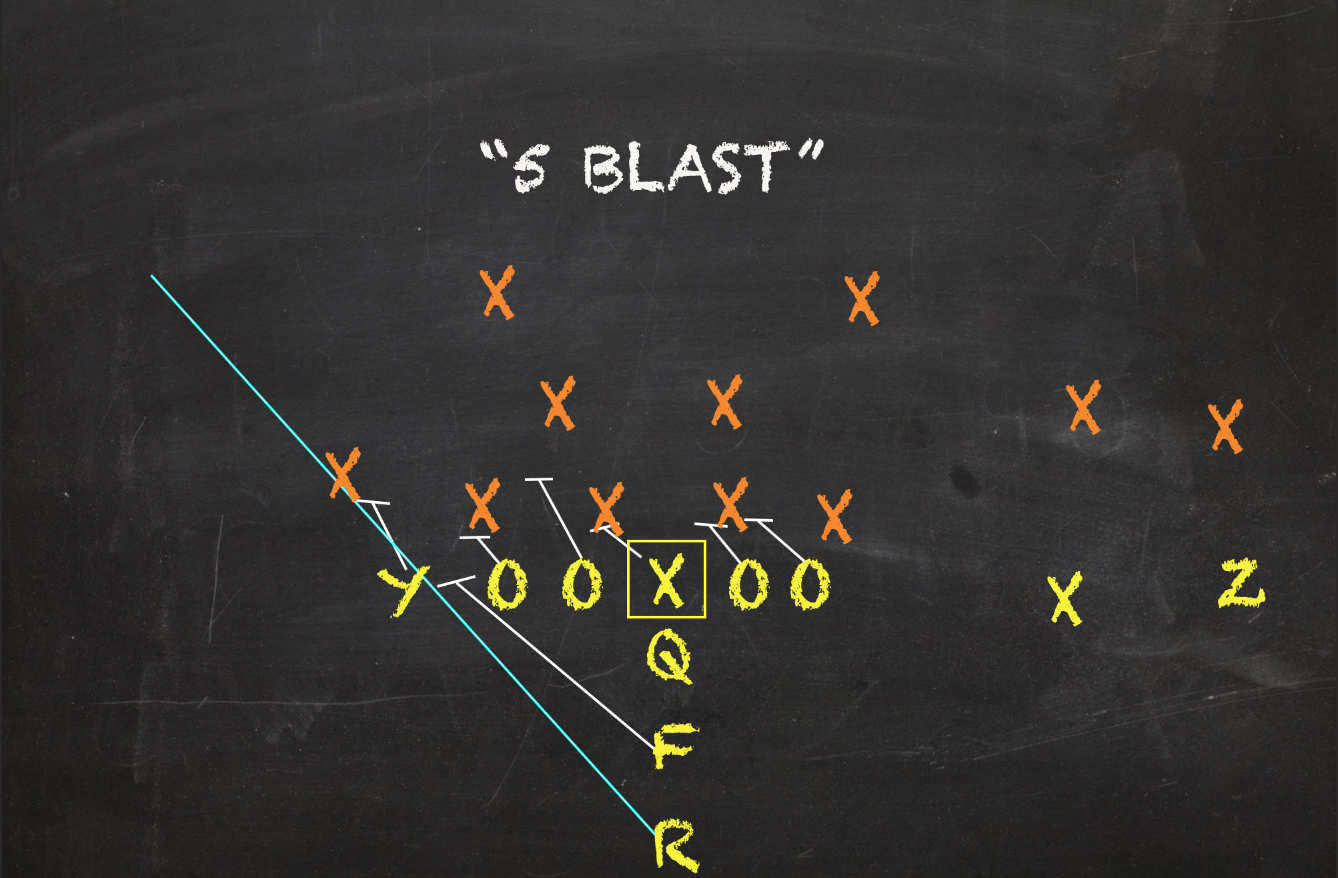
The Ole Miss game was responsible for 83% of Blast’s production, all four of its explosive carries, and 60% of the concept’s reps in our sample. While fans of archaic styles of play might find Bobo’s M.O. refreshing, this Outside Zone finished among South Carolina’s most successful looks due to the poor quality of defensive opponents rather than some kind of schematic edge. When Bobo sensed a weakness (or softness) along his foe’s front, he wasn’t hesitant to trot out the I and stress them with some lead blocking run plays. With the exception of Tennessee in Week 1, the remaining four games in which the I-Formation logged multiple reps came against defenses that finished in the conference’s bottom5 in Rushing Defense Success Rate.
4. Play Action Bootlegs: 2.21% Play Share, 8.09 Y/A, 63.6% Success Rate
South Carolina’s various Waggles and Boots helped provide easy targets for its passers outside the pocket and complimented it’s run-first approach. Most of these looks came from 12 personnel to better exploit the defense’s aggressiveness to curb the Gamecocks’s backs. As a result, five of the concept’s 11 targets produced a fresh set of downs. The Auburn game saw Boots the most. In that game, three of its four attempts resulted in success with two first downs. Plus, no other Flood logged a rep all afternoon. But only two other Boots would be called for the rest of the season. If I were to include some play action Sail wrinkles, it would gain back a few reps and pad its already sturdy Success Rate.
5. Mesh: 1.60% Play Share, 6.13 Y/A, 62.5% Success Rate
Point blank: the Mesh concept should have been featured more by this offense. Not only did the look play to this scheme’s strengths of providing multiple underneath options for South Carolina’s passers and a place to go with the ball versus several coverage looks, but it carried preferable results to most of the ‘Cocks’ passing output. But thanks to Bobo’s unrelenting belief in matchup schemes, this Rub Variation was overly shelved for most of the year. As a whole, this concept group collectively posted a 66.7% Success Rate over the course of the entire season. All Verts — a concept that didn’t fit the Gamecocks’ personnel in anyway — still logged more reps than Rubs. Over the course of our sample, Bobo evenly split this look’s tries evenly with half being the aforementioned Kelly Mesh and the other being a composition of a few standalone varieties.