2020 Offensive Play Calling: Vanderbilt
2020 Offensive Play Calling: Vanderbilt
Derek Mason’s final offense in Nashville once again represented the SEC floor in numerous offensive categories. Like in 2019, the Commodores finished with a conference-low Success Rate and Points/Play. I could go on, but there’s no point beating that dead horse. Already a place that struggles to put talent on the field, COVID protocols and opt outs further accentuated Vanderbilt’s difficulty competing within the SEC.
As a program that entered this past fall with rock bottom expectations (Vegas oddsmakers set their over/under win total at 0.5 and ESPN’s SP+ had them comfortably ranked in the triple digits), Vandy once again went winless against conference opponents while displaying little signs of hope. Though this offense tried to evolve and become a less-stale version of its past self, the aforementioned subpar results were too much to overlook. With that, I get why most will find a review of this offense totally unnecessary. Still, there are some elements Clark Lea’s new staff can look at, tweak, and possibly implement next season.
Since Vandy logged A LOT of garbage time snaps, I only looked at their calls when the margin was 18 points or less. Rather than letting desperation calls skew their “normal” modus operandi, omitting those plays give us a better depiction of what Vandy’s offense was and how it wanted to function. I looked at their most featured runs and passes, the concepts that gained the most yards, and their most “successful” looks across these meaningful minutes.
MOST FEATURED RUNS:
1. Inside Zone Slam Read: 15.7% Play Share, 4.23 Y/A, 40.9% Success Rate
Like many college offenses, the Commodores featured the Inside Zone Slam Read more than any other play. Despite fielding one of the worst lines in the Power5, Derek Mason and Todd Finch anchored Vanderbilt’s offense around this look. The Slam Read was frequently seen on first down where it accounted for nearly a fifth of the ‘Dores’ such plays in meaningful minutes. But in those spots, the play delivered its worst Success Rate across all downs with an appalling 30.6% clip. You can see why Vandy played a good amount of snaps behind the chains thanks to Slam Read’s dominance in the script and overall inefficiency. Only Kentucky and Texas A&M ran more to start a series within the SEC than Finch’s bunch; no one sported a lower first down Rushing Success Rate (32.1%).
As sad as this fact is, the Slam Read actually finished as the ‘Dores’ most successful run concept among their favorite looks with a 40.9% rate. But let’s be honest, calling this kind of production ‘pedestrian’ would be extremely diplomatic of me. At least the play’s Success Rate improved year-over-year. Including snaps outside of our applied points parameter, Slam Read’s clip improved from 37% to 45% even though its Y/A dipped from 4.92 to 4.23 in SEC play.
Often a great canvas play on which to tag routes on the perimeter for Run-Pass Options, the Slam Read featured Tunnels, Bubbles, and Slants as its go-tos for this offense. While the comparative Success Rate among straight reads and RPO designs were the same, Vandy averaged over a half a yard more with route tags featured on this concept. About two-thirds of the look’s snaps and 72% of its yards occurred off RPOs in meaningful minutes.
2. Outside Zone Off-Tackle: 7.98% Play Share, 3.53 Y/A, 30.6% Success Rate
Last year, the Off-Tackle was Vanderbilt’s most explosive run concept. But with decreased backfield speed and bookend blocking, this Outside Zone significantly worsened in production in 2020. The look’s Y/A and Success Rate fell from 6.43 and 43.5% to 3.53 and 30.6%, respectively. It’s one thing for a play to fail about 70% of the time; but for a staff to actively dedicate the second-most calls to said look is a terrible reflection of coaching judgement. Outside of two 20-yard scampers, no other Off-Tackle gained more than nine yards all season garbage time or not.
Like the rest of Vandy’s most featured run concepts, the Off-Tackle was terrible on first down. Only six of the 24 repped in meaningful minutes gained at least 5 yards. No other concept with adequate reps posted a worse Success Rate or Y/A than its 25% and 3.21 respective clips. Again, it wasn’t a wise move to call this play as much as the ‘Dores did in these spots. Though its overall play share in this parameter was about 8%, it climbed to about 13% to start a set of downs. The script-leader Slam Read only logged 12 more reps in meaningful minutes on firsts than this Outside Zone. But oddly enough, Vandy found gains on later downs despite its upsetting output on firsts. Four of the five Off-Tackles moved the chains on such third down tries while averaging exactly 8.0 Y/A, the highest figure among looks with at least seven tries. Only Inside Zone Slam Read’s 87.5% Success Rate topped Off-Tackle’s within this offense on the money down.
3. Inside Zone Bluff Read: 5.32% Play Share, 2.29 Y/A, 20.8% Success Rate
As horrific as the returns of Vandy’s top two run concepts were this season, no other look can challenge the ineptitude of the Bluff Read. While logging the 3rd-most calls for this offense, barely a fifth of the Split Zone Read’s reps found success. On a per play basis, no concept averaged less per attempt than its 2.29 clip. A mere four tries gained at least seven yards with only one going for 10-plus. With that bit of information it’s rather interesting that this play cracked Vandy’s top5 most featured runs when that wasn’t the case in 2019. Though the split zone action helped birth two explosive passes, Vandy was just as likely to log a sack on bluff play fakes as generate a completion of at least 20 yards.
With the two Inside Zone Reads predominately floundering, I was a little surprised to see the ‘Dores averaged more rush yards before contact on these looks than its overall clip. Regardless of the scoreboard margin, Vandy only averaged 1.5 yards — good for the conference’s floor. But their YBC ticked up to 1.68 on Inside Zone Reads. Though better, it’s still miles away from being acceptable. Every other SEC offenses’ YBC average topped 1.92 yards besides the ‘Dores and LSU.
4. Duo Dive: 3.77% Play Share, 3.06 Y/A, 35.3% Success Rate
There’s certainly nothing sexy about this gap scheme run, but that didn’t stop the Commodores from leaning on it to help carve tough yards. In 2019, the Duo Dive was the only one of Vandy’s most repped concepts — run or pass — with at least a 2% play share to see at least half of its reps end in Success. Overall, only four other looks bested its 51.3% clip in SEC play. But while the Dive aided the ‘Dores to play physically and gain four yards through a cloud of dust, the double teams birthed far worse figures in 2020.
Thanks to a bad line, both of the concept’s Y/A and Success Rate declined by over 45% year-over-year. Looking at Duo Dive’s concept group, Inside Powers, the Dore’s only averaged a paltry 1.47 yards before contact. Though usually a design from multi-tight end sets, only 8 of the play’s 17 reps in meaningful minutes came from those personnel packages. Moreover, Vandy only mustered a 25% Success Rate and 1.5 Y/A in such spots. All year, only a single Duo Dive went for 10-plus yards. Its lone explosive carry came against Ole Miss’s porous front, which finished only ahead of the ‘Dores’ defense in terms of surrendering such carries within the conference.
5. Draw: 3.09% Play Share, 6.71 Y/A, 35.7% Success Rate
Halfback Draws were not a major element to conference offenses this season. Regardless of the scoreboard margin, only 56 were called all year within the SEC. Vandy accounted for over 30% of them. Ordinarily a design with dissatisfactory returns, Vandy’s offense only saw about third of their Draws find success. But while delayed handoffs are commonly seen on later downs, only two of the ‘Dores’ 14 Draws occurred on third down. Though its 6.71 Y/A was easily the best clip among their most repped run concepts, only two HB Draws went for 10-plus this season.
Like much of Vanderbilt’s ground game, backs faced plenty of early contact. If they couldn’t shed tacklers, then the play was doomed. Nearly a fourth of these Draws resulted in a loss as the ‘Dores only averaged 1.08 rush yards before contact regardless of the scoreboard margin.
MOST FEATURED PASSES
1. Spot/Triangle: 3.99% Play Share, 7.00 Y/A, 61.1% Success Rate
Vanderbilt’s most targeted pass concept was arguably its best look through the air. While a 7.0 Y/A is a relatively middling clip compared to other pass plays, Spot/Triangle provided this offense’s young passer with short outlets and providing consistent results. Both designs are three-man route combos that can be construed as a wrinkle on to Stick concept. But no matter how you view it, it’s designed to find an open man against a few different zone coverages, which makes it a very popular pattern in all levels of football. Outside in, the Spot concept calls for a spot/sit hook, corner, and flat route. This quick video goes over processing the QB’s read based on the coverage. Triangle is the same combo with the exception of the No. 2 receiver running a dig, which changes the orientation of the hi-low from outside the numbers to the medial shoulder. Some have been known to call these concepts “Snags”.
Though great at helping an option come open versus zones, Spot/Triangle can be easily curtailed by man coverage. Like most, Vanderbilt frequently featured slants as backside man-beaters to round out their designs on both sides of the center. As a three-man combo, these typically occur towards the strength of the formation or the side to which the back aligns from balanced sets. When defenses overshade that way, more room usually comes open for the backside slants. Like you might suspect, only 22 of the 46 Spot/Triangle concepts called this year were targeted outright by this offense regardless of scoring margin.
2. RPO Bubble Screen: 3.77% Play Share, 5.78 Y/A, 64.7% Success Rate
It’s hard to call RPO Bubble Screens an outright concept, but they provided the highest Success Rate of any of Vandy’s most featured looks. In theory, most RPO outlets should naturally bring with them a high rate of return. After all, they shouldn’t see the ball come their way unless the defense is flanked or out-numbered on the perimeter, which obviously helps these screens win and the offense find gains. With Vandy’s dismal display executing Inside Zone Reads, it’s at least some solace their Bubble route tags worked.
Cam Johnson was the sole source of this concept’s production. All but three targets and 17 yards came from Vandy’s serviceable slot. While the look’s Y/A when the scoreboard margin was 18 points or less was a sturdy 5.78, Johnson himself averaged just under 8 Yards/Target on RPO Bubble Screens. Thanks to his wiggle in space, this concept finished among the ‘Dores top5 yardage gainers in meaningful minutes.
3. Smash: 3.06% Play Share, 3.64 Y/A, 35.7% Success Rate
Smash is a basic hi-low combo along the sideline seen from Pop Warner to the pros. Vanderbilt primarily featured the classic design of an outside curl/hitch and inside corner route. Of the 18 variations of Smash targeted during our applied parameter, 14 were directed towards the conventional pattern. To better facilitate their young passer’s throwing windows and to get him outside of the ‘Dores muddy pockets, a good amount of Vandy’s Smash patterns were rollouts.
All in all regardless of margin, five Smashes resulted in either a sack, scramble or throwaway, which account for a fifth of the concept group’s total targets. As far as true Smashes go, only three went for a gain of 10-plus as only one sparked a big gainer. Buoyed by a bullet seam on the look’s only explosive completion, Keyon Henry-Brooks accumulated over a third of Vandy’s total production on Smash Variations. In meaningful minutes, half of the concept’s reps took place on first down. There, the looked remained forgettable in terms of Y/A even if it carried an okay 42.9% Success Rate.
4. All Verts: 2.44% Play Share, 6.73 Y/A, 36.4% Success Rate
When a look averages only about two calls per game, it can be tough to say it was a major part of an offense’s plan. But All Verts had its role within Vandy’s scheme. Regardless of margin, ten of the 20 targeted All Verts occurred on first down even though its a play often synonymous with third-and-long. In our parameter, Vandy managed to find success on half of its targeted All Vert patterns when excluding sacks and scrambles. Overall, that clip remains rather sturdy at 40%. But with busted attempts on the year, Vandy’s cumulative Success Rate drops down to 30%. Though still in the upper half of the league, it’s clip was right on the SEC average.
All in all, three All Vert targets went for 20-plus yards and two others resulted in a TD. Despite the moderate results on this aggressive pattern, Ken Seals was 0/5 on deep attempts with an interception and another potential turnover that was dropped. Tight End Ben Bresnahan was the only ‘Dore to sport a perfect Catch Rate on this concept among players with multiple targets.
5. Play Action Bootleg: 2.44% Play Share, 5.82 Y/A, 45.5% Success Rate
Generally speaking, Play Action Bootlegs as either charted as Boots and Waggles. The properties of the two renditions are essentially the same. Both are weak side floods with a play side high-low, underneath hot route, and trailing crosser. The only difference is the initial orientation of the hot receiver, which is almost always a TE or H-back. Waggles will mimic split zone action and have that TE flow across the formation on a slide route. Boots will ask for a delay release into the flat towards the QB’s path and look to resemble normal zone flows or feint as a power play with a pulling lineman. There are other forms, but Waggles and Boots are unquestionably the most common. Of Vandy’s five such designs around this concept they called this fall, only one wasn’t categorized as either.
Like on some of its Smash pattern designs, these bootlegs opted to help Ken Seals see the field with less mess and clarify his passing lanes. Though the returns were blah, PA Boot’s output was still better than most of the ‘Dores’ passing game. Yet, play caller Todd Finch opted to overly fade this concept down the stretch. Of the 14 PA Boots calls this season overall, 12 came in the first three games. Only three targets birthed a gain over 10 yards; two occurred in Week 2 against LSU. Though more sporadic, the Sail concept, a strong side flood, also chipped in on the script. But only one of Vandy’s eight targeted Sails found success when the scoreboard margin was 18 points or less. When combined, the 21 targeted Flood Variations own the second highest play share of any pass concept group for this offense in meaningful minutes.
6. Tosser: 2.44% Play Share, 6.55 Y/A, 54.6% Success Rate
Tosser, or dual/all slants, has been seen across college football as a natural backside man-beater and as a RPO route tag. Though it can often depend on the individual route runner, slants can provide easy completions to underneath areas of coverages especially if an opponent is sitting back in a shell afraid to give up a homerun. Regardless of subconcept or scoreboard margin, Vandy targeted a slant 26 times this season, which is tied for the most of any route. Tosser itself was featured on 27 snaps with 13 reps. Of those 13, only three targets occurred on an RPO. While other offenses eagerly tagged slants on to read options, Vandy preferred the old Bubble Screen approach in this respect.
Acting as that aforementioned man-beater to round out dual-sided pass designs, Tosser was paired with Spot, Stick, slot fade, swing screens, quick out combos, and a slant/wheel rub play by this offense. When up or down 18 points, over half of the targeted Slant Variations have been Tosser, which helped the concept group finish among the ‘Dores five most successful looks.
TOP YARDS GAINERS
Inside Zone Slam Read: 300 Yards, 4.23 Y/A, 40.9% Success Rate
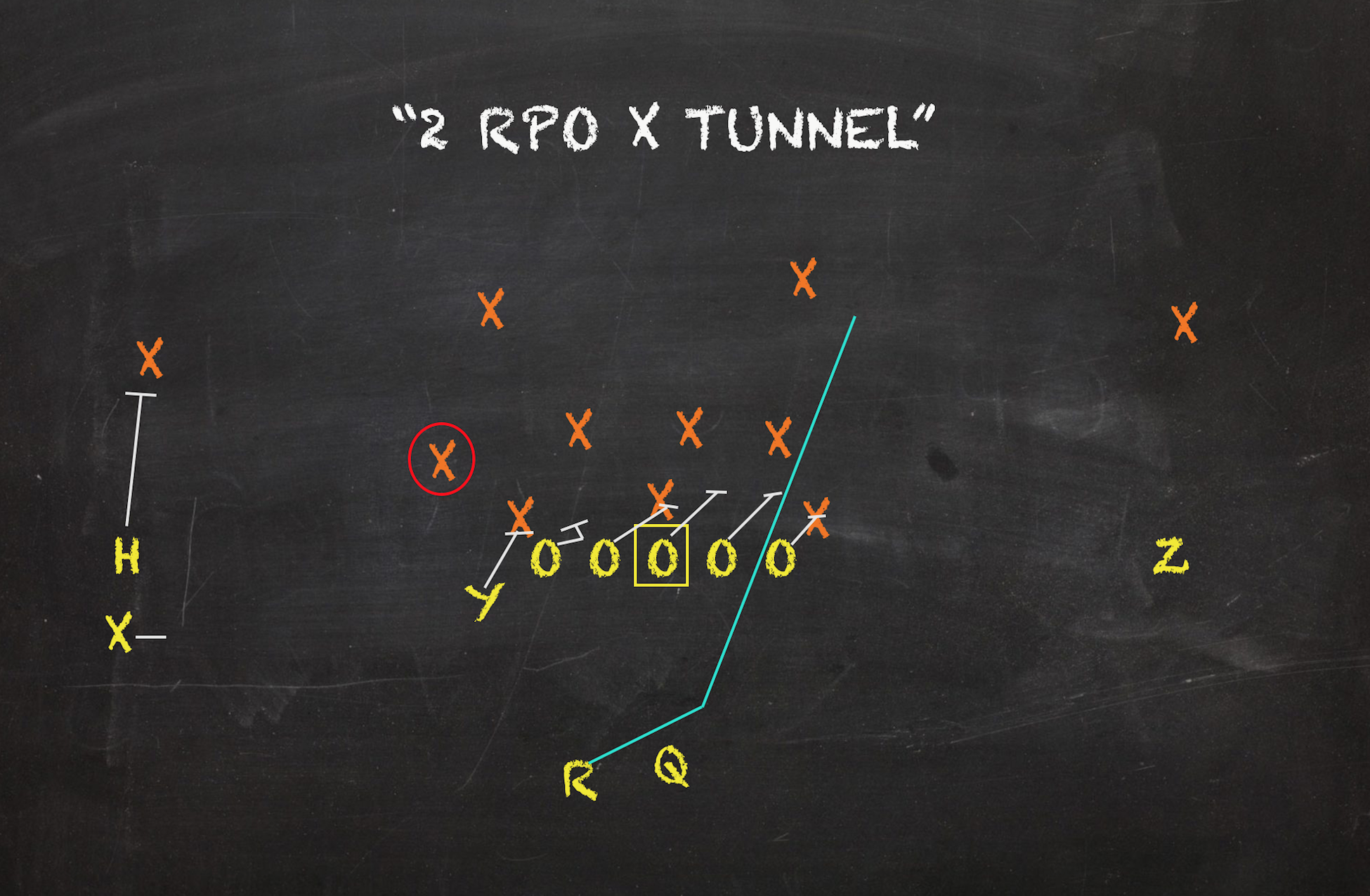
Thanks to the number of carries it received, Inside Zone Slam Read accumulated the most yards for Vandy’s offense in meaningful minutes in addition to play calls. While the anchor concept for this offense, it was overly lackluster. But with literally no other ground look able to provide consistency for the ‘Dores, Finch and Co. were forced to lean into it. Only four other SEC offenses dedicated more total reps to Inside Zone Reads but only Florida and South Carolina posted a less preferable Success Rate. All in all, the Slam Read accounted for roughly 18% of Vandy’s yards; 14% when the scoreboard margin was 18 points or less. In our applied parameter, this concept almost doubled Vandy’s next-best yardage gainer.
2. Vertical Shots: 187 yards, 13.4 Y/A, 50.0% Success Rate
Much like its output with All Verts, Vandy’s pass attack put up pretty respectable figures on Vertical Shot plays. In fact, only Kentucky, Missouri, and Tennessee bested this offense’s cumulative Success Rate on these designs within the SEC. Still, it’s impressive for an offense so hand-tied by opt-outs and inferior talent to see half of these shots meet situational goals. No other concept among Vandy’s most repped or most successful plays top Vertical Shot’s 13.4 Y/A.
Like its name suggests, these designs are all about one man working deep. Depending on the subconcept, you’ll know what kind of vertical route was targeted. Slot Fades and Solo Streaks accounted for 11 of the 14 Vertical Shots when the ‘Dores were up or down 18 points. The former buoyed the concept group’s output for the most part as five of the six targeted Fade designs found success on a 19.8 Y/A. But while the look posted great stats on the surface, Ken Seals’ only score on a Vertical Shot was a check down on a Vert+Curl combo. The freshman passer also logged 2 INTs on these looks.
3. Outside Zone Off-Tackle: 127 yards, 3.53 Y/A, 30.6% Success Rate
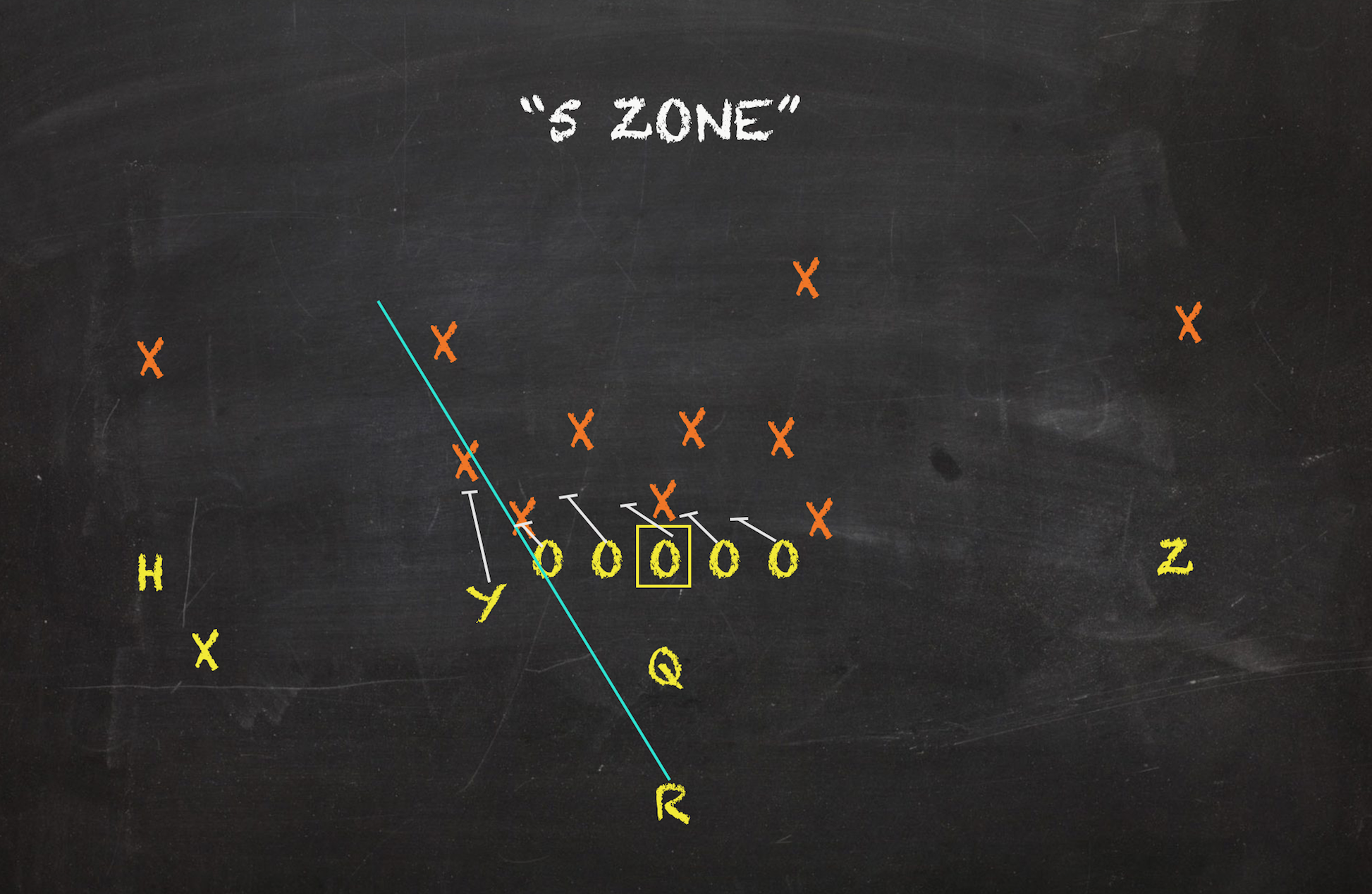
With a dismissible output, Off-Tackle only shows up on this list thanks to Vandy’s insistence of trying opponents around the edge no matter the results. Like most of its rushes, early contact hindered the ‘Dores’ backs from doing much damage on the outside. About one out of seven Off-Tackles on average went down for a loss compared to less than 5% generating an explosive gain. Again since this was often the source for this offense’s chunk runs a year ago, this downturn has to especially sting for an offense that has incessantly searched for answers. The only quadrant where Outside Zones topped a 3.7 Yards/Carry was to the mid-left where the concept produced a 9.5 clip; but only four carries ended up hitting that spot. While most winded up running though the outside left quadrant, 55% of Vandy’s Outside Zones were directed to right of center.
4. Spot/Triangle: 126 yards, 7.00 Y/A, 61.1% Success Rate
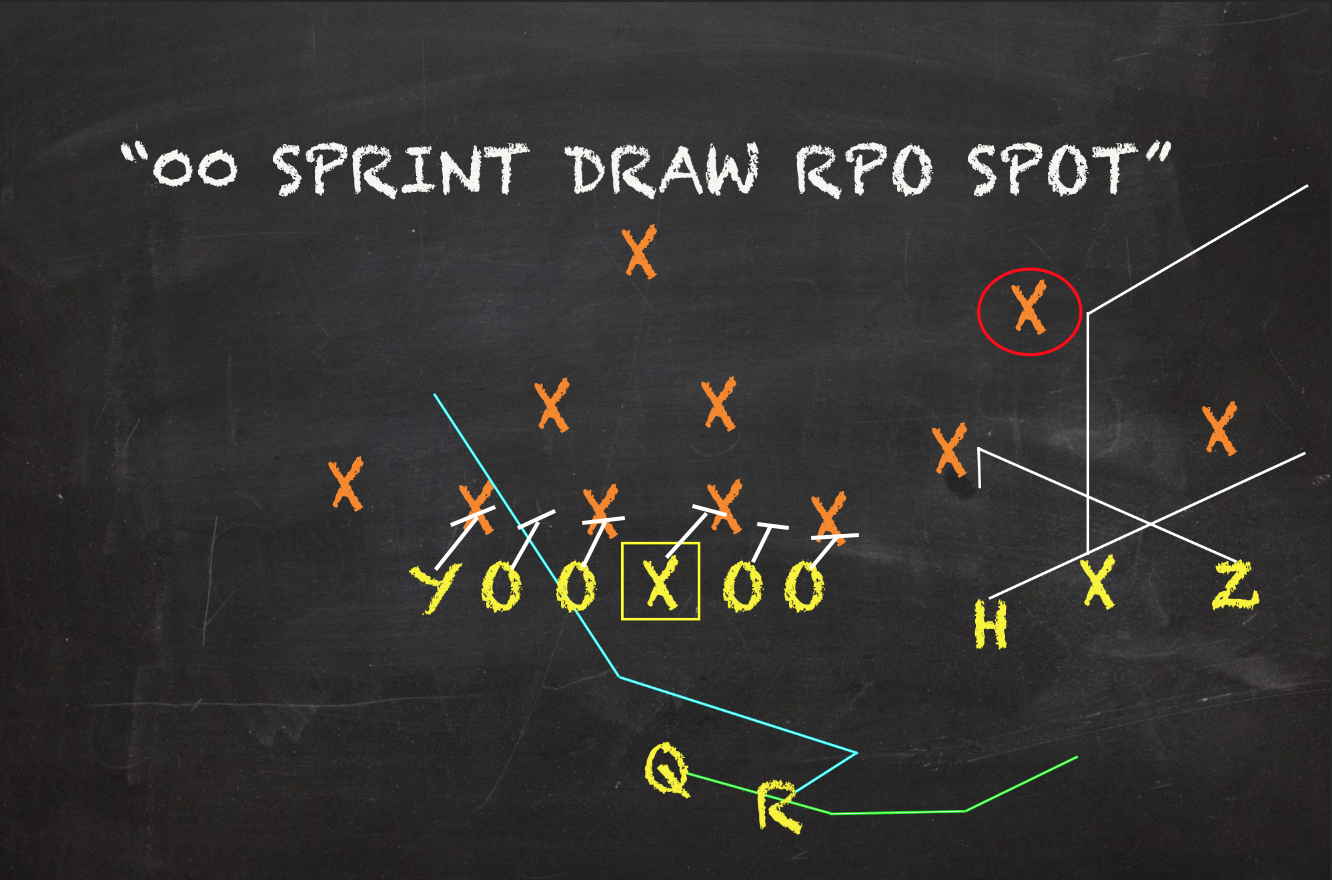
Though Vertical Shots out-gained Spot/Triangle when grouped together, no singular pass pattern was responsible for more yards in Vandy’s meaningful minutes. This short passing look enabled a 79.2% Completion%. Certainly not designed to stretch the field, this concept only birthed one explosive play. Still when excluding sacks and scrambles, ten of its 16 reps went for a first down. Five completions resulted in double-digit gains with three others resulting in a tuddy. Four of the 10-plus yarders and both scores came to the right of center. Excluding our parameter and including all snaps, Keyon Henry-Brooks and Amir Abdur-Rahman saw most of this concept’s production. Overall, the duo combined to account for 12/24 targets and 105/160 yards when Spot/Triangle was targeted.
5. RPO Bubble Screen: 123 yards, 5.78 Y/A, 64.7% Success Rate
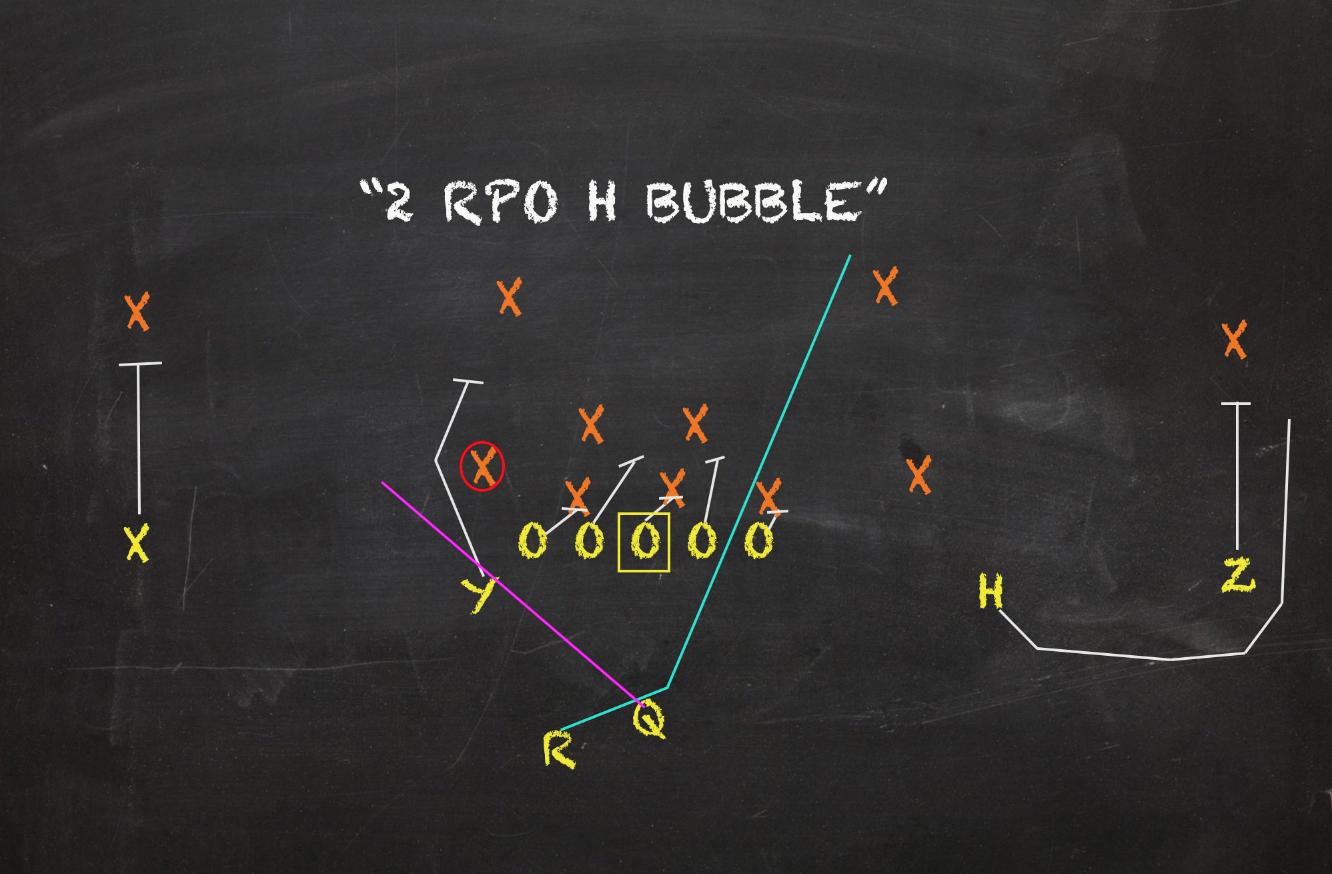
Besides being one of this offense’s most consistent concepts, RPO Bubbles also finished among Vanderbilt’s top gainers in our applied parameter with 123 yards. With no other RPO route tag fielding more than 2 targets, Bubbles easily were the ‘Dores most dependable design in that respect. With both Inside and Outside Zone Reads delivering a Success Rate south of 38% on RPOs, Bubbles were the only elements that helped them sport moderate numbers on the whole. All in all, RPO runs sported a 37.7% Success Rate with their pass counterparts donning a 58.6% clip.
6. True Screens: 120 yards, 5.64 Y/A, 31.8% Success Rate
Screens, like Draw and All Verts, are commonly placed into a box labeled “Desperation Plays”. Though modern offenses sprinkle them on early downs as easy yard-stealers, Vandy targeted seven true Screens in our applied parameter on 3rd Down, which accounted for a third of the look’s reps. With a wishy-washy line and the increased difficulty of playing behind the chains, that shouldn’t be too much of a shocker. Vandy featured five types of screens in its meaningful minutes. Slip screens totaled the most tries, but Swing screens were the most successful. Across the ‘Dores’ 10 targeted Slip Screens, which primarily were dump offs to backs, only two found success. All four of the targeted Swings worked while averaging 14.8 Y/A. Its long of 30 yards occurred on a flair motion Swing paired with backside slants against Mississippi State. While the two looks primarily operated separate from one another, Vandy called a two-headed screen with each type on opposite sides of the center a handful of times this fall. When all the subconcepts of screens were pulled together, they composed the most targets of any pass concept group for this offense in its meaningful minutes with 22.
MOST SUCCESSFUL CONCEPTS
1. Comebacks: 1.77% Play Share, 13.1 Y/A, 75% Success Rate
Vanderbilt only targeted this concept 8 times over the course of 2020 and showed healthy variety on the designs that featured it. Along with the conventional seam+deep sideline comeback combo, the Commodores coupled this concept with Shallow and All Vert patterns. They even had a deep hook pattern off heavy split zone play action akin to a wrinkle Alabama ran this year. All six of the concept’s successful targets took place in consecutive weeks on consecutive tries from the Mississippi State to the Kentucky game. The latter featured the three aforementioned variations of this concept on its four reps, a perfect Success Rate and 14.0 Y/A.
2. RPO Bubble Screen: 3.77% Play Share, 5.78 Y/A, 64.7% Success Rate
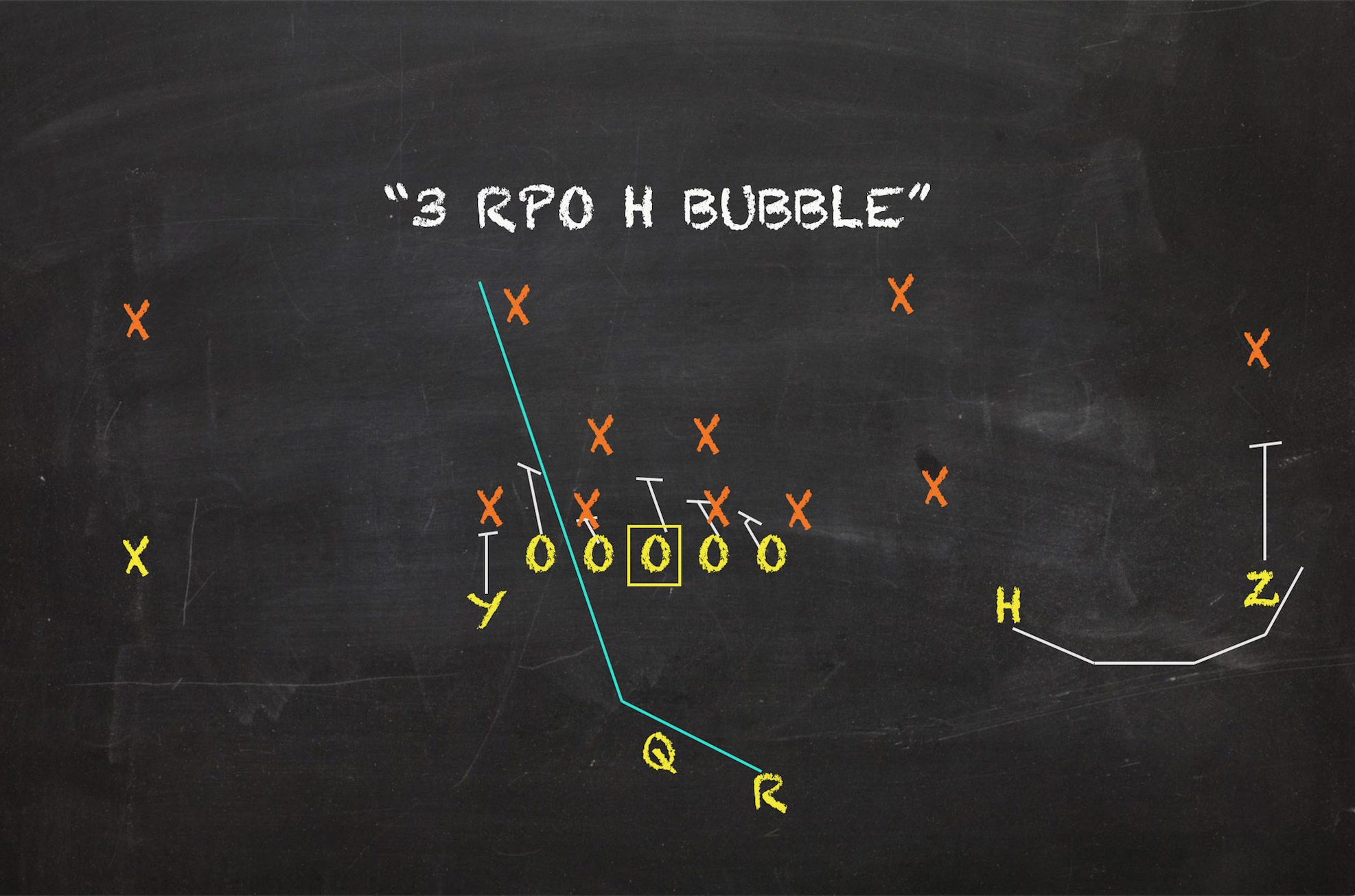
Vanderbilt’s run-first approach yielded less-than-satisfactory numbers. If you haven’t figured that out by this point, I don’t know what to tell you. But when the hammered early down runs, a good amount featured route tags. With that, RPO Bubbles saw its highest output on first down. Of the 17 targeted in our applied parameter, nine occurred to start a set of downs. Since Vandy’s run game was sought to be predominately extinguished by opponents in these spots, their play makers on the edge were able to be more advantageous. Despite most of Vandy’s runs putting up their worst returns on firsts, the Bubble outlet buoyed its overall baseline to the tune of a 6.52 Y/A and 77.8% Success Rate.
3. Spot/Triangle: 3.99% Play Share, 7.00 Y/A, 61.1% Success Rate
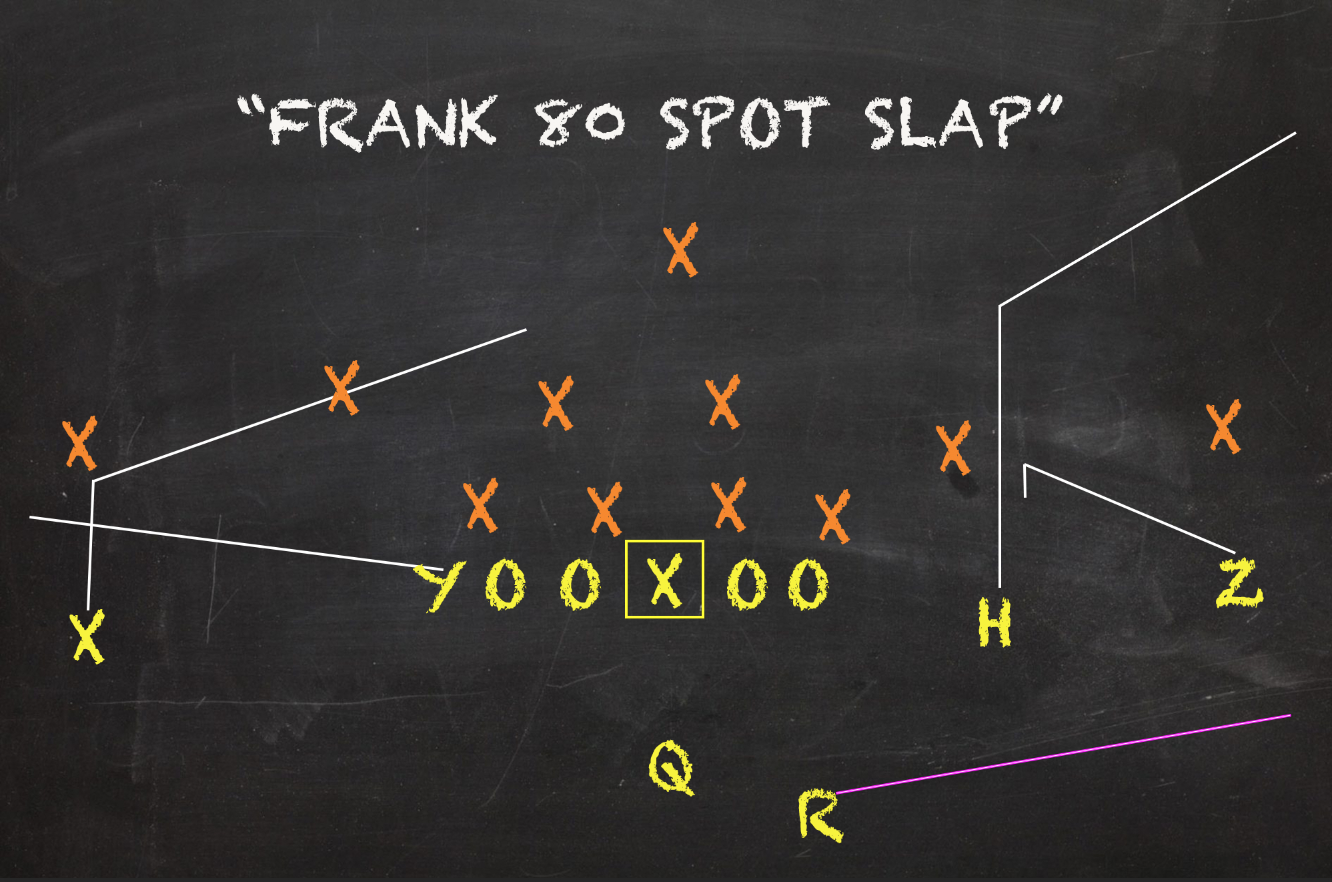
Five pass concepts were dialed up at least five chances to convert on third down. Only one saw at least half of its reps move the chains: Spot/Triangle. In addition to that, Vanderbilt featured this West Coast staple more than any other look on the money down; 11 of its 18 reps in our parameter took place in such spots. Among the eight overall concepts to see at least five third down attempts, only Off-Tackle averaged more yards/play than Spot/Triangle’s 7.09 clip. Though they are charted together, the ‘Dores exclusively featured the Spot concept with no reps given to Triangle.
4. Straight Inside Zones: 2.22% Play Share, 4.10 Y/A, 60.0% Success Rate
Without a read element attached, Vanderbilt’s straight forward Inside Zones displayed more consistency. Either from 12 personnel with a no-nonsense attitude or from spread sets that utilized jet motion, Inside Zone Slam and Splits saw over half of its attempts meet situational goals, a feat none of Vanderbilt’s most repped run concepts came close to achieving. Though the sample size was relatively small, only Todd Finch can answer for why these zones weren’t explored more over the course of the season.
5. Slant Variations: 4.43% Play Share, 5.90 Y/A, 55.0% Success Rate
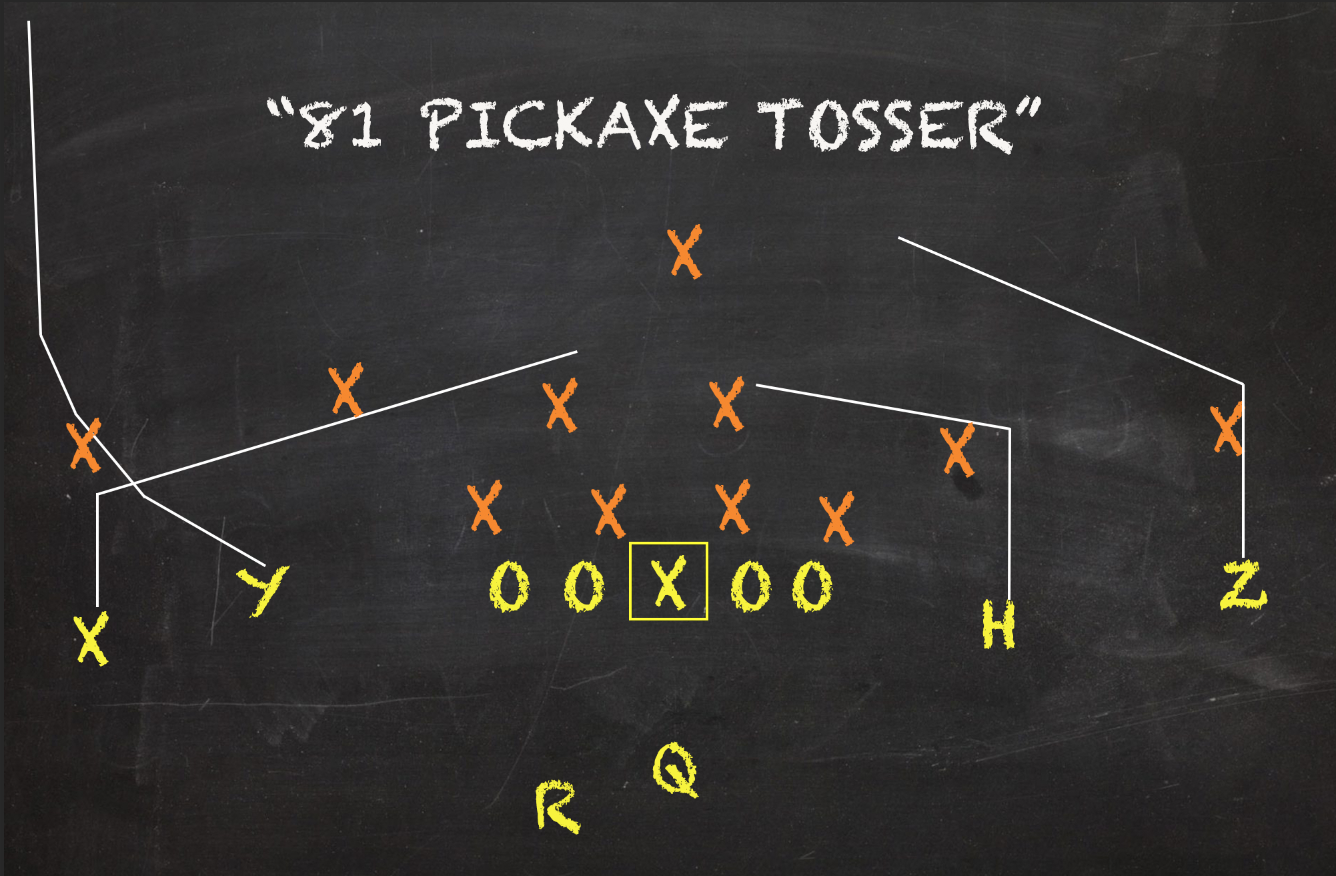
Much of what I mentioned about Tosser reigns true for the rest of its concept group. Slants were seen on read options as route tags but they were mostly used as backside man-beaters to compliment front side zone-topping patterns. Since Tosser carried the load and saw the most targets, much of its output is reflected by the concept group’s 5.90 Y/A and 55% Success Rate. But in addition to the 11 targeted dual-slant Tosser combos, Vandy gave five looks to Slant+Flat, three to solo slants/glances, and one to a Curl+Slant pairing on an RPO.