Sideline to Sideline: Georgia 2019
Georgia at a glance
Georgia had every reason to believe they would contend for a title entering 2019. I won't reopen the wounds of yesteryear. But for a program so close to breaking through, this past season was just the latest letdown for the Bulldogs. For the first seven weeks of the season, Georgia was on track to get to Atlanta unscathed ready to try their luck with another playoff birth. That all changed with a lazy noon kickoff with the Bulldogs hosting South Carolina. Of course, Georgia was upended and its entire offensive identity was uprooted. The Gamecocks' blueprint for bottling up this once-mighty offense was unfurled by every opponent the Dawgs faced from Week 8 on.
This decline wasn't just in a stat here or a stat there but rather a reflection of a systematic failure. It's not too much of a secret Georgia runs the most basic and watered-down scheme in the SEC. Though they weren't operating from the wishbone or the I-formation, Georgia's scheme is heavily rooted on winning in the trenches. Despite this hard-nosed mentality, the Dawgs overly preferred zone plays to power ones. All five of their favorite run concepts are members of the zone family. Nearly a third of their entire offense was composed of their basic zone looks. Sure, the Dawgs' incorporated modern spread tactics like read options, operating from primarily 11 personnel, and a "balanced" Run/Pass ratio. But, there was no question this unit would go as far as its no-nonsense run game would allow.
Before we examine just how badly Georgia trended offensively across the back half of the schedule, let's first acknowledge the Bulldogs were still a good team on that side of the ball relative to the rest of the SEC. Even though their Run/Pass Ratio was close to 50/50, Georgia had the SEC's fifth lowest Pass Rate. Georgia's volume rush numbers weren't impressive. Their 185 run yards/game was the fifth most in the SEC and failed to finish inside the nation's top40. But, the Dawgs still finished with preferable efficiency figures. Despite a middling 5.48 yards/carry, Georgia's 47.8% Rushing Success Rate was good for the conference's fourth best clip. Unlike their bland yards/carry would suggest, Georgia was one of the SEC's best a generating explosive rushes. Over 17.5% of Georgia's designed carries went for 10 yards or more, which was good for the fifth best clip in the SEC.
While Jake Fromm's play certainly took a step backwards in 2019, Georgia still commanded one of the best passing offenses in the conference. By year's end, only LSU, Alabama, and Florida could claim a higher Passing Success Rate than Georgia's 44.9% clip. Though above average in terms of consistency, the Bulldogs were considerably less potent down-to-down on their dropbacks. With a fresh group of wideouts, some adjustments were needed. But despite the predominant unfamiliarity entering the year, Georgia's pass game -- like their run game -- was on a completely other level the first seven weeks of the year. As the year played out, however, man coverage and tighter windows arose due to a year over year reduction in collective speed from their receivers. Georgia was was one of the ten SEC offenses with an Explosive Pass Rate in the single digits.
Like most run-heavy offenses, Georgia's 1st Down play calling was dictated by their ground game. Of their six most called plays on firsts, four were run concepts. Though by year's end they failed to see half of their 1st Down runs met situational goals, the Bulldogs sported the third best Success Rate in those spots within the SEC. Not too many teams would turn down their 48.6% clip. Georgia's pass game was able to break the 50% barrier by seizing on advantageous coverages or unsuspecting secondaries lulled by the run. Thanks to their performance through the air, Georgia owned the SEC's third best overall Success Rate on 1st Downs. But this offense's philosophy was to impose its will on fronts. Georgia wanted to bash, bruise, and demoralize defenses with a run-first attack.
The straightforward play calling helped entertain that. The Dawgs were often bigger, stronger, and faster than a good amount of their opponents. So this offense never really looked to out-scheme people. They were much more interested in the psychological effect failing to stop simple runs has on a defense over the course of a ball game. Looking at the macro, this tactic mostly worked. Only three teams inside the SEC posted better Early Down Conversion Rates than Georgia's 71.6% clip. Like I love to say, the best 3rd Down offenses are the offenses that avoid 3rd Downs the best.
When the run fails to establish itself on early downs, offenses generally take to the skies. Only two SEC offenses had a higher Pass Rate on the money down than Georgia's 78.8%. Though the Dawgs held their own when they were in position to convert on the ground, they were basically average relative to the rest of the conference when they passed on 3rd Downs. In the end, the Dawgs failed to finish inside the SEC's top5 regarding Success Rate. Nearly 23% of UGA's offensive drives ended in a Three-and-Out.
Overall, Georgia's offense was one of the best around at limiting mistakes. While both their Run and Pass Havoc rates ended up being middling, Georgia averaged the SEC's fifth best yards before contact and commanded a top3 Turnover Rate (1.19%) and Sack Rate (1.74%). Not to mention, the Dawgs' OLine prevented pressure better than anyone else in the conference. Though it wasn't as sterling as their clip in 2018, Georgia only faced pressure on about a fourth of their dropbacks (24.6%).
Now it's time to take off those red-tinted goggles. Like I mentioned, Georgia's final output was greatly buoyed by their figures over their first seven weeks of action. Once there was a blueprint for hindering this offense, Georgia instantly lost their firepower and effectiveness. Plus, I'm sure there aren't many out there arguing their scheduled eased up starting in Week 8. Six of their final eight opponents finished inside the nation's top40 in Total Defense. But Georgia was supposed to be a team that could line 'em up and knock down anyone in their way. Much to the dismay of UGA supporters, that was not the case this year. Even as Georgia kept finding ways to win, the final products were rocky and reflected the downturn this offense took.

Due to the rise in level of competition, a decline in efficiency should have been expected. Still, the massive drop the Dawgs suffered from across the board was rather alarming. From Week 8 on, Georgia was a below average offense relative to the rest of the SEC. Defenses aggressively honed in on their straightforward zone scheme. While Georgia's two top targets were far from scrubs, they simply lacked big play potential of UGA's corps last season. Since secondaries respected them less, safeties were obliged to stack the box and help bottle up the Bulldogs' run game more. This was a major gamble on their part. Though I have always questioned Fromm's passing acumen, his numbers were too sturdy to tackle when he was surrounded by talent. The risk of forcing Fromm to play the hero paid off mightily as the junior quarterback couldn't maximize his opportunities. I'll get more into this later, but Fromm regressed when pressured and even looked less accurate when kept clean. Fromm can slice zones up with the best of them, but it was clear he didn't pass as sharp against man coverages. Injuries and inexperience handcuffed this passing attack from being able to take the top off of defenses overly aiming to neutralize Georgia's ground game.
Extra bodies in the box led to a reduction in Georgia's average yards before contact on rushes, which was the major catalyst for everything falling apart. The first seven weeks, The Dawgs simply dominated their foes by generating massive run lanes. In this span, Georgia boasted an SEC-high 3.36 yards before contact. They executed their run-heavy scheme to a T. With plenty of cushion, Georgia was able to run the ball down their opponents' throats and overly stay ahead of the chains. No SEC offense was more successful down-to-down or averaged more per carry than Georgia before Week 8. Since the run game was winning at will, Offensive Coordinator James Coley could use Fromm's passing more prudently.
As I touched on earlier, much of this success came from kicking ass on 1st Downs. From Weeks 1-7, Georgia's offense played some of its best snaps on those downs. They were the only SEC team with a 1st Down Success Rate over 59% and averaged more yards before contact (4.23) than Tennessee averaged per rush attempt (4.06). As you might have guessed, the Dawgs were otherworldly on the ground as 60.2% of their rushes met or exceeded situational goals; that clip was 17 percentage points better than the SEC average. With the line blowing the doors off defensive fronts, opponents were forced back on their heels and left weary of what might come next. Fromm greatly benefited when he was not this offense's focal point.
Though less domineering on the money down, Georgia still commanded top5 Rushing and Passing Success Rates within the SEC from Weeks 1-7. In the back half of the schedule, their play on this down saw less of a decline than their 1st Down numbers. But, there was an obvious shortcoming when the Bulldogs aimed to convert on the ground. Despite averaging the SEC's third best yards before contact clip the first seven weeks of the season, no conference offense put up a worse clip starting in Week 8 than Georgia. As crappy as it sounds, the Bulldogs only managed to average -0.22 yards before contact in these spots, which had a devastating effect on their 3rd Down rushing efficiency. Their 56.3% clip dropped to 47.8%, which was the SEC's fourth worst Rushing Success Rate after Week 7. Fromm's numbers worsened as well but not as much relative to the rest of the conference. Overall, Georgia's 3rd Down Success Rate went from 45.5% in Weeks 1-7 to 38.1% from Week 8 on.
Georgia's backsteps on the do or die down in the back half of their schedule were minimal compared to the regression their 1st Down numbers experienced. Their once mighty 4.23 yards before contact clip was more than cut in half to 1.75, which comfortably landed UGA in the SEC's bottom4. I'm sure you can fill in the gaps on how this drastically handcuffed Georgia's operation. The Bulldogs' Passing and Rushing Success Rates were over 13 and 12 percentage points worse compared to their numbers from Weeks 1-7 in these instances.
Much of this stalling was due to the fact their play calling doubled down on their core zone looks. While more Draws, Nakie Tosses and pass wrinkles popped up more in their script, 36.4% of their plays after Week 7 were either Inside or Outside Zones along with their read counterparts. All four of these combined for a pedestrian 41% Success Rate. Failing to execute their bread and butter looks without introducing worthwhile new ones undermined the overall level of play from this offense.
Inside the conference, Georgia's defense was one of the best across the board but only managed to finish with the fourth best Defensive Success Rate in SEC play. Still, the Bulldogs allowed the lowest yards/play (4.55), yards/pass (5.11), and yards/carry (3.63) versus conference offenses than any other SEC defense. Despite that superb clip against the pass, Georgia was far more consistent stopping the run. Remember, Georgia often played old-school wanted to control the line of scrimmage on both sides of the ball. Versus conference opponents, Georgia ravaged OLines as SEC offenses averaged less than a yard before contact facing the Dawgs' defense. UGA's league-leading 31.6% Run Havoc Rate obviously played a part in them dismantling blockers all year long.
Plus, Georgia limited explosive plays -- passes that gain 20 or more yards or runs that gain 10 or more yards -- better than all other SECers. UGA's Explosive Play Rate Allowed to SEC foes was a mere 8.03%. As you might suspect from the nation's best scoring defense, Georgia's Touchdown Rate Allowed (2.09%) was tops within the conference. Though they did a fantastic job of pressuring passers, sacks were not this unit's strong suit. UGA was able to log a pressured pass on 25.1% of SEC opponents' dropbacks, which was the third best rate versus SEC offenses. But, the Dawgs' Sack Rate of 5.03% was among the four worst in conference play. Kirby Smart's defense also had trouble forcing takeaways. Against conference foes, Georgia was more likely to let up a touchdown than generate a turnover. And remember, no one was better curbing TDs in SEC play than the Dawgs.
While their offense kept disappointing, Georgia's defense remained elite. By the end of the year, the Dawgs' defense finished 1st in Scoring Defense 3rd in Total Defense nationally. ESPN's SP+ also recognized Georgia's defense as the best in college football. Sacks, Takeaways, and limiting points are three solid metrics in which most upper-echelon defenses thrive. Certainly, the Dawgs could have played more aggressively or performed better in order to create game changing plays. But at the end of the day, it's all about who scores the most points. Georgia absolutely excelled in that department better than any other college defense despite a rigorous SEC schedule.
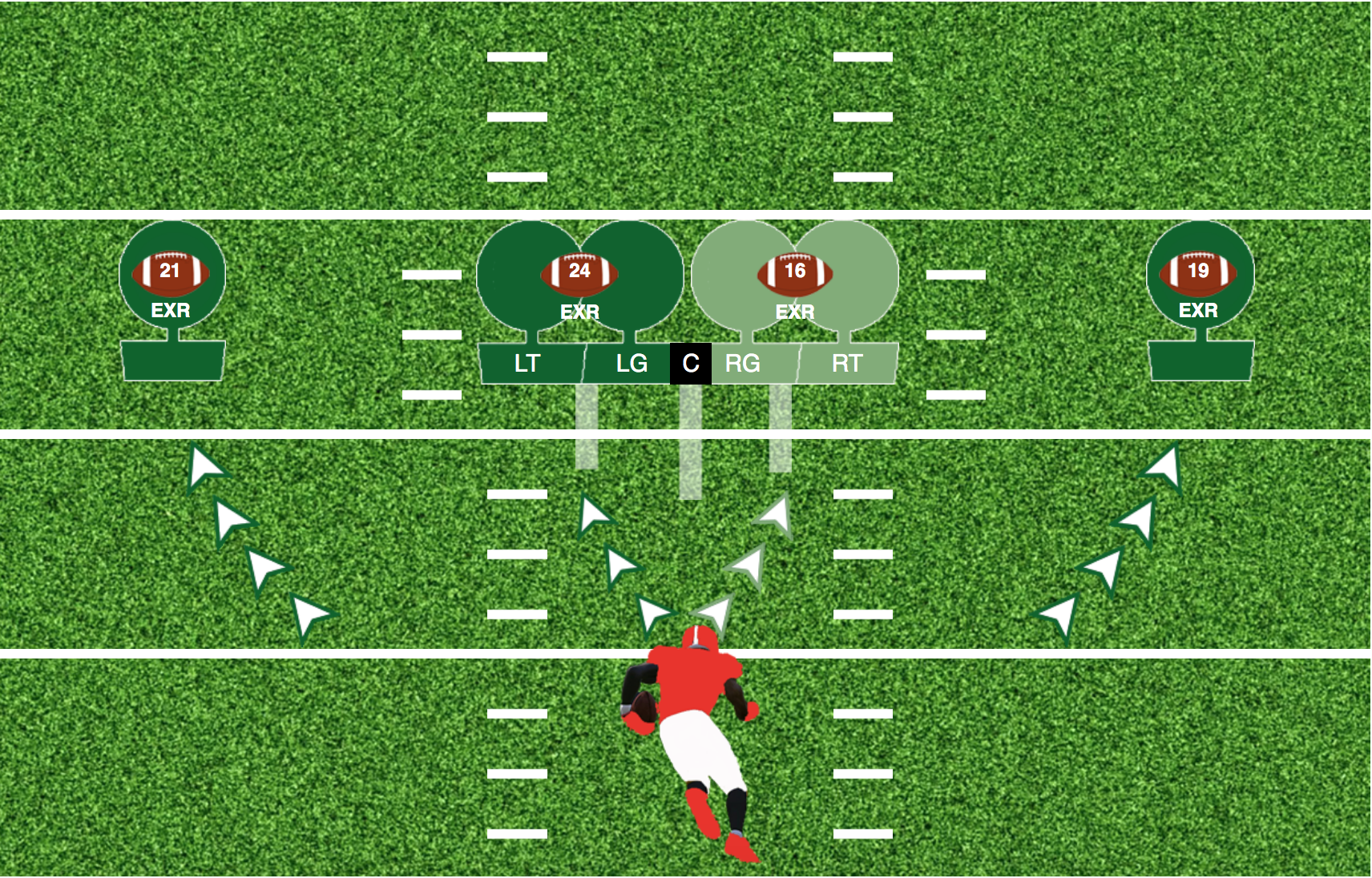
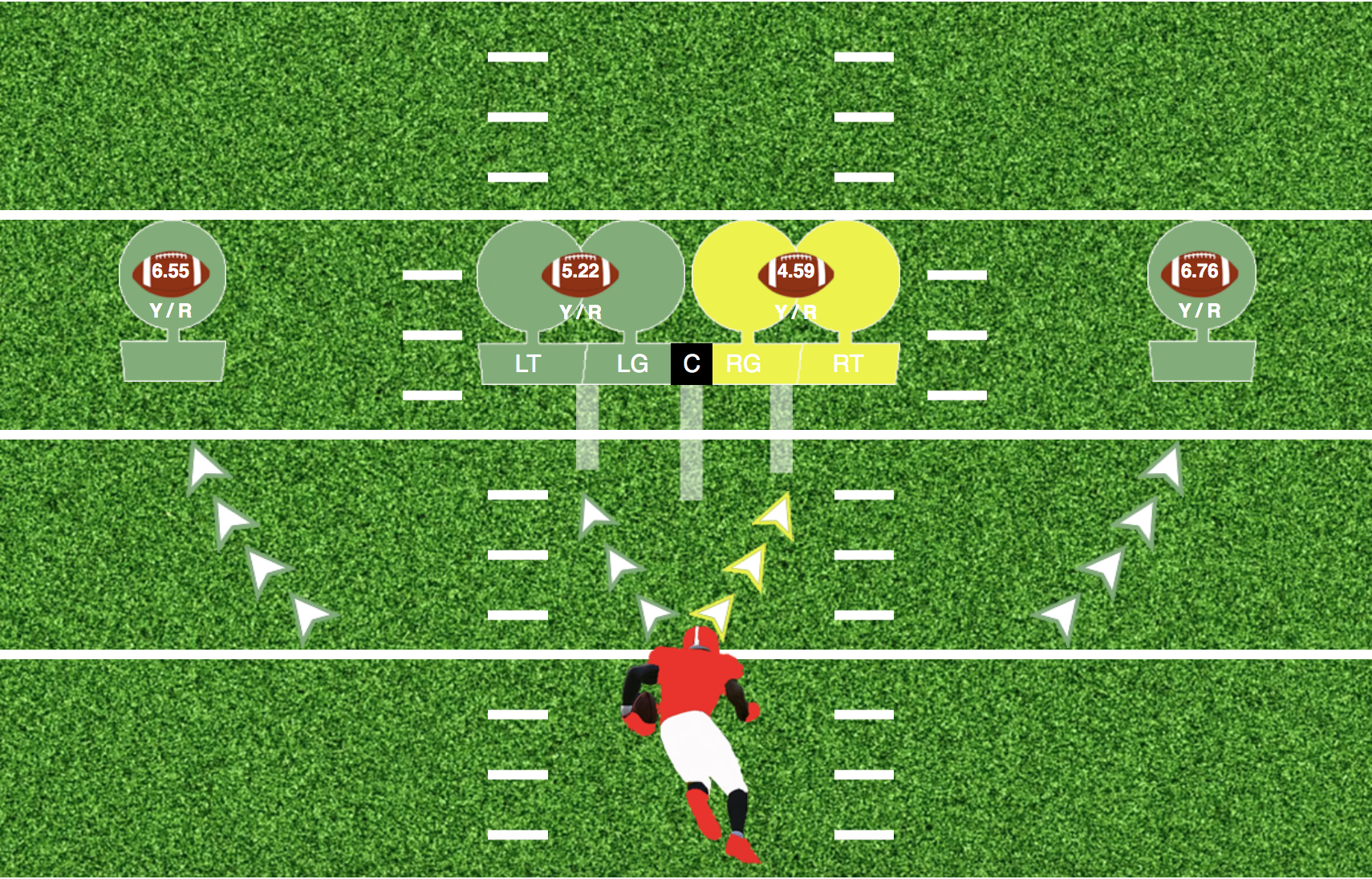
Georgia's favorite run looks
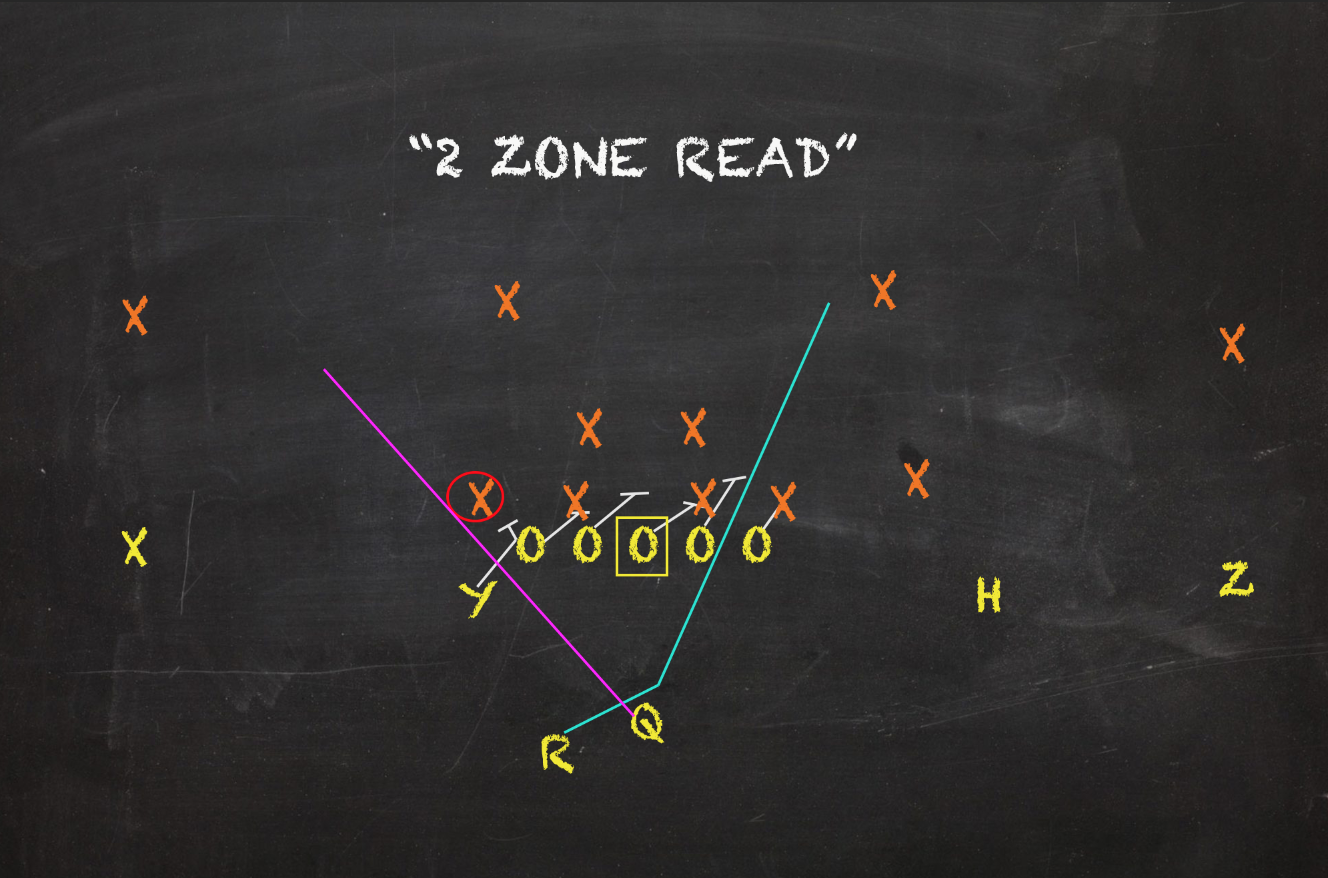
1. Inside Zone Slam Read 16.5% Play Share 5.32 Y/A 48.0% Success Rate
Georgia's manilla run game was anchored by one of the most common concepts on the ground, the Inside Zone Slam Read. This basic inside zone rooted their entire offense. Again, Georgia's modus operandi wasn't complicated. The Dawgs wanted to line 'em up and knock 'em down. Georgia finally started to incorporate more outlets via RPOs, and Slam Reads were often the core concept on those play designs. As you might recall, Jake Fromm rarely scooted down the sideline last season. On all Inside Zone Reads, Fromm only had three attempts. Every one of these reps occurred from shotgun; and to my trained eyes, Fromm always had the option to run. Instead, he was much more inclined to whip it out to a wideout on his keeps. About 40% of this look's reps operated as an RPO. The tagged routes helped open up alleys as RPO Inside Zone Slam Reads saw an uptick in yards/attempt to 6.83 and Success Rate to 53.3%.
As you might suspect, this was Georgia's favorite play across all downs. With the bar lowered on 3rd Downs, UGA executed Slam reads more "successfully" in those spots than other downs despite averaging 3.07 yards/carry. On the money down, the Bulldogs sported a 64.3% Success Rate. On the most frequent down, 1st Down, the Dawgs were kinda middling with only a 44.4% clip. By with a decent amount of success and by shear volume of carries, this look just about tripled the total yardage of the next best concept. Slam Reads amassed 809 yards. Plus since this was the team's most run play, it had a good effect on their overall Success Rate. (UGA's Rushing Success Rate was 47.8% overall and 43.9% on 1st Downs).
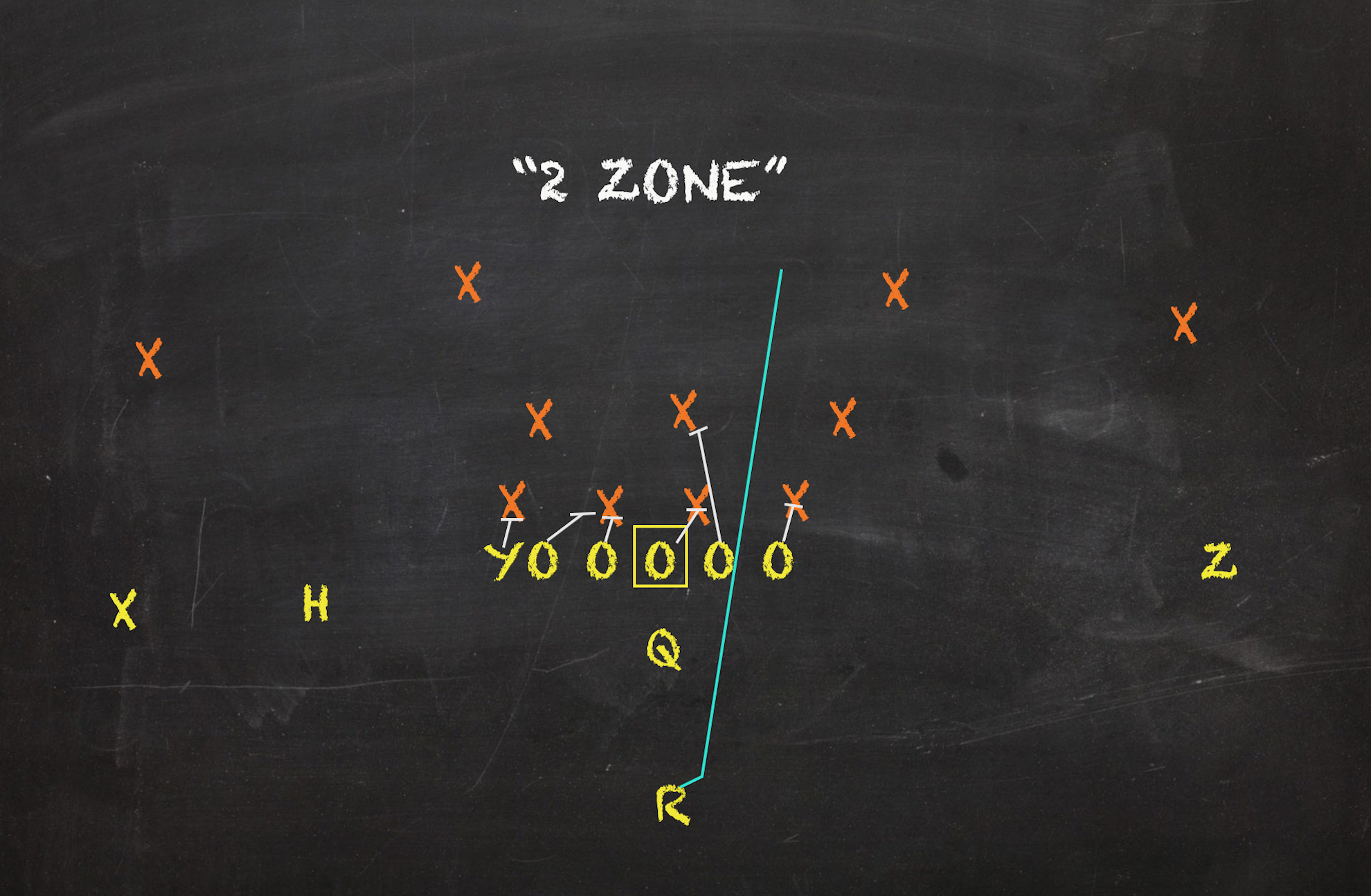
2. Inside Zone Slam 5.64% Play Share 5.21 Y/A 44.2% Success Rate
The non-read version of the Inside Zone Slam was the Bulldogs' second most favorite play. Talk about a watered-down scheme, amirite? Over a fifth of their script was composed by the Slam concept. While the read design occurred out of the gun, the non-read version primarily operated from undercenter or the pistol. Despite the no-nonsense mentality, Georgia's OLine failed to forge run lanes consistently on this concept. Schematically, this zone when run from undercenter plays in a part in the misdirection game. Occasionally, UGA would turn toward the gap-play Duo Dive, which is directed towards the B-Gap between the guard and tackle like Slams. Unfortunately, the Dawgs were not that spectacular executing either.
By SEC standards, the Dawg's execution on IZ Slams were rather pedestrian. This look was largely a early down play as 50 of its 52 reps occurred on either first or second. Though Slams were more than doubled in number of reps on 1st Downs by their read counterpart, they were Georgia's second most favorite play in those spots. On firsts, Slams had a slightly better Success Rate at 46.7% but it averaged 4.67 yards per pop. On seconds, it yanged averaging 5.75 yards/attempt on a 40% Success Rate. Thanks to their abundant chances, Slams' 271 yards were the second most of any UGA look.
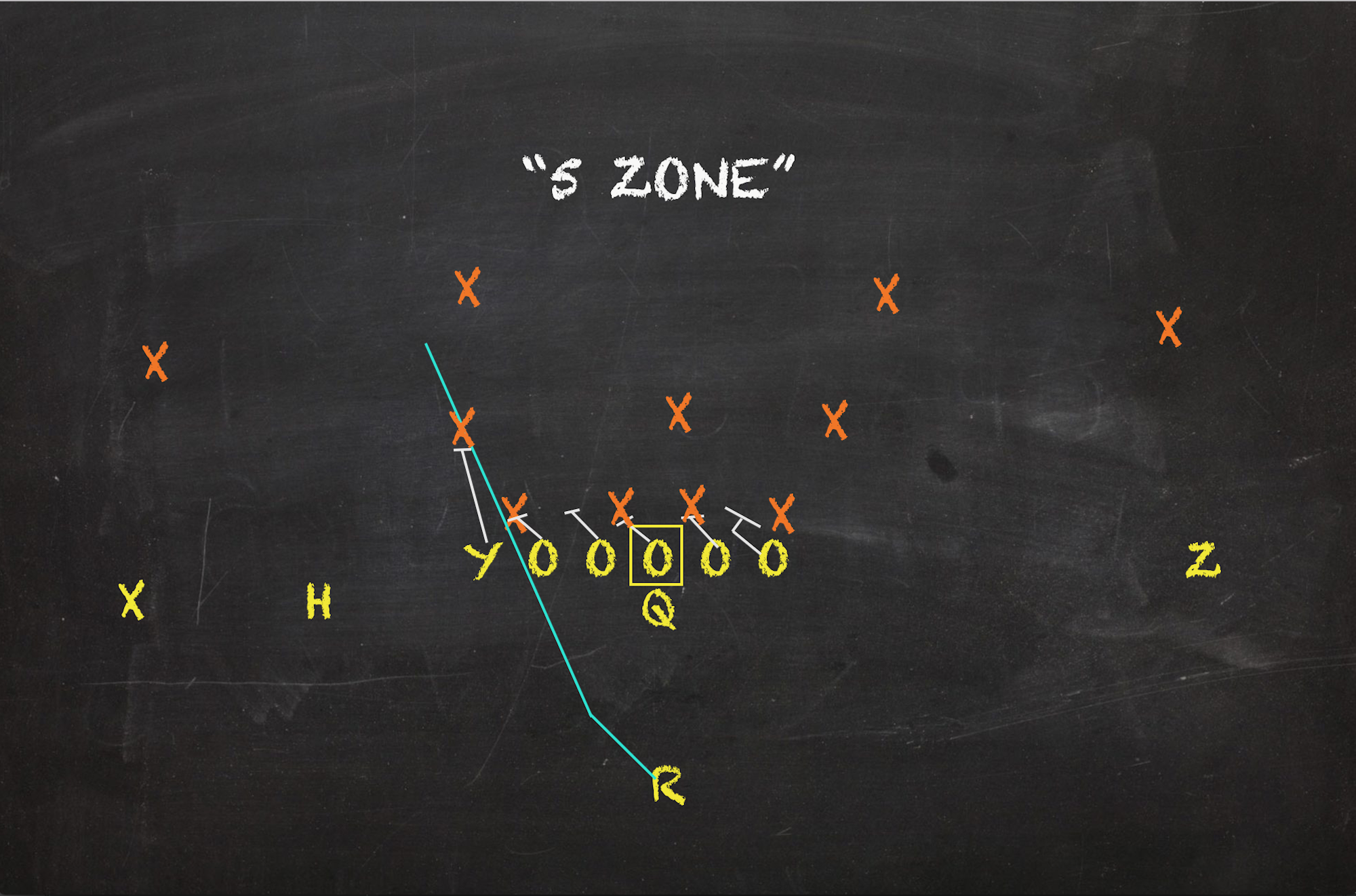
3. Outside Zone Off-Tackle 3.58% Play Share 3.76 Y/A 30.3% Success Rate
While the occasional Duo Dive would compliment a non-read slam, Off-Tackle zones were featured more. In an attempt to get their speed on the perimeter, Off-Tackles naturally paired well with Slams that aimed to win inside. Too bad the Dawgs were downright pitiful reaching end men on the line or sealing interior defenders. Of Georgia's five most favorite runs and pass looks, no concept averages less per play or sports a lower Success Rate than Off-Tackles. Since this design strives to get towards the outside, the OLine generally takes flatter paths in order to take care of the most immediate threat in their zone flow. Inside penetration or a conquered edge by the defense can easily neutralize this zone.
Like non-read Slams, Off-tackles were predominately an early down play. All but one of the play's reps took place on 1st or 2nd Down. On firsts like in general, Off-Tackles were the Dawgs' third favorite play. Though their production in those spots was middling, it was far favorable than their output on 2nd Downs. On seconds, Georgia was absolutely in efficient AF as they only averaged a mere 1.58 yards on a 8.33% Success Rate. As you might suspect, this drastically hindered the concept's overall numbers. As the year progressed, other outside oriented runs like Nakie Tosses and Sweeps provided wrinkles for Georgia to win outside the bookends more consistently.
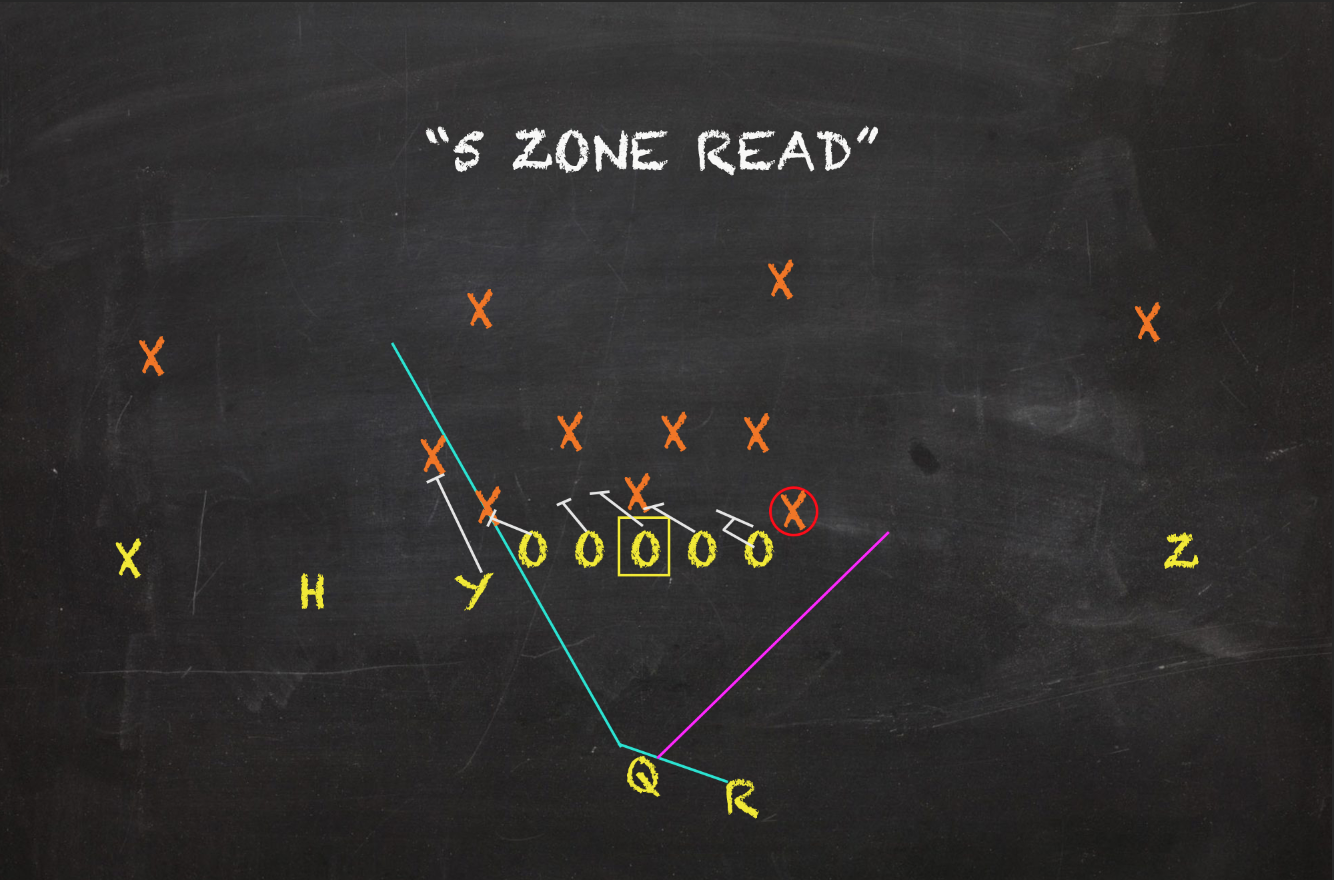
4. Outside Zone Read 3.25% Play Share 6.10 Y/A 50% Success Rate
If you are keeping tack at home, I'm sure you have noticed a pattern looking at Georgia's favorite runs. With Slam Reads, Slams, and Off-Tackles filling up their top3, it's not too much of a surprise that Outside Zone Reads would be next in the pecking order of this zone-heavy scheme. With the added element of read and RPO aspects to the play design, these benefited from more consistent run lanes than their non-read counterparts. Of Georgia's five most called ground looks, Outside Zone Reads commanded the highest yards/attempt and Success Rate. D'Andre Swift was a major catalyst in this look's output. He personally averaged 7.93 yards/attempt on a 53.3% Success Rate. Like on Slam Reads, Jake Fromm was rather hesitant to run with his attempts. He didn't log a single rush on this concept.
Like most of Georgia's most featured runs, the majority of its snaps occurred on early downs. The Outside Zone Read was UGA's second most repped concept on 2nd Down. But like its non-read counterpart, that's where the look had its worst results. There, it's Success Rate dipped to 42.9% and averaged less than 4 yards/carry on its 14 attempts. Also like its non-read counterpart, this concept was significantly better to start a set of downs. On 1st Downs, Outside Zone Reads averaged just under 11 yards/carry on a sizzling 75% Success Rate. With defenses expecting a run inside, Outside Zones often gained a step towards the perimeter on firsts. In terms of yardage, this concept was responsible for 183, which was the fifth most.
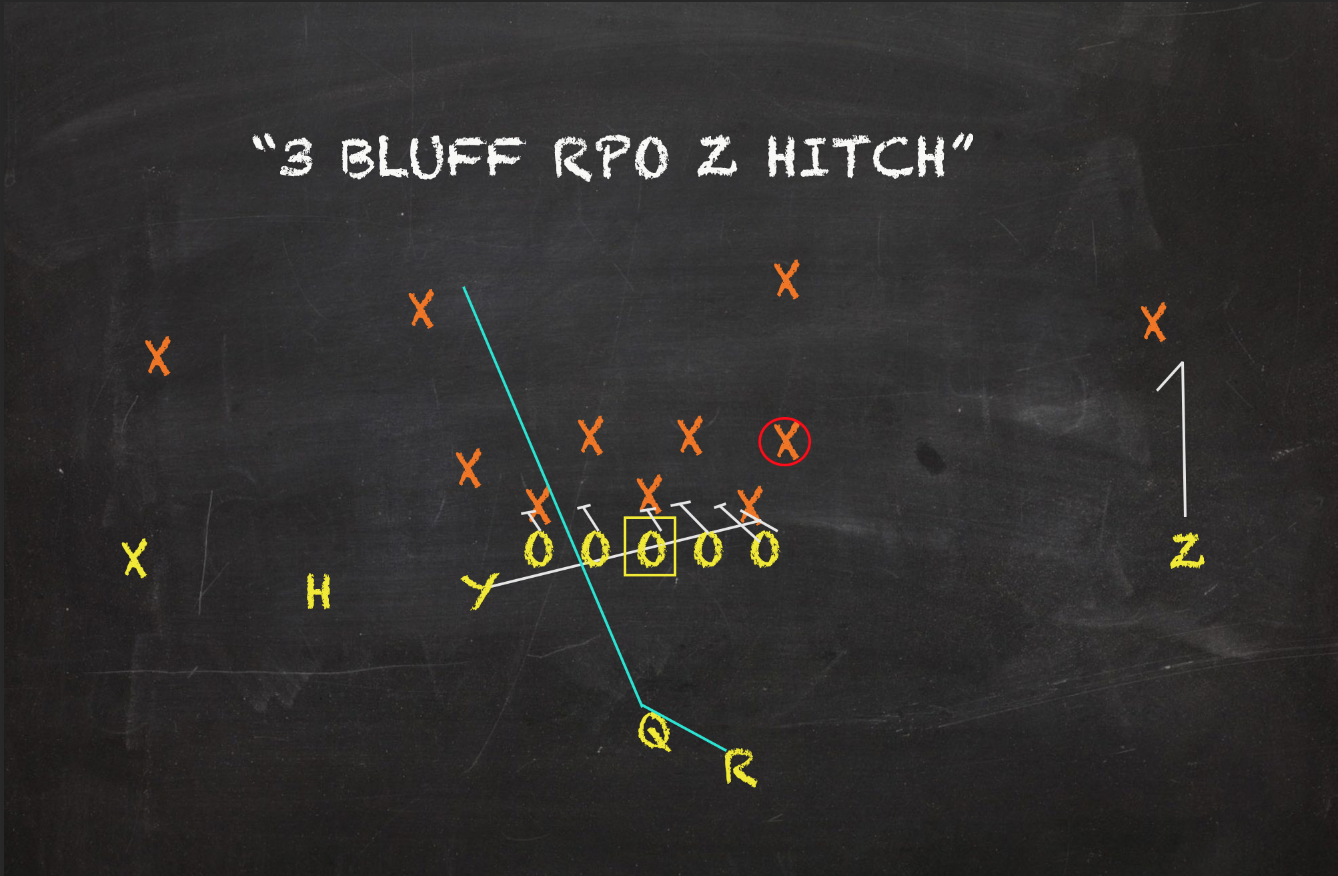
5. Inside Zone Bluff Read 2.71% Play Share 4.92 Y/A 40.0% Success Rate
Inside Zone Bluff Reads edged out non-read Split Zones and Duo Dives to round out Georgia's five most called run looks. While Slam and Off-Tackle zones were far better on read designs, Bluff Reads were inferior to their non-read counterparts. Split Zones averaged 6.25 yards/attempt on a 66.7% Success Rate and was one of the Dawgs' best looks. But, more on that later. These zones differentiate themselves from basic Slams due to the responsibility of the offset tight end or fullback. Instead of abiding towards the playside zone flow, this play fires against the grain towards the other side of the formation to seal an edge. In the read game, this play often arcs upfield and becomes a personal protector for the quarterback should he choose to keep it.
While other Inside Zone Reads struggled to make a dent with their 1st Down play calls, Bluff Reads had their best production in those spots. The consistency was lacking per its 41.7% Success Rate, but the Dawgs averaged 7.58 yards/attempt. That was not the case on seconds. There, this look only averaged 2.46 yards/attempt on a 38.5% Success Rate. Like Slam Reads, RPOs occurred on 40% of reps. These wrinkles aided its numbers as they averaged half a yard more per carry and saw its Success Rate increase to 50%.
Georgia's favorite pass looks
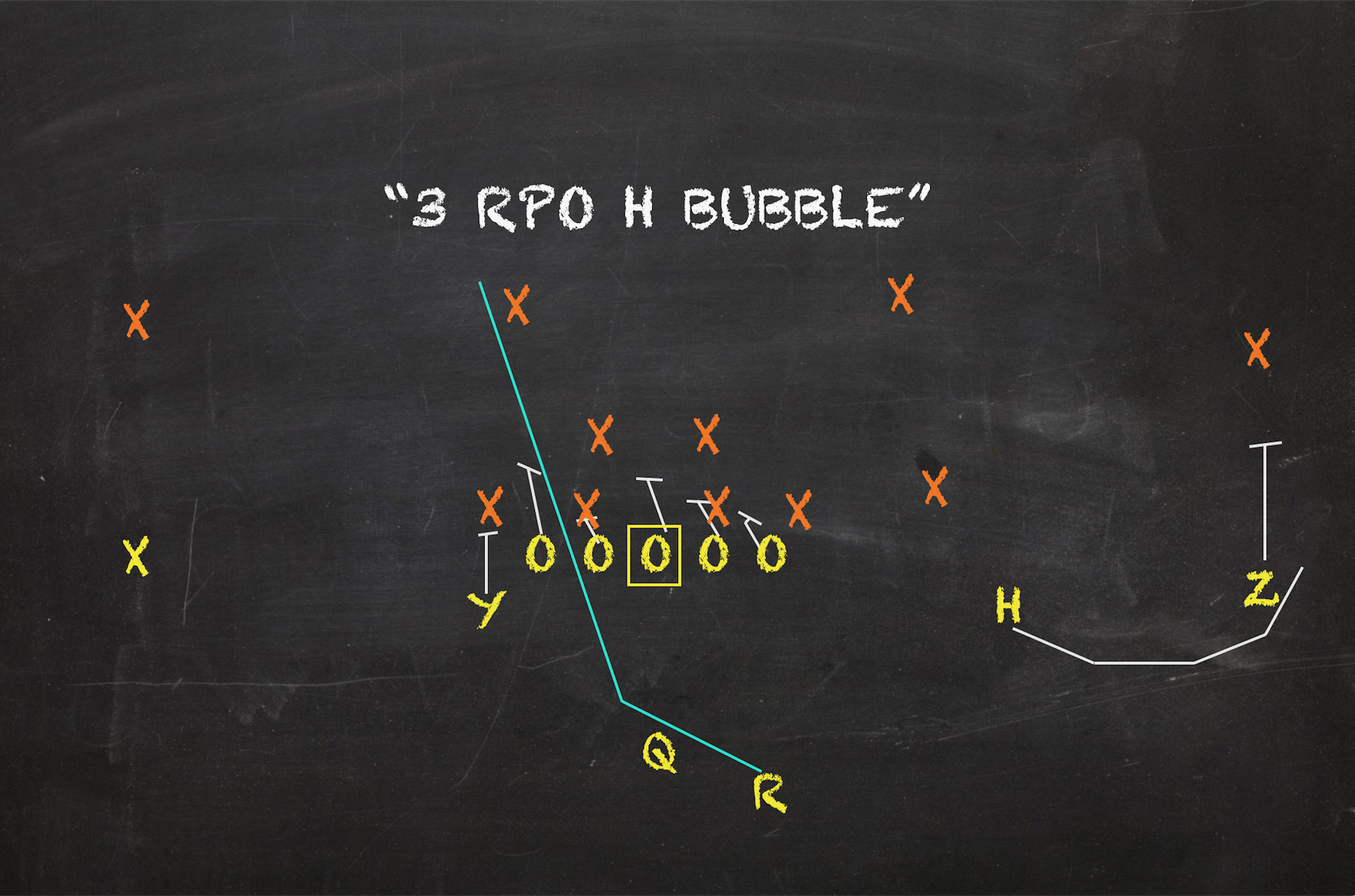
1. Run-Pass Option Outlets 3.47% Play Share 5.94 Y/A 46.9% Success Rate
With three of Georgia's five most called run plays being read options that frequently incorporated tagged routes, it shouldn't be too much of a shocker that Outlets off of those designs would accumulate a decent amount of reps. Bubble, Swing, and Tunnel screens along with isolated hitches combined to total the fifth highest play share for the Bulldogs. RPO Outlets are reliant on passers to make the correct decision based on the defensive alignment. Georgia was fairly consistent making the right reads on these plays and winning in space. While Swings and Tunnels were unsatisfying, Bubble Screen and Spacing Outlets each sported Success Rates over 50%. While only 14.5% of UGA's plays were RPOs -- the second lowest clip in the conference, Fromm had the eighth highest RPO Throw Rate among 21 SEC passers with at least 74 attempts.
Like the run concepts to which they were anchored, these Outlets were primarily early down plays. This look was rather consistent in terms of Success Rate in those spots hovering right around its overall clip. Though serviceable, Outlets were less efficient than other tagged concepts in the context of RPOs. Jake Fromm's 57.7% Success Rate on RPOs was the SEC's third highest clip and well above this concept's output.
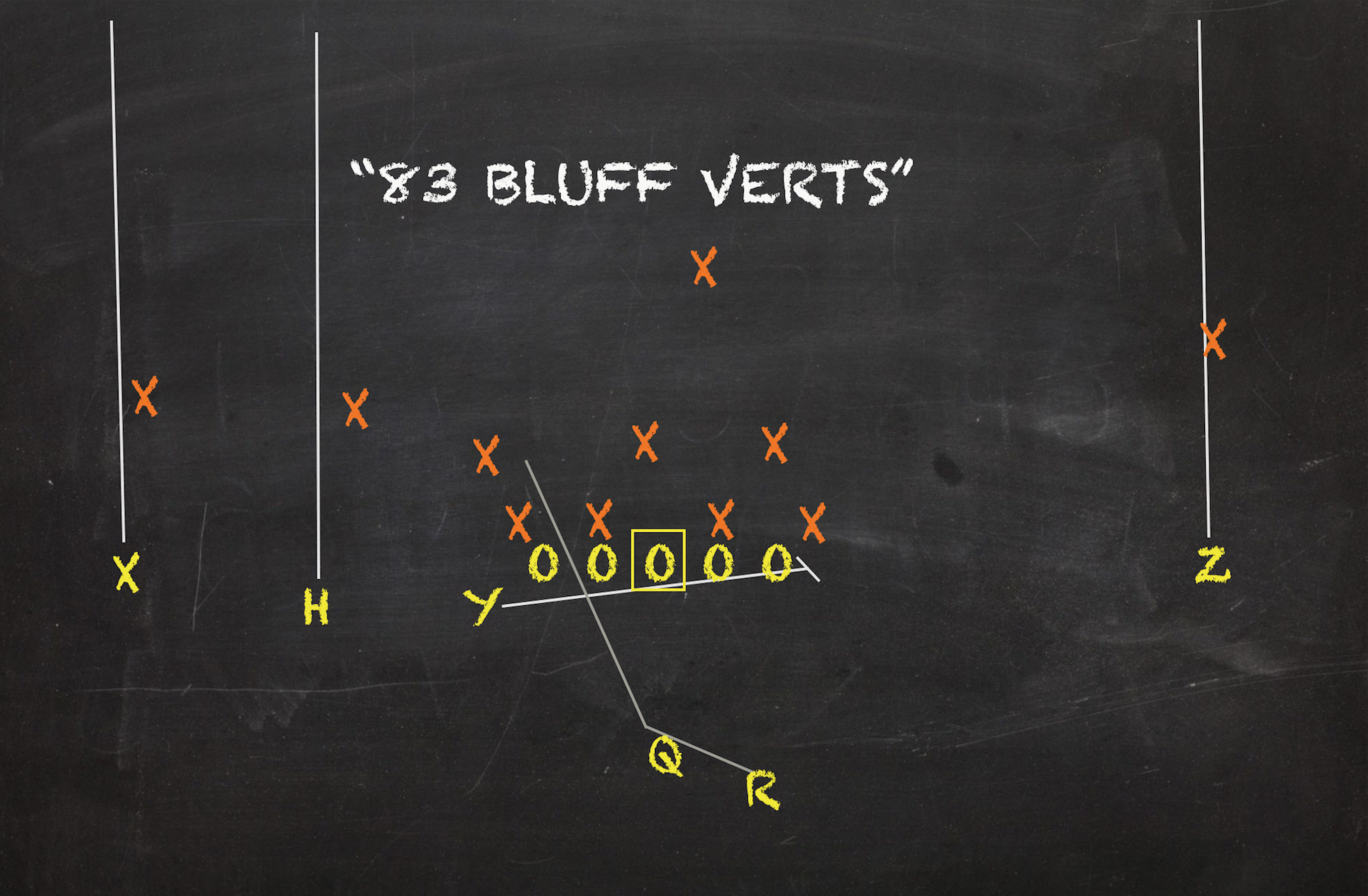
2. All Verts 2.71% Play Share 10.4 Y/A 36.0% Success Rate
Much of Georgia's dropback passing game was matchup football. They didn't overly scheme guys open as they were expected to whip their man in coverage. Sending everyone deep downfield certainly isn't a very creative pass pattern, but sometimes there's power in simplicity. No SEC passer had more attempts targeting the All Vert concept that Jake Fromm. Despite only connecting on nine of his 23 attempts, Fromm generated four touchdowns on this concept. It wasn't out of the question for him to test his chemistry with his wideouts via backshoulder fades. Whether on this look or on another, Fromm completed eight of his nine backshoulder fade attempts in 2019.
All Verts failed to be among the Bulldogs six most called looks on any of the three downs. But most of their volume and success game on 1st Downs. Turning to All Verts when behind the chains and needing a miracle on 3rd Down rarely works out. But off play action or when the defense is on its heels on firsts, All Verts can catch secondaries napping. In Georgia's case, six of their 13 targeted attempts found its mark on 1st Downs. Due to the aggressive nature of the play and UGA's occasional success, commanded the highest yards/attempt of the Bulldogs' favorite plays. This in turn resulted in All Verts accumulating the third most yards of any look with 260.
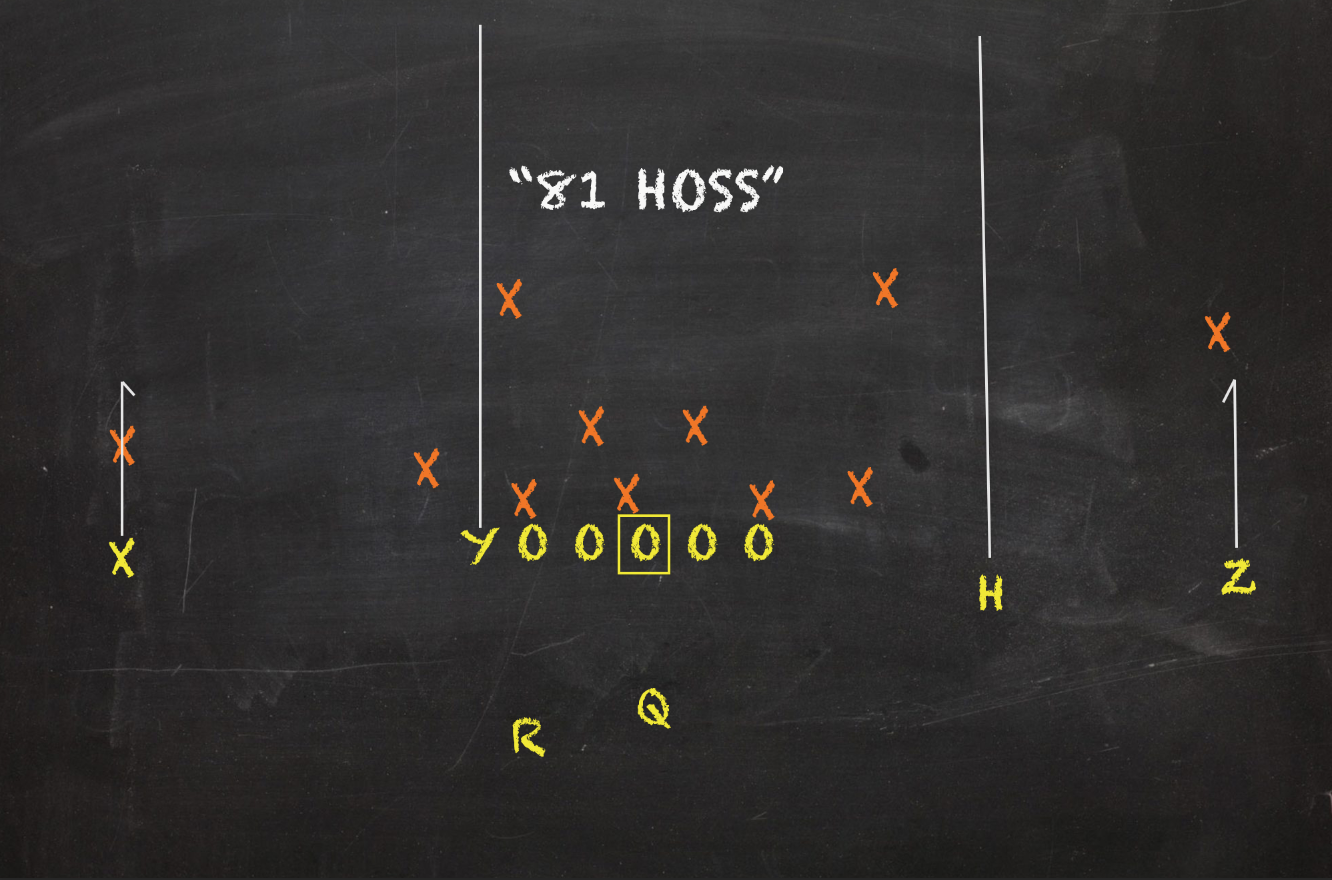
3. Hoss 2.39% Play Share 7.05 Y/A 50.0% Success Rate
The seam+sideline combo Hoss gave Georgia both an aggressive avenue down the middle of the field and an easy hitch completion. Though rudimentary, this curl+seam design can win versus a number of coverages. Since All Verts were featured, secondaries were obliged to back up and relinquish extra cushion along the sideline. This allowed hitches and curls plenty of room to manufacture a pitch and catch opportunity. Besides sagging man, single high coverages often are vulnerable to these routes. The seams can win versus Cover 2 or Cover 3 zone.
Looking at all seam+sideline attempts, Fromm's 32 were tied for most in the SEC. While Hoss was a sturdy look in its own right, its brother concept Comebacks was far more efficient. In fact, it was one of the Bulldogs most successful designs. Hoss was fairly consistent across all downs in terms of success rate. By opportunity, 19 of the concept's 22 targets occurred on either 1st or 2nd Down.
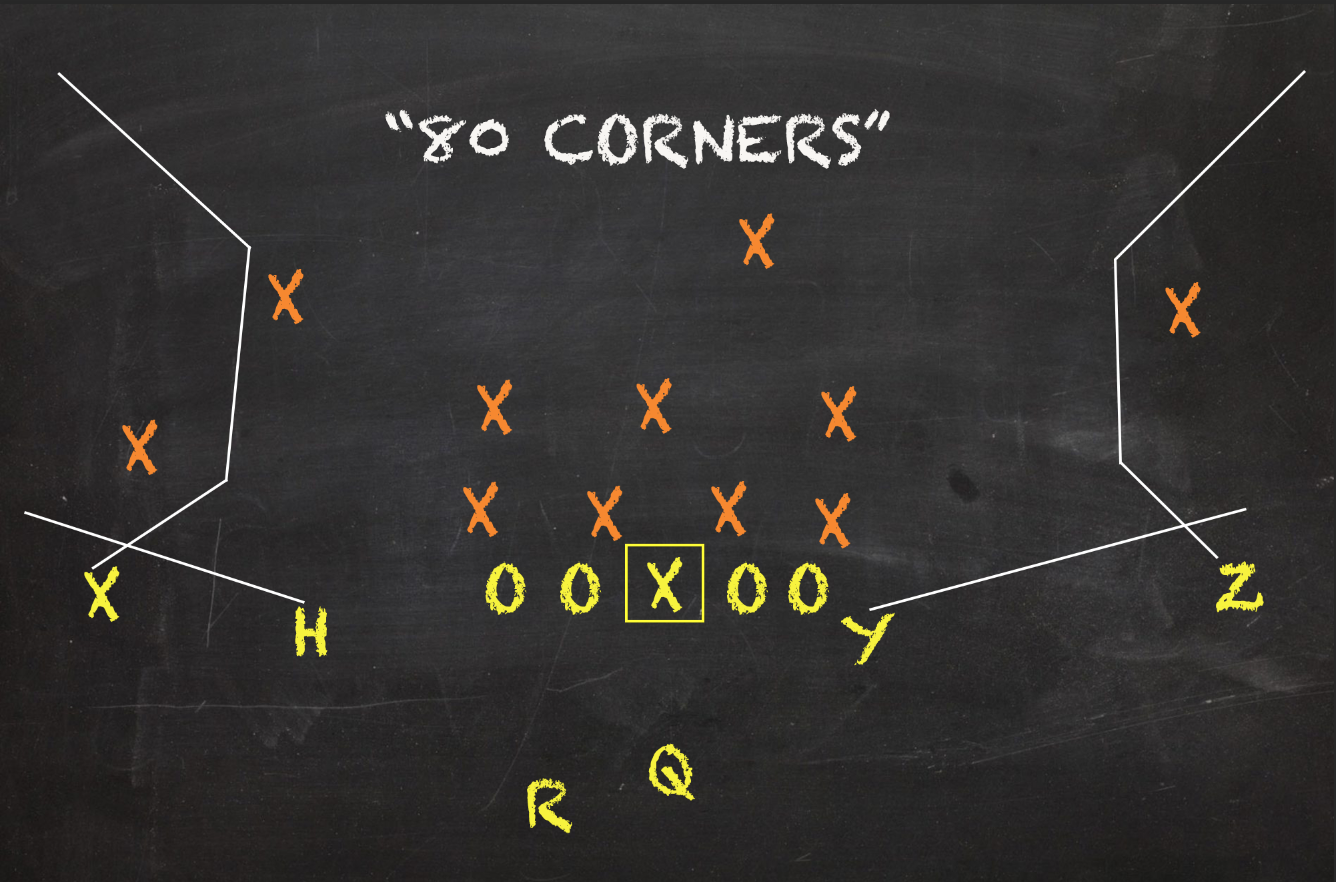
4. Corners 2.28% Play Share 5.52 Y/A 52.6% Success Rate
The Corners wrinkle is a member of the Smash family. Instead of following the traditional design of an outside hitch and inside corner, the two receivers swap orientations. Named for the outside receiver running a "C" corner, the inside man compliments that route by running towards the flat. While the normal Smash design can be bottled up by Cover 2, the natural path of the "C" corner directs the wideout into the "honey hole" of the zone. Versus single high coverages, the multi-breaking corner can undercut sagging defenders or be difficult to curb for those in man. Corners was the most successful pass pattern of Georgia's favorite aerial looks with a 52.6% Success Rate.
Corners was one of Georgia's go-to looks when they ran their two-minute offense. Regardless of the time on the clock, Corners was overly a 1st Down play; 15 of its 21 reps occurred there. Corners had a consistent output in terms of yards/attempt and Success Rate across all downs for the most part. But while Corners was Georgia's favorite Smash wrinkle on early downs, the Bench design took the lead on the money down. Despite delivering a low rate of return, Benches were among the Bulldogs six most featured plays on 3rd Downs. All in all, only Texas A&M's Kellen Mond targeted more Smash Variations than Fromm's 30 attempts. But, this family was far from an explosive play generator for this offense. Mr. "Cant go broke taking a profit" didn't have a single Smash attempt net 20 yards. While it led all of Georgia's favorite passes in terms of Success Rate, none averaged less per target.
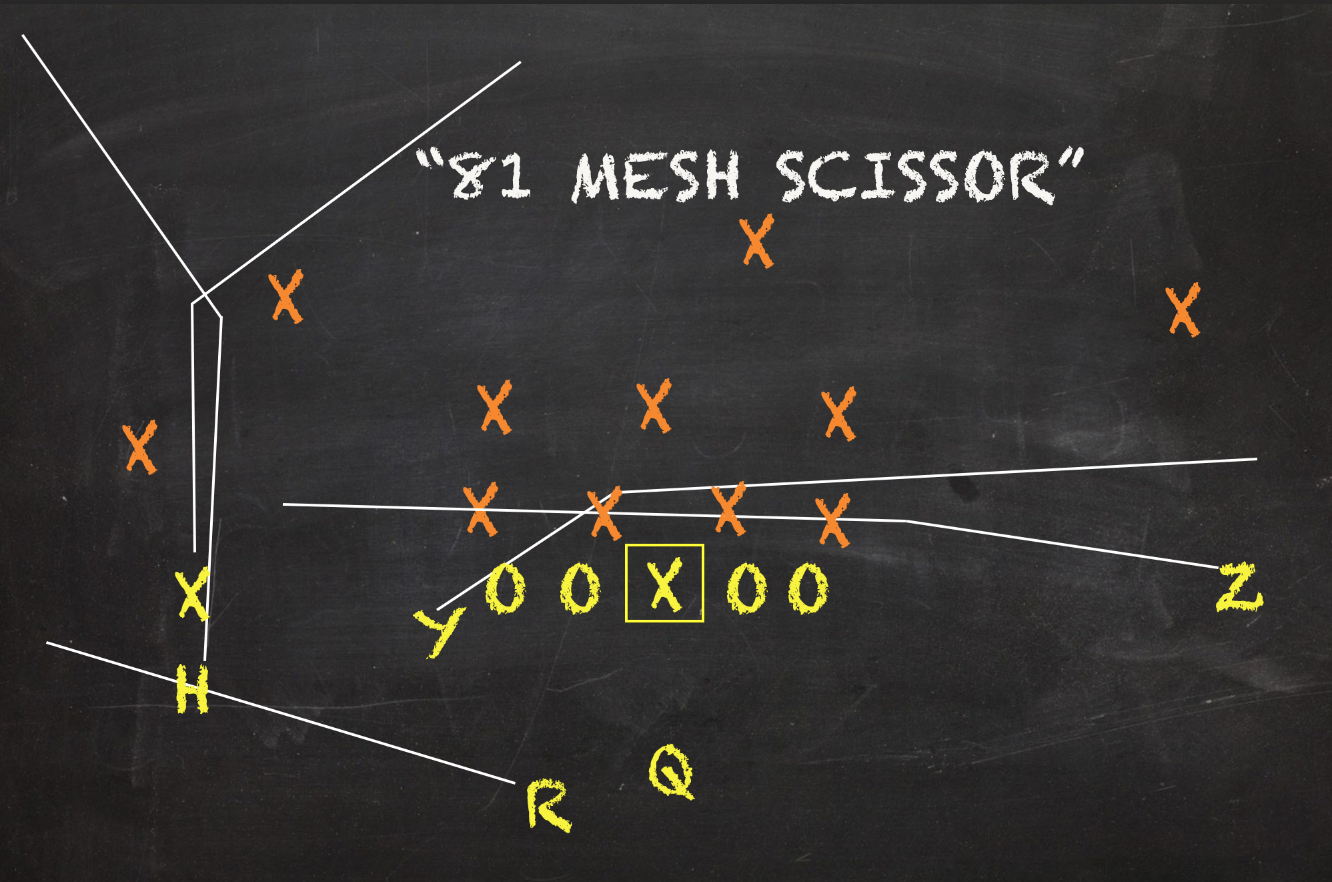
5. Mesh Variations 2.06% Play Share 6.32 Y/A 36.8% Success Rate
Meshes are rubs plays with two intersecting drag routes over the middle of the field. This overlap often creates a legal pick versus man coverage, which can help receivers can a step against their man. While it varies what the other options do on these designs, all meshes contain that criss-cross combo. Since Georgia's passing blueprint was more matchup football, their receivers were less crafty running routes or operating as YAC outlets. UGA's four main targets averaged between 3.8 and 4.4 yards after the catch, which was significantly below the conference mean.
Meshes were one of the Bulldogs most targeted pass patterns on later downs. Of the 19 targeted Meshes, 16 took place on either 2nd or 3rd Down. While two of the three 1st Down reps and four of the ten 3rd Down reps ended in success, Meshes were very disappointing on seconds. Only one of the concept's seven 2nd Down targets met situational goals. All in all, Brian Herrien was Fromm's most targeted option on Meshes. Of the play's 19 chances, Herrien saw six targets. He caught all of them with all but one ending in success.
Chalking up Georgia's most successful looks
1. All Curls 1.41% Play Share 9.08 Y/A 84.6% Success Rate
Only Joe Burrow had more attempts 20+ yards downfield last year within the SEC last season than Jake Fromm. While the Dawgs gave him plenty of chances deep, Fromm was never the best bomber. After all, only 27.8% of these attempts found that mark, which was comfortably below the SEC average. He was much more inclined to spread defenses horizontally with copious amounts of hitches and curls. No SEC passer bested Fromm's 81.8% Success Rate targeting this concept. As a team, Georgia's clip was actually even better. Though outs were the Dawgs' most targeted route with 30 attempts, hitches and curls weren't too far behind with 28 and 27 targets, respectively. All Curls only accounted for a fourth of these targets.
Despite being one of the most conservative pass designs around, only All Verts averaged more yards/attempt among their five favorite pass plays. Among SEC concepts with at least a 1.3% play share, no team was better executing any other look than Georgia was on All Curls. But by a per game basis, the Dawgs would only call about one of these per game on average. Poker -- a curl+flat combo -- was also seen from this offense to work secondaries sideways as was the Spot, which calls for a similar read. Both saw a Success Rate over 57%. But, these were well behind All Curls. Eight of the 13 targeted All Curls were on RPO designs and each ended in success. This was a concept that was overly shelved until their bowl game. In the Sugar Bowl versus Baylor, this look was seen in various forms six times.
2. Comebacks 1.52% Play Share 9.07 Y/A 71.4% Success Rate
Seam+Sideline combos were a regular feature of Georgia's offense. With a good portion of their passing attack being rigid routes, this up-and-down manbeater naturally fit with their gameplan. Comebacks -- named for the titular route on the perimeter, was the more efficient of the two seam+sideline combos. Since Comebacks have more of a vertical element than their brother concept Hoss, the extra few yards in regards to average depth of target led to a more preferable output. Though Hoss ended with a higher play share, Comebacks averaged two yards more per attempt and its Success Rate was over 20 percentage points higher.
Like Hoss, Comebacks saw most of its targets take place on early downs. While it delivered sturdy returns, the concept's numbers were inflated because of how UGA was able to execute it on the money down. On thirds, all three of the targeted Comebacks resulted in success while averaging 15.7 yards/attempt.
3. Nakie Read 1.84% Play Share 9.41 Y/A 70.6% Success Rate
With zone reads becoming more and more commonplace for modern offenses, defenses have become keen at curbing these concepts. So offensive coordinators have gotten a little cute with a wrinkle that is increasingly showing up in spread run schemes. Ordinarily, the back is the dive player working towards the playside blocking with the quarterback running a naked keep towards the other side of the center. It only makes sense to design maximum blockers for you primary ball carriers. But on the Nakie Read, that all changes. Instead, the back attacks the edge and the QB is gifted blockers between the tackles. The Nakie Read is charted as a power play, but it functions like a typical zone read. Since the back is gifted a hard edge, that is our reasoning. Plus, Nakie Reads are very very close to Veer options. The only difference between those designs is the orientation of the quarterback's rush path. Again, Nakie will always send him towards the opposite of center as the back while veers have both potential carriers attack the same side.
Traditional Outside Zones really struggled to produce efficient gains whether straight-up or with read elements for the Bulldogs. Nakie Reads provided a much needed way for UGA to win outside of the bookends. Thanks to the design mostly resulting in backs hitting the perimeter versus a flat footed read man, Georgia found much more success on this wrinkle. Of their five most successful plays, none averaged as much per play as the Nakie Read. D'Andre Swift, James Cook, and Brian Herrien all averaged at least 10.5 yards/attempt on this look. As a team, Georgia averaged nearly 7 yards before contact on this concept, which is about 3x larger than their overall clip.
4. Split Zones 2.60% Play Share 6.25 Y/A 66.7% Success Rate
While their read counterpart received one more rep placing it among the Dawgs' most called ground concepts, Split Zones were far more efficient. Though other zone looks like Slams or Off-Tackles mostly failed when run from undercenter or the pistol, Split Zones were one Georgia's best run plays. I mean, two-thirds of this look's reps ended in success. Plus, every single of their most favorite run averaged less yards/attempt than this concept's 6.25 clip.
Split Zones were fantastic for Georgia on 1st Downs. Over half of the look's reps occurred there, which made Split Zones among UGA's six favorite plays in those spots. On firsts, this concept averaged 7.07 yards/attempt on a fiery 78.6% Success Rate. Any team would take Split Zones' 50% clip on 2nd Downs; but obviously, that's not as strong as its numbers to start a set of downs.
5. Drive 1.84% Play Share 10.4 Y/A 58.8% Success Rate
The Drive concept is a high-low pattern towards the middle of the field consisting of a drag and overtop dig. This design is common within West Coast offenses that strive to create yard after the catch chances for their wideouts. Though a good portion of the Bulldogs' featured pass patterns were matchup oriented, Drives can operate as both man and zone beaters. Versus Cover 2, the dig slices through the middle void of that zone. Versus Cover 4, two underneath routes can be difficult for the three underneath defenders to contain across the field.
Georgia would call about one of these per game with most of its reps taking place on the money down. Of the look's 17 attempts, 11 occurred on 3rd Down. Only Inside Zone Slam Reads the Pivot concept received more calls in those spots. Though Drives had a slightly lower Success Rate on thirds, their yards/target ticked up to 10.6 yards, which was the most of any of Georgia's six most featured concepts on that down.
Where Georgia's weapons ranked
With Justin Fields taking his talents north to Columbus, Jake Fromm was the undisputed starter for the Bulldogs entering 2019. But even if Fields hadn't transferred, Fromm was the guy for this offense unless something unforeseen occurred. Though Fromm didn't have many crucial flaws in his game, it's very clear he left much to be desired from a talent standpoint. Middling arm strength prohibited him from being able "to make all the throws", but his savvy and craftiness allowed him to manage this offense with the best of them. Backshoulder fades and other timing routes made Georgia one of the most efficient passing offenses in the SEC.
Still with a decent amount of speed departing their receiving corps, this offense lost a big element that helped hide this shortcoming. With receivers unable to create as much space for themselves, Fromm consistently had to pass into smaller windows or see his targets battle for a contested opportunity. Plus, teams aggressively looked to neutralize the Bulldogs' ground game and make this somewhat handcuffed passing attack beat them. While Fromm held his own, there's no denying the increased degree of difficulty dipped in his play year over year.

Jake Fromm in one season went from the SEC's most efficient passer to one that was just average. This was a constant theme in his overall level of play. So if I come off sounding repetitive later, forgive me. In 2018, Fromm had either the SEC's best or second best Passing Success Rate, Accuracy, First Down+Touchdown Rate, and yards/attempt. The collective speed of his wideouts paired with his OLine limiting pressure at the best rate in the conference, yielded a formidable pass attack. While his line still curbed pass rushers well, having less twitchy targets lowered Fromm's margin of error. He just couldn't rise from mediocrity without his guys getting themselves wide open. With less burners, Fromm fell to the back half of SEC passers in terms of Explosive Pass Rate - a metric which he finished inside the conference's top3 in 2018. With less down-to-down potency and due to his affinity for targeting hitches and curls, Fromm's average yards/attempt went from the SEC's second best to a clip well below average.
Despite being a three year starter, Fromm was never going to be superman in this offense. Don't believe me? Go back and watch the first half of the Notre Dame game. Fromm was obviously directed to play conservatively and not press. Does that sound like a quarterback with all the necessary tools to carry a team to the Promised Land? Even as Georgia's run game kept disappointing, the Bulldogs' 48.5% Pass Rate fell inside the SEC's bottom5. Florida was able to adopt a pass-happy mentality midseason when its run game floundered, but Georgia stuck to its guns. Once South Carolina gave the rest of the conference the blueprint to on how to disrupt this offense, Georgia failed to significantly evolve or find success with new wrinkles. With a brighter spotlight, Fromm's play kept slipping. Nitpicking decision making from a game manager won't get you too far. But seeing his significant drop in downfield accuracy is an area that deserves fair criticism.
With two seasons already under his belt and experience in some big time games, many had hoped Fromm would be ready to shoulder more of the load. After all, the guy beat out Justin Fields and Jacob Eason in quarterback battles. So a good amount of UGA fans and analysts alike suspected this was the year for him to make the leap. Doing so would not only solidify his perception as a premier college passer but also get Georgia some hardware.
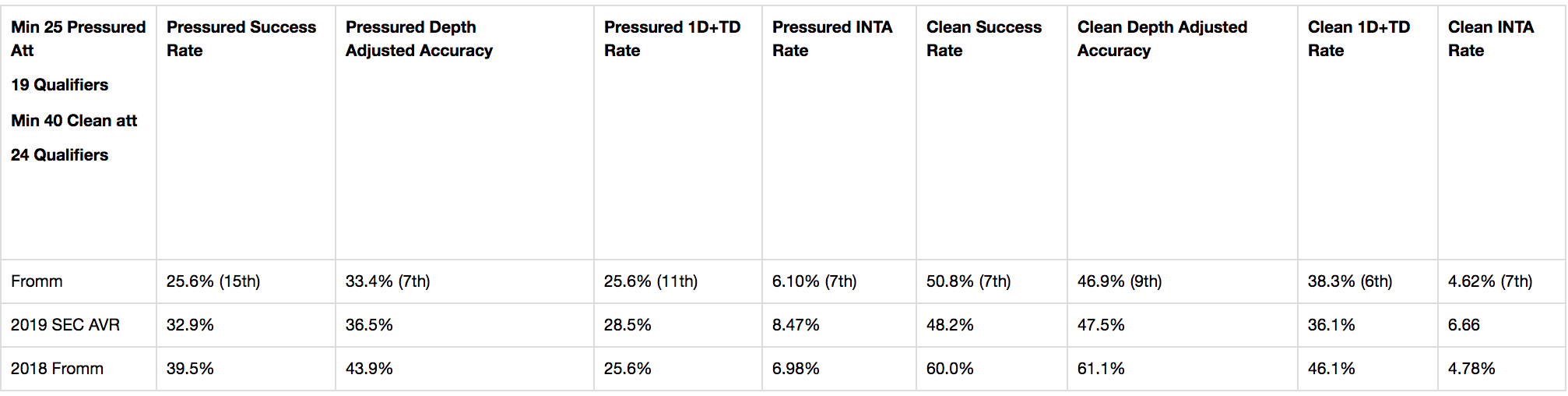
Yet despite his experience, Fromm was ill-prepared to seize the moment. For me, this goes back to his shortcomings as a passer. Fromm was fantastic when he was given plenty of time in the pocket and guys were generating three yards of separation on their routes. But when those perfect conditions were tested, he simply showed his true colors. When pressured, Fromm often played flustered. Backpaddeling and often looking to dish it to a hot route, his Success Rate under duress was one of the five worst in the SEC despite being one of the SEC's four best a year ago. Barely a fourth of his pressure attempts ended in success with only a third of his downfield throws being considered accurate per his lackluster Depth Adjusted Accuracy.
Though Fromm -- like most amateur passers -- played worse in the face of pressure, scouts will be more concerned with his regression from clean pockets. Since these snaps are a better representation of what a passer is likely to face on a average play -- as clean pockets are more common and consistent down-to-down -- they're a more efficient gauge of someone's top end potential. If you can't pass well when everything is perfect, how can you be expected to perform as well with the variability of pressured dropbacks. Again, Fromm excelled from clean conditions in 2018. When unpressured, over 60% of his attempts resulted in success and only two SEC passers boasted a superior First Down+Touchdown Rate. But in 2019, Fromm's Success Rate, Depth Adjusted Accuracy, and First Down+Touchdown Rate all noticeably declined. The only area where Fromm's play from clean pockets improved was limiting turnover worthy throws.
On dropback attempts, Fromm failed to take the next step. With screens and RPO throws omitted, Fromm saw considerable regression on this throws outside the hashes in his passing output. Despite being the SEC's most successful passer targeting outside the numbers and the second most between the numbers and hashes last season, Fromm dropped to around the conference mean in those areas of the field. Always a precision, touch thrower rather than one with a rocket arm who could fit the ball into tight spaces, these "longer" throws were dull and a number of them along the sidelines hung in the air too long. Though Georgia's receivers were pretty good on contested targets, that's not a smart way to maximize talent. Would you expect a basketball player to consistently make contested midrange jumpers?

Georgia only saw a marginal increase in terms of its RPO usage as did Fromm's individual RPO Throw Rate. Still, Fromm's clip was high enough to place him inside the top third of SEC qualifiers. Plus by volume, only Auburn's Bo Nix, Alabama's Tua Tagovailoa, and South Carolina's Ryan Hilinski had more than his 52 RPO attempts. Though his rate was about average, these completions consistently helped pad his passing numbers. Though these designs were obviously less explosive, they helped this offense nickel and dime and manage their down and distance. Despite a below averaged 6.17 yards/attempt on RPO Throws, only LSU's Joe Burrow and Alabama's Mac Jones had a higher Success Rate within the SEC than Fromm's 57.7% clip. Not to mention, his First Down+Touchdown Rate was the fourth best in this context. But these stats mostly reflected his ability to make correct decisions rather than his talent level.
Despite losing his footing as one of the most sterling pill-slingers outside the hashes year over year, Fromm made strides finding production towards the middle of the field. In 2018, Fromm failed to crack the SEC' top5 targeting inside the hashes in both Success Rate and Accuracy. While he also failed to do so with the former in 2019, there's no denying this was his most efficient area of the field to target. Drives, Shallows, one-man drag screens, slants, and plenty of hitches helped Fromm find production. With shorter throws in his line of sight, Fromm was able to jump over this low bar more often than his more challenging throws outside. Both his Success Rate and Accuracy inside the hashes bested the SEC average and was a obvious improvement than his numbers last season.
I'm not sure what advice Fromm put the most credence in when he was evaluating whether or not to enter April's draft. But to me, it's clear he ignored these numbers. Going from a top-level performer to the definition of average screams "not ready". There was already vocal concerns about his arm strength, and concerns about his accuracy intensified as the season progressed. When looking at his production on throws with an average depth of target of greater than ten yards, Fromm was just another guy as his Success Rate, Depth Adjusted Accuracy, and yards/attempt were right at the conference mean. Fromm failed to prove he was any more than a game manager inside the lines. Sure, he has a portfolio of nice throws, but they were to infrequent for me to erase my trepidation about his outlook as a professional passer.
Georgia basically had to replace their entire receiving corps entering 2019. With Riley Ridley, Mecole Hardman, Terry Godwin, and Isaac Nauta taking their talents to the pros and Jeremiah Holloman dismissed from the program, the Bulldogs only returned one player who saw more than 30 targets. That person was running back D'Andre Swift. As much as a three-down-back as Swift is, having such inexperience from their pass catchers hindered a nuanced passer like Fromm in his own personal development. However, that isn't to say Georgia's receivers were forgettable or were ineffective in their own rights. They just had different skill sets than what Fromm was accustomed to. Still, less collective speed and limited chemistry with their quarterback helped lead to a aerial regression for the Bulldogs.

True freshman George Pickens became Fromm's favorite target. The former 5-star instantly became a reliable, big bodied target outside the numbers. Though he only saw one target in Week 1, Pickens led the team in that regard by the time the first month of the season concluded and never looked back. His 77 across UGA's entire schedule were 22 more than the next closest Bulldog player. Though Pickens' receiving yards and total catches finished outside the SEC's top10, he was one of the conference's most consistent wideouts despite averaging a high depth of target. Pickens' average depth of target was 15.4 yards, which was the fourth highest clip in the SEC. That clip was ballooned due to the fact Pickens was one of the conference's most targeted receivers deep. Pickens' 23 deep targets were tied with the third most in the SEC. But while he was able to amass the seventh most deep receiving yards, he only managed to haul in about 30% of his chances. But some of that was on his passer. Pickens was just as likely to be on the end of a completion 20 or more yards downfield as he was to suffer an uncatchable target on a deep attempt.
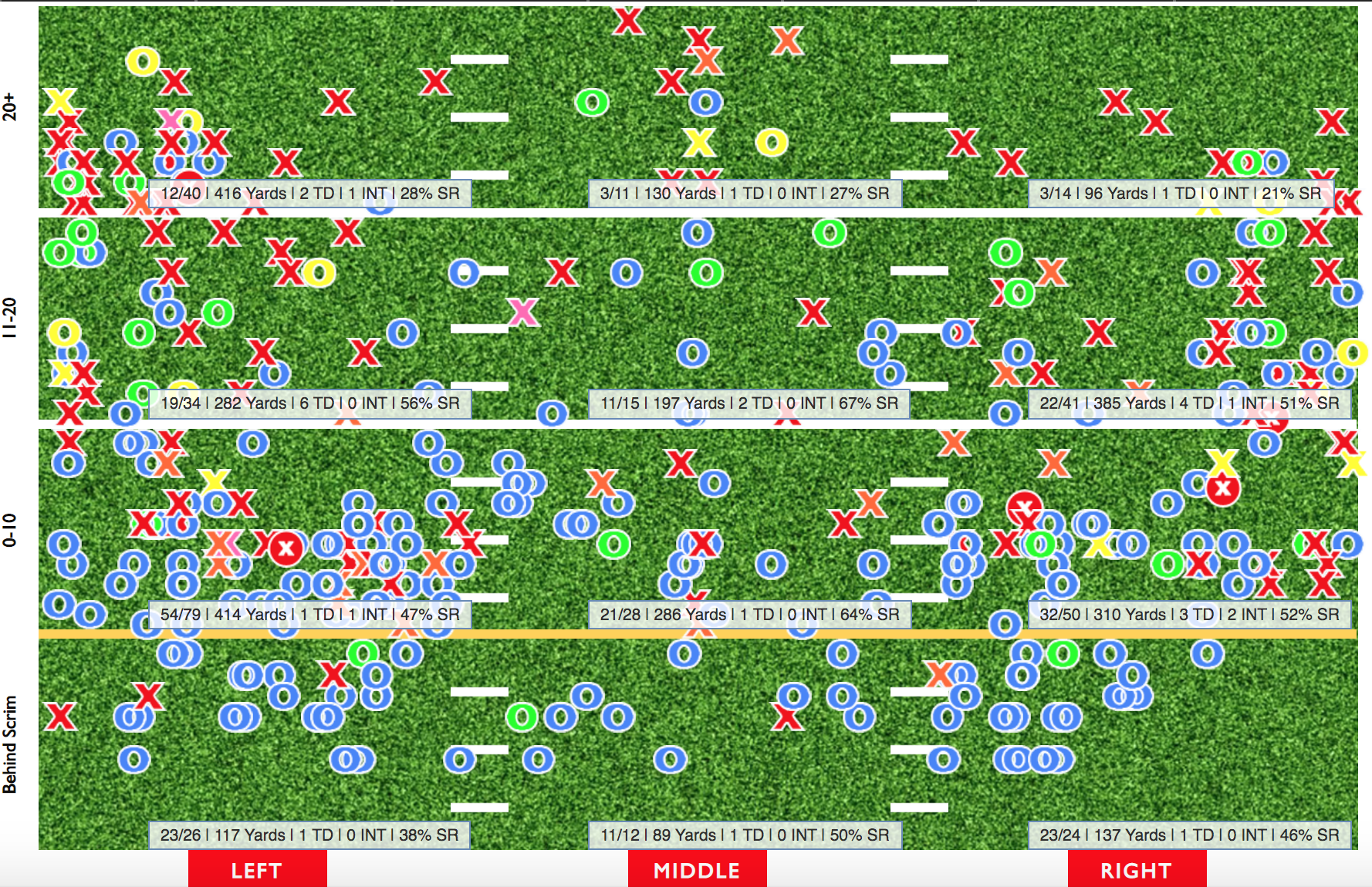
Operating mostly from the X-spot -- the outside left receiver -- 28.6% of his targets and 22.6% of his yards came on short throws to the left. There, Pickens caught 20 of his 22 chances; one of those was an interception. Though the freshman was not best on contested targets, Pickens was one of the top receivers in the SEC at creating opportunities for himself. Whether via jump ball, diving catch, or other crazy athletic feat, Pickens created 5 receptions, which shared the number two spot in the conference. By a rate basis, his Created Catch Rate was 6.49% and was the SEC's fourth best. Most of these occurred on contested targets. Pickens' 28 were tied for the sixth most in the conference. Plus, Pickens only logged a single drop in 2019. Only South Carolina's Shi Smith's was lower than his 1.3% clip within the SEC. That paired with a top10 overall Success Rate and clips above 50% on 3rd Downs and Red Zone chances made Pickens one of the budding stars inside the SEC.
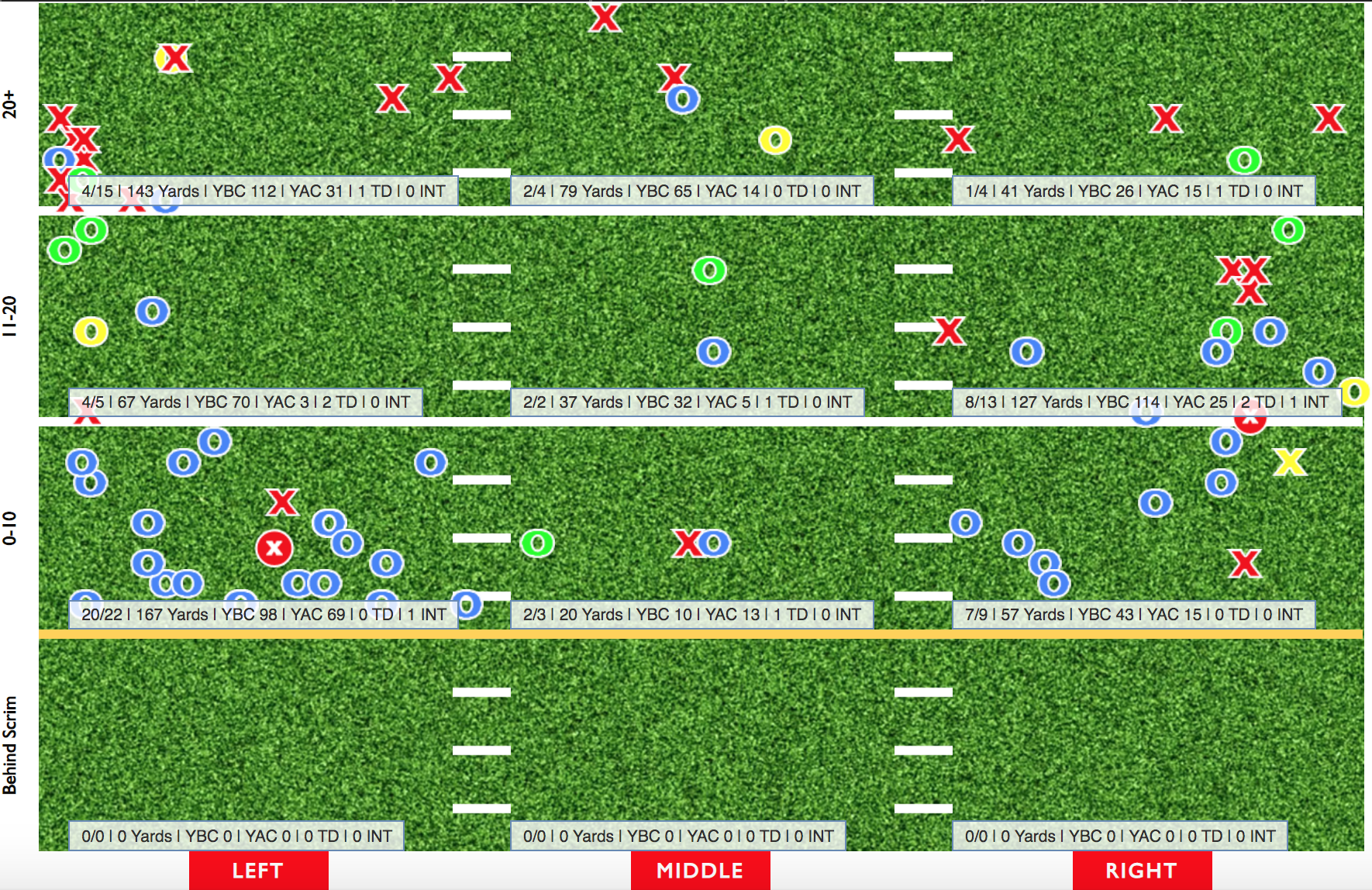
Though I'm sure no one will stand up and proclaim grad-transfer Lawrence Cager as one of the SEC's premier receivers last season, there's plenty of evidence to suggest he was. No matter where or how he was targeted, Cager played like the wile veteran he was expected to be. Even though he owned a top10 average depth of target within the conference, Cager boasted a top10 Explosive Catch Rate, yards/target, Success Rate, Catch Rate, and First Down+Touchdown Rate; the latter three were good enough to crack the top5. No SEC receiver was better at commanding contested targets. Cager caught an insane 83.3% of these chances. Like Pickens, Cager did a fantastic job creating opportunities for himself and boasted a top5 Created Catch Rate within the SEC. Cager's 7.5% clip was only bested by Tennessee Josh Palmer and Kentucky's Josh Ali.
Even in clutch moments, Cager operated unfazed. His 81.8% 3rd Down Success Rate was tops in the conference and his clip inside the Red Zone was good enough for the SEC's fifth best. Thanks to a sturdy Deep Catch Rate and being money on short and intermediate targets, Cager finished 2019 with the SEC's tenth best Depth Adjusted Catch Rate at 71.5%. Again, there was hardly anything to complain about regarding Cager's on-field performance. If injuries didn't come into the picture, there's no doubt in my mind he would be a first or second day draft pick. Rib and shoulder injuries hindered a good portion of his season. Yet, Cager kept making plays and being the Bulldogs most consistent receiver. Though it remains to be seen what kind of player he'll be once his broken ankle finally heals, Cager should be a mid-round flyer based on his outstanding numbers from last season.
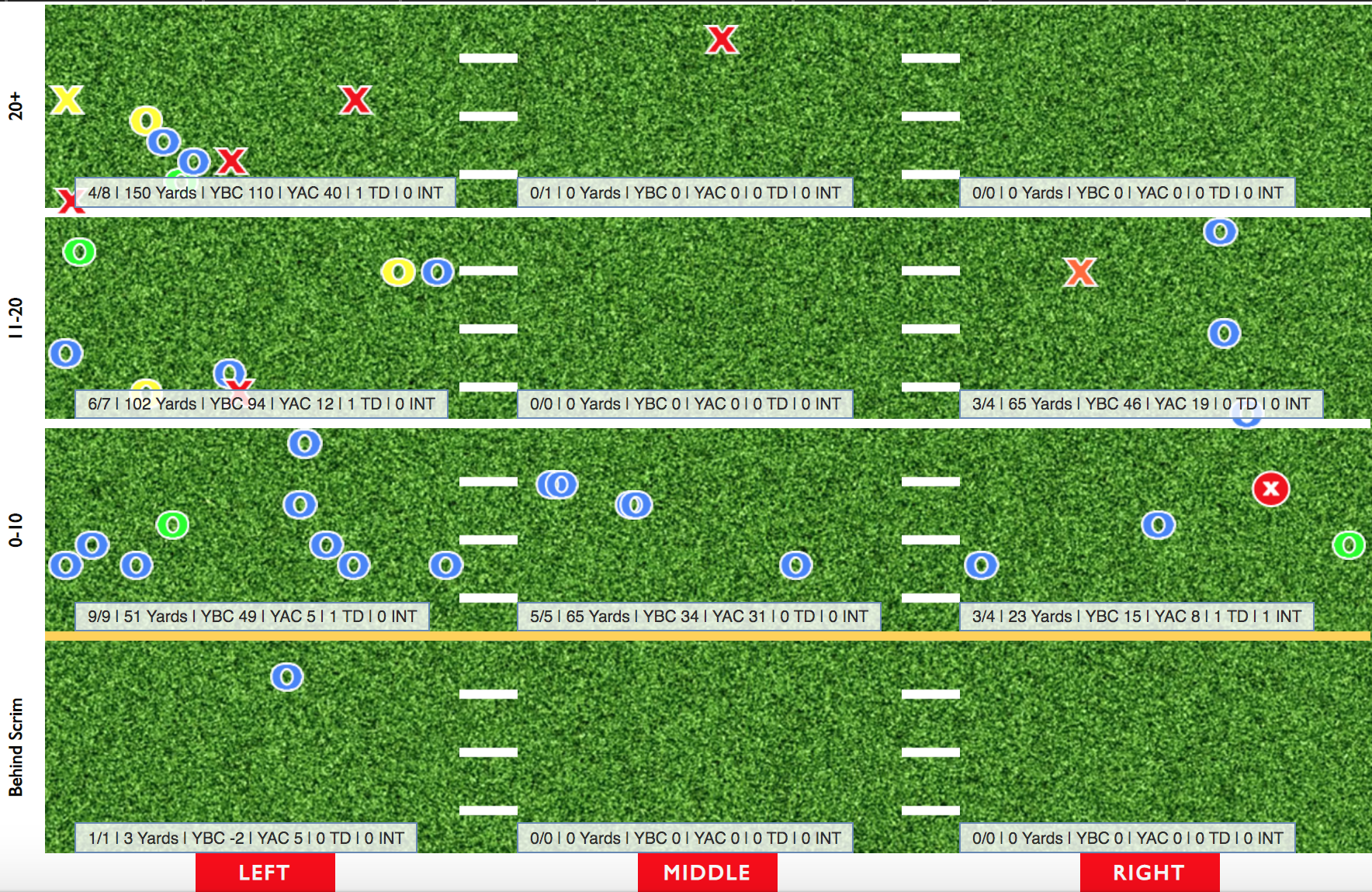

Demetris Robertson went from seeing three targets in 2018 to 55, which were the second most on the team this past season. Robertson was Georgia's primary slot receiver. Of his 55 targets, 42 were on snaps where he lined up inside. Nearly 58% of his yards and two-thirds of his catches came from those 42 chances. But while a decent amount of slot receivers see an uptick in efficiency due to what they're consistently asked to do, Robertson was one of the SEC's worst bang-for-buck outlets. Overall, Robertson owned a bottom10 Success Rate, yards/target, Explosive Catch Rate. Also, he was bottom15 in Catch Rate, First Down+TD Rate and average yards after the catch. On his 11 catches over ten yard downfield, Robertson only accumulated 12 yards after the catch.
Being the shortest of Georgia's main targets, the junior struggled on contested targets. Robertson went 0-12 on contested chances and was the only SECer with at least 10 such chances without a catch. That paired with an Uncatchable Target Rate that was considerably below the conference mean birthed an inefficient season. Even if uncatchable attempts were omitted, his Depth Adjusted Catch Rate was among the 15 worst in the conference. Though he was among 16 SEC players with a 50% or better Catching Success Rate inside the Red Zone, Robertson's clip on 3rd Downs was one of the worst in the conference. Considering he will be one of the most experienced receivers returning for 2020, Georgia might look to fade his snaps in favor of younger players. It might behoove this staff to move him outside opposite Pickens. Though he failed to score a touchdown lined up as an X or Z, he caught 77% of his targets with 69.2% of them ending in success while averaging 10.7 yards/target.
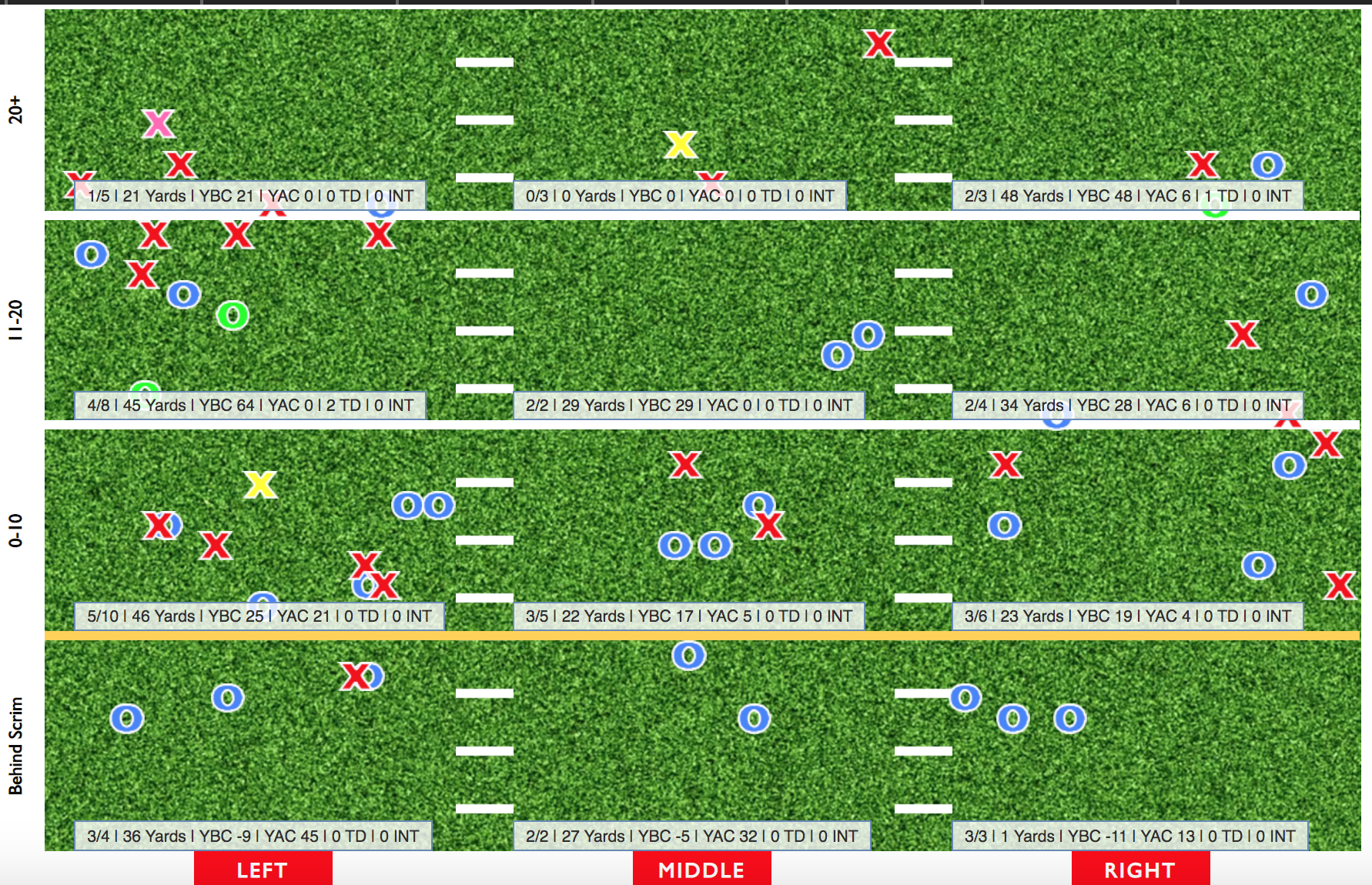
The remaining nine Bulldogs that saw at least 15 targets had more defined roles. They were either safety valves, deep threats, or gadget players. These players had varying degree of success. James Cook, despite operating as a YAC outlet behind the line of scrimmage, caught all 16 of his targets and boasted a team high 75% Success Rate. Though they saw similar volume and were both mostly hot routes in the flat, D'Andre Swift's 38.7% clip was significantly worse than Brian Herrien's 50% Success Rate. Despite having one of the highest yards/catch on the team (15.8), Kearis Jackson only saw a fifth of his targets end in success. Tight end Charlie Woerner's 18.2% Success Rate was even worse. Former Tennessee Vol Eli Wolf emerged as a decent 3rd Down option as six of his ten targets in those spots moved the chains. Dominick Blaylock was one of their most targeted players behind the line of scrimmage. Of his 15 targets less than ten yards downfield, three went for scores.
Though it remains to be seen who will see an increased role in 2020, the returners can't afford a misstep. There were too many departures and graduations to assume Georgia will be firing on all cylinders in early September offensively. With a brand new passer inline to direct this offense, this unit might have the most questions entering a season than any other Kirby Smart offense has had in his tenure.
While their passing offense regressed, Georgia was always going to win or lose based on how it performed on the ground. Sure, this unit's figures noticeably took a major hit halfway through the year, but the Bulldogs still finished inside the SEC's top4 in Rushing Success Rate despite a middling yards/attempt. While it's easy to focus on Georgia's backs for the missteps, their OLine should shoulder a fair amount of the blame. Again despite averaging a league-leading 3.36 yards/contact from Weeks 1-7, the Bulldogs only averaged 1.79, which was the fourth worst clip in the SEC. Captain Obvious wanted me to tell you that its generally easier to run the ball effectively without constant obstacles in your rush lane.

D'Andre Swift was the unquestioned lead back for this offense. Heck in a split-carry offense in 2018, he received 155 carries. As the primary option in 2019, Swift totaled the SEC's fifth most with 196. And, that was without playing significant snaps in Georgia's bowl game. While his volume numbers increased due to his increased workload, his analytics were roughly the same year over year (even though his spots in the rankings fluctuated). With a decent amount of continuity across their offensive line, that kind of consistency was nice to have. But, there was one major area that has given pro scouts some pause. While Swift averaged essentially the exact same clip year over year before contact, the Bulldogs' bell cow back averaged a half a yard less after contact despite his Broken Tackle Rate equalling his 2018 clip. Swift still broke off plenty of big gainers per his top10 Explosive Run Rate, but that drop off should be concerning for a position with a short professional shelf life. After all if Swift is already losing steam, its fair to ask how will he fair versus bigger, stronger defenses.
Despite the knock his yards/carry took, Swift saw his Success Rate tick up a few spots to 49.5%. Thanks to a top10 yards before contact clip within the conference, Swift didn't suffer from too many negative rushes. In general, Georgia was a pretty good team at moving forward. Though all three of their main ball carriers had similar clips, Swift's Negative Run Rate of 5.61% was the lowest and was good for the SEC's eighth best. But with UGA's OLine's struggles in conference play, Swift had to bounce or cutback a decent amount of his carries. Nearly 23% of his ground touches had to manufacture a run lane against the grain of the play design, which was the SEC's eight highest clip. Still with less cushion to run inside, Swift was less effective inside the tackles. Thanks to a few outward oriented run plays, Swift was able to really do damage on the perimeter. With less congestion and dirty defenders aiming to clog his path, Swift lived up to his name sake when he got around the edge. His average yards before contact, after contact, and Success Rate all significantly improved to 4.51, 3.32, and 57.1%, respectively. Corners were easier tacklers for him to dismiss as Swift's Broken Tackle Rate on outside carries was 42.9%. Despite the rise in output, only about a third his carries were charted outside of the bookends.
Brian Herrien was a serviceable back in the past -- he averaged over 6 yards per pop on a 52% Success Rate in 2018. With over 100 carries under his belt this year, maintained that level of play. But the senior's skill set never jumped off the screen. Of Georgia's three main ball carriers, Herrien was the least explosive, the worst tackle breaker, and the worst after defensive contact on average. Again, it's far less challenging running the ball effectively without obstacles in your way. Herrien's yards before contact average was certainly below the conference mean at 2.04. But an insane 11.6% of his rushes saw initial defensive contact behind the line of scrimmage. Though he was able to limit the amount of negative carries he suffered, failing to even be mediocre after engaging with defenders greatly curbed his output. Herrien was dreadful at moving the pile after Week 7. Herrien's 1.54 yards after contact clip was the lowest on the team from Week 8 on. Overall, his yards/attempt on the season fell into the conference's bottom12 at 4.73. Herrien was a much more difficult man to corral on later downs then on firsts. Granted, he was Georgia's least successful ball carrier on the money down despite his uptick in production after contact in these spots.
Though freshman Zamir White finished the season as the Bulldogs' most successful rusher, much of his stats were padded by games in the front of the schedule. I've already talked about the Dawg's decline after Week 7, but White was one of the most affected. Despite being the lead back in the bowl win versus Baylor, "Zeus" saw equal carries from Weeks 1-7 and Weeks 8 to the end of the season with 39. Regardless of the week, White consistently faced early engagement from defenders. On the year, his 1.94 average yards/contact clip was comfortably inside the SEC's bottom10. It's a damn good thing he was the Bulldogs hardest rusher. Leading the way in average yards after contact and Broken Tackle Rate, it's easy to understand how Zamir got his nickname.
Being a first-year and hungry to earn snaps, White was a little gung-ho at times. After all, he had been used to tossing high school defenders around like rag dolls. Less patience to let the play develop paired with this aggressive style of play certainly played a part in his narrow run lanes. I mean come on, why would defenses consistently go out of their way to handcuff a third string back? For whatever the reason, White only averaged 1.64 yards before contact after Week 7, which certainly played a part in the falloff from his figures. His vision and composure should increase with increased reps. But his bruising running style should forebode a solid career in Athens. Of SEC backs with at least 40 designed carries, White was the only ball carrier with a Yards Before Contact Makeup in the bottom10 and a Success Rate above 44%. His Success Rate, of course, was 50% and good enough to crack the conference's top10.