Sideline to Sideline: Florida 2019
Florida at a glance
Dan Mullen was hired to bring Florida back to prominence. The former offensive coordinator that had first-hand experience resurrecting the program under Urban Meyer would now be responsible for picking up the pieces and building a new foundation. Since Meyer's departure, the Gators had just as many four-win season as double-digit ones. After Mullen's first two seasons, it's safe to say he's on the right track. Florida has won 21 games with two bowl victories. While chompers are happy with the early returns, we all know they won't be satisfied until Georgia is upended in the SEC East and the Gators are back in the national title discussion.
I don't want to call what Mullen has accomplished his first two seasons as an overachievement, because he is one fine football coach. But based on the personnel he had to work with, championing consecutive double-digit win seasons will surely make expectations rise in Gainesville. Mullen lived up to his reputation and shored up the Gators offense instantly. His read-heavy offense littered with screens brought Florida's offense from 51st in the S&P rating -- now known as ESPN's SP+ metric -- to 15th. The climb up the rankings continued as the Gators finished with the 11th best offense per that metric this year.
While 2018 saw the Gators ride their ground game for much of their success, Florida became one of the most pass-happy offenses around in 2019. Though their Offensive Success Rate dipped year over year, the Gators finished higher within the conference placing fifth in that regard. Much of this change in philosophy was due to the fact Florida was simply a bad rushing offense. Mullen is a smart coach who recognizes his personnel's shortcomings. He cleverly molds his scheme based on the talent he has rather than dictating one ultimate style of play.
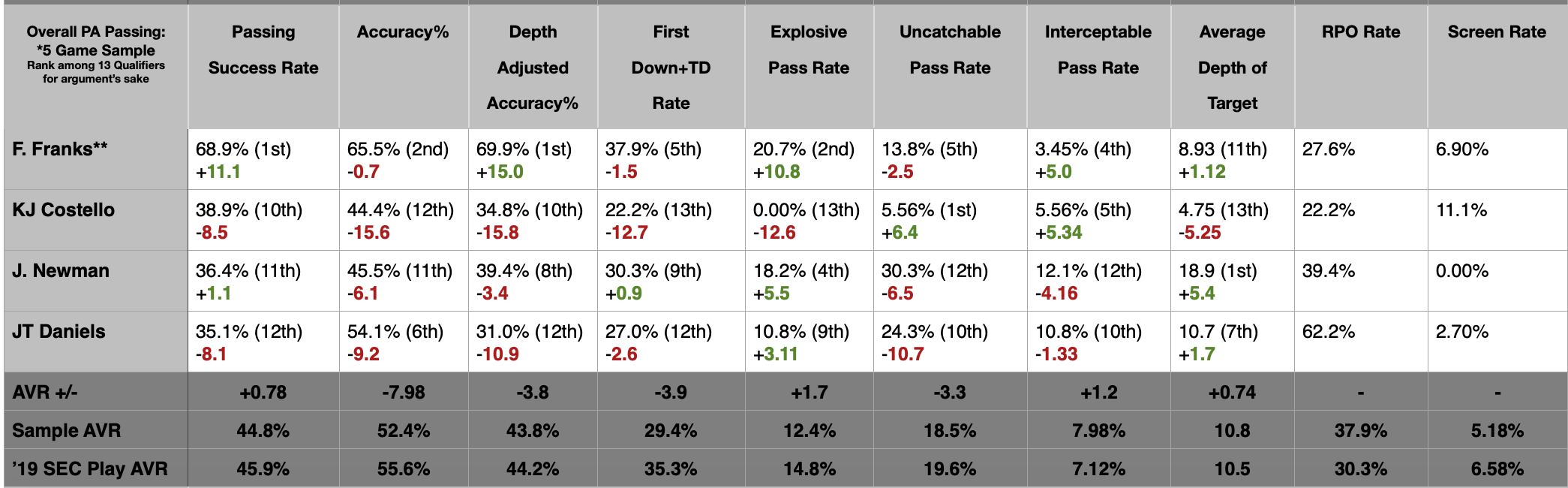
This should be apparent with how he managed Feleipe Franks in 2018. Though somewhat mobile with an above average arm, Franks was turnover prone and often struggled on dropback pass patterns with his accuracy. Instead of trying to make him something he wasn't, Mullen obliged to call more RPO outlets, screens, and predefined routes to maximize his passer's output. Over a fifth of Franks' attempts in 2018 were RPOs, and nearly 37% of his throws utilized play action, which easily led the SEC.
The Gators had to replace four veteran offensive lineman entering 2019. While growing pains are to be expected, I don't think even Mullen believed the learning curve would be so steep for his hog mollies. Plus to add to this challenge, Florida lost Franks for the season with a dislocated ankle in Week 3. While Franks was never much of a threat in the open field, his still sported a 51% Rushing Success Rate despite owning the second worst yards/attempt within the conference of guys with at least 40 designed carries. His injury placed more pressure on Florida's backs to make up the difference.
If it wasn't for Joe Burrows meteoric rise, I'm not sure any other player's success was as unforeseen as Kyle Trask's. The former two-star recruit was a career backup dating back to his freshman year in high school. But once he became the default starter, Florida's offense saw noticeable improvement through the air. The cement-footed Trask never would have thrived running the spread-run scheme Mullen built his reputation on, but he could sling it with the best of them. Plus, Trask didn't overly need to pad his numbers with RPO outlets. Trask's skill set paired with the Gators green OLine failing consistently on the ground led the Gators to boast the SEC's second highest Pass Rate. Only LSU bested UF's 59.3% clip within the conference.
Rather than waiting until later downs, Mullen aimed to pass more on 1st Downs. Though the fourth most air-friendly offense on firsts in 2018, only 43% of their plays were passes in those spots compared to 58% this season. Florida's aforementioned woes running the ball were at their worst on firsts. Though they were okay on a yard/carry basis, only Missouri had a worst 1st Down Rushing Success Rate than the Gators' 35.9% clip. Again, Mullen is a smart play caller and recognized early on running as much as year's past wouldn't end well. It was just icing on the cake that Trask turned out to be one of the most efficient passers within the SEC. On firsts, only Alabama and LSU averaged more than Florida's 9.13 yards/pass and topped their 55.7% Success Rate.
Since they passed more to start a set of downs, the Gators saw more explosive gains in those spots. In general, Florida commanded the conference's fourth best Explosive Pass Rate. Roughly 11% of their passes netted 20 yards or more. On 1st Downs, however, that clip cranked up to 15.7%. Only Kentucky and Tennessee had a lower rate of 1st Down passes gain between zero and three yards than the Gators' 6.09%.
Trask's sound decision making and precision passing helped offset much of the failures of the ground game. Across all three downs, Florida boasted a top5 Success Rate within the conference even with the ground game consistently placing near the SEC's floor.
Mullen still stuck to his roots and called plenty of read options with Trask. Three of the Gators five most called run concepts had read aspects. He just called less of them as the season rolled along. Inside Zone Slam Reads remained atop of their play sheet for the second consecutive year, but Florida was one of a handful of SEC offenses to limit that look's play share to under 10%. Through variety, the Gators increasingly one-dimensional attack gained an edge. While some offenses can dropback and pass every down and not think twice about it, Florida was much more calculated. Of the 17 concepts that earned at least a 2% play share, three were screens, seven were passes, and seven were runs. On its face, that's pretty well-distributed plan of attack. Despite being pigeoned-holed into passing more, Mullen wanted to keep defenses on their toes by presenting a bevy of different designs.
On 1st Downs especially, Mullen wanted to remain cagey and unpredictable. His six most called looks to start a set of downs only owned a 30% play share in those spots. In that context, Alabama was the only other offense inside the SEC to have a share of 34% or lower. On 3rd Downs, this variety continued as the Gators repped nine concepts between five and 13 times. Since Florida was able to stay ahead of the chains and be one of the SEC's best offenses on any given down, they didn't suffer from a high Three-and-Out Rate. In fact, less than 18% of their drives this season resulted in such, which was the SEC's third best clip.
Florida's OLine failed to make much progress. The early letdowns were to be expecting from a unit transitioning to new starters. But even against non-quality fronts, the Gators' big boys found forging run lanes challenging. For run games in general, backs perform more efficiently if there are less obstacles in their paths. Early contact from defenders can be a difficult hinderance to conquer consistently. Well, only two SEC offenses averaged less yards before contact than the Gators. Florida averaged a measly 1.6 yards/before contact. Plus nearly a third of their rush attempts faced some form of Havoc. Havoc is a cool buzz word for basically anything bad that can happen to an offense. When running the ball, these include tackles for a loss, initial defensive contact behind the line of scrimmage, fumbles and "broken" carries. With a decent amount of dysfunction and very little room to maneuver, Florida finished 2019 as the SEC's least efficient rushing offense with a 38.9% Rushing Success Rate. The line was better when pass blocking, but that isn't saying much. The Gators allowed the conference's sixth highest Pressure (29.7%) and Sack Rate (2.91%).
As you can imagine, this OLine was even more dreadful playing the likes of Georgia, Auburn, and LSU and other SEC defenses. Gator fans, brace yourselves. On the ground versus conference foes, the Gators were the only offense in the SEC to sport an average yards before contact lower than a yard. The fact their backs averaged the highest yards after contact clip largely didn't matter facing SEC defenses. Only Missouri was worse as far as Rushing Success Rate was concerned against conference opponents. Plus, Florida's Run Havoc Rate, Pressure Rate, and Sack Rate all worsened in SEC play.
No other SEC offense lined up in empty formations that the Gators. With the ground game providing very little solace, Mullen found matchups in space by spreading out in five-wide sets. Over 14.1% of Florida's offensive snaps were out of empty last season. Only Ole Miss and LSU had a higher percentage of their total yardage come from these sets than the Gators within the SEC. Despite leaving their passer more exposed, both Florida's Pressure and Sack Rate improved out of empty. Despite Mullen's affinity to spread out in this manner, this strategy didn't result in an uptick in efficiency. Both of the Gators' Rushing and Passing Success Rates were worse out of empty than their cumulative figures.
Overall, Florida could move the ball and score points with the best of them. Their points/game and yards/game placed inside the conference's top4. On any given snap, the Gators were one of the three most potent SEC offenses with their 6.29% Touchdown Rate. But inexperience birthed the occasional mistake. While Trask was overly one of the most accurate and sound passers, he had a bad habit of hitting defenders with attempts. His 12.4% Defender Breakup Rate fell inside the SEC's bottom10. Plus, it wasn't like these were effort plays by coveragemen. Trask occasionally would hit a defender right in the numbers. By volume, only South Carolina freshman Ryan Hilinski had as many turnover-worthy throws as Trask's 27 within the SEC. Sure his Interceptable Pass Rate isn't as mind-numbing due to the Gators' high Pass Rate. But that was his most glaring flaw last season as 7.63% of his attempts had potential to be picked off. Of course, seven of those bad boys ended up in opponents' hands, which was the fourth most in the SEC. Thanks to this miscues and run game fumbles, Florida had the SEC's sixth worst Turnover Rate (1.98%).
Florida's defense had been this program's rock. The offense over the last decade was wishy-washy, manilla, and boring. Oh and not to mention, products were rarely efficient. The Gators constantly had to keep opponents to low-scoring rock fights in order to have a chance for victory. Over the last six seasons, Florida fielded four top10 defenses as far as the SP+ is concerned. Under Todd Grantham, year one saw their ranking improve from 33rd to 17th. From year one to year two, the Gators went from 17th to 7th.
Versus SEC offenses, Florida's defense finished with a top5 Success Rate (38.2%), Explosive Play Rate (9.75%), Takeaway Rate (2.34%), Run Havoc Rate (27.2%), and Pass Havoc Rate (14.4%). Winning consistently down-to-down, limiting big plays, and creating Havoc are all three excellent pillars for success defensively. The Gators were one of the best at curbing SEC offenses' ground game. Despite allowing a top5 yards/pass clip to conference foes, the Gators' Defensive Pass Success Rate of 41.9% placed ninth within the SEC. But against the run, Florida allowed the second lowest yards/carry (4.29) and third lowest Rushing Success Rate (37.4%) to SEC offenses. No SEC defense could claim a higher TFL Rate than the Gators 10.3%. Florida limited SEC offenses to the second lowest Explosive Run Rate in the conference. Only 10.6% of carries against them went for ten yards or more.
The Gators' pass rush was discussed in good company. After all, their Sack Rate (6.47%) was the SEC's third best clip. But this front didn't get after conference quarterbacks as often as that clip would suggest. The Gators' 18.3% Pressure Rate was the second worst versus SEC offenses. With less applied pressure, passers were able to stand tall and make more throws. With shell coverage schemes, they didn't get beaten for the big play too much. For an elite unit, however that rate was far too high.
Grantham molded Florida into one of the best 1st Down defenses around. There, they held SEC offenses to a 37.6% Success Rate, which was the second best mark in SEC play. Getting and keeping opponents behind the chains was a big element to their operation. Though the Gators placed seventh and eighth in SEC play on 2nd and 3rd Down Success Rate, only Auburn commanded a higher Forced Three-and-Out Rate. Over 40% of Florida's defensive drives against conference offenses resulted in a punt after there plays. Plus, UF bottled up scoring plays quite well versus SEC offenses. In that context, only Georgia boasted a lower Touchdown Rate allowed than the Gators' 2.92%.
Florida's favorite run looks
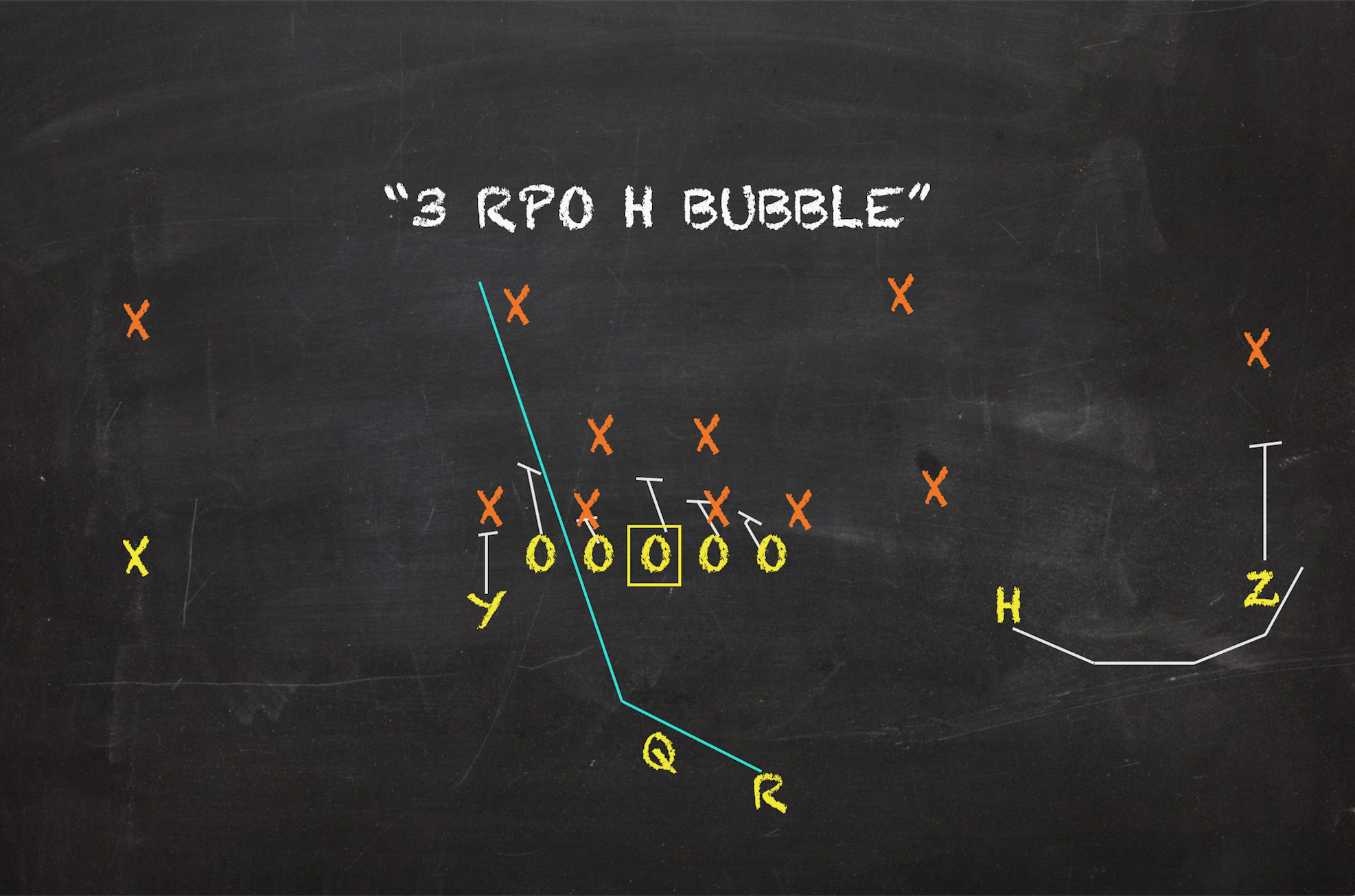
1. Inside Zone Slam Read 9.78% Play Share 3.96 Y/A 28.6% Success Rate
Like the in majority of modern spread offenses, the Inside Zone Slam Read led Florida's script. Much of the Gator's putrid rushing output was because they consistently failed to execute this basic Inside Zone Read. If you run something a lot and you are not particularly good at running said concept, your overall numbers will suffer. Though RPO route tag were common on top of these reads, Kyle Trask's lack of mobility made this a disastrous play down-to-down for the Gators. If the secondary correctly accounted for each passing outlet, Florida just couldn't take advantage of their numbers in the box, generally speaking.
Though Dan Mullen did a good job of mixing up his playcalls on 1st Downs, Slam Reads were by far their most favorite concept. Their 42 reps in those spots almost doubled the next closest look, which happened to be Outlet Screens. Many of those were attached to Slam Reads. But this look posted its worst results on firsts. Less than a fifth of its reps gained five yards or more. No other SEC team was as incompetent in these spots running Slam Reads. Obviously, this concept should have been supplanted by another run look. At least the Gators were one of five SEC offenses to limit Slam Reads' play share to single digits. By its shear volume of carries, Slam Reads accumulated the second most yards of any concept for the Gators' offense.
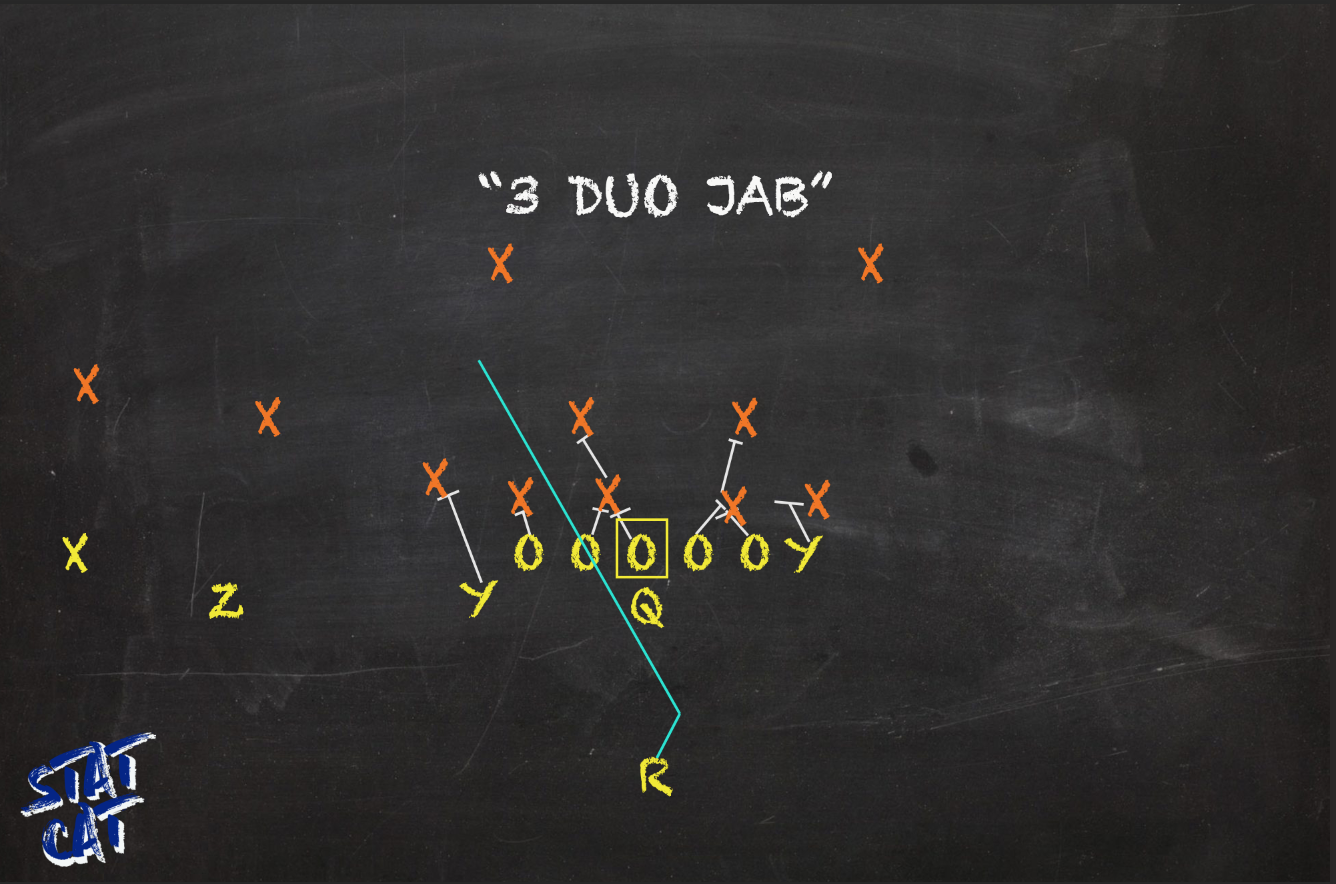
2. Duo Jab 3.26% Play Share 4.61 Y/A 28.6% Success Rate
The Duo Jab -- or "Counter Duo" -- was a run look the Gators often turned to when undercenter. Overall, it received the fourth most calls on the year among all of Florida's plays. Though this Duo wrinkle helped anchor a good amount of their play action pass patterns, the look itself fell flat time after time. Duo Jabs were just as disappointing as Slam Reads. Again, it's rather hard to have a good rushing game if you suck executing your two most called concepts on the ground. These Duos were "better" on firsts and were among their most featured plays on those downs. On their 14 reps, Duo Jabs averaged 5.64 on a 35.7% Success Rate.
Duo Jabs are misdirections with the backfield basically running a counter action. But instead of the trapper and wrapper from the backside, the OLine aims to double and drive the front at the point of attack without any pullers. With both Slam Reads and Duo Jabs being ground looks with an inside orientation, it's not a good look for Florida's line.
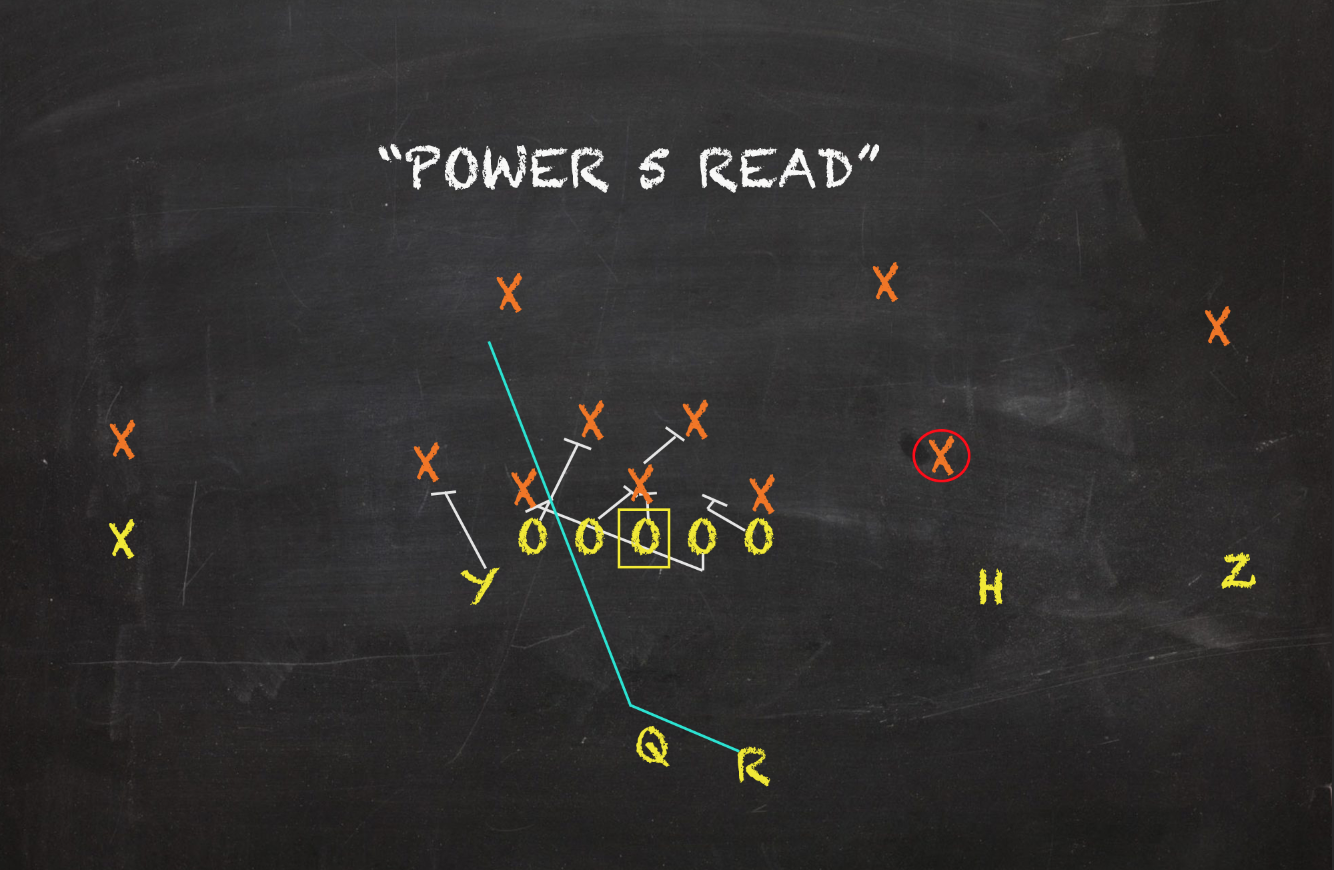
3. Power Read 2.79% Play Share 6.04 Y/A 41.7% Success Rate
Mullen also used power principles in his read game. While Power Reads were a pedestrian look in terms of production, they were far more effective for the Gators than their zone counterparts. Though the same ailments that hindered Slam Reads remained on Power Reads' reps, providing a puller playside helped provide more consistent gains. Among their five most called run concepts, only non-read Powers were better in terms of yards/attempt and Success Rate.
The design, however didn't really help the Gators create cushion before contact. On all Inside Power Reads, the Gators averaged 1.03 rush yards before contact, which is almost a yard less than their overall clip. LaMical Perine received most of these reps, and only finished with a single carry that gained more than 10 yards.
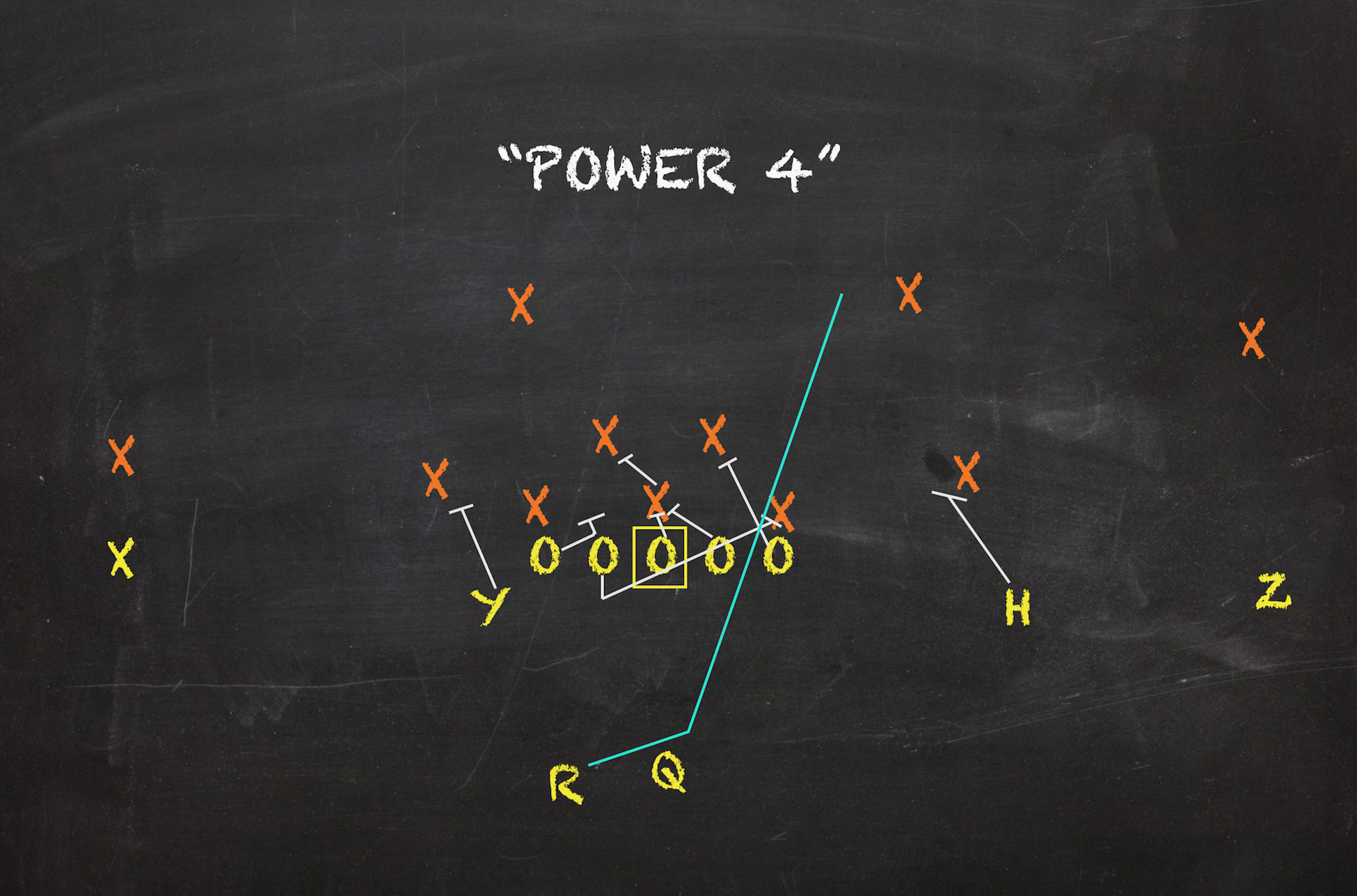
4. Power 2.68% Play Share 9.57 Y/A 56.5% Success Rate
Power runs without reads were the Gators' best run play in their normal offense. Mullen did a good job balancing the straightforward version with the read/RPO one. While the latter were mostly out of the gun, a good amount of Powers were from the pistol or undercenter. On second down, no other look accumulated more than the look's 181 yards for this offense. Overall, Powers were responsible for 220, which were the sixth most of any concept.
As Florida fans saw, Gators weren't able to capitalize on many run plays this past season. Even on Counters -- which are highly similar designs to Powers -- the Gators failed to be successful on a third of its reps. This was a concept Mullen should have called more, no doubt. With a fairly good sample size, it averaged nearly 10 yards/carry and was the only one of their most featured run with a Success Rate over 50%.
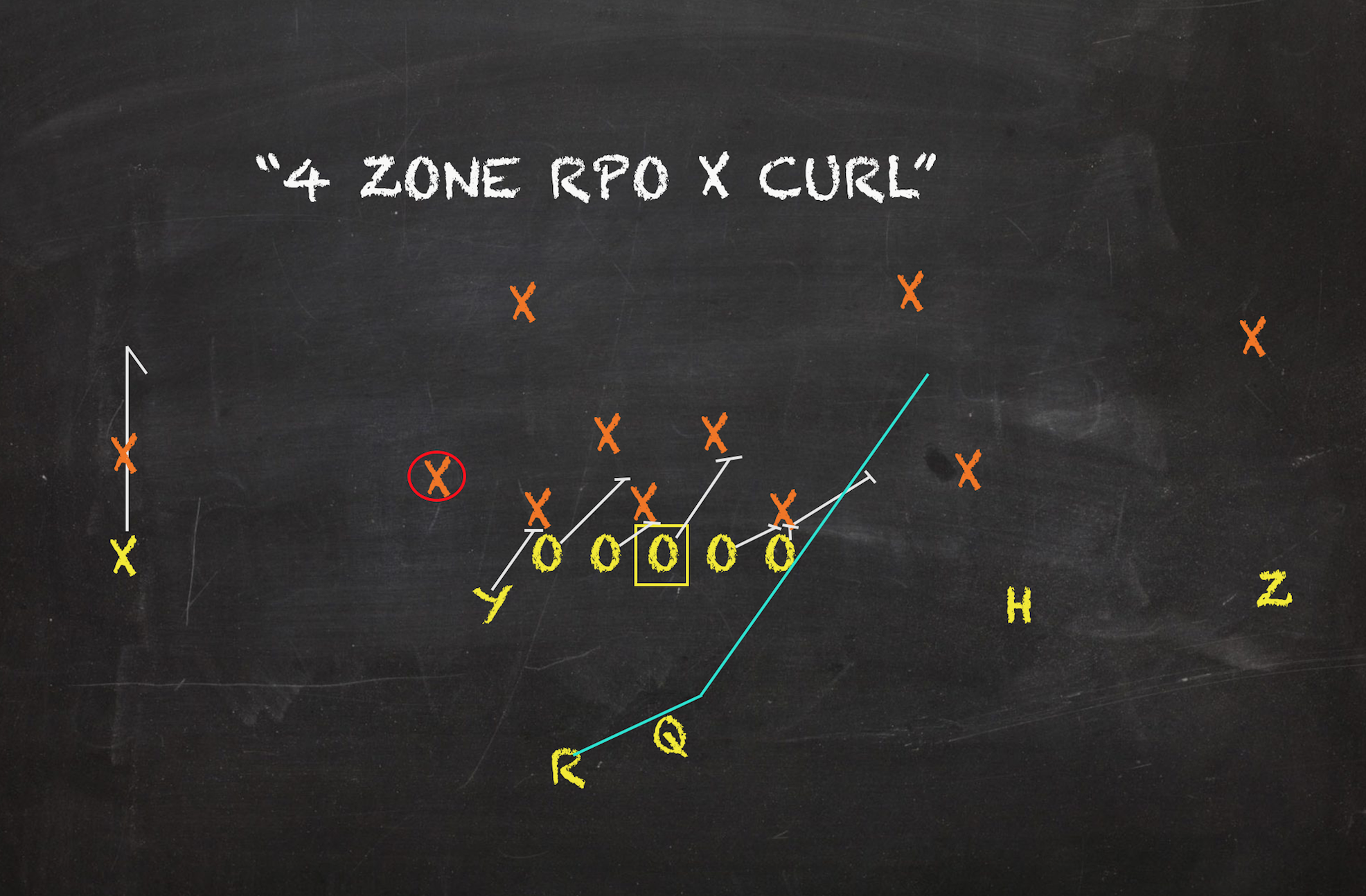
5. Outside Zone Read 2.44% Play Rate 3.67 Y/A 28.6% Success Rate
I kid you not; three of the Gators five most called run concepts all had a 28.6% Success Rate. In terms of potency, Outside Zone Reads were the worst of them. With Trask's limited mobility, these shared the same issues Slam and Power Reads suffered from. If the passing outlets were covered, the Oline failed to win its battle and Trask was no threat to run. Of the 23 reps Outside Zone Reads received, Trask only had three carries for a mere eight yards.
Outside Zone Reads were one of the Gators most featured 1st Down concepts. There, the look was executed worse than its overall clip. On firsts, Florida only averaged 3.23 yards/attempt on a 23.1% Success Rate. No Florida ball carrier finished the year with a Success Rate above 40% on Outside Zone Reads and Malik Davis was the only one to average more than 5 yards per carry.
Florida's favorite pass looks
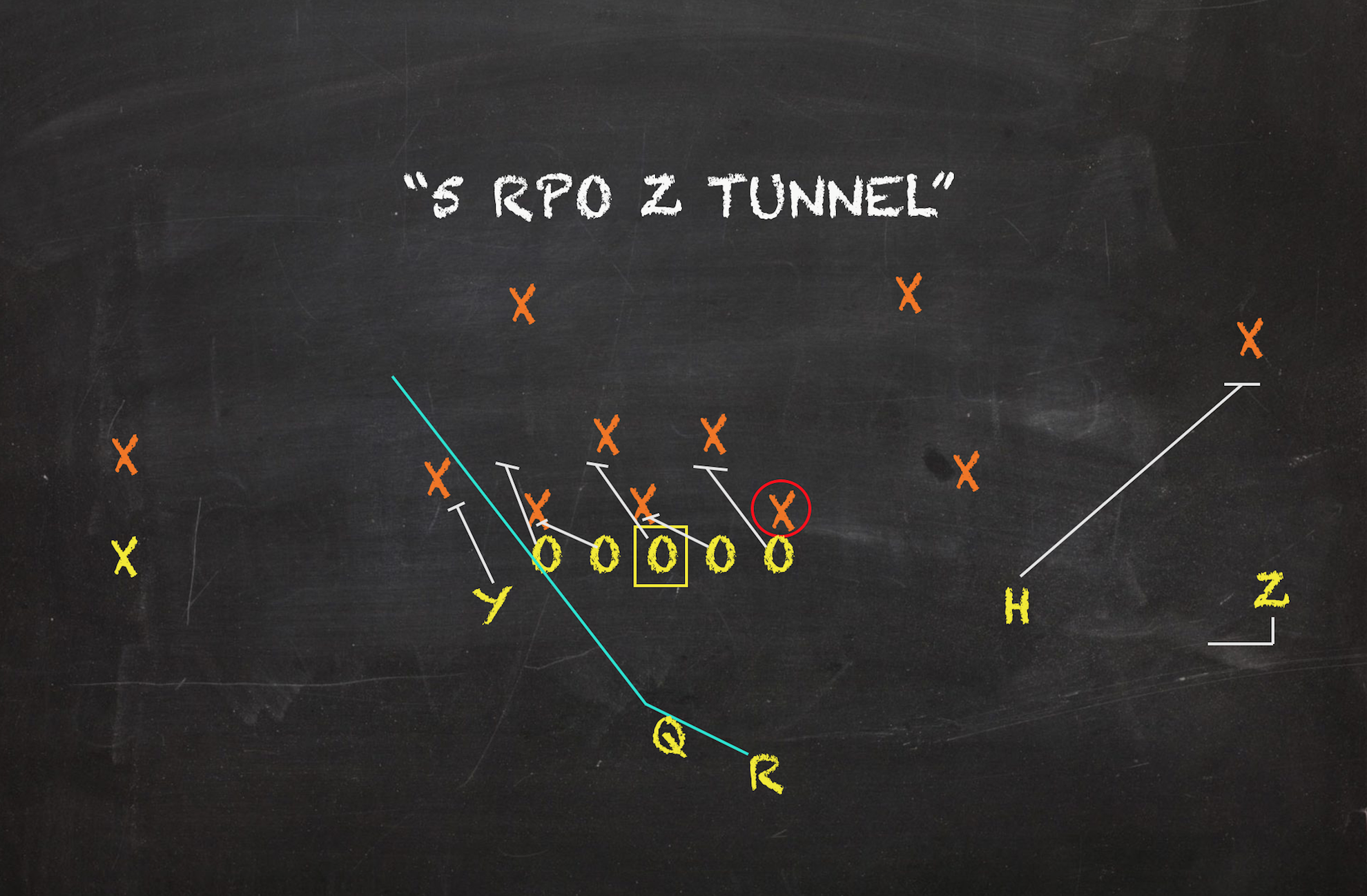
1. Outlet Screens 6.99% Play Share 6.67 Y/A 56.6% Success Rate
With three read options composing their five favorite most called run concepts, Florida tagged plenty of routes on top of them. Their favorite were Outlet Screens like Bubbles, Tunnels and Swings. When combined only Inside Zone Slam Reads had a higher play share. Though Florida was one of the most screen-heavy offenses in the SEC and occasionally featured Outlets, most were targeted off RPO designs. While the read options struggled to earn real estate on the ground, Trask and Florida's wideouts had a nice connection when they had numbers on the perimeter. Outlet Screens aren't necessarily to bust big gainers, but they are a very effective (and conservative) method to help stretch a defense horizontally and manage down and distance.
Outlet Screens were so heavily featured that Bubble and Swing screens each had a 2.5% play share. Tunnels screens were among the team's most successful looks. Outlet Screens only trailed Slam Read in 1st Down Reps. While the latter posted frustrating figures, Outlets Screens were at their best to start a set of downs. There they averaged 8.52 yards/target on a 62.5% Success Rate. Even though Outlets were the Gators most targeted 3rd Down play, that's where the look was at its least efficient. On thirds, only 30.8% of their chances moved the chains. But because of their dependability and volume, Outlet Screens combined to total 400 yards, which was the most of any look for Florida.
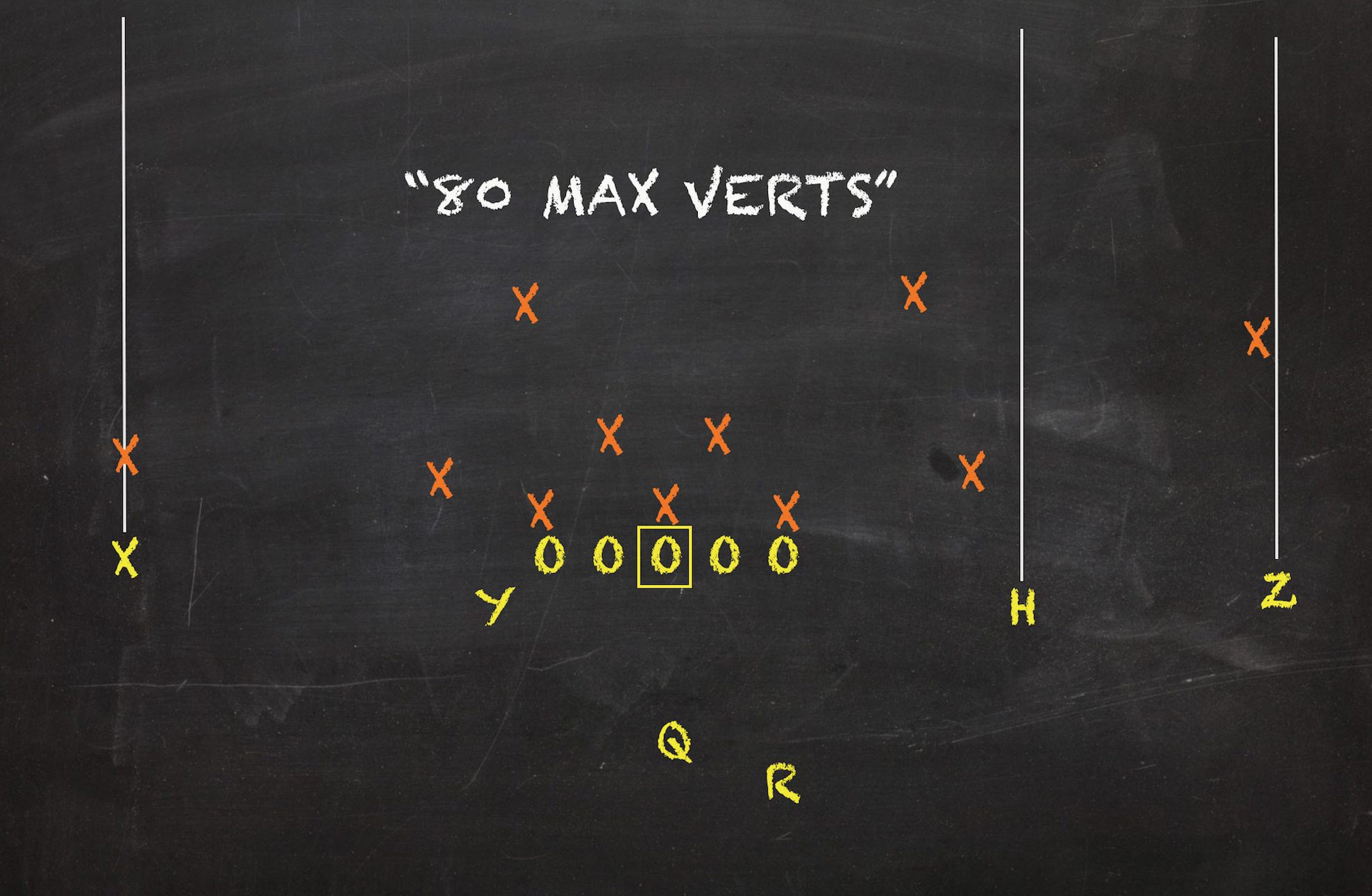
2. All Verts 3.61% Play Share 7.69 Y/A 29.0% Success Rate
While a decent amount of teams turned to the All Verts pattern when behind the chains and desperate for a spark, this deep aerial concept was the Gators' most targeted 1st Down pass play. Mullen liked to take a shot on an early down once the defense was either off-balanced or scrunched up expecting a read option. These spots produced the concept's best figures. Florida was able to average 11.7 yards/target on a 40% Success Rate on firsts. The element of surprise met with the Gators' talented receiving corps helped this boom or bust design post a sturdy rate of return. Of SEC quarterback with at least six All Vert passes, none was better at turning an attempt into a first down more than Trask.
But Florida was far less effective executing All Verts on 3rd Downs. Though Trask was 1/2 for 24 yards, three other reps resulted in a sack or a scramble. On thirds, All Verts only averaged 3 yards/attempt. Still, All Verts were one of Florida's best yardage gainers. The look's 226 yards were the fifth most of any concept; 154 of those yards came off four targets. Tyrie Cleveland, Josh Hammond's and Ricky Well's all were able to haul in their All Vert chances and buoyed the look's overall production. Kyle Pitts was the Gators most targeted player on All Vert patterns with seven, but the tight end only caught two of his targets.
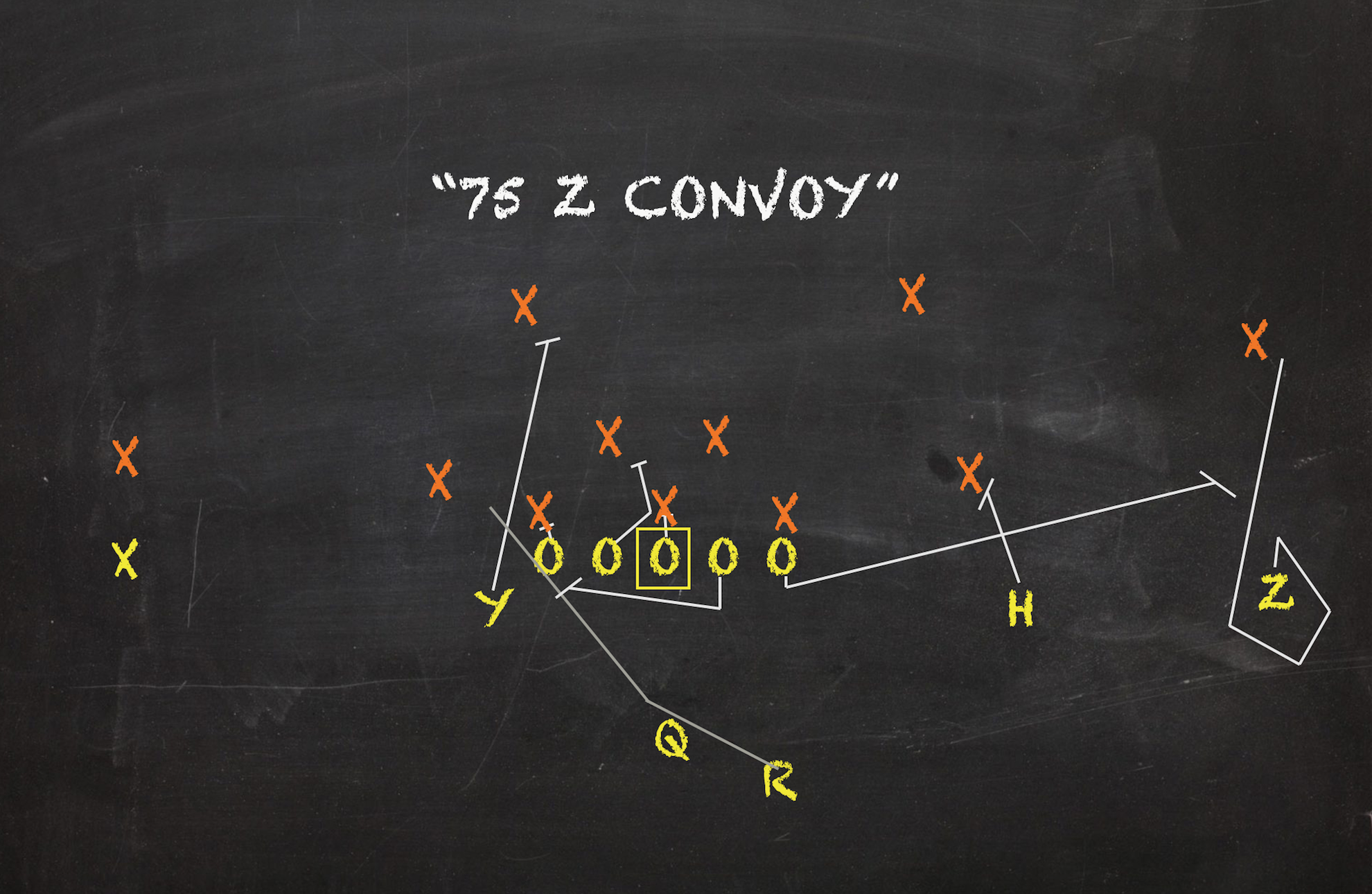
3. Jailbreak Screen 3.14% Play Share 8.89 Y/A 48.2% Success Rate
Of SEC passers with at least 30 attempts, Emory Jones and Kyle Trask were one/two in the conference in Screen Rate. Over one in seven of their pass attempts were True Screens. Unlike quick flip screens featured on RPOs, True Screens operate like an extension of the run game with the OLine getting out on the edge to led the way for the wideouts. The Jailbreak -- or Convoy -- Screen was their favorite wrinkle. Florida often called these with power play fake. The extra action potentially holds backer an extra beat while the playside lineman race outside the numbers to engage with defensive backs. While the Gator OLine overly struggled blocking fronts, their found much more success taking on corners and safeties in space.
Like a good amount of offenses, Florida turned to Jailbreak Screens on 3rd and long. Only Outlet Screens saw more targets on the money down than Jailbreaks. Naturally with more yards to gain, the degree of difficulty in these spots was challenging. So while the look's figures there are lesser than its overall numbers, averaging 8.08 yards/attempt on a 41.7% Success Rate is respectable. Jailbreaks a numerous big gainers and accumulated 240 yards, which were good for the fourth most of any concept for the Gators. Four Gator players were among the SEC's top 11 yardage producers off True Screens this season.
4. Hoss 3.03% Play Share 11.5 Y/A 65.4% Success Rate
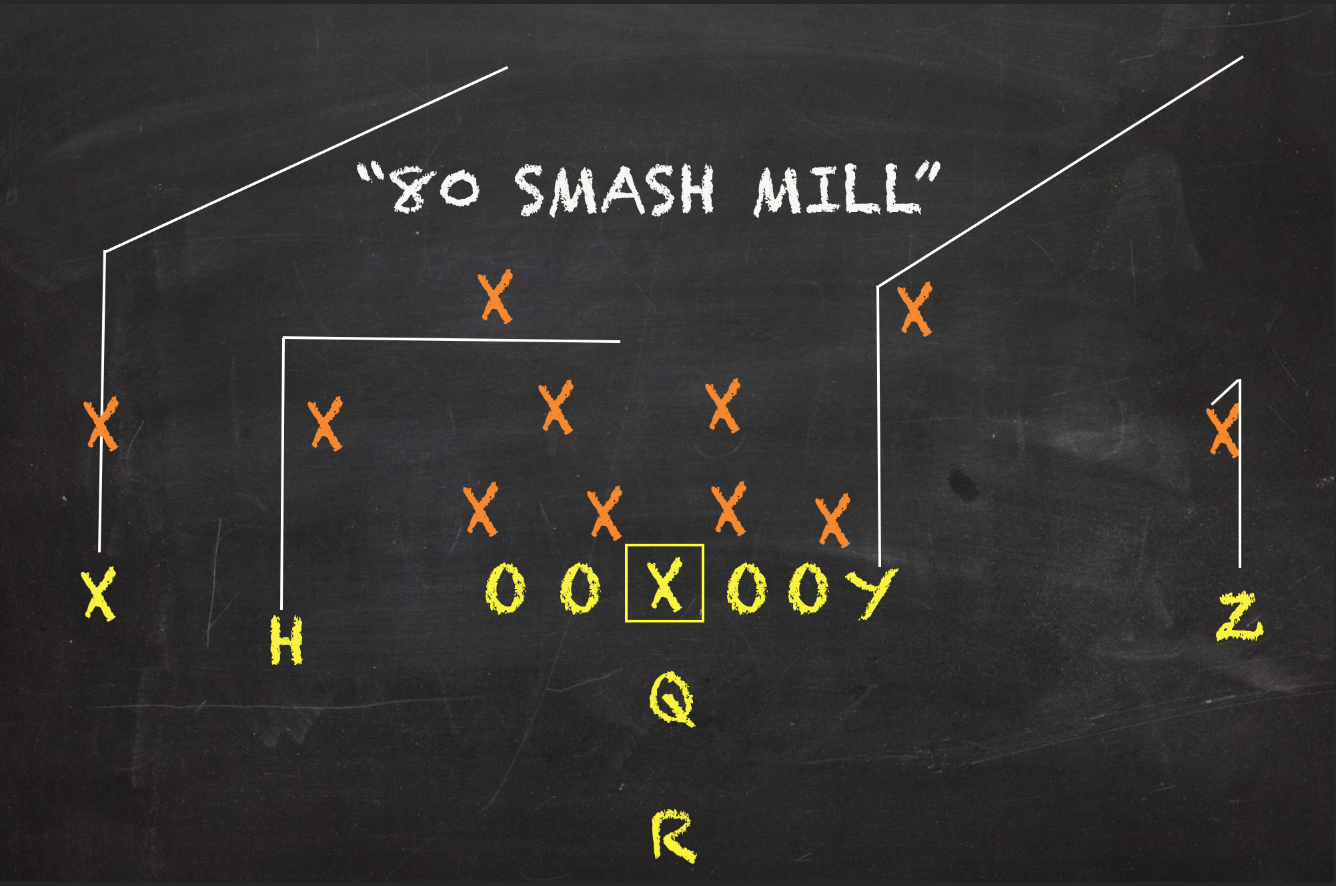
Florida's favorite dropback pass patterns were vertical in nature. Besides All Verts, Hoss and Smash concepts rounded out their five most favorite pass patterns with a couple types of screens. Hoss is a seam+sideline combo where the outside guys with run hitches with the inside receivers running straight downfield. The seams can split Cover 2 or create a favorable matchup for a slot or tight end in man coverage. The hitches can win versus the cushion of Cover 3 or 4 or sagging man coverage. Thanks to its versatility and Trask's sound decision making, Hoss consistently delivered. Among the Gators' most favorite pass plays or five most successful looks, none finished with a higher yards/attempt. Hoss was responsible for 299 yards, which was the third most of any look for this offense this season.
Florida occasionally would insert a slot "juke" route when out of empty formations on its Hoss designs. This multi-breaking manbeater provided an easy throw for Florida's passers if protection broke down or if a slow-footed backer was responsible for covering that route. This was much more of a tactic on later downs. The Gators executed Hoss the best on 1st Downs. On firsts, the look shared the fifth most calls of any concept and was the team's most successful play with a 76.9% Success Rate.
5. Smash 2.21% Play Share 7.84 Y/A 68.4% Success Rate
Complimenting All Verts and the Hoss concept, the Smash pattern was the Gator's most successful look in 2019. While the outside hitches remain, the inside receivers run corners instead of seams like on Hoss. If safeties are inching inside, the passer is given an easy high-low read along the sideline. If the corner sinks, dink it to the hitch. If he dives, drive it overtop outside the numbers. Other Smash wrinkles like Corners or Bench were also seen from this offense, but the old school design was their most featured and most efficient.
Like Hoss, Smash put up its best results on 1st Downs with a 77.8% Success Rate and 9.22 average. While those are clearly fantastic outputs, Smashes were fairly consistent for the Gators across all downs. Sure, their Success Rate dwindled on each subsequent down. But no down saw this look sport below a 50% Success Rate or 6.2 yards/target. Lamichal Perine, Kyle Pitts, Trevon Grimes, and Van Jefferson all saw at least 6 targets on Smash Variations this season. No other SEC offense had as many players break that threshold on this concept. Thanks to moving guys around the formation and Trask's decision making, the Gators feasted on secondaries on Smashes.
Chalking up Florida's most successful looks
1. Smash 2.21% Play Share 7.84 Y/A 68.4% Success Rate
Kyle Trask was a pretty good quarterback when he didn't look to press. Mullen frequently gifting him looks he was comfortable with; and more times than not, Trask took what the defense gave him. In the context of the Smash concept, this often resulted in Trask targeting the outside hitch. Though not the best or second best receiving corps within the SEC, Florida still had a talented collection of receivers who could stretch the field and burn people with their speed. This threat naturally resulted in secondaries granting them more cushion on the perimeter. Across all Smash Variations, 77% of targeted hitches or flats were completed compared to 52.9% of corners routes.
2. Hoss 3.03% Play Share 11.5 Y/A 65.4% Success Rate
Not only was Hoss one of Florida's most successful concepts, it was one of their most featured passes and was one of the Gators best yardage gainers. This was a very complete and versatile look Mullen called out of empty, balanced, and unbalanced formations. The Gators even tagged Hosses on top of its read options. Though a rather rudimentary curl+seam combo, Hoss can beat a number of coverages. Looking at all Seam+Sideline targets, 18.4% of their targets went for 20 yards or more. That's not too shabby considering Florida's overall Explosive Pass Rate was 10.8%.
3. Solo Slant 2.12% Play Share 9.21 Y/A 63.2% Success Rate
What's more simple than an isolated slant route? Though not really a concept, placing an in-breaking slant with an outside oriented combo or tagging it on RPO designs sparked numerous chunk gains for the Gators. Looks like Hoss, Smash, All Verts, Fades, and Curl+Flat combos all saw an inside slant wrinkle occasionally from this offense. Florida's wideouts all possessed potential to win one-on-one and the quick, manbeating route provided plenty of opportunities for them to showcase their skills. Across all concepts, 53 slants were targeted, which was 21 more than the next closest route.
4. Tunnel Screen 1.75% Play Share 8.93 Y/A 60.0% Success Rate
Tunnel Screens -- either as RPO outlets or as quick flips -- allowed Florida's wideouts to make plays in space. Despite seeing less volume than Bubbles, Swings, and Jailbreak screens, Tunnels were the Gator's most efficient in both yards/attempt and Success Rate. Tunnels were far more effective in the RPO game. Since they're designed to make the defense pay if they don't appropriately account for receivers in space, favorable numbers and correct decision making fueled this concept's laudable stats. Only 33.3% of non-RPO Tunnel Screens resulted in success compared to seven of the eight targeted on RPO designs. On RPO's, Tunnel screens averaged an eye popping 13.4 yards/target.
5. Knight QB Counter 1.40% Play Share 5.83 Y/A 58.3% Success Rate
A few SEC offenses had distinct packages for their back-up quarterbacks who happened to display more athleticism than their starters. In order to differentiate these calls from a team's normal offense, I categorized these sets as "Knight" with our nomenclature. As far as Florida is concerned, their Knight package was either a two-back Wildcat set or plays out of empty for Emory Jones to do damage on the ground. While Kyle Trask sported a 41.7% Success Rate running QB Counters inside the Gator's normal offense, Jones is clearly the more talented runner. After all, Trask only averaged 2.42 yards/carry on his 12 QB Counters. Knight QB Counters along with non-read Powers were the only two run concepts that received significant reps to finish with a Success Rate north of 50% for the Gators.
Where Florida's weapons ranked
Feleipe Franks incessantly faced scrutiny in his stint as Florida's starting quarterback. Middling play paired with a high turnover rate kept him from ever establishing himself as top dog quarterback within the conference . He was certainly viewed as replaceable no matter no many plays he made. Even though early returns on his analytics showed signs of growth, Gator fans critical of Franks got their wish less than 3 week into the season. He dislocated his ankle in the second half versus Kentucky. Kyle Trask -- a career backup not only in college but in high school as well -- was thrusted into the lineup to save the day. He rallied the troops, made some throws, and helped mount a comeback victory.
Despite having to rework his tactics on the fly, Mullen showed instant trust in Trask. He refused to handcuff his offense. His gamble paid off as not only did Trask help execute game plans with the best of them, but he also helped Florida become one of the most explosive pass offenses within the conference. Despite being a limited athlete that would certainly hinder Florida's read option attack, his precision from the pocket helped negate many of the Gators' faults offensively.
Trask, however, had one glaring flaw: his high Interceptable Pass Rate. Over the course of the season, Trask would make a throw or two a game where it looked as if he neglected to account for a defender in his passing lane. This particularly was a problem in the Red Zone where 18.5% of his attempts were altered by defenders. Only Arkansas' Nick Starkel's clip was worse amongst SEC starters. Trask's Interceptable Pass Rate in that area of the field climbed to 11.1%. Trask overly was one of the most efficient passers in the SEC. By the old way of gauging output, he threw for the second most yards and third most touchdowns. Plus, his Completion% and yards/attempt cracked the conference's top5. When his play was examined with further context via analytics, he came out just as strong. Trask was the best QB in the SEC East in Success Rate, Accuracy, and First Down+Touchdown Rate. As a downfield thrower, he was one of the five best in the conference per his Depth Adjusted Accuracy%.

Still, there's no denying Trask's passing was a major upgrade. Florida's floundering ground game was constantly buoyed by Trask and his receivers able to win their battles. Again, Florida had the SEC's second highest Pass Rate with only LSU and Alabama sporting more situational success through the air. Trask's numbers this year were better across the board than Franks' 2018 season. He managed games well and often nickel and dimed his way down the field. Cliche or not, he took what the defense gave him. His average depth of target -- or how far his receiver is on average when thrown the ball -- was about a yard less than Franks' 2018 clip.
Despite a few more muted throws, Trask was far less reliant on RPO to pad his passing stats than Franks. Last season, over a fifth of Franks' attempts were off RPO designs; Trask's rate this year was more than half of that. Even with Trask being far more cement-footed than Franks, Mullen didn't shy away from incorporating RPOs into this offense's script. The Gators owned the SEC's fourth highest RPO Rate at 28.1%. Yet, Trask refrained from overindulging in those completions. His RPO rate of 8.76% was the third lowest amongst qualifiers.
Compared to the average SEC passer facing pressure, Trask was heads and shoulders better. This increase in production year over year in these spots wasn't just moving up a few spots in the rankings. On pressured attempts, Florida's passing game went from being neutralized to galvanized all thanks to the play of Trask. Still, it's worth mentioning that Trask had the second lowest average depth of target on pressured dropbacks in the SEC at 8.39 yards. Only South Carolina freshman Ryan Hilinksi had a lower clip within the conference. When pressured, exactly half of his yardage came after the catch, which was an average rate inside the SEC. Trask significantly increased Florida's passing game production when under pressure. Franks was abysmal under duress in 2018 and one of the worst within the SEC. Roughly fourth of his attempts resulted in success and barely a fifth of his passes earned a 1st Down or score. Though he avoiding risky throws, it was rare something good would happen if defenders got up in Franks' grill. Though Trask allowed a few balls to get away from him, he was one of the most efficient quarterbacks versus pressure around. Trask excelled under duress -- which often times resulted in less defenders being back in coverage. Both of his Pressured Depth Adjusted Accuracy and First Town+Touchdown Rate top his clips from clean pockets.
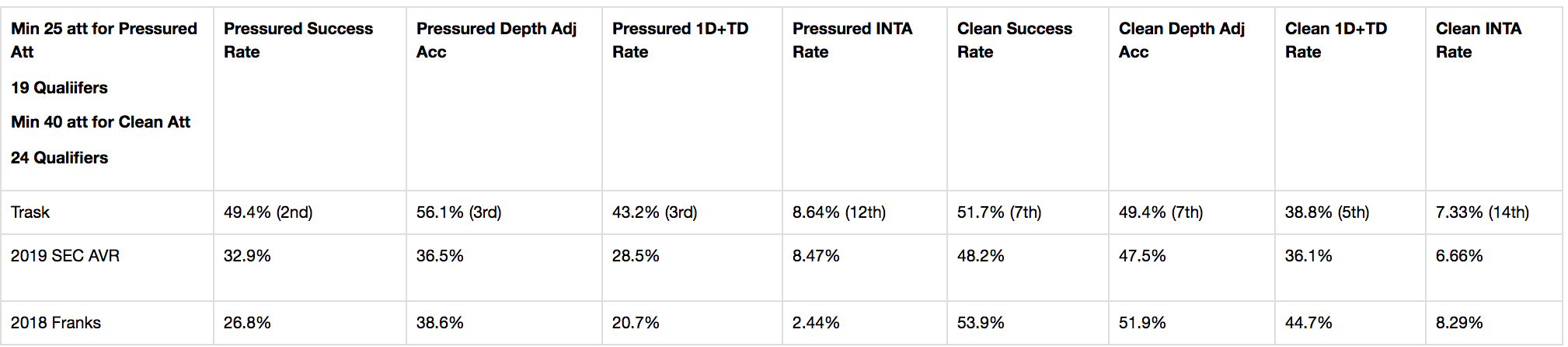
From clean pockets, Trask's figures dipped. Since clean pockets are more consistent, they are a better prognostication of a passer's potential. With less variables and a chaos, a passer has less excuses for delivering a bad pass. After all if you can't be a good passer when conditions are perfect, how can you succeed consistently under pressure?
Trask wasn't bad when he was kept clean, but he was relatively worse in these spots than when pressured. Across the board, he still beat the conference average from clean pockets. His First Down+Touchdown Rate, in particular, was a top5 clip within the SEC. His Clean Success Rate and Depth Adjusted Accuracy, however, failed to break that threshold. Though the gap is marginal in most areas, Franks' 2018 season was more efficient. Though neither passer couldn't curb turnover-worthy throws that well, Franks was more consistent, accurate, and more likely to convert or score from clean pockets than Trask.
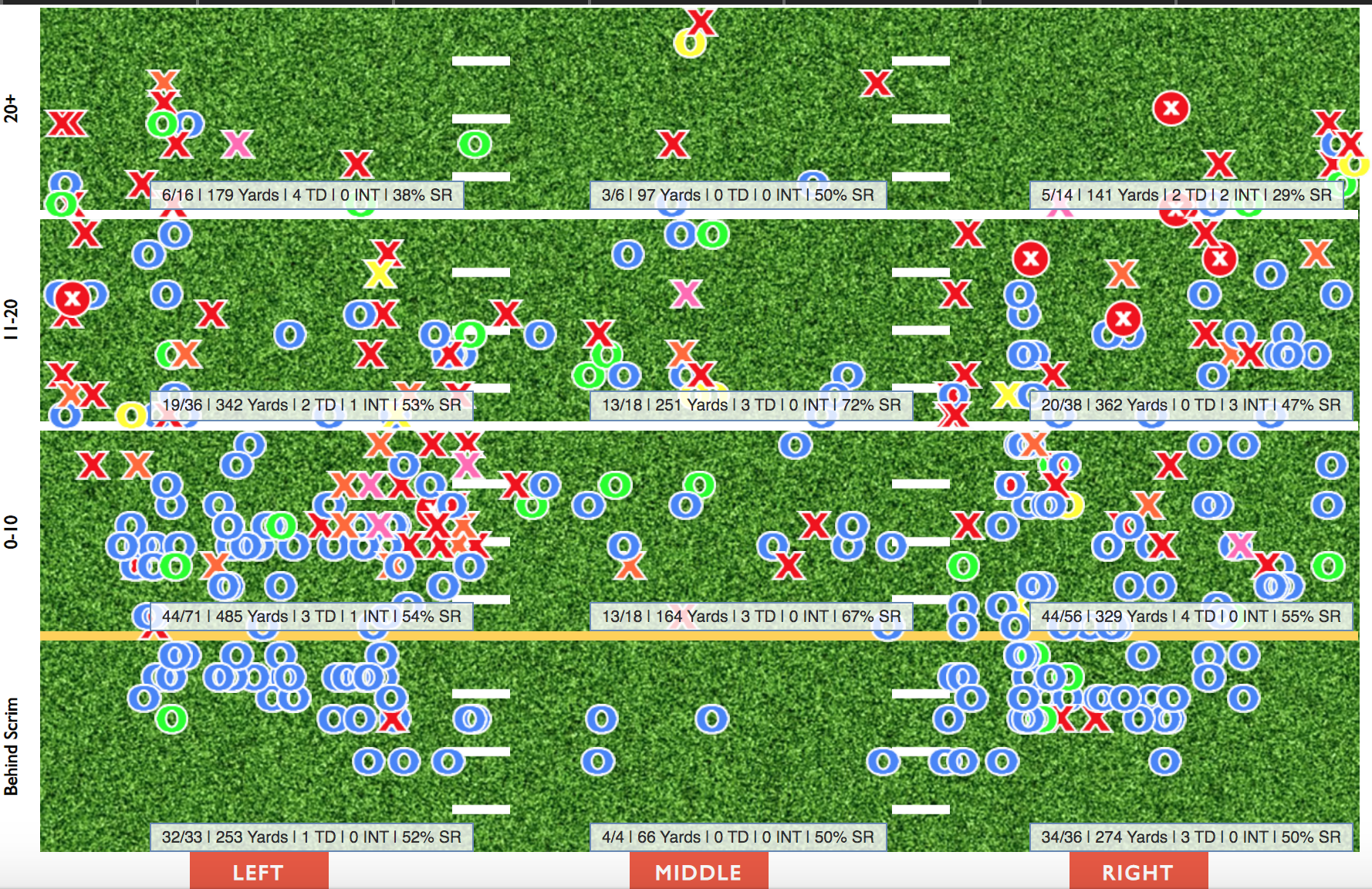
Trask was a fantastic design maker when dropping back. Over half of his throws in each area of the field resulted in success, because he was able to make the right read more often than not. Outside the hashes, only Joe Burrow was more accurate on dropback attempts within the SEC. Though Trask was at his most successful targeting the middle of the field, that's where he was at his least accurate. Again, that's the only spot where Franks' accuracy bested his. While superior to the conference average in every other aspect, his accuracy inside the hashes was unsatisfactory relative to the rest of the conference. As aforementioned, Franks was far more reliant on RPOs. Though it's not always the case, this is a tactic some play callers utilize in order to build confidence for their passer and to gift him easy completions. Generally if a passer is a subpar quarterback operating within the pocket or struggles with downfield accuracy, RPO outlets can keep an offense's passing game alive and functional. Franks wasn't the strongest dropback passer so he welcomed the opportunity to load up on RPO throws when the situation called for it. Outside of being more accurate on middle of the field throws, Trask was more accurate and succesful as a passer sideline to sideline. Though like Franks, Trask's Screen Rate was high. He still, however, overly avoided these throws preferring to operate in the dropback game.

One consistent tactic Mullen carried over was ample use of play action. Though Franks used it more, Florida's failure running the ball didn't restrict Trask's use of play fakes. Trask's Play Action Rate of 28.8% only trailed Alabama's Mac Jones and Mississippi State's Tommy Stevens. Thanks to the high volume of chances Trask finished top3 in the SEC in play action completions, touchdowns, and first downs. Off play fakes, Trask Success Rate ticked up to just under 54% with his Explosive Pass Rate increasing to 17.5%. Both clips were good for fifth best within the conference.
Thanks to his poise under pressure and solid precision long and short from sideline to sideline, Trask is well-position to be one of the premier passers int eh SEC in 2020. Considering this was his first major action on the gridiron in quite some time, Gator fans should be really excited for his trajectory. Though he noticeably plateaued as the year went along, what other passer would you trade him for within the SEC.
Some Florida Fans are campaigning for Emory Jones to take on the role full time. Obviously his athleticism adds an extra element to the run game and the Gators were more predictable with their intentions based on who was taking snaps. Eliminating the quarterback carousel could make their offense less predictable and more potent, in theory. While Jones had a higher Explosive Pass Rate and Touchdown Rate than Trask, he was less consistent in terms of success and was considerably less accurate. Plus his 39% Depth Adjusted Accuracy was well below the conference average. Sure a strong offseason could make for an interesting QB competition. But in my opinion, Trask should be the unquestioned started moving forward.
No, Florida didn't have the best receiving corps in the SEC. Depending on personal preference, most would don LSU or Alabama with that honor. Regardless, the Gators had a very talented collection of targets. All three position groups were featured in Florida's passing game. Tight end Kyle Pitts led the way in targets, running back Lamichal Perine had the team's third most catches, and six receivers saw more than 30 targets. With Florida's run game consistently underwhelming, Trask and his receivers had to uplift and support the Gators' offensive production. Either via screens, RPO outlets or on true dropback pass patterns, these players answered the bell consistently providing chunk gains. Excluding Perine, all of Florida's main targets finished with a Catching Success Rate above 50%.
Pitts had a bit of a drop problem. His 8.75% Drop Rate was among the ten worst in the SEC among players with at least 40 targets. By volume, only three SECers had more than his seven on the year. But this inconsistency didn't deter Trask from targeting Pitts when in a pinch. Pitts' Contested Catch Rate placed into the upper third of conference receivers proving he was a bit of a handful. Though Van Jefferson and Perine outdrew his number of 3rd Down targets, no Gator had as many has his 15 Red Zone attempts. Despite the trust and ability to win in tight windows, Pitts was relatively a bad option in those spots in terms of success. While he might have been the least bang-for-buck option among Florida's outlets, Pitts as a physical specimen should continue to be featured in this offense moving forward. Another year of refining his skills should see his volume remain the same. But if he wants to be the best tight end in the SEC in 2020, his efficiency needs to improve. That starts with being a more consistent pass catcher and more dynamic vertical threat. Kyle Pitts certainly became a fixture within Florida's offense this season. With his athleticism, he became a natural matchup weapon from the tight end spot. No matter where he lined up, Pitts ended the year as Trask's favorite target. Over the course of the Gators' final eight games, Pitts either shared or led the team in targets five times. With only four deep targets on the season, he largely roamed short to intermediate areas of the field. Of Florida's four main outlets, he was the least efficient. Though he has some wiggle to him, Pitts' average gain after the catch fell into the bottom12 of SEC qualifiers. All in all, Pitts had the lowest yards/target, Catching Success Rate, Explosive Catch Rate, and First Down+Touchdown Rate.

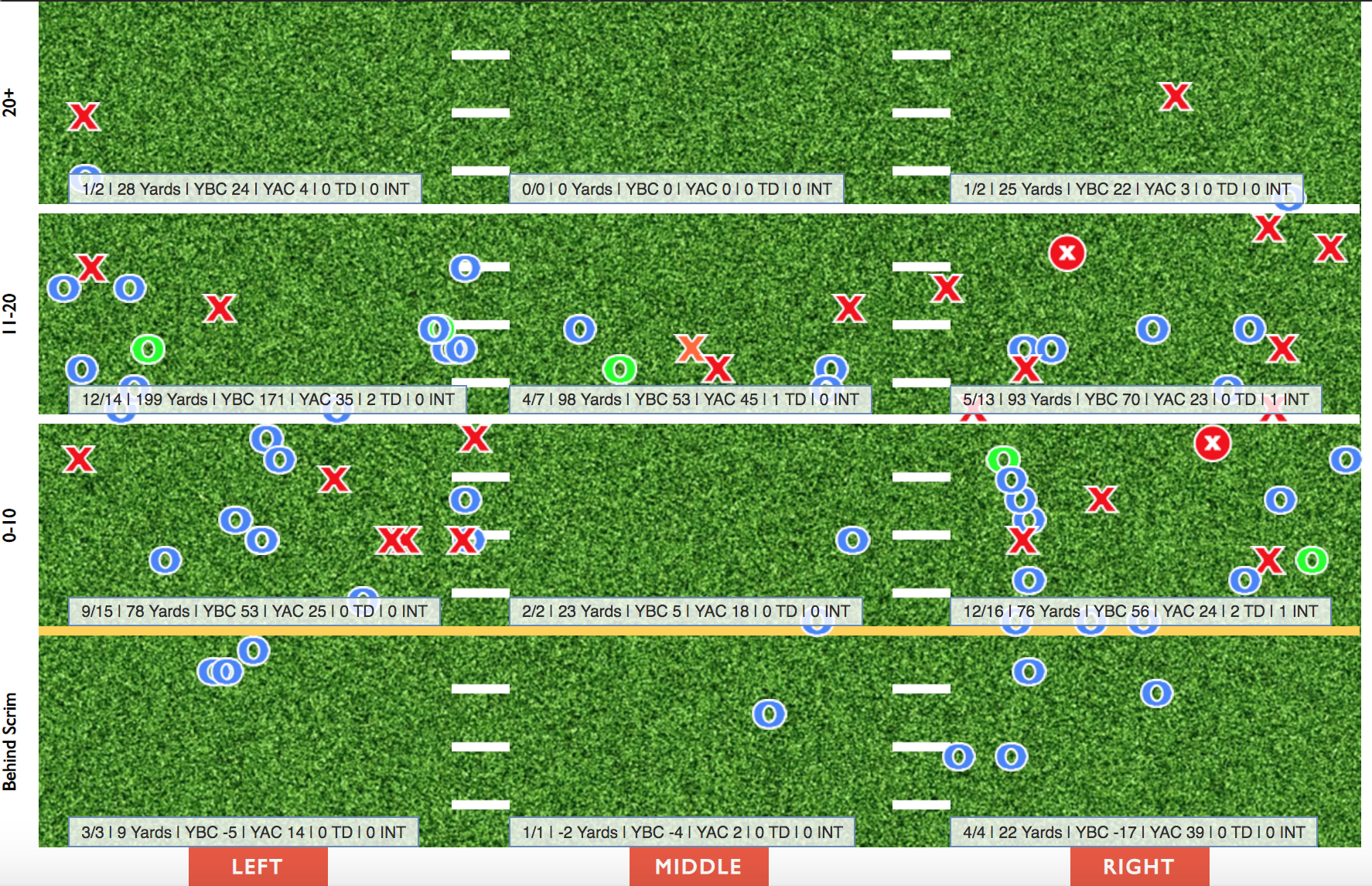
Van Jefferson was this unit's number one receiver. Though Pitts led the way in terms of targets and catches, Jefferson amassed a team-leading 657 yards. Sure, that's a volume figure that won't excite many folks. But Jefferson was a solid receiver across the board in his final collegiate campaign. His Catching Success Rate, First Down+Touchdown Rate, Catch Rate, yards/target, Explosive Catch Rate, and Contested Catch Rate all cracked the SEC's top15. Though the latter was the only area besides receiving yards where Jefferson led the Gators, it was hard to find major flaws in his game.
Jefferson dropped four targets, which gave him an undesirable drop rate relative to the conference. Plus, Jefferson wasn't the best downfield receiver. Like Pitts, his Depth Adjusted Catch Rate remained high by consistently jumping over a low bar. Nearly two-thirds of his targets were ten yards or less downfield where he caught 80% of his chances. Though three of his five scores occurred on targets beyond ten yards, Jefferson only caught 52% of his opportunities past that threshold. Jefferson only was able to haul in three of his nine deep attempts. But thanks to doing consistent damage short, he was able to balloon his Depth Adjusted Catch Rate similarly to Pitts. Partially because of his ability to win in tight windows, Jefferson was a great clutch down receiver for the Gators. While Trevon Grimes was the standard bearer, Jefferson was able to move the chains on over half of his 3rd Down Catches and was one of the most effective Red Zone targets in the SEC with a 72.7% Success Rate.
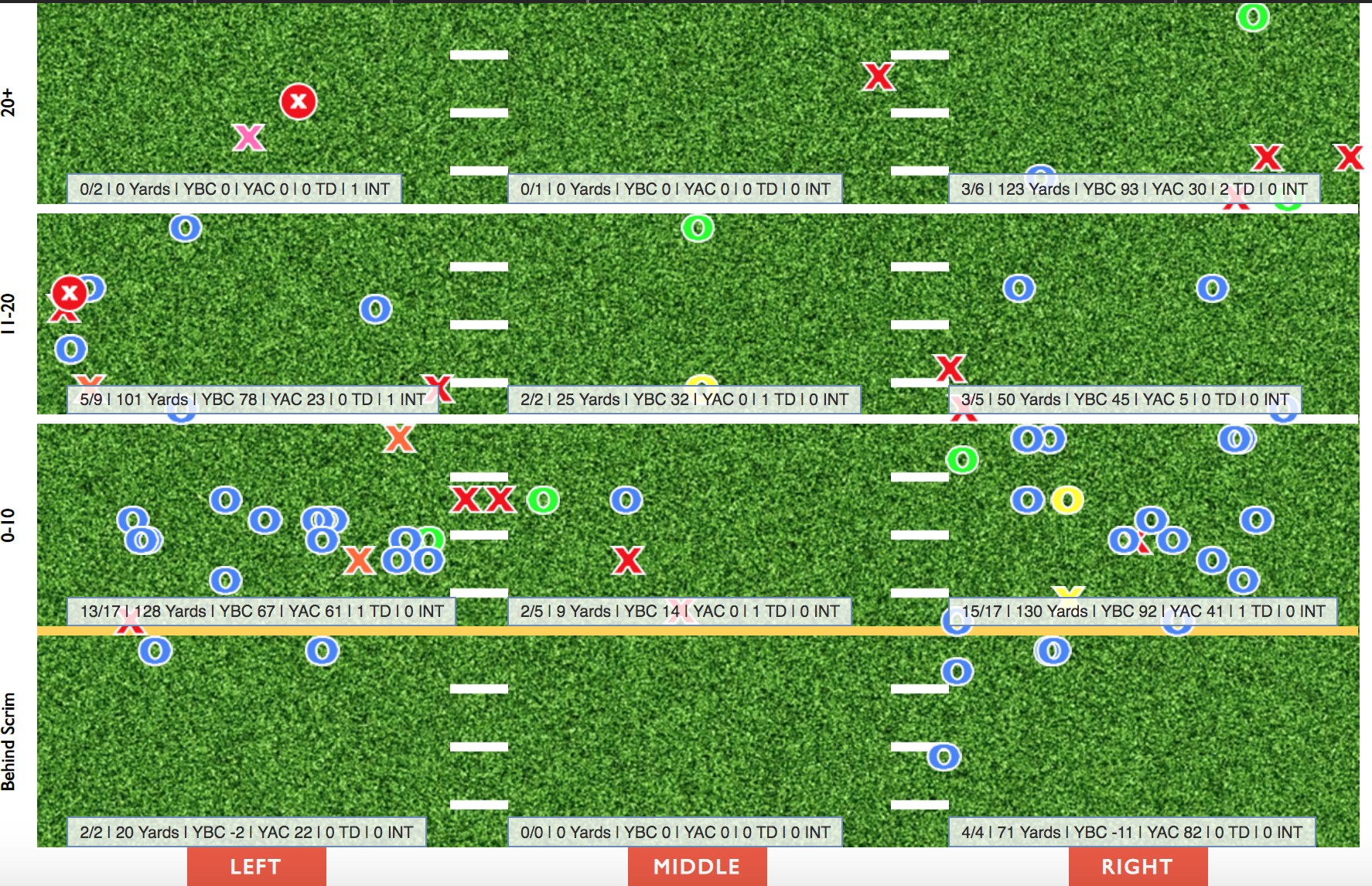
Being one of the Florida's shortest receivers at six feet tall, his smaller frame was less effective winning in tighter windows. Though okay on the money down, failing to consistently corral Red Zone and contested opportunities prevented him from rounding out his game. Though far from terrible his clips in both areas were below the SEC average. But if the ball was able to dissect the secondary and find Swain's hands, there was a very good chance he'd hold onto it. Swain only dropped one pass this season, which naturally made his Drop Rate among the best in the SEC. Freddie Swain from the slot was the Gators' most explosive pass catcher despite sporting the lowest average depth of target among their main options. Of his 58 targets, 49 occurred when he lined up inside at either the H or Y position. In terms of yards/target and Success Rate, Swain's numbers didn't favor playing inside or out as they basically stayed the same. Regardless of where he was in the formation, one out of six catches on averaged gained 20 yards or more, which vaulted his Explosive Catch Rate into the conference's top10. Swain was also featured heavily in Florida's screen game. He accumulated 79 yards off true screens, which was the seventh most in the SEC. Furthermore, his 12 RPO targets were most on the team. Thanks to his screen targets and functioning as a quick twitched manbeater in the short game, Swain had the lowest average depth of target amongst their four main outlets. Swain only was able to catch half of his targets over ten yards downfield. Beyond ten yards, Swain caught three of his seven scores but also three of his targets resulted in interceptions.

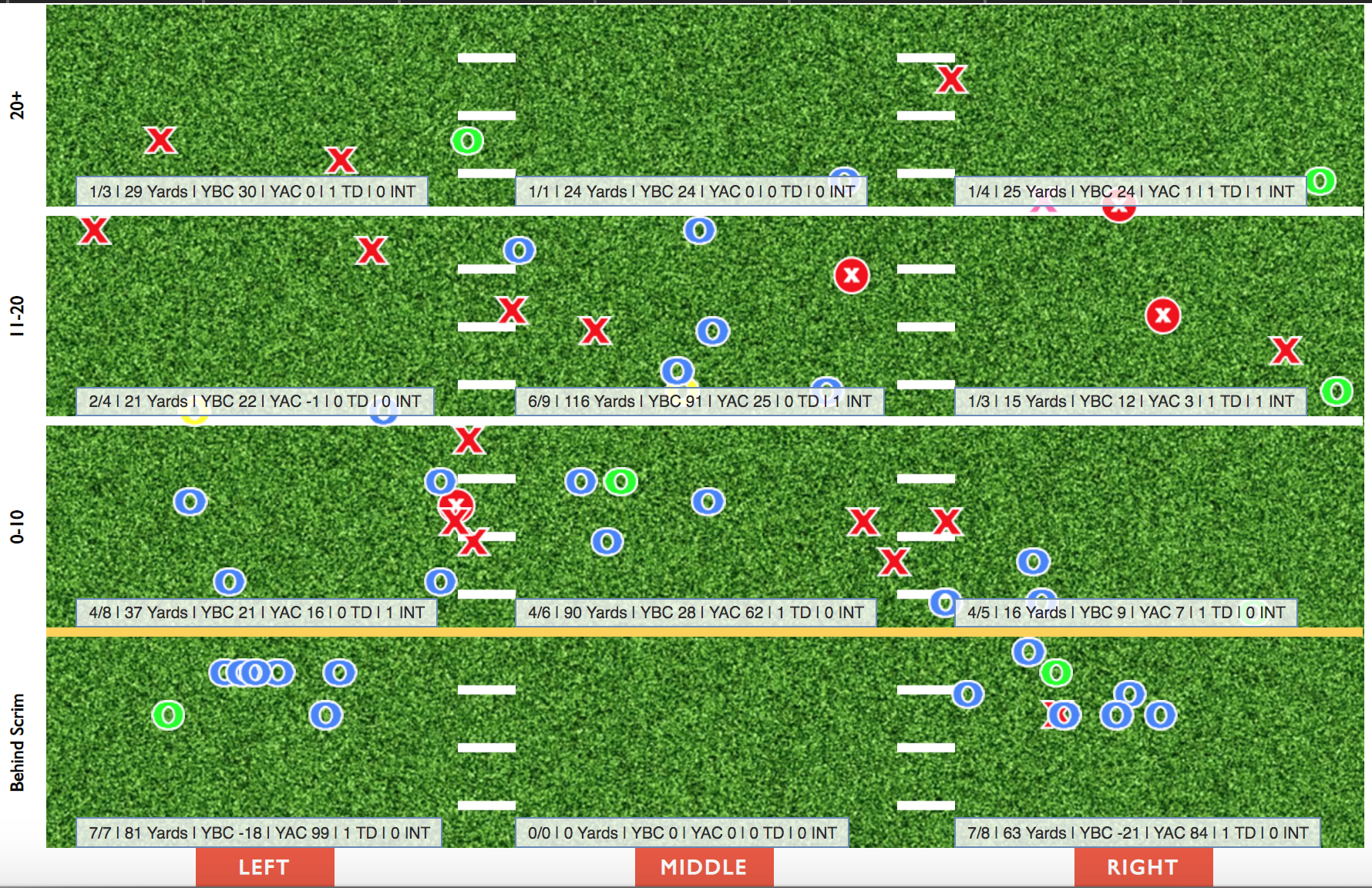
Despite ranking fifth on the team in targets, Trevon Grimes was the most efficient of the Gators main options. Boasting the SEC's third best Success Rate, Grimes also commanded a top10 Catch Rate, yards/target, First Down+Touchdown Rate, and average gain after the catch. Grimes' role was to be the team's main screen wideout, provide YAC on short completions, or help stretch the field on the right side of the formation. He was just as likely to be targeted on a screen as a deep attempt. In general, over a fourth of his targets were behind the line of scrimmage. But of Florida's four main targets, none was better being on the receiving end of deep attempts or racking up deep yards. Grimes wasn't just running underneath bombs. Half of his deep chances were created catches.
Despite overly being targeted short, Grimes led all Gators with at least 30 targets in yards/catch at 14.9. I mean, exactly two-thirds of his targets resulted in success. Grimes had a knack for playing efficiently and winning situationally. Along with his laudable overall Success Rate, Grimes placed top3 within the conference when targeted on 3rd Downs and in the Red Zone. If you were to judge him based on the traditional stat lines, he would be seen as overly forgettable instead of one of the most efficient receivers in the conference. Sure, pro scouts probably desire more production in intermediate areas and for him to shore up his below average catch rate. But as a flyer candidate, Grimes could be a diamond in the rough is someone wants to take the time developing his route tree.
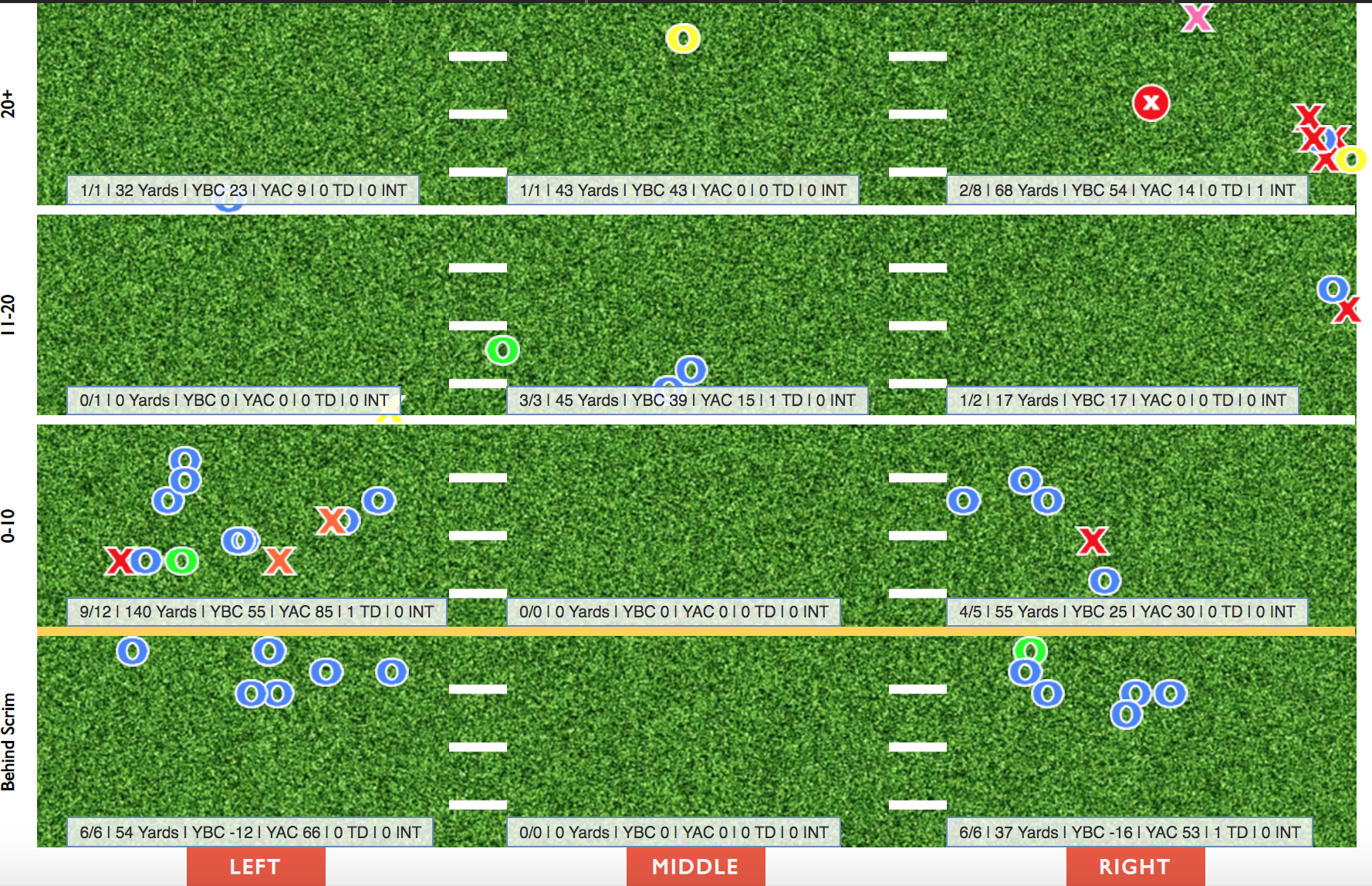
Though they failed to see 40 pass targets, Lamical Perine, and Josh Hammond, had productive roles for this pass game. Perine totaled 40 catches, which was the third most on the team. Over 30% of his targets were screens. Only Missouri's Tyler Badie and South Carolina's Bryan Edwards saw more screen opportunities than Perine's 16 within the SEC. Screens or no, not many offenses featured their backs in the passing game like Florida. LSU's Clyde Edwards-Helaire was the only other SEC running back with over 50 targets. But since the vast majority of his chances were at or behind the line of scrimmage, Perine was bottled up quite well. Despite owning the conference's seventh best Catch Rate (76.9%), his averaged the SEC's second lowest yards/target and was the only Gator with at least ten targets with a Catching Success Rate below 45%.
Josh Hammond's senior season was more over a replica of his junior year stat line. Though his volume figures were lesser, Hammond sported very favorable analytics. Hammond caught an insane 90% of his targets and only logged a single drop. If his number of targets qualified, Hammond's Catching Success Rate of 76.7% would top LSU's Terrence Marshall's league-leading clip by seven percentage points. But with plenty of mouths to feed, Hammond operated under the radar and out of the spotlight. With other players receiving the focus, he was able to do considerable damage with the ball in his hands. Of Gator receivers with at least 30 chances, no one topped his 11.5 yards/target.
I'm not going to sugarcoat things, Florida had the least efficient run game in the entire conference. Florid'a OLine regressed in 2019. While some of the frustrations on the ground were because of poor vision from their ball carriers, posting one of the lowest yards before contact averages in the SEC certainly didn't help. If you are unaware, it certainly easier to find significant gains running the ball if you don't have to make a defender miss as soon as you cross the line of scrimmage. On designed carries, the Gators only averaged a mere 1.6 yards before contact, which no doubt put more pressure on their backs to make something happen post-engagement with defenders. Missouri was the only other rushing attack in the conference to finish the season with a Success Rate under 40%. But no SEC offense was worse in that regard than the Gators' 38.9% clip.
Center and position group "big toe" Nick Buchanan was the lone starter to return to 2018. Inexperience and lack of push was apparent early on as the unit looked to find its groove. Rather than just bang it out inefficiently on the ground, Mullen shifted his tactics to take to the skies. Florida went from the fourth most run-heavy offense to the second most pass happy. With a veteran corps of blockers, both Lamical Perine and Dameon Pierce were gifted excellent yard before contact averages in 2018. Each averaged over 3.3 yards in that respect, which allowed the pair to sit inside the SEC's top10. Perine was able to use that cushion to be among the SEC's most efficient backs. Despite a middling yards/attempt in 2018, Perine sported the SEC's seventh best rushing Success Rate at 53.9%. Pierce was less flashy analytically, but he still commanded the conference's fifth best yards/carry average among dudes with at least 40 touches. Florida's OLine was fantastic at hindering fronts from amassing tackles for a loss. Both Perine and Pierce sported a 3.13% Negative Run Rate, which were the best in the SEC.

The Gators went from four players receiving over 60 rush attempts to just one. I'm sure you guessed that one player was Perine. For the second consecutive year, Perine led the team in carries and yards. With the lackluster line play, Perine went from being one of the most efficient rushers to the conference floor. Only Vanderbilt's Keyon Brooks and Arkansas' Devwah Whaley had worse Rushing Success Rates than Perine's 35.6% clip. Averaging under 2 yards before contact, Perine had to do his best Jordan Scarlett impersonation and play big in order to get modest gains. Though his Broken Tackle Rate remained average, Perine was able to break-off some chunk plays after contact, which padded his yards after contact clip.
In general, about one out of every six of his attempts gained ten yards or more, which was right around average within the SEC. Botched assignments and early penetration increased Perine's degree of difficulty. Nearly 13% of his attempt faced defensive contact behind the line of scrimmage. Perine was one of seven SEC backs with at least 40 carries to have over half of their rushes gain between zero and three yards. Unless Perine rose above the moment and played out of his skill set, he frequently operated via three yards and a cloud of dust.
Despite his high yards/attempt in 2018, Pierce really wasn't the most efficient back in terms of analytics. So when wide run lanes narrowed in 2019, it's easy to get why Pierce's play plateaued. Pierce finished in the SEC's bottom10 in First Down+Touchdown Rate, Broken Tackle Rate, and Negative Run Rate. His dreadful 1.76 yards before contact average fell into the bottom5. Though Pierce averaged the SEC's fourth highest yards after contact clip, frequently early engagement with defenders neutralized his production. Again, he wasn't the best at squirting out of tackles or breaking off big gainers after contact quite like Perine. Though his 123 carries over the last two years were about half the volume Perine received, Pierce will have to learn to shoulder the load in 2020. His efficiency has a long way to go if the Gators want to get back to playing more balanced in terms of Run:Pass Ratio.
Packages with Emory Jones were the only source of effective running for the Gators' offense. With Franks' injury Jones became the new backup QB with Trask throw into the fire. But Jones obviously was used differently than the pocket passer Trask as far as the run game is concerned. Sure, Mullen had Trask run Counters, Draws, Sneaks, and be the point man in their read option attack. But Jones' presence in the backfield gave this ground game a noticeable spark. Naturally, bringing in the more fleet of foot Jones tipped Florida's hand. For awhile, this package was nothing more than a two-back wildcat set. But despite the heavy-handedness of the playcalling, Jones was able to squirm and squeeze through run lanes inside as well as turn on the jets outside of the bookends.
Jones was a hard man to track down. Due to his speed in space, he was able to seize more yardage before contact on average. With less obstacles in his path, he was able to churn out more explosive carries. In fact his 21.4% Explosive Run Rate was the eighth best clip within the conference. But even when defenders did get their mitts on him, he didn't just go down like other quarterbacks in this league. His led the team in Broken Tackle Rate and averaged 3 yards after contact. Unlike Perine and Pierce, less than 5% of his attempts saw contact behind the line of scrimmage. Yet, Jones didn't log a single negative rush all season. he was the only SEC ball carrier with 40 touches that can make that claim.
While the two QB rotation is not ideal, Mullen made it work last season. Jones will always be a better open field athlete than Trask, but he still has a long way to go as a passer. Though he can hit an open target, Jones in the dropback game is a clear downgrade to what Trask currently brings to the table. I'm guessing Mullen would want to avoid this do-si-do moving forward. But unless his line can consistently take care of its business out of normal sets, he might not have any other recourse.