Sideline to Sideline: Texas A&M 2019
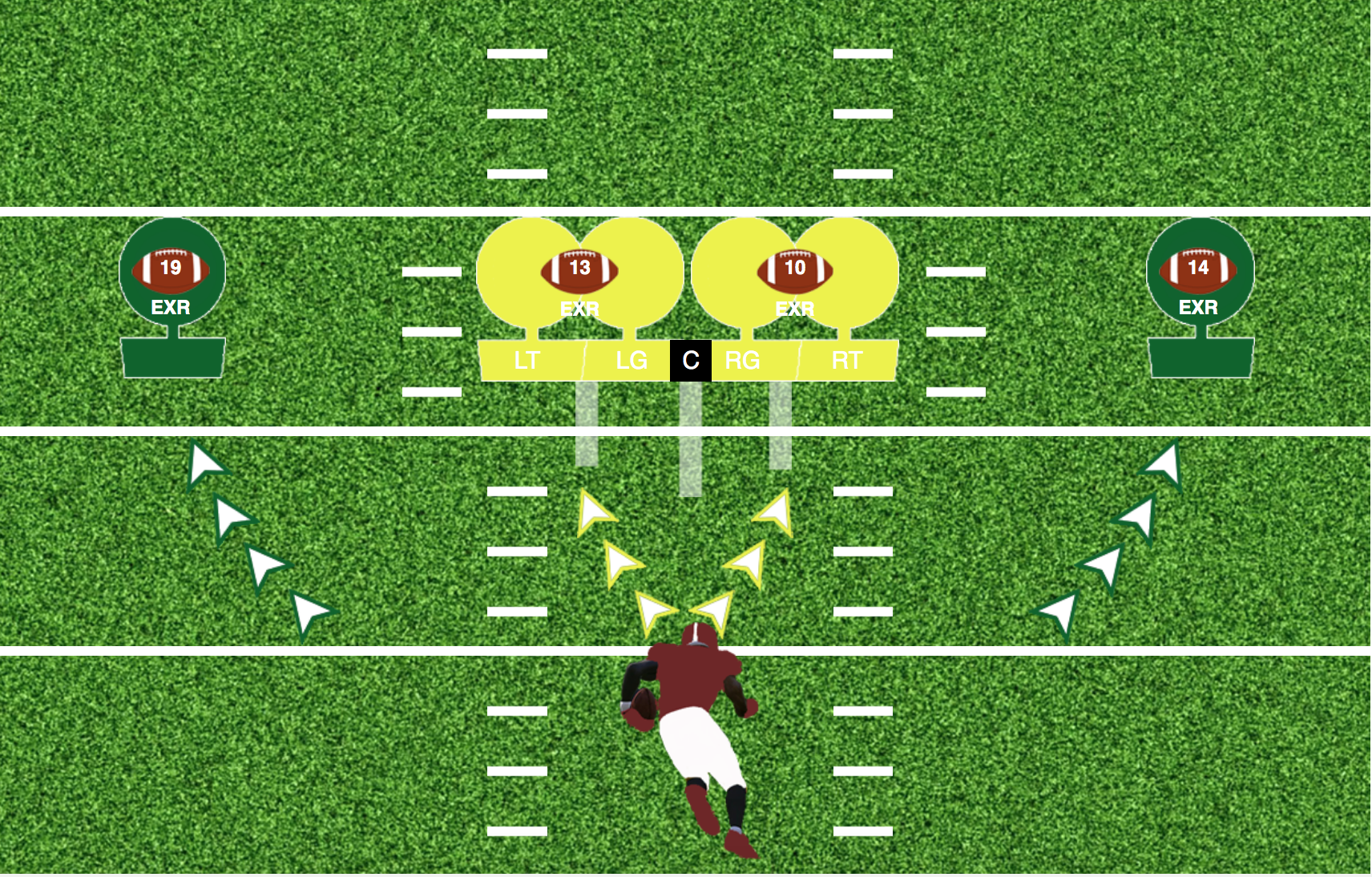
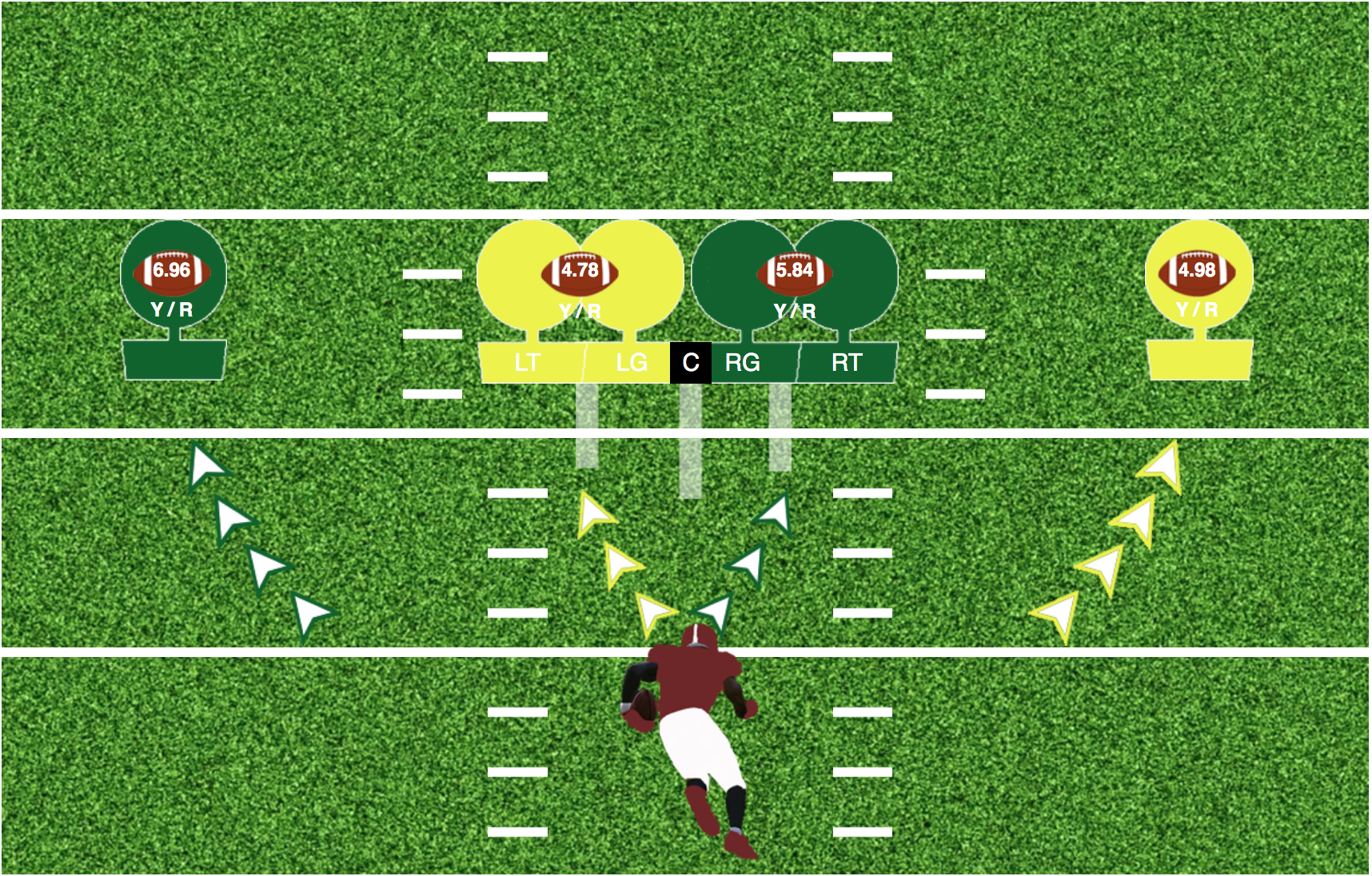
Texas A&M at a glance
With an aggressive schedule and an under-the-radar roster, 2019 could have been a year where the Aggies returned to the national conversation. Knocking off the likes of Clemson, Alabama and the resurgent LSU could turn a middling season into one to remember. Unfortunately for the Aggies, the second season of Jimbo Fisher didn't magically erase their flaws. Despite improving to be one of the best teams analytically in the SEC, it was clear Texas A&M was in a tier below the conference elites or playoff hopefuls from around the country. Simply put, they beat who they were supposed to beat and lost to who they were supposed to lose to.
Last year, Kellen Mond managed to finish inside the SEC's top5 in Passing Success Rate. With another offseason of Fisher's tutelage, many expected a leap in on-field performance. Trust was earned, and Mond noticeably looked more comfortable running the offense. There was no question the Aggies' offense would live or die based on the play of its quarterback. Though one of the most "balanced" units in the conference in 2018 in terms of Run:Pass Ratio, TAMU took to the skies more this season. That was a response to both Mond's improvement as well as their OLine's inconsistent run blocking.
Year over year, the Aggies Pass Rate increased from 52.1% to 58.9%. Only LSU and Florida passed more on average within the SEC. This passing proclivity really ticked up on 1st Downs compared to last season. By SEC standards, the Aggies had an average 1st Down Pass Rate in 2018. Roughly 41% of their plays were passes in those spots. But this year, their clip was over ten percentage points higher at 52%. Passing more heightened TAMU's Success Rates on firsts, which is what you'd like to see. Since an average pass play gains more than an average run play, a rise in that respect should occur so long the offense can execute. The Aggies went from the sixth worst to the four best most successful 1st Down offense within the SEC. Since firsts are the most frequent and common down, they pull more weight regarding a team's output.
With the passing game taking the lead, Texas A&M could pick their spots better on the ground. Despite a 45.4% Rushing Success Rate on firsts, the Aggies sported a top4 clip within the conference. Much of the frustration with their run game came from their disappointing results against quality opponents. In their five losses, less than a third of TAMU's 1st Down runs resulted in success compared to a 47.9% clip in their wins. Though the Aggies ended the season with the SEC's third best overall Rushing Success Rate at 49.4%, a paltry 37.1% clip against Tier 1 opponents is nothing about which to brag. Hell, the Aggies only averaged 1.1 yards before contact versus their elite foes. That clip was a good yard and half less than their season long average.
Failing to forge run lanes against top level foes meant Fisher's unit was forced to dropback more to start a set of downs. It was either that or incessantly play behind the chains with fronts pinning their ears back. In the five games against Clemson, Auburn, Alabama, Georgia, and LSU, their Pass Rate skyrocketed up to 70.1%. Being shoehorned into passing more, their efficiency dropped. In those games, Mond's Passing Success Rate was about 44%, which was right around the conference average and only a couple of point less than his overall clip. But he only averaged a mere 5 yards per attempt and faced pressure on an insane 40% of his dropbacks in those games.
Their line being overwhelmed by superior athletes was a common theme in their losses. Whether it was a dip in pass blocking or failing to win in the trenches on the ground, TAMU's OLine was a big reason why the Aggies didn't click. On the season, they allowed the second worst Pressure Rate (35.7%), Sack Rate (3.89%), Run Havoc Rate (36.6%), and allowed a below average yards before contact clip (2.63) within the SEC.
Subpar line play increased their degree of difficulty, but the Aggies still were better than most in a number of spots. The boasted the SEC's fourth best Overall Success Rate, fifth best Passing Success Rate, and 3rd Best Rushing Success Rate. Generally, their pass happy ways kept them ahead of the chains and they avoided 3rd Downs with the best of them. It's not wise to set yourself up for a do or die opportunity that can nix a drive with a single miscue. Converting on early downs is a much better way to play. TAMUs 74.5% Early Down Conversion Rate was the conference's third best. When they did get to 3rd Downs, the Aggies were the definition of the conference average in terms of Success Rate. But since they were able to be better than most on early downs, the Aggies didn't suffer from an undesirable Three-and-Out Rate. Only LSU, Alabama, and Florida had a better clip than their 20.5% rate.
Though great at consistently netting modest gains, Texas A&M had a big play problem. Their Explosive Play Rate -- or percentage of passes that gain 20 or more yards or runs ten or more -- was only 11.5%, which was the fourth worst in the SEC. The Aggies were much better at creating Explosive Runs. They actually were the SEC's fourth best in that department with a 17.9% clip. But their passing game struggled immensely to get behind defenders or exhibit electricity in the YAC game. Only Vanderbilt and South Carolina were less explosive through the air than TAMU. Less than 7% of their passes gained 20 or more yards.
Mond's downfield accuracy noticeably improved, but he was still not the sharpest dropback passer. To take advantage of Mond's athleticism, hide some of his line's shortcomings, and potentially give his passer easy completions, Fisher incorporated more Run-Pass Options into Texas A&M's script this season. Last year, read options were no stranger to this offense. But only about 11% of their plays constituted as RPOs. In 2019, TAMU had an RPO Rate of 17.6%. Though Mond was still less reliant on these completions than other SEC QBs, this style of play had a considerable effect on his numbers. Texas A&M's Passing Success Rate on RPO throws was 53.2%, which was over ten percentage points higher than their clip on normal dropbacks or screens. Though the very nature of the tagged routes call for less explosive gains, they certainly can help manage down and distance. After all, the modern day triple option is all about death by 1,000 paper cuts.
Mond more often than not made the correct read to flip it to an outlet in space if the defense was too keen on stopping the run. So it's easy to see why the pass game would see a jolt in production. But the run game failed to benefit from RPO designs in both yards/attempt and Success Rate. Non-RPO rush attempts averaged 5.94 yards/attempt on a 52.4% Success Rate compared to a 4.80 and 42.1% on RPO runs, respectively.
Most SEC offenses have standardized their attacks to primarily operate out of 11 personnel. No, that doesn't mean they trotted out the required 11 dudes per play. That is shorthand code for sets calling for one back and one tight end. No SEC offense lined up in 11 personnel less than the Aggies did in 2019. With only 53.6% of their plays coming from that grouping, other personnel packages saw increased usage. TAMU operated out of two-back sets (20, 21, 22) the second most in the conference only trailing Ole Miss. They were one of three SEC offenses with a Success Rate north of 50% in those personnels. With an extra running back, these groupings made backers uneasy and more hesitant on what runs were coming their way. Though the odds were clear a run was coming -- only 27% of their plays out of these sets were passes -- the uncertainty on who would get the ball resulted in the Aggies sporting a 58.1% Rushing Success Rate.
Though the Aggies went to 12 personnel (one back, two tight ends) at an average rate within the conference, only Alabama was more successful from those packages than TAMU. Out of the I or with two TEs, the Aggies boasted a 54.8% Success Rate while averaging nearly 6 yards per play. Like two-back sets, the Aggies were far more likely to run the ball out of 12 personnel than 11. Less than a third of their plays from these sets were passes.
Though two-back or two tight end sets were the Aggies favorite sets from which to run the ball, sets with no or one tight end were their preferred package to air it out. From 11, no SEC offense was as pass happy as the Aggies. From 10, nearly 86% of their plays were passes. Unlike their production from two-back or two-tight personnels, Texas A&M failed to play efficiently out of these packages. Though average from 11 sets, the Aggies were one of the worst units executing from no tight end sets in the conference; only Vandy and Arkansas were worse in terms of Success Rate. Normally, that wouldn't be an issue. But since the Fisher went to these sets more often than anyone else in the SEC, a glaring tactical flaw persisted.
On defense, the Aggies were the definition of an average SEC defense against conference opponents. Both their yards/game and Defensive Success Rate was right on the SEC mean. Since they were middling in creating Havoc versus conference offenses, SEC foes were able to do a number of things well. Looking at SEC vs. SEC contests, the Aggies finished bottom5 in Explosive Play Rate Allowed (13.3%), Touchdown Rate Allowed (4.49%), and Takeaway Rate (0.94%).
The latter was the lowest clip in the SEC as the Aggies only managed to force five turnovers in conference play. On the year, Texas A&M had the third worst Turnover Rate among SEC offenses with a 2.29% clip. Consistently failing to control the ball and force extra possessions for themselves, handcuffed their potential in league play. Often granting a shorter field for opponents due to turnovers, over a quarter of conference foes' drives resulted in points, which was good for the fifth worst rate.
While their Pressure Rate (23.3%), Sack Rate (5.74%), and Pass Havoc Rate (14.2%) was rather pedestrian in the context of SEC vs. SEC contests, the Aggies finished with the fifth best Defensive Pass Success Rate. TAMU was much less sound on the ground. Nearly 16% conference opponents' rush attempts went for ten yards or more with 43.7% of them ended in success. The Aggies were bottom5 in both areas. Luckily, the Aggies had one of the best Tackle for Loss Rates in the SEC. Against conference offenses 9.93% of their defensive snaps resulted in a TFL, which only trailed Florida and Auburn.
Losing the explosive play battle and the turnover tussle, Texas A&M often had to resort to ball control tactics to prolong drives and keep opponents off the field. Though it can be an effective way to play if you can execute, making the game smaller in that regard often makes your margin of error shrink. This wasn't an offense who threatened to score on any given snap or threaten to flip the field in a blink of an eye.
Texas A&M was largely an average SEC team last season despite placing well in a number of analytic categories. I think it goes without saying that Fisher wasn't brought to College Station to be average. Year three could see his seat heat up if significant wins don't come. Their non-conference schedule appears to present little worry and some conference foes could be vulnerable transitioning to a new staff or personnel. Plus with a senior-to-be quarterback, the Aggies should have plenty of elements to make some noise in 2020. But if they don't, some rich whacko might be calling for Jimbo's job.
Texas A&M's favorite run looks
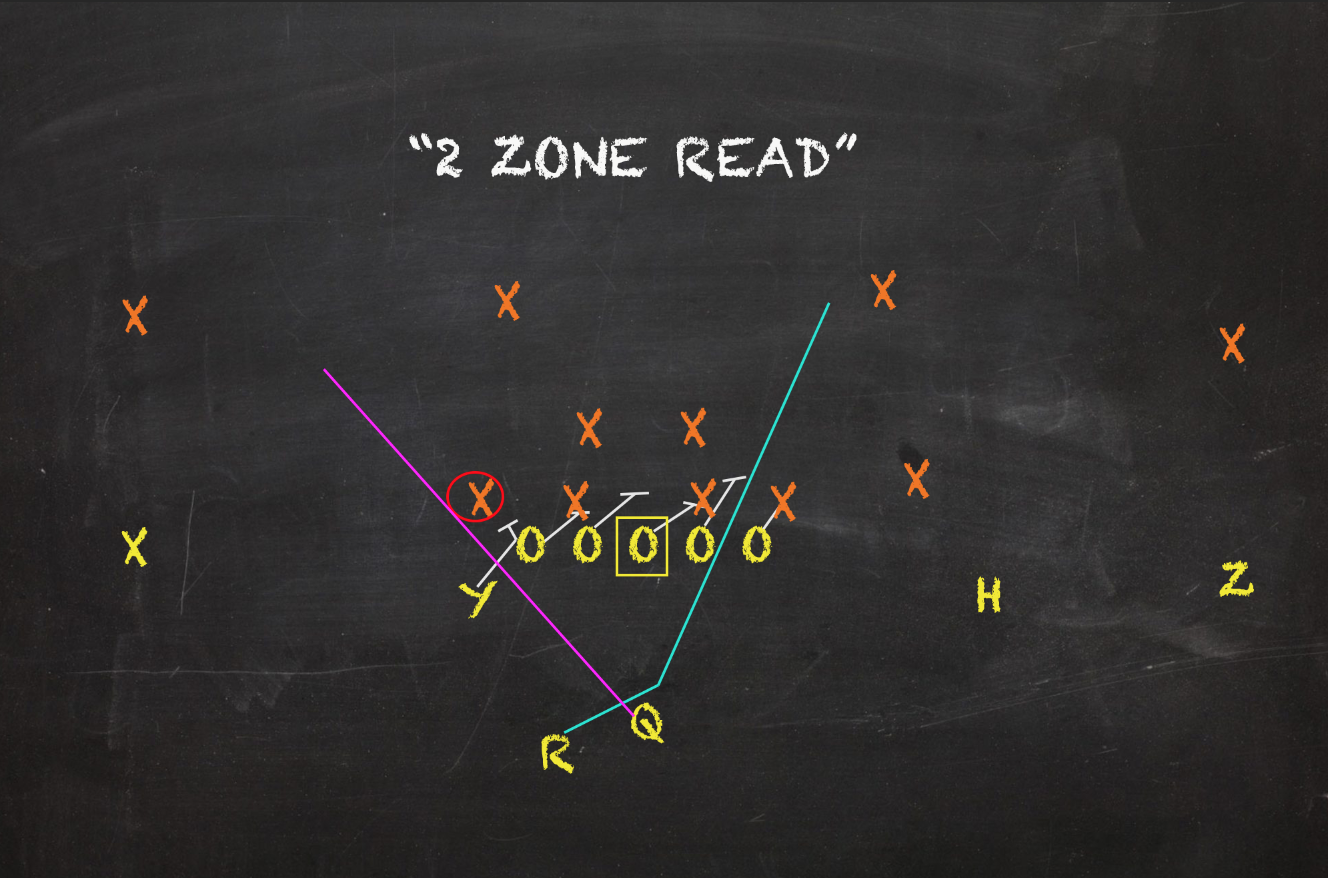
1. Inside Zone Slam Read 8.82% Play Share 5.88 Y/A 44.2% Success Rate
The Inside Zone Slam Read has become the bread and butter play for many spread offenses. Though you don't necessarily need a mobile QB in order for this play to reach its potential, it certainly helps. Mond's athleticism along with their increase in RPOs allowed the Aggies to stretch the field more horizontally and manufacture more room to run. Still, Mond only pulled his read on an Inside Zone play seven times in 2019. No matter who ended up with the ball in the end, the Aggies were pedestrian executing Slam Reads relative to the rest of the SEC. Since this look received more chances than anything else, it naturally accumulated the most of the Aggies yards with 453.
Texas A&M leaned less on this design than most in the SEC. Only Alabama, Missouri, and South Carolina had Slam Reads own lower than TAMU's 8.82% play share. Plus, the Aggies were one of five SEC offenses where their top concept received less than 10% of their total calls. Jimbo preferred to remained balanced in his approach and not to tip his hand too much in any given situation. That said, Slam Reads were the Aggies favorite early down play. Only the Kelly Mesh outrepped that look on 3rd Down. TAMU executed Slam Reads the best on seconds. There, 58.3% of the play's reps ended in success while averaging 6.17 yards/attempt. Of the look's eight tries on the money down, only two moved the chains.
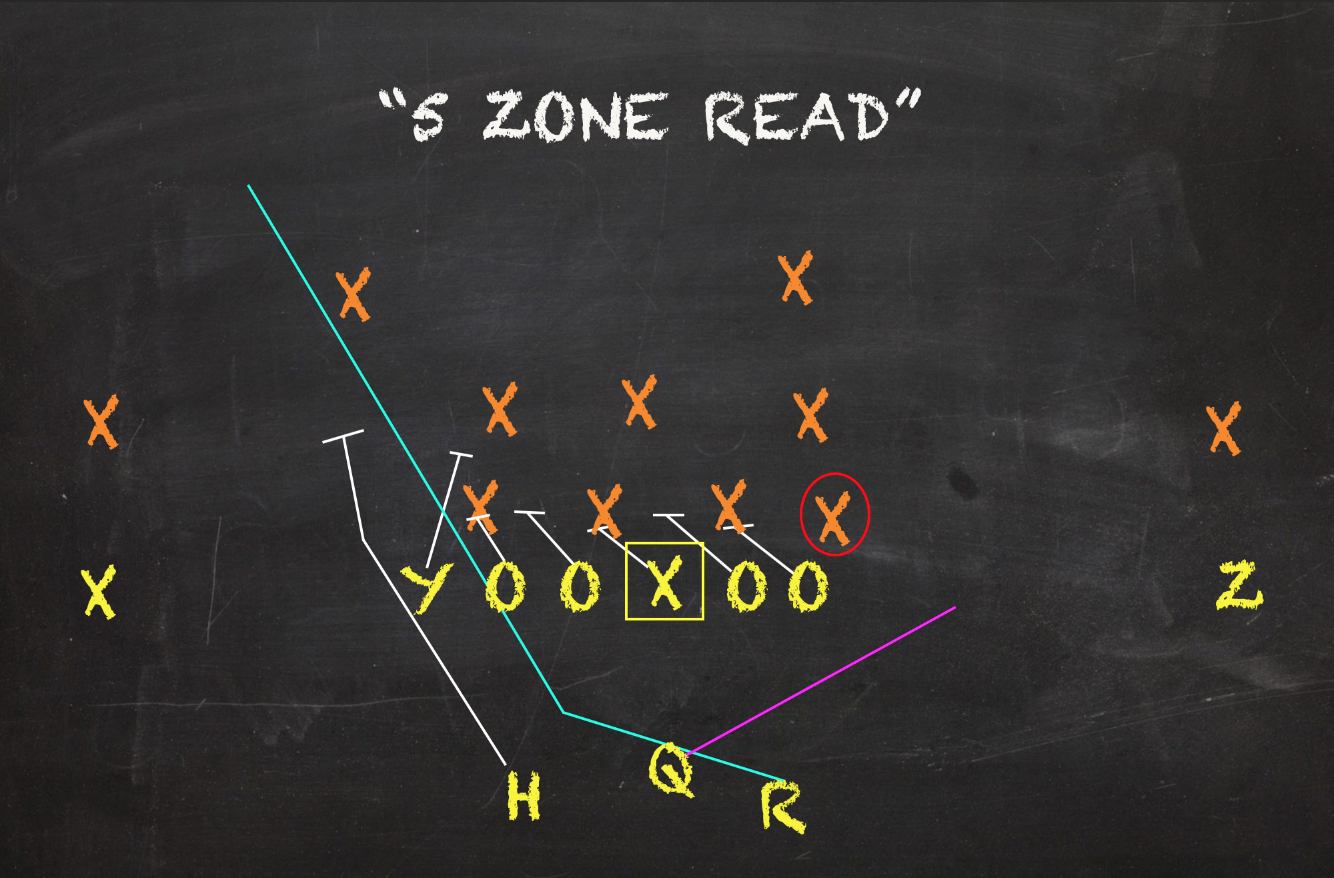
2. Outside Zone Read 5.38% Play Share 7.89 Y/A 46.8% Success Rate
While the vast majority of SEC offenses featured Inside Zone Reads, very few conference offenses included their Outside Zone cousins in their script. No one else in the SEC had Outside Zone Reads commanded a higher play share than the Aggies' 5.38%. TAMU picked its spots more with this look despite the fact it received the second most calls on the season. True Off Tackles were preferred the first seven weeks of the season. Only Inside Zone Slams' 27 reps bested their 24 reps in that span while the read version only saw 16 calls. Over the last six games, Off Tackles only received eight chances while Outside Zone Reads were dialed up 31 times.
Their rise in both production and execution coincided with the Aggies operating more from two-back sets. Over a 40% of this look's reps occurred from 20, 21, or 22 personnel packages; Outside Zone Reads averaged 13.8 yards/attempt on a 53.3% Success Rate out of these sets. Like on their overall play sheet, this design was only outrepped by Inside Zone Slam Reads on 1st Downs. Though most teams would take their 7.39 yards/attempt and 45.2% Success Rate on firsts, both clips were less than their cumulative figures. Still, their production on other downs were only slightly better than their overall clips , which made Outside Zone Reads one of their most consistent designs in terms of output.
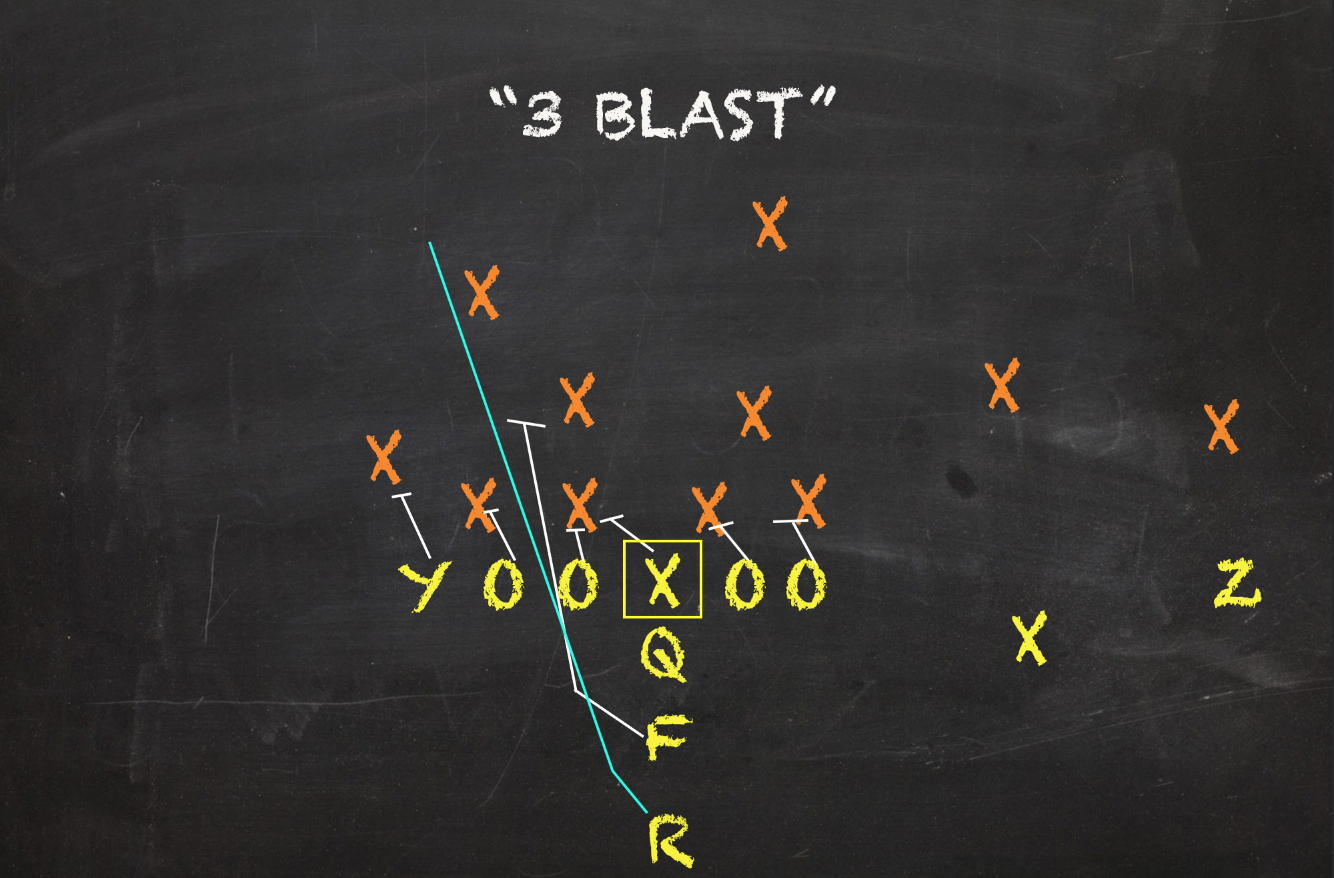
3. Inside Zone Blast 4.70% Play Share 5.20 Y/A 51.2% Success Rate
When modern SEC offenses use the old I-formation, most either use an offset player in a hybrid tight end/fullback/"sniffer" position or exclusively in goal line situations. Though they as still a spread scheme, TAMU wasn't afraid to incorporate a design from yesteryear into their script. The Inside Zone Blast is essentially a basic zone play but it also asks the fullback to act as a lead blocker through the hole. Undersized or zone-heavy offenses can still get that power aspect without jeopardizing their offensive identity. Blasts can resemble the Isolation run concept. Isos, however, are gap scheme designs that aim to create hard edges. Due to the nature of this look, I'm sure you can imagine it was apart of the Aggies playcalling on 3rd Downs; and you'd be right. Only three concepts received more than its 6 reps on the money down.
But, Blasts were overly an early down play for Texas A&M this past season. Of the looks 41 reps, 35 occurred on either 1st or 2nd Down with each basically seeing equal chances. Still, most of the concept's success took place on later downs. Blasts sported Success Rates of 56.3% and 66.7% on 2nd and 3rd Downs, respectively. But, TAMU disappointed finding room to run on firsts with this design. Despite being the Aggies fourth most favorite look to start a set of downs, Blasts averaged a mere 3.71 yards/attempt on a poor 35.3% Success Rate. Of TAMUs six most called plays on 1st Downs, no concept was worse in those regards. Thanks to a few big gainers, Blasts racked up 231 yards on the year, which was the third most of any look for the Aggies.
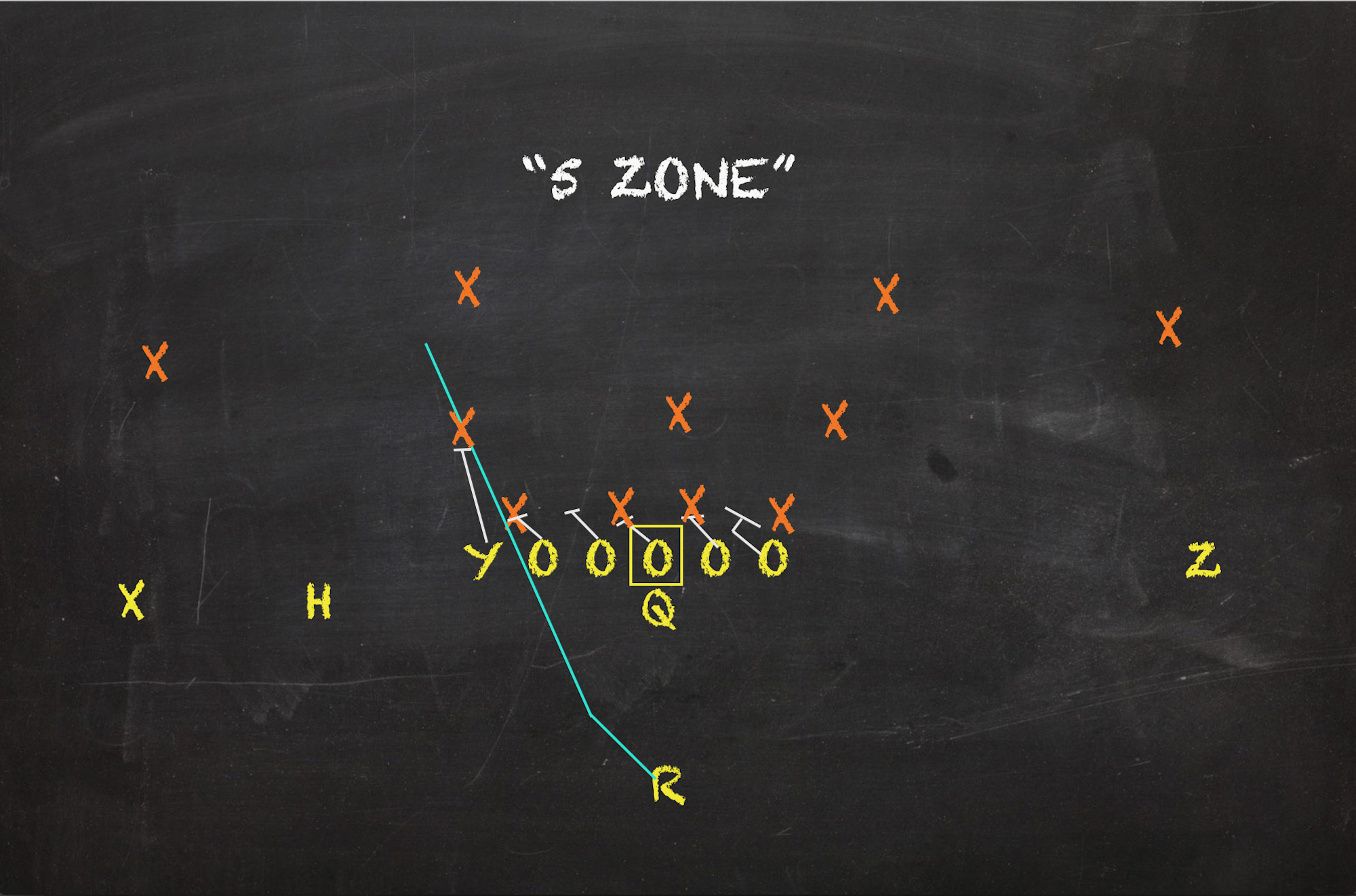
4. Outside Zone Off Tackle 3.67% Play Share 4.31 Y/A 59.4% Success Rate
As I mentioned above, Off Tackles played a big role in TAMU's offense during the first seven games of the season but soon lost ground in the script to their read counterparts. Though they were the Aggies second favorite play in this span, this look only received eight reps over the final six games. Off Tackles had a subpar Stuff Rate -- or percentage of carries than gain one yard or less -- but still managed to finish among Texas A&M's most successful plays. There's no question Outside Zone Reads were the more potent variety as they averaged over 3.5 yards than non-read Off Tackles. These, however, were far more consistent.
Off Tackles were exclusively an early down play. Only one of the concept's reps took place on 3rd Down. Like its read counterpart, Off Tackles struggled to pull their weight on firsts. Both its yards/attempt (3.75) and Success Rate (43.8%) were considerably worse than its overall clips. With a shorted down and distance situation, Off Tackles thrived on 2nd Downs and were one of the Aggies best plays in those spots, which clearly inflated its total to the heights necessary for the concept to be among the team's most successful. On seconds, Off Tackles boasted a 73.3% Success Rate across its 15 reps.
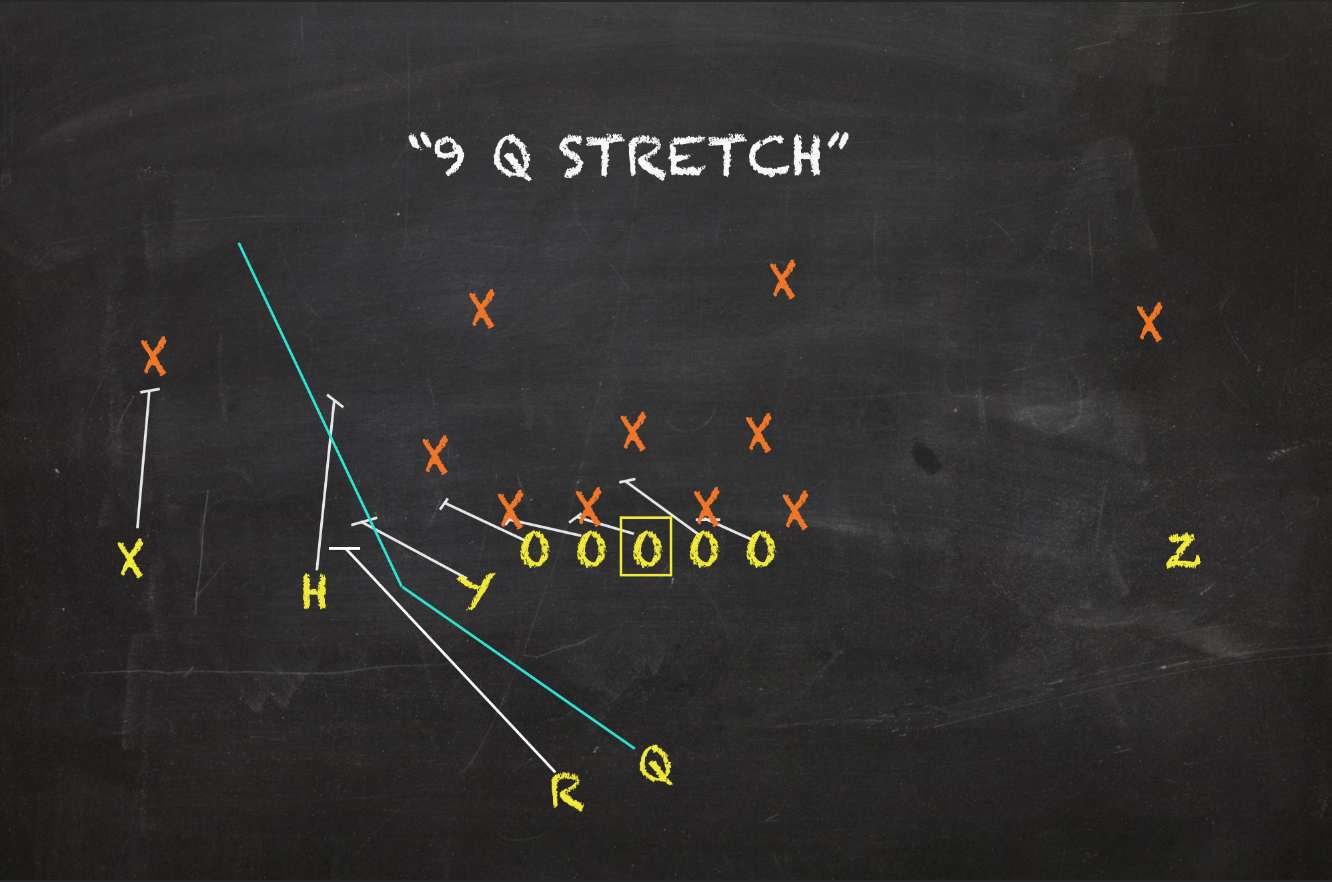
5. QB Stretch 2.63% Play Share 6.04 Y/A 56.5% Success Rate
The QB Stretch -- another Outside Zone wrinkle -- rounds out the Aggies most called run concepts. Like Off Tackles and Outside Zone Reads, Stretches aim to hit the edge of the formation. While most zones like lineman to gain ground and get toward the second level, these call to seal the most immediate threat towards the playside. The line will often take flatter paths and not worry about push. Due to Mond's mobility, their back acting as a blocker, and the Aggies general strength getting towards the edge, Stretches delivered more times than not for TAMU. Though Outside Zone Reads allowed them to play more 11-on-11 with Mond threatening to run, this design truly accomplished that much like a play from the Wildcat set.
Though they didn't finish among the Aggies five most successful plays, only Off Tackles and the pass concept Comebacks sported a higher Success Rate within their most called plays. TAMU averaged about two QB Stretches per game and most of them occurred on 1st Downs. Of its 23 reps, 15 took place on firsts where the Aggies averaged 6.43 yards/attempt on a 57.1% Success Rate. Even though it was their fifth most favorite run concept, it failed to be among their six most called plays on any of the three downs.
Texas A&M's favorite pass looks
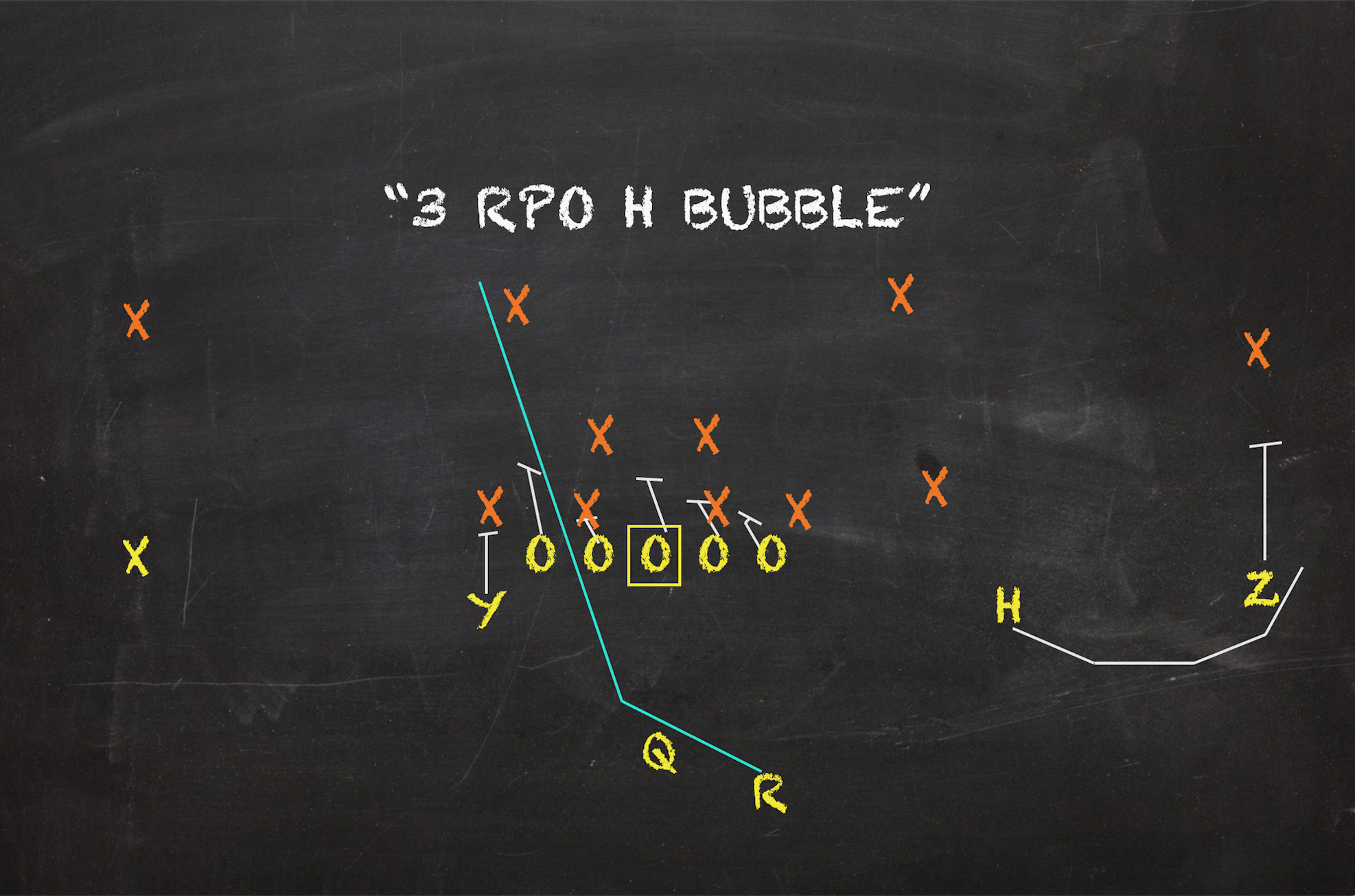
1. Outlet Screens 4.81% Play Share 5.24 Y/A 47.6% Success Rate
In 2018, roughy 10.9% of their plays consisted of Run-Pass Options. That rate ticked up to 17.6% in Fisher's second season in College Station. Naturally with those getting more reps, the route tags and outlet screens often attached to them would also see an increase in usage. Bubble, Tunnel, and Swing screens combined to total the highest play share of any pass concept. Fisher wanted to deploy a good amount of pass concepts to keep defenses on their toes. No single pass concept received over a 3% play share. Even though Mond had one of the lower RPO Throw Rates in the conference, Bubble Screens would have led the way in that regard with its 2.98% play share. Besides being the most targeted of their outlet screens, Bubbles were also their most efficient.
Bubbles accounted for 26 of the 35 targeted Outlet Screens and were the standard bearer in terms of Success Rate. Usually off their zone read action, Bubbles were at their best on 1st Downs. While their clip was 58.3% overall, targeted Bubbles in these spots yielded a 61.1% Success Rate, which obviously helped balloon their concepts figures. For what it's worth, 18 of the 22 targeted Outlet Screens on firsts were Bubbles. Overall, Outlet Screens combined to total 196 yards, which was the fifth most of any concept this season.
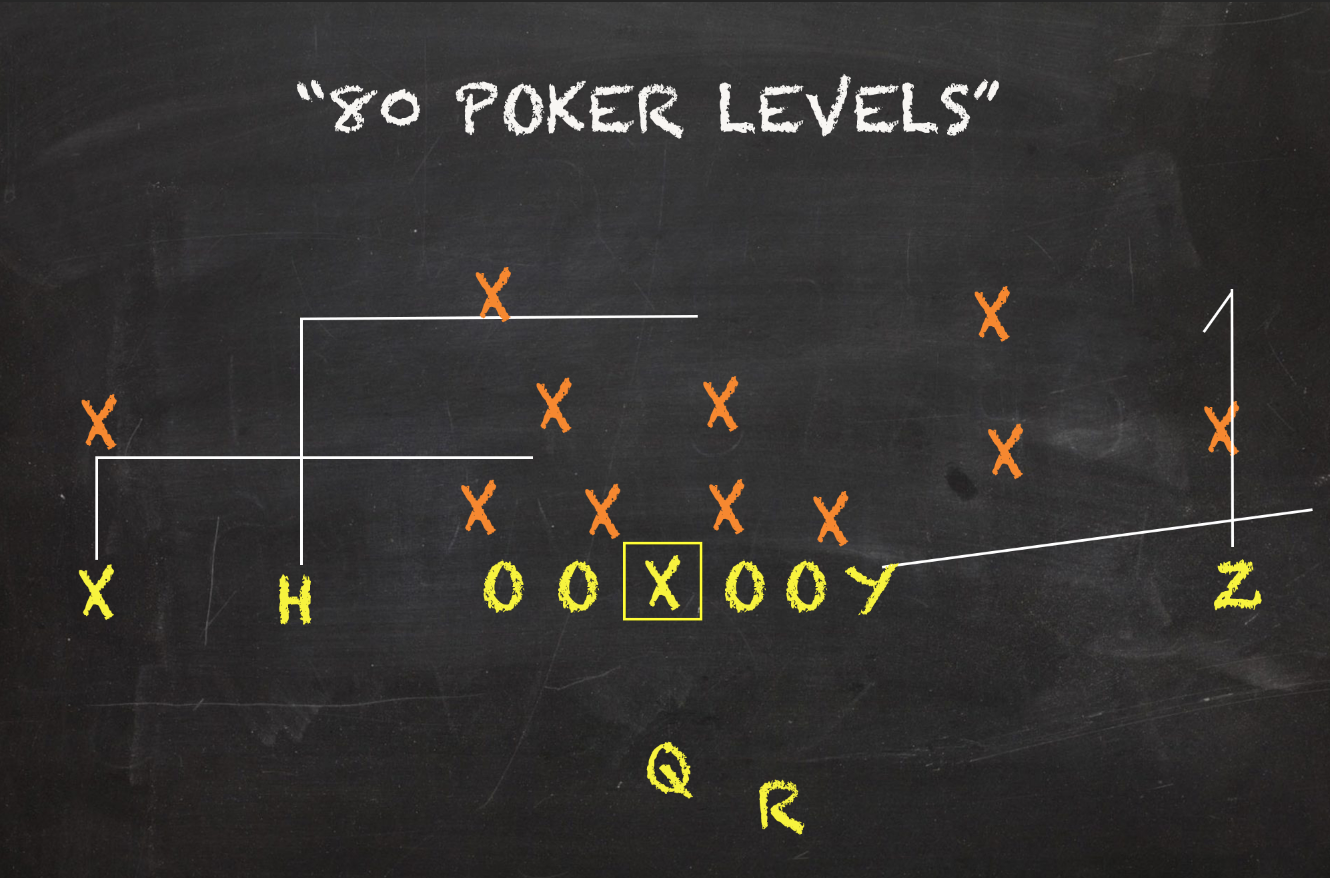
2. Levels 2.86% Play Share 5.56 Y/A 52.0% Success Rate
Levels is a high-low passing concept aimed at hitting an underneath receiver on a quick in or throwing over top the backs towards a dig. There are very similar to the Drive concept. But while Drives are mostly two-man combos, Levels can incorporate an additional outlet who will run an additional in route. This trips wrinkle often opens up the China concept (where instead of running a dig, the inside receiver will run a corner) particularly in the Red Zone. Levels started showing up during the second half of the Auburn game where the Aggies couldn't do much of anything to move the ball. All three targets the look received resulted in success. From there, Levels soon became a mainstay for this offense despite averaging about two targets per game across TAMU's schedule.
Levels is a low-risk design aimed to get a modest gain. Fisher seemingly coached Mond to work low to high. Meaning, the quick in was his first read. This often creates an easy completion that helps set up more manageable down and distance situations. Of the 25 targets Levels received this season, 20 occurred on 1st and 2nd Downs, which is where all of the concept's success took place. Only one of the five Levels on 3rd Down resulted in a conversions as the Aggies averaged a horrific 0.8 yards/attempt in those spots. But thanks to sturdy clips on early downs, Levels owned the second highest Success Rate among the Aggies five most repped pass plays.
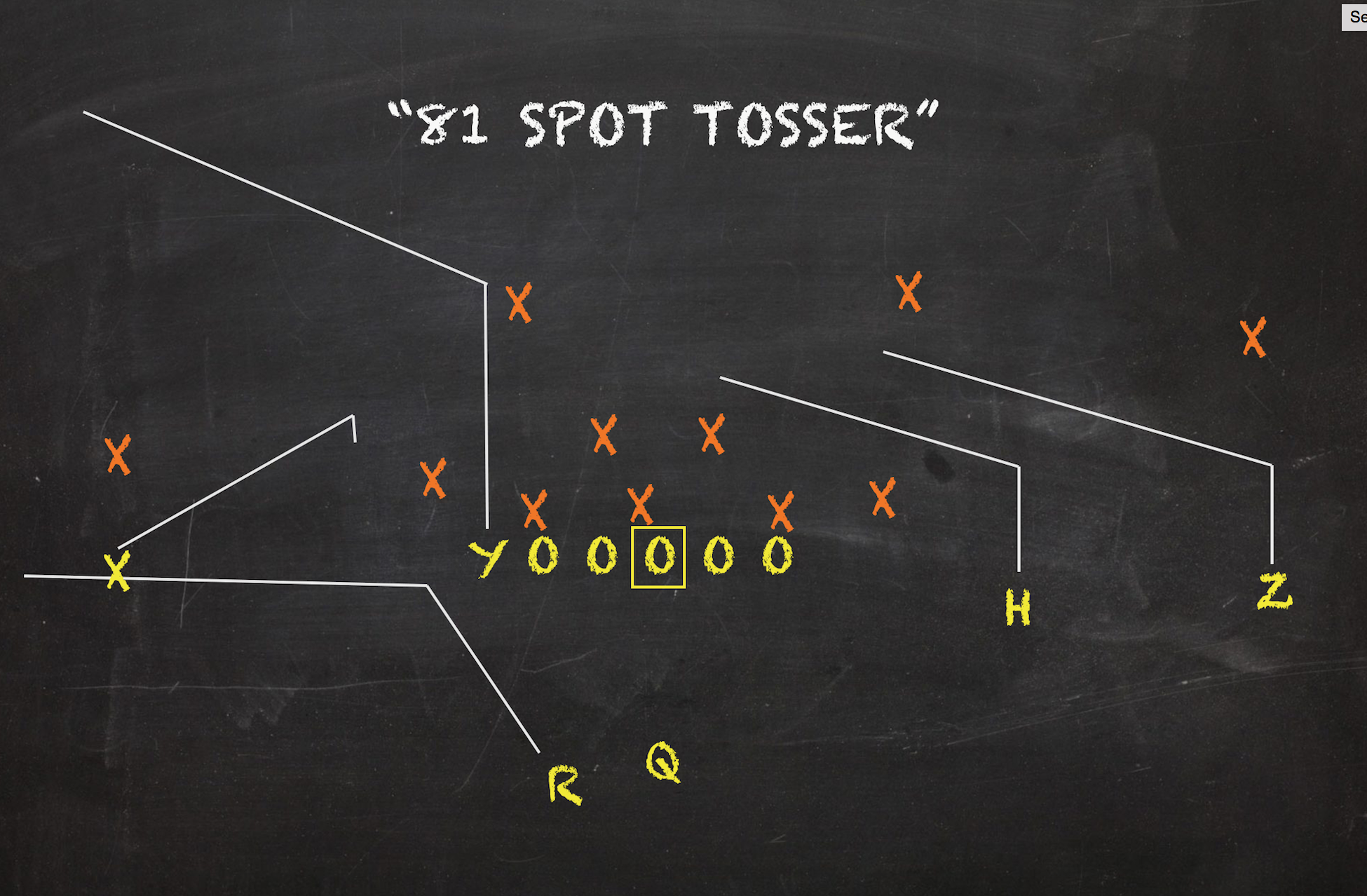
3. Tosser 2.75% Play Share 5.88 Y/A 50.0% Success Rate
Slant Variations were very much a part of Texas A&M's gameplan. If all the varieties were combined together, they'd own TAMU's fourth highest play share. Tosser -- dual or all slants on the same side of the formation -- was their most targeted version. A handful of SEC offenses this year really liked to include this concept within their RPO game, but not the Aggies. Of the 24 targets Tosser received this season, only one was off an RPO. Instead, Texas A&M often paired this look as a backside complimentary concept to numerous zone beating designs frontside. It was common to see Tosser along with Spot, Stick, Spacing, and Smash concepts.
Though it finished amongst its five favorite pass concepts, it failed to be considered one of the Aggies six most repped plays on any of the three downs. But Tosser saw its highest volume of calls and production on 2nd Down. Half of the concept's targets occurred there while sporting a 58.3% Success Rate compared to 44.4% and 33.3% clips on 1st and 3rd Downs, respectively. All in all, slants routes were targeted 41 times by TAMU passers last year, which was the second most of any route.
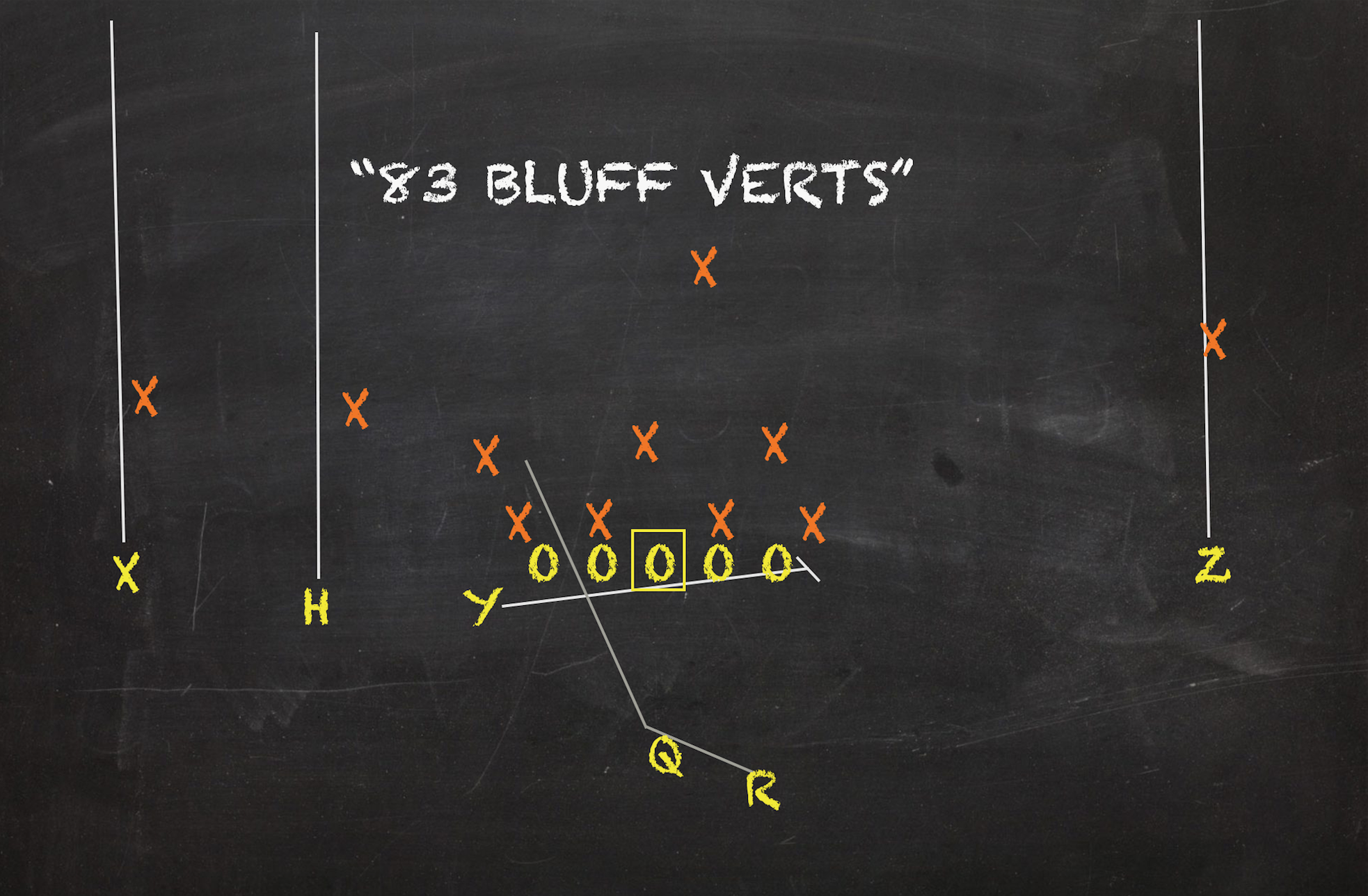
4. All Verts 2.63% Play Share 5.26 Y/A 26.1% Success Rate
Sometimes when your back is against the wall and there's a country mile between the line of scrimmage and the first down marker, your creativity as a pass caller can be handcuffed. Sometimes multiple dudes deep on a go route can bail you out, but it often results in failure. For the Aggies, the All Verts pattern only saw about a quarter of its targets work. TAMU was just as likely to suffer a sack or scramble on this design as it was to call a successful All Vert. Though it is a play teams turn to when all hope looks lost, a number of SEC offenses incorporated All Verts in their 1st Down offenses when they wanted to take a shot. The Aggies fell into this mold. The nine targets this look received in those spots were the most on any down, but only one ended in success. Much was the same on the money down as only two of its eight tries met its situational goals. Oddly, All Verts saw their best production on seconds where all three of Mond's attempts found their mark. One of them went for a score.
Since All Verts is a design with a high degree of difficulty, teams often struggle posting satisfactory results. As far as the SEC is concerned, Texas A&M finished with a below average yards/target and the conference's sixth worst Success Rate targeting All Verts. With their low returns and decent play share, this concept was easily the Aggies' least efficient among their favorite looks.
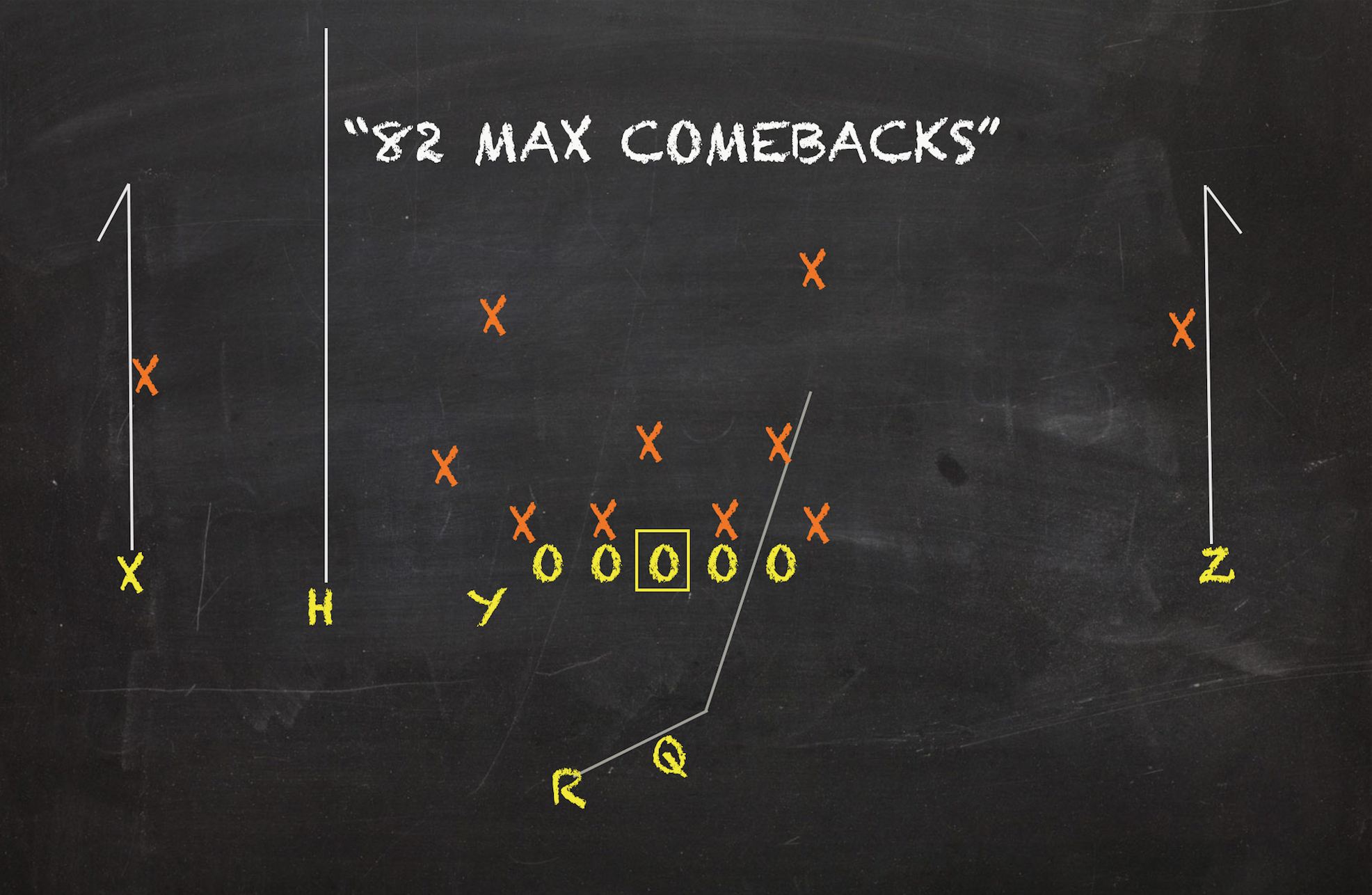
5. Comebacks 2.29% Play Share 10.2 Y/A 76.5% Success Rate
The Comebacks concept was Texas A&M's most successful look on the season. Though isolating a deep comeback or pairing it with a middle seam is a simple design, its highly effective at winning versus a number of coverages. While the Aggies mostly struggled getting beyond secondaries on All Verts or other deep concepts, they had no problem feasting on zone cushions or wishy washy man defense. Along with a team-high 76.5% Success Rate, no other of their five most called runs or passes beat its 10.2 yards/attempt.
Comebacks racked up the most yards of any pass pattern for TAMU with 203 -- good for fourth most of any look overall. Essentially all of the concept's production took place to start a set of downs. Of the concept's 17 targets, 16 took place on 1st Down, where it was tied with Off Tackles and Counter Reads for the fifth largest play share in those spots. Taking a step back and including all Seam+Sideline combos, Texas A&M executed these looks the best within the SEC. Their Success Rate on Comeback and Hoss was 70.4%. No other conference offense had a Success Rate over 65%.
Texas A&M's most successful looks
(min 1.3% Play Share)
1. Comebacks 2.29% Play Share 10.2 Y/A 76.5% Success Rate
The seam+sideline attacking combo Comebacks were the Aggies' most successful look. Though its design is rather basic, their execution was otherworldly. No other SEC offense could match their sizzling 76.5% Success Rate targeting this concept. TAMU was among a select few units to sport a clip over 75% on a play within the conference this season. Featured among their favorite pass patterns, Comebacks allowed Aggie receivers to win down the seam or toast single-high coverages outside the numbers. While their wideouts weren't the best at getting behind defenders last season, this look allowed them another method to create chunk gains. Though most Comebacks featured a bend post/seam, it wasn't out of the question to see an isolated deep comeback from time to time.
2. Play Action Boot 2.05% Play Share 9.11 Y/A 61.1% Success Rate
All five of Texas A&M's favorite runs were zones. Since zones call for a coordinated flow from the OLine, defenders have less keys to read, and thusly can be more aggressive versus them. Play Action Boots and Waggles are great ways to beat these overanxious backers with fakes. Don't believe me? Go watch a few 49ers games and see how much of this stuff Kyle Shannahan's offense uses consistently. With the faux zone path duping linebackers, outlets in the flat or beyond the second level often have plenty of green grass to operate. But the Aggies didn't limit their designs on this concept to strictly zone looks. A few Play Action Boots used power principles and pulled lineman to help sell the action. Plus with Kellen Mond's athleticism, Boots gave him an extra option to run on the edge of the formation if everyone else was covered.
3. Corners 2.29% Play Share 9.50 Y/A 60.0% Success Rate
Corners is basically an inverted Smash concept. While the traditional Smash asks for an outside hitch and an inside corner, the wideout and the slot/TE swap responsibilities. Meaning, the outside guy will run a corner with the inside one attacking the flat. Like Comebacks, the Corners concept is quite good at finding the "honey hole" between the curl/flat corner and deep half safety in Cover 2 zone. Plus since the "C" corner is a multi-break route, its a hard route to track in man coverage. Though Aggie receivers struggled to get behind coverage this season, they still were able to manufacture pitch and catch completions outside the numbers with this look. Besides pairing the "C" corner with a flat route, sometimes TAMU would only run an isolated corner. Other times like in the video above, the tagged a middle post, which creates the "Shakes" pattern.
4. Counter Read 2.29% Play Share 6.50 Y/A 60.0% Success Rate
All five of Texas A&M's favorite run plays were zone concepts. But their most successful on the season was a power look. Though most read options in modern football incorporate zone blocking rules, you can still use power principles in this manner. Power Reads can be more muddled than their zone counterparts, but there's no questioning their effectiveness if the offense can get a hat on a hat. Counter Reads provided an excellent change of pace design to take advantage of backers expecting their basic zone stuff. This play clearly took Oklahoma State by surprise in the Aggies' bowl game. All four Counter Reads resulted in success that game averaging 9.5 yards/attempt in the process. On the year, the Counter Read was TAMU's fifth most favorite play on 1st Downs with 16 reps.
5. Outside Zone Off Tackle 3.67% Play Share 4.31 Y/A 59.4% Success Rate
The Off Tackle was the only one of Texas A&M's most called run concepts to finish amongst their most succesful plays on the season despite its pedestrian 4.31 yards/attempt. It was a consistent yard gainer, but rarely resulted in an explosive gain. Obviously with their read counterparts and QB Stretches also being one of their most feautred run looks, Jimbo wanted to get his speed towards the edge of the formation. Since TAMU allowed a 36.6% Run Havoc Rate, there was some trepidation trusting his interior OLine to win consistently. Like Counter Reads and Comebacks, Off Tackles received 16 reps on 1st Downs, which made them one of the Aggies most repped concepts in those spots.
Where Texas A&M's weapons ranked
With Nick Starkel trading in his Aggie maroon in favor of Razorback cardinal last offseason, there was no question Kellen Mond would be the guy moving forward. After a year of solid play in Jimbo Fisher's first season, it was certain this was Mond's offense and it would go as far as he could take it. Though Texas A&M didn't have the best line and lost a couple of playmakers to the pros, Mond sturdied the ship and was a calming force in 2019. Sure he had some hiccups along the way, but Mond ended up as one of the better passers within the SEC. Despite his improvement, a good deal of fans were left wanting more.
Playing in the SEC West, he was constantly compared against the play of Alabama's Tua Tagovailoa or LSU's Joe Burrow. The scrutiny increased when Texas A&M looked neutered against upper-echelon defenses. Along with Alabama and LSU, Mond and the Aggies were quelled by Clemson, Auburn, and Georgia. TAMU had one of the hardest schedules in the country as four of those teams finished inside ESPN's SP+ top5 to end 2019. Still, the Land of the Twelfth Man expected more from a respected offensive mind and athletic passer.
Thanks to his team's high Pass Rate, Mond was given more chances than the majority of his contemporaries. Only Burrow had more attempts, completions, and total first downs + touchdowns inside the SEC. Plus, Mond finished third in the conference in passing yards. By his volume production, Mond's play reflected a sound year. Mond was one of the more consistent passers in the SEC. His Success Rate and Depth Adjusted Accuracy were both among the top5 amongst conference quarterbacks. He also limited risky and turnover-worthy throws with the best of them. So don't you say he can't throw the ball. Plus, Mond did all this despite suffering from the SEC's fourth worst Pressure Rate. About one out of every three dropbacks of his was under duress; and yet Mond was able to make plays for his offense.

But again, he was criticized for not being able to drag his unit over the hill against upper-echelon defenses. Versus TAMU's five hardest opponents, 21.6% of Mond's attempts were deemed as uncatchable as he saw a significant uptick in pressure. Because of the latter, TAMU's Sack Rate essentially doubled in these games (8.65%) compared to their overall clip (3.89%). All of Mond's major stats were worse across the board and decidedly below the conference average. In general, his weapons were not YAC monsters. Mond's overall Air Yard Percentage -- or the amount of his yardage that omits yards after the catch -- was the SEC's 5th highest at 56.9%. In these five games, his clip shot up to 64.7%, which would have led the conference if it was averaged out over the course of the season by about three percentage points.
Texas A&M's passing offense was very much "go to a spot and wait for the ball". Comebacks, Spots, Corners, Sails, and other rigid pass patterns littered their script. Though Mond was one of the SEC's best targeting them, TAMU's pass game was one of the least explosive in the conference. While they could manufacture modest and intermediate gains, connecting on a 20 yard pass was a seldom occurrence for the Aggies. Only 8.13% of Mond's attempts resulted in such, which was the sixth lowest clip of qualifying SEC quarterbacks. Despite his sound decision making and above average accuracy, this naturally brought down his Yards/Attempt. With less home run connections ballooning his passing numbers, his Yards/Attempt finished over a half yard lower than the SEC average.
Mond's work from clean pockets has him in position to finish 2020 as the SEC's best passer. Sure, it is nice to see someone stand tall versus an unblocked rusher or make a play when a rep collapses; but those plays are highly volatile and full of variables. Examining production from clean pockets reflect a more consistent depiction of someone's ability down-to-down. After all if you cannot hit a man when conditions are perfect, how will you be expected to do the same with a free defender barreling towards you? Only Ben Hicks, Deuce Wallace, and John Rhys Plumlee saw a higher pressure rate than Mond's 30.4% this season inside the SEC. Like most passers, Mond's play regressed when under duress. He was largely an average passer relative to the rest of the conference in these spots. Something good happened about once every third pressured rep on average. Despite being overly middling when things broke down, Mond kept producing touchdowns when he was frazzled in the pocket; 45% (9) of his pass TDs occurred in these instances. Matt Corral was the next closest SEC passer with a 33.3% clip.

Only Burrow and Tagovailoa were more successful and better downfield throwers from clean pockets than Mond last season within the SEC. His Clean Success Rate, Depth Adjusted Accuracy, and Interceptable Pass Rate all cracked the conference top4. While dependable, Mond still mostly operated in short to medium areas of the field. From clean pockets, Mond's average depth of target -- or how far his receiver is downfield when thrown the ball -- was a bottom5 SEC clip at 8.16 yards. Failing to stretch the field when being kept clean was constantly a shortcoming for Fisher's offense.
Still since Mond relies less on RPOs to fuel his passing production than the average SEC quarterback, you'd obviously like to see better output on his dropback attempts. Being okay rarely cuts it in the SEC West; especially when boosters and universities are paying a pretty penny (or billion) to contend. Mond was certainly adequate in 2019. Thusly, the Aggies had a mostly good offense last season. But for a fan base still hungry for relevance and the limelight, that just isn't good enough. Nickel and diming can only go so far. If Mond can't improve as a dropback passer or create more explosive gains through the air, 2020 could very well be a disappointment. Besides being a conservative , Mond's dropback passing has gotten a fair share of criticism. With screen and RPO attempts taken out of the equation, Mond was rather pedestrian. Though his play inside the Aggies' expanding RPO game improved, Mond still leaves much to be desired on true pass patterns. On dropback throws outside the hashes he was basically average. But Mond delivered his most accurate balls between the numbers and the hashes. Even though his 65.8% Accuracy Percentage was only good for the SEC's seventh best, it was his only clip above average targeting the three horizontal areas of the field. Mond's most successful place to target was inside the hashes. His 56.8% Success Rate was over ten percentage points higher than his clip targeted other spots. Plus, it was good enough to finish top5 within the conference.

All of the Aggies main targets are over 6'2. Though they are far from cement footed outlets, they collectively are not a swift group known for burning secondaries. As hinted above, Texas A&M's receivers are built to win contested battles. Much of this units success came from crisp routes and good timing or using their wide frames versus tight coverage. Only Arkansas averaged less yards after the catch this season within the SEC than the Aggies.
Quartney Davis and Jhamon Ausbon were Mond's favorite targets. Each saw over 90 targets and ranked 7th and 8th in that regard within the SEC. Kendrick Rogers and freshman TE Jalen Wydermeyer rounded out their top4, but three other Aggies saw 25 targets or more. Having the conference's third highest Pass Rate certainly helped get more guys involved. A good portion of these receivers were able to sport above average numbers within the conference, which justified taking to the skies.
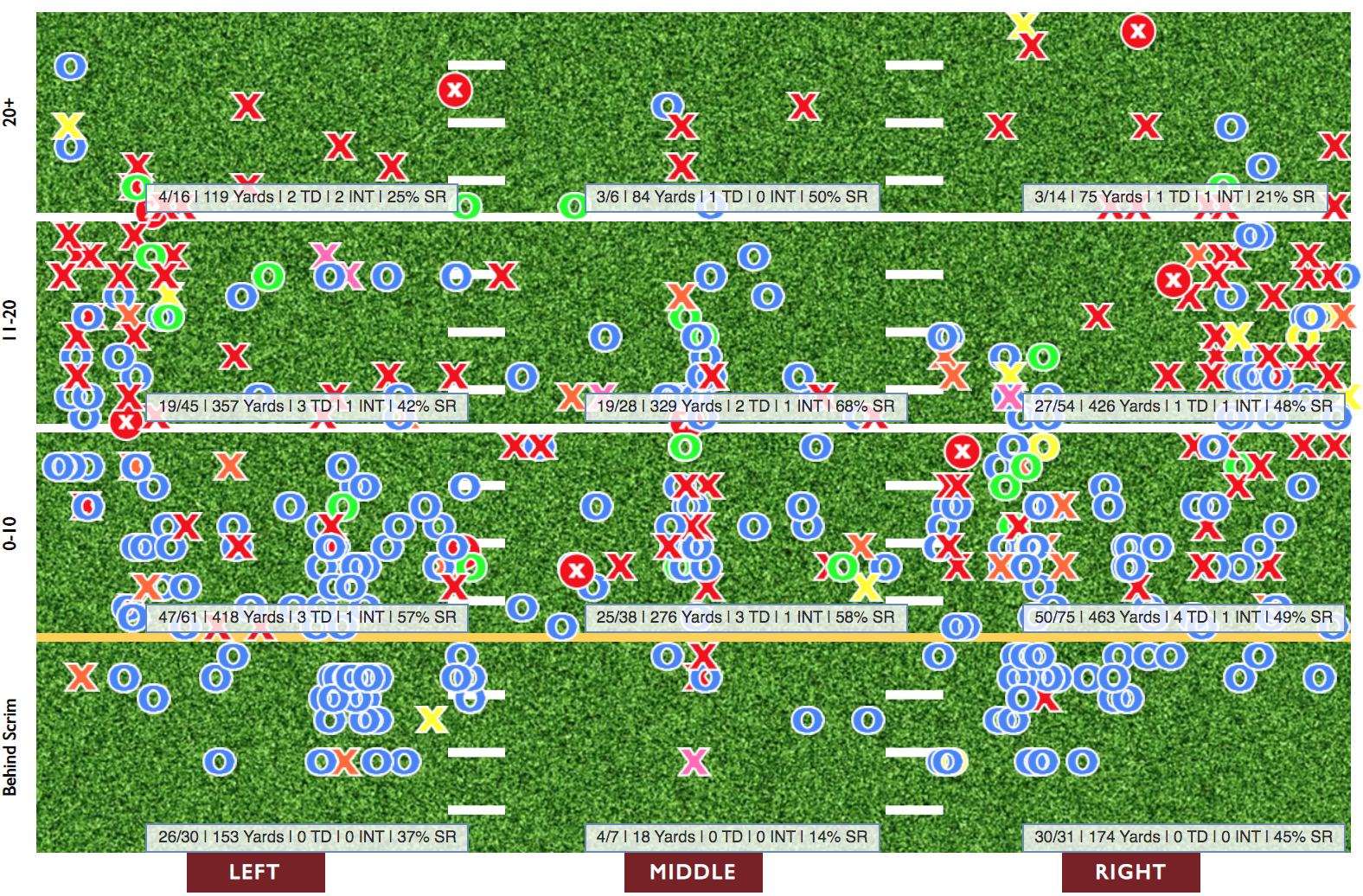
While Davis carries the bulk of the blame for his bad play, some of his shortcomings were on his quarterback. By volume, his 42 inaccurate targets ranked fifth in the conference. Taking it one step further, roughly 23% of his targets were deemed as uncatchable, which comfortably placed him inside the SEC's back third. Beyond ten yards downfield, Davis saw 28 of his 42 inaccurate targets and only managed to haul in three of them. An insane 57.1% of those chances were not catchable. So, it's easy to see why Davis ended the year as one of the SEC's least efficient deep threats. He failed to catch a single pass 20 or more yards downfield last season.Both Davis and Aubson ended the year commanding over a fifth of the team's targets. Davis was clearly the lesser of the two in terms of efficiency. By the volume stats, Davis saw three more targets than Ausbon but ended up with 13 less catches and 263 less receiving yards. Naturally with those shortcomings, his analytics wouldn't come out smelling like a rose. Davis finished inside the conference's bottom 20 in Success Rate, Yards/Target, Catch Rate, Explosive Catch Rate, and First Down+TD Rate. He was also woefully unsatisfactory on clutch downs as less than a third of his 3rd Down targets and less than a sixth of his Red Zone chances resulted in success. Despite his frame, he only managed to haul in 33.3% of his contested target, which was decidedly below the SEC average. His 7.22% Drop Rate was among the 15 worst inside the conference and was a team high.

Since a copious amount of wayward passes were thrown his way, his Success Rate and overall figures suffered. But even if we were to omit uncatchable passes, his Depth Adjusted Catch Rate of 57.4% still was subpar. Plus, this doesn't consider targets behind the line of scrimmage where 28% of Davis' chances occurred. By his Catch Chart below, you can see just how much Davis struggled to be productive outside the numbers. At least he found a niche working towards the middle of the field. Over 48% of his receiving yards come on targets between the hashes 1-19 yards downfield where Davis caught 73.1% of his opportunities.
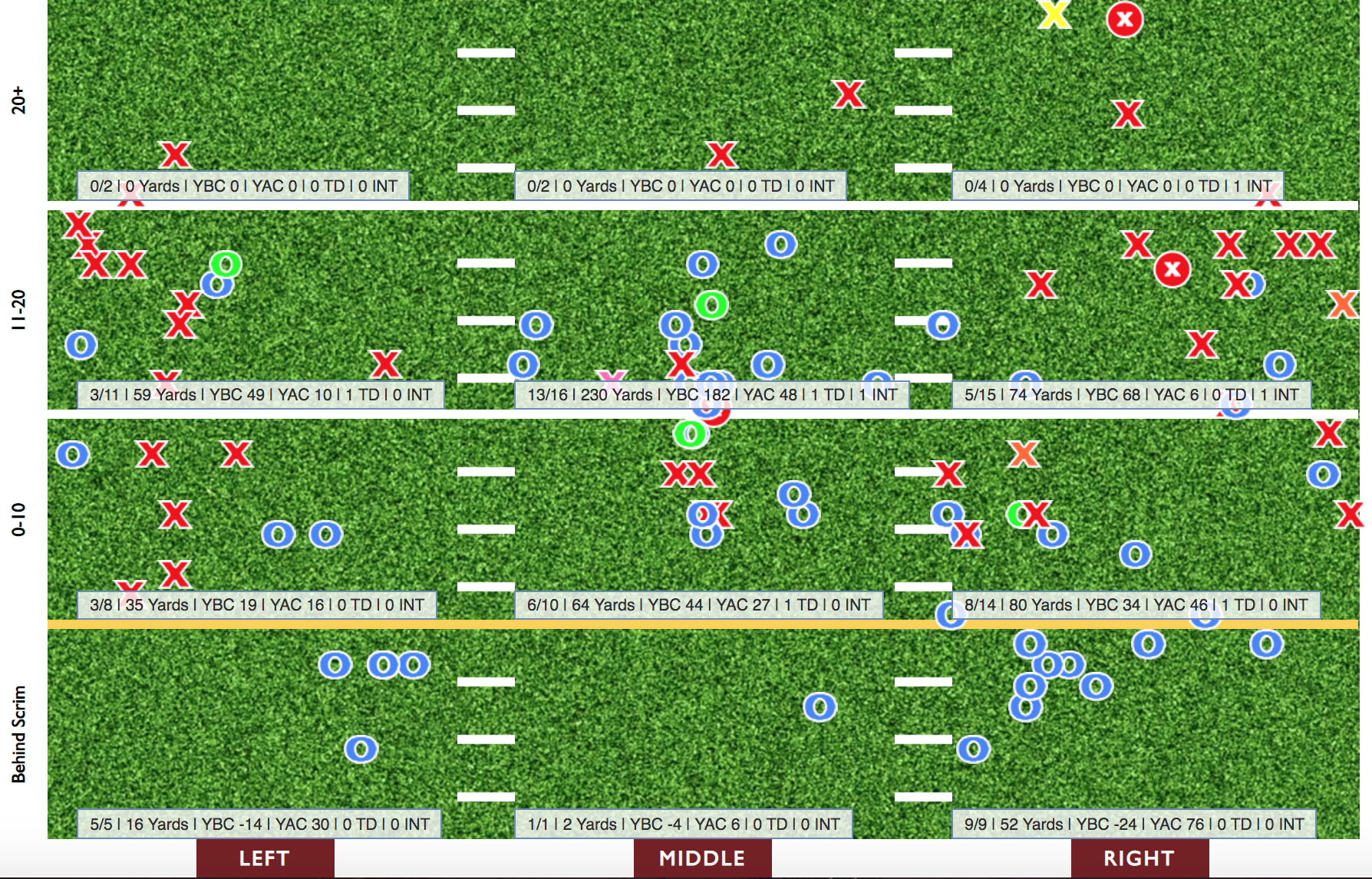
Ausbon was one of the SEC's best under-the-radar receivers this season. Despite being fourth on the team in targets, he sported the Aggies best Catching Success Rate among guys with at least 40 targets last season. That play earned him more opportunities in 2019. By volume he finished sixth within the conference in terms of yards and catches. While on the surface that is an excellent place to start, his analytics make him a player any offense would want. To match his great volume numbers, Ausbon's Catching Success Rate also finished sixth within the SEC and his raw Catch Rate of 71.3% led the team. Unlike other Aggie receivers, Ausbon's Uncatchable Pass Rate of 8.51% also led the team. It's much easier to be productive when its pitch and catch rather than trying to corral a bad pass.
Though Texas A&M drastically struggled to take the top off of defenses, Ausbon was among the SEC's most efficient deep receivers. His Deep Catch Rate was fourth and his 192 Deep Yards crashed the conference's top10. Though Davis and Rodgers only controlled a third of their contested targets, Ausbon managed to catch 50%. This Contested Catch Rate allowed him to once again finish amongst the SEC's top10. He was the teams best 3rd Down receiver as 53.3% of his money down targets resulted in success.
The major knock on Ausbon was his below average 4.26% Drop Rate and the fact he was rather disappointing inside the Red Zone. And though he was very good catching passes between the hashes, it was clear Fisher wanted to direct him passes more outside the numbers. Even with his undesirable Drop Rate, he led the team in Depth Adjusted Catch Rate. His 78.3% clip was yet another area where Ausbon was one of the conference's ten best performers. His clip beat out the likes of LSU's Ja'Marr Chase, Alabama's Jerry Jeudy, and Florida's Van Jefferson to mention a few.
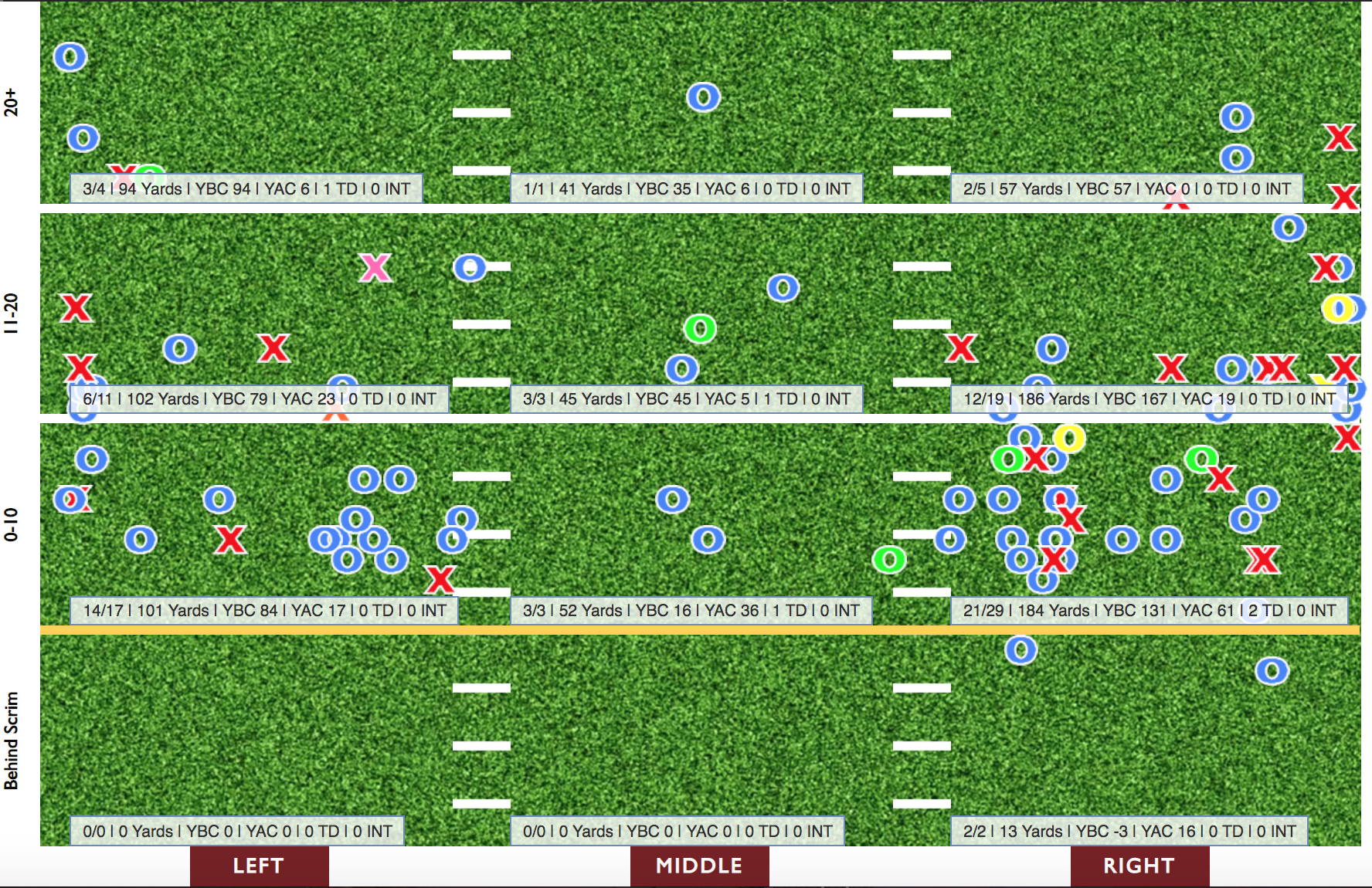
Though his Success Rate was "Jeff Fisher mediocre", Rogers decidedly was one of the worst SEC receivers last season. While Ausbon was able to crack the top10 or top15 in a number of spots, Rogers was the inverse of that as he comfortably finished among the SEC's bottom10 in Yards/Target, Catch Rate, Explosive Catch Rate, First Down + Touchdown Rate, and average yards after the catch. The only area of the field where Rogers had a decent output was on short throws towards the left side. There, he caught ten of his 12 targets and accumulated 100 yards. No other area totaled more than 75. Last year Kendrick Rogers was finished in the bottom12 of SEC receivers with at least 40 targets. He followed up that season with an even worse year analytically in 2019. Though his rank improved in some spots, most of his figures dipped including his Catching Success Rate, Catch Rate, and Yards/Target. He and Davis suffered from mostly the same ailments. Both went o-fer on their deep attempts, struggled on clutch downs, dropped a decent amount of balls, and were soft winning contested targets. Since Rogers was fed the SEC's third highest Uncatchable Pass Rate, there was no way he was going to finish in the top half of conference receivers.

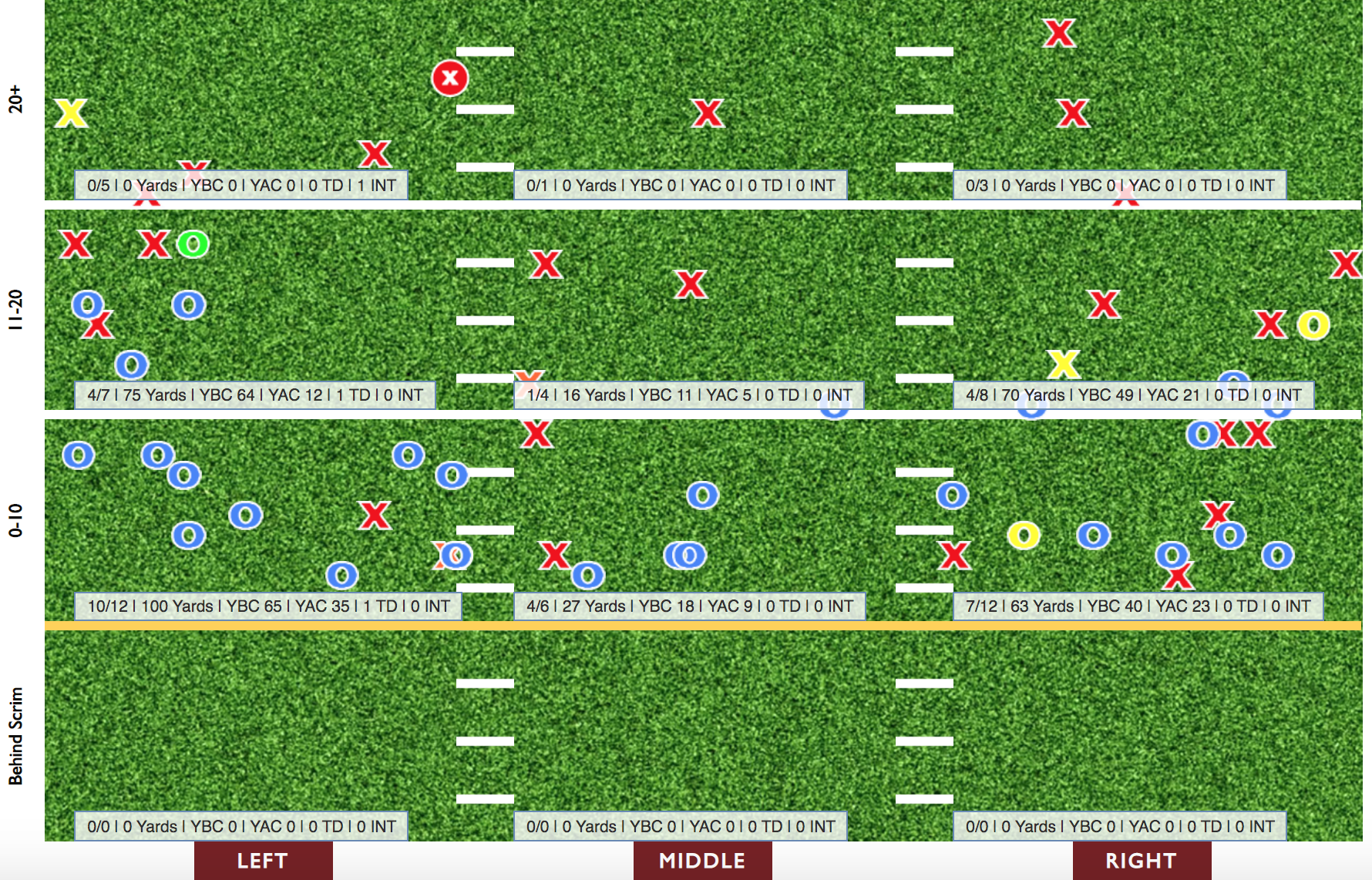
Wydermeyer instantly established himself among the conference's best tight ends. As a true freshman, he was the Aggies most explosive receiver, best after the catch, most likely to earn a conversion or a score with a catch, and most skilled at winning contested targets. Not bad for a 260 pound 19 year old. Jace Sternberger was a major cog from last year's offense that needed replacing. His vertical presence helped stretch the field and gain chunk gains down the seam or outside the numbers. Like last year, Aggie wideouts struggled to win deep or get behind coverages consistently. Plus, none of the main three were any bit of threats after the catch. Though it took a month or so, Wydermeyer's play popped on tape and Fisher never looked back.
All four of his deep targets ended up as completions with three of them going for scores. A fifth of his catches resulted in a gain of 20 or more yards, which is a big reason why his Yards/Target led the team. His Explosive Catch Rate was good for the seventh best in the conference. Whether long or short, Wydermeyer had fantastic hands. But, why just state a generality when I can give cold hard facts? Wydermeyer cracked the SEC's top10 in Drop Rate, Depth Adjusted Catch Rate, and Contested Catch Rate. Not to mention, he caught over 71% of his targets during his first season in College Station. His ability to win in tight spaces allowed him to boast the conference's second best Red Zone Success Rate. With how phenomenal his freshman year was, it would be safe to assume he'll be a major part of the Aggies blueprint for 2020.
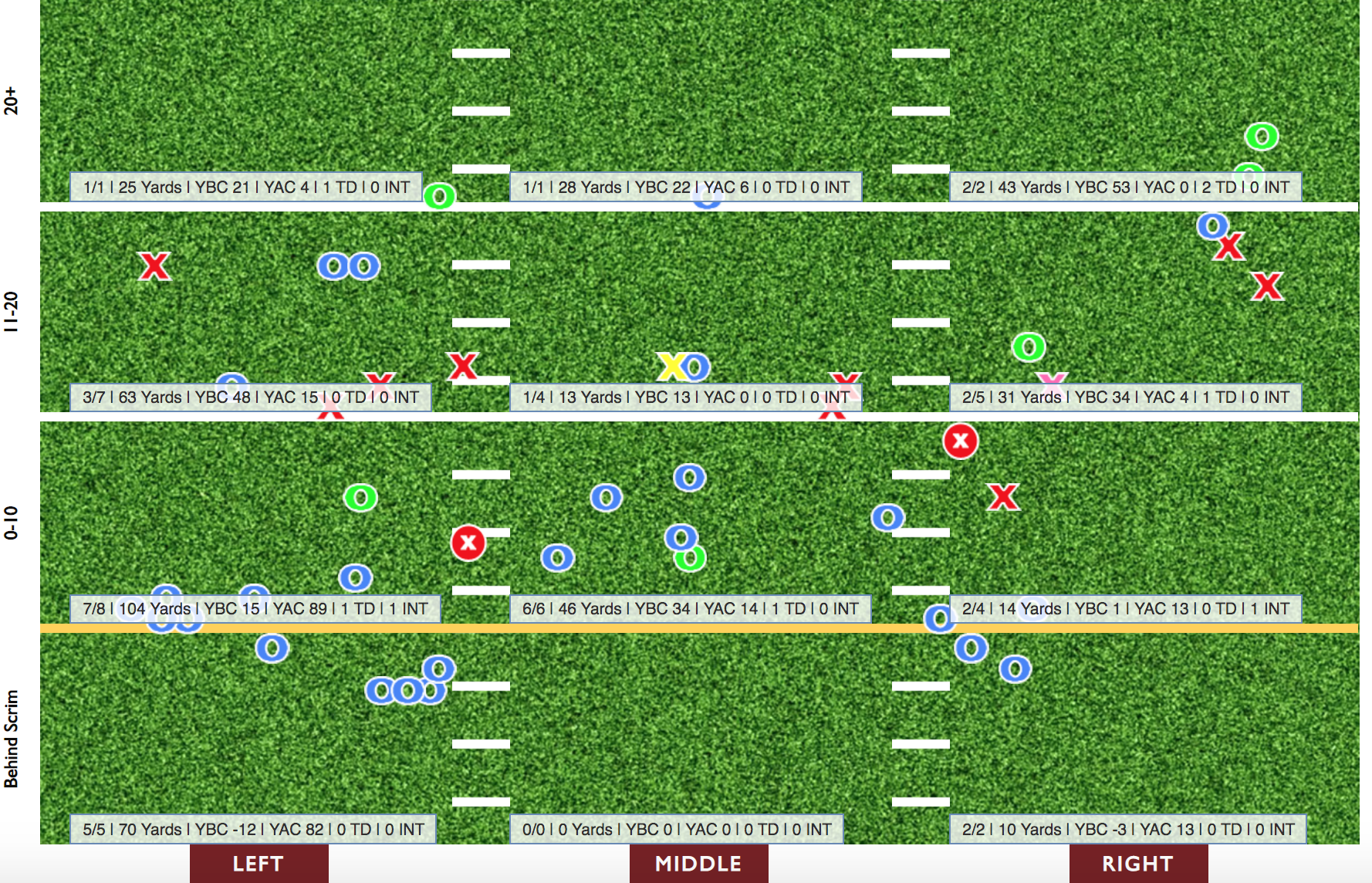
Before continuing onto the run game, I wanted to talk a little bit about TAMU's primary slot receivers. Neither Cam Buckely nor Ainias Smith saw over 40 targets. Though the season started with Buckley being the lead slot, Smith soon usurped the role just like Wydermeyer did to Glenn Beal. Game-altering speed was one attribute that TAMU's receivers appeared to lack. Most of their wideouts have the classic mold of possession receivers: tall, wide catch radiuses, sturdy frames. Heck, even Buckley is 6'2. Smith -- who originally planned to join the Aggies in the backfield -- instantly provided a spark from the slot. Both his speed and shiftiness made him a tough outlet to cover.
Buckley suffered from an ungodly high Uncatchable Pass Rate, which solidified a terrible 4.84 yards/target. With a 32% Catching Success Rate, it was hard for him to stand out in any way statistically. Smith, however, used his knack for getting open to finish with a great foundation for the rest of his time at A&M. His Success Rate, Catch Rate, Explosive Catch Rate and Yards/Target ranked third on the team only behind Ausbon and Wydermeyer among their pass catchers. But even though speed in the slot is a major area of need, Smith was moved back to running back to end the year where he will presumably play next season.
While whipping the ball around the yard was this offense's identity, Texas A&M finished the year with the third best Rushing Success Rate within the conference. Only LSU and Alabama could say they had a clip better than 49.3%. Coming into the year, Jashaun Corbin looked to be the heir apparent to Trayveon Williams and carry the load for the Aggies on the ground. In 2018, he sported the SEC's second best Rushing Success Rate and percentage of runs that resulted in either a first down or a touchdown. After the first two games, it certainly appeared that way. Before his hamstring injury heading into Week 3, Corbin was on pace for 228 carries. Only Mississippi State's Kylin Hill topped that amount this season within the conference.
Forced to find a playmaker in a hurry, freshman Isaiah Spiller wound up the Aggies bell cow back. While Kellen Mond was able to chip and and help out, TAMU's style of play and limited rotation resulted in Spiller being the only back of theirs with over 40 designed carries on the year.
Spiller was one of the easiest ball carriers to corral within the SEC as far as his Broken Tackle Rate is concerned. His 18.9% clip was the SEC's fifth worst. If you had glanced at his average yards after contact, I'm sure that would raise some eyebrows. Despite falling inside the SEC's top15 in that regard, he consistently failed to squirt out of defenders' grasps. Thanks to a handful of breakaway runs after breaking a tackle close the line of scrimmage, his average yards after contact was inflated and didn't depict his down-to-down output.When he was plugged into TAMU's scheme, Spiller was a dependable and consistent back. So considering he was a freshman thrusted into the fire, he handled himself rather well. Still, he was an average back when all the dust settled. Thanks to their pass-first ways, TAMU often had less yards to gain on their rush attempts, which lowered their degree of difficulty. With less yards to gain on average, Spiller was able to produce a top15 First Down+Touchdown Rate within the conference.

Texas A&M allowed the second worst Run Havoc Rate in the conference. Havoc plays translate to anything bad that can happen towards an offense on the ground; initial defensive contact behind the line of scrimmage, tackles for a loss, busted runs, and fumbles are examples of such. This resulted in Spiller having a below average yards before contact clip. As you can imagine, Spiller was hit quite often behind the line of scrimmage. In fact, 13.8% of his carries suffered that fate. Luckily for the Aggies, Spiller was full of "gumption". Nearly 5.2% of his carries were instances of Spiller being hit behind the line but a gain was made, which was the SEC's eighth highest clip.
Kellen Mond thrived in TAMU's read game and in space on the perimeter. While Ole Miss's John Rhys Plumlee and Kentucky's Lynn Bowden were some of the most dynamic quarterbacks on the ground this season within the conference, Mond was far and away the most efficient. Mond was the only SEC rushers who finished inside the SEC's top3 in Success Rate, Explosive Play Rate, First Down+TD Rate, and Gumption Rate. Like Spiller, he suffered from a good amount of havoc and padded his yards after contact number with a few breakaways. Since he's a quarterback, he wasn't the best at breaking tackles. His 16.2% Broken Tackle Rate was the third worst in the conference.
Much of Mond's success on the ground came from Texas A&M's read heavy attack. With options, Mond just had to follow the play design and pick his chances. Most of the time, he made the correct read. Mond's 3.48 yards before contact clip reflects such. Sure he had his fair share of flubs, too. Nearly 15% of his designed carries -- which omit sacks and scrambles -- saw initial defensive contact behind the line of scrimmage. But when Mond had the ball, good things generally happened. With a top5 Passing Success Rate and Rushing Success Rate in 2019, Mond is well positioned to use his balanced skill set to continue to fuel the Aggies offense next season.
Cordarrian Richardson and Jacob Kibodi occasionally received spot carries to lessen Spiller's load. Kibodi was the first beta back the Aggies tried. Of his 31 carries, 25 occured in the three weeks following Corbin's hamstring injury. Kibodi lacked great vision and consistent run lanes. That's a bad combo. On the year, he averaged less than a yard before contact on his rushes, which was over a yard and a half less than the SEC average. The early adversity on his carries limited the sophomore to a 38.7% Success Rate.
Once it was clear Kibodi wasn't much help, Richardson starting stealing reps. Of his 25 carries, 19 took place from Weeks 9-11. Richardson saw plenty of snaps out of two-back personnel packages. As I mentioned in the glance section, these sets sparked a good amount of big gainers and successful carries. Overall, Richardson led the team in Yards/Rush as he averaged just under 6 yards before contact. But he wasn't just being advantageous of good blocking. He also sported a team high 3.32 yards after contact clip. But like most Aggie ball carriers he wasn't much of a tackle breaking machine. But if he qualified, his 68% Rushing Success Rate on the year would be in a class of its own within the conference. Despite providing an obvious spark for this offense, he didn't received over their final three games.
Richardson, Kibodi, and Corbin all decided to transfer this offseason, which forced TAMU to move Smith back to running back despite providing a missing element to their passing game. Since he only received seven carries in their bowl win versus Oklahoma State, the jury remains out for what his sophomore season holds.