Sideline to Sideline: Alabama 2019
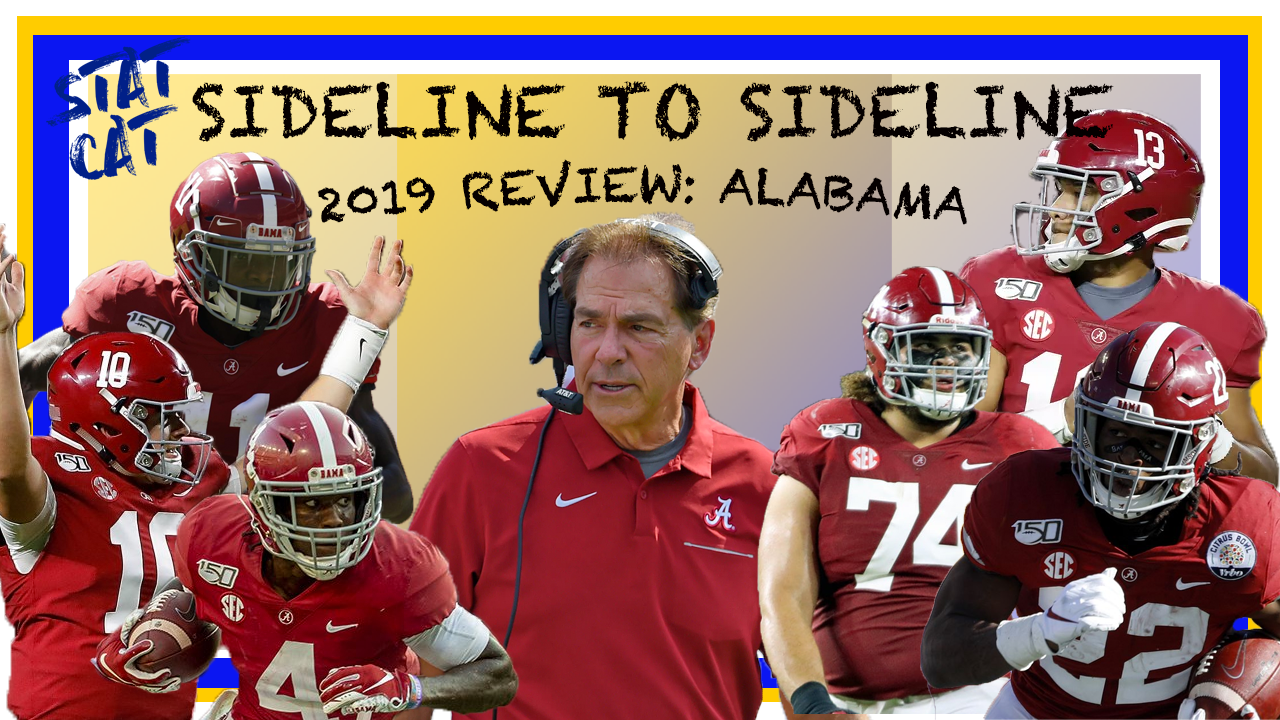
As college football fans saw, that's not how things played out. Coaching turnover and piling injuries hindered the Tide in the summer months. Thanks to a roster fathoms deep, the Tide weathered the early setbacks. For about three months, everything was unfolding Alabama's way. That was until a certain key contributor got dinged up. Not too long after the original boo boo, that same certain person went down with a season-ending injury. In the end, that created too much of an obstacle for Alabama to conquer. While losing a few defenders is one thing, it's another losing a Heisman hopeful and arguably the most talented passer in school history. Last summer, there was no reason not to believe Alabama would be back in the title discussion. Sure, they suffered a humbling defeat on the big stage. But many expected - nay assumed - that Alabama would run it back by making the College Football Playoff.
Alabama was a flawed football team this past season, but that didn't make them any less dangerous. For the better part of the year, Tua and his wideouts carpet bombed any defense that stood in their path. Najee Harris contributed to the onslaught by continuously running tough and being the backbone of the scheme. But since Alabama's standards are higher than the rest of the field, their shortcomings were magnified while many of the things this team did well were overlooked.
Alabama at a Glance
Steve Sarkisian wasted no time returning Alabama's offense back towards a West Coast philosophy. While departing play caller Mike Locksley ran mostly the same stuff, Sark's fingerprints were all over the Tide's hot start. Run-Pass options, YAC-oriented patterns, and a dizzying amount of motions rooted a scheme that was very much meant to push defenses around. Using his lightning-quick receivers all over the field in a variety of ways allowed the Tide to punish teams inside the tackles with a burly ground game. Every time any of the Tide's top4 wideouts caught a pass, they were a candidate to score. That in turn caused them to receive more attention, which helped open up the run game.
While Tua Tagovailoa was the player to watch, Sark wanted to make him more of a facilitator than playmaker. In 2018, Alabama only called RPOs on 15% of their plays. During the first 5 weeks with Sark back in charge of the offense, that figure doubled to just under 30%. While Locksley had wanted Alabama's wideouts to stress secondaries deep, Sark strived for horizontal stretches. Jerry Jeudy, Henry Ruggs, DeVonta Smith, and Jaylen Waddle are all burners. The thinking was: "The sooner we can get them the ball, the better." Bubble screens, slants, orbit swings, and quick hitches permeating not only Alabama's copious RPOs but also its dropback game.
Despite playing in less games, Tagovailoa led the conference in passing yards from RPOs with 602, which was nearly 100 more than the next closest passer. His Explosive Pass Rate - or percentage of throws that net 20 or more yards - on these throws was the highest amongst starters in the SEC at 16.4%. FYI Mac Jones' 14.8% clip was next in line. Whether via RPO meshes or play fakes, over 43% of Tagovailoa's attempts this season were off some form of action, which further aided the cat-and-mouse game Sark wanted.
Naturally, Tagovailoa saw his RPO Throw Rate tick up a few percentage points and saw his average depth of target shrink by nearly a yard and a half. Last season, about 52% of his yards came after the catch. But in 2019, that clip shot up to over 60% - good for fourth highest in the SEC. Outside of Jeudy, all of the Tide's main targets owned Top6 averages after the catch within the SEC. When Tagovailoa was permanently sidelined after the Mississippi State game, the read/RPO game lost reps to more straightforward runs.
Overall, Alabama averaged more yards per run and pass and higher Success Rates on RPOs than on the variety without them. Their average yards/run increased from 5.21 to 6.33 with their average yards/pass going from 9.89 to 11.3. While the rise in Success Rates were much more marginal, Alabama's clips were still higher when RPOs were deployed. Despite all that, Tagovailoa was less accurate, successful, and explosive on RPO throws than on his dropback attempts.
Sark's mentality was to keep defenses on their toes and always guessing. On any given snap, six guys donning crimson could go the distance. Due to the speed and big play ability of its wideouts, Alabama loved manipulating defenses presnap with variety of motions that either altered the formation or threaten to attack the edge with speed. No SEC offense used more true motion than the Tide. Just under 23% of their snaps used motion with another 7% seeing orbit motion. All in all, well over a third of their plays used some form of motion this season.
Along with the eye candy, Alabama kept foes off-balanced with their play calling. 20 concepts owned at least 2% of the Tide's play calls. Only a 2.5% Play Share separated their most called look from their fifth. It's a lot easier to stop an offense is you can pinpoint what is coming. Due to the numerous concepts they scripted regularly, Alabama's offense was one of the more unpredictable in the conference.
Tua and Company lived up to their reputations. While their first half vs Duke was a bit of a let down, it didn't take much longer for Tuscaloosa's finest to assert themselves as one of the most dominant offenses in college football. Just under 9% of Alabama's offensive snaps resulted in a touchdown, which was the highest in the SEC. Exactly 60% of their series this season resulted in points with no other offense in the conference averaging more yards per drive. This played into the fact that Alabama had one of the lowest Three-and-Out Rates in the SEC. On average, only about one out of seven of the Tide's possessions ended in one.
With a balanced and versatile approach that kept its options open (no pun intended), this offense rarely was behind the chains. Only 29.3% of their 2nd and 3rd Down plays had a distance to gain of six yards or more -- good for second lowest in the SEC. Without beating themselves early in the series, Alabama kept applying pressure on their opponents. Sometimes, the Tide would orchestrate a long march down the field. On others, they had no issue ripping off a chunk gain or scoring in the blink of an eye. Through the air, no one was more explosive than Alabama. Nearly 18% of their pass attempts resulted in a gain of 20 or more yards. That shouldn't be any bit of shock due to what our eyes saw this past fall. Overall, 17.5% of the Tide's plays resulted in an "explosive" gain.
On 1st Downs, the unpredictable Tide were at their bests. On those downs, Florida was the only SEC team that saw their Top6 most call concepts sport a lower Play Share than the Tide's 34%. All the moving parts and variables were too much for defenses to handle. Alabama was the only SEC offense with both its Rushing and Passing Success Rates over 50% on firsts. In fact, both clips topped 52%. Their 54.9% Success Rate on the down only trailed LSU's within the conference. Overall, their Pass Rate on these downs was average at 48%. But Alabama was much more aggressive and pass-happy in the first half where their Pass Rate was 57%. That should make sense. Alabama mostly jolted out to big leads that would naturally call for more clock draining runs supplanting passes after halftime.
Though they had a middling Early Down Conversion Rate, they boasted the best 3rd Down Success Rate in the SEC. Overall, only LSU had more plays result in first downs by a rate basis than the Tide. But on the money down, no other team in the conference matched Alabama. An astonishing 53% of the Tide's 3rd Down snaps resulted in a conversion.
Aided by dynamic special teams play and a defense that still was better than most, no SEC offense had the luxury of a better starting field position on average than Alabama. Over 42% of Alabama's drives entered their opponent's red zone, which led the conference. While their chances exceeded the rest of the conference's, Alabama was good but not great inside the red zone. Their Touchdown Rate, Scoring Drive Rate, and Success Rate all were outside of the SEC's Top4 despite being comfortably above the conference average.
While their title chances took a ding when Tagovailoa was lost for the season, the offense remained strong analytically. In the four games where Tagovailoa didn't suit up, the Tide posted a lower rate of Three-and-Outs suffered while sporting a higher Touchdown Rate with their Overall Success and Explosive Play Rates staying essentially the same. But thanks to a shanked kick and a substitution snafu in the Iron Bowl, that ended up not mattering a lick.
All three of Alabama's best defensive opponents (LSU, Auburn, and Michigan) held the Tide to an Offensive Success Rate under 47%. On its face, that is a more than respectable clip. After all, the SEC's average Success Rate when playing conference foes was only 41% this past season. It's only natural to see some regression when up against the best. And Alabama remained strong in other advanced categories in these games. But, Captain Obvious wanting me to point out that two of those games resulted in a loss despite Alabama scoring 86 points in those contests.
Injuries and thrusting green youngsters into the lineup inevitably brought down Saban's defense. I mean, Alabama lost two games when they topped 40 points. That's on the defense, folks. No doubt about it; especially considering how consistently Sark's unit put up video game numbers.
Regardless of year, most fans normally can count on this squad to be sound on that side of the ball and anchor Alabama's success. But with inexperienced contributors, Alabama's defense remained vulnerable all year long. While the antiquated and archaic Total Defense figure used by everyone and their grandpa shouted from the rooftops that the Tide had a Top20 unit, few other advanced analytics took up their case as they were good, not great essentially across the board.
In the SEC, Alabama was far from their normal selves. Versus SEC competition, their defensive allowed an average Success Rate of 40.8%. This clip was right smack dab in the middle of the conference as was Alabama's rate of snaps that allowed a gain of 15 or more yards (9.57%). Because I just know you are curious, Alabama allowed Success Rates of 59.2%, 46.7%, 50% against LSU, Auburn, and Michigan, respectfully.
Unlike their offensive counterparts, their defense was at it's worst on 1st Downs where they had the SEC's third worst Success Rate (47.4%). The youth-laden linebacking corps were picked on by many. A number of offenses found success catching them out of position whether in the run or pass game. Within the SEC on firsts, only Arkansas allowed more rush yards before contact on average, and the Tide finished with the fifth worst Passing Defensive Success Rate despite owning a Top4 yards/attempt through the air.
Since offenses won a fair share of their battles, Alabama's average distance to defend on 3rd Downs was the SEC's fourth lowest clip (6.43). So, it makes sense why the Tide also had the fourth worst Success Rate in those spots within the SEC against conference foes. Alabama's Three-and-Out Rate forced was right at the conference average at 32.3%. Saban's units are typically stifling and unwavering. In 2019, however, it was much more bend-don't break. Being the master schemer that he is, Saban still found ways for his defense to alter ballgames.
Despite being rather mediocre down-to-down, Alabama still regularly generated Havoc plays. Simply put, these are plays were anything bad happens for the offense. Sacks, tackles for a loss, forced throwaways, QB pressures, and turnover plays are all forms of Havoc. When facing conference opponents, over 20% of the Tide's defensive snaps created Havoc - good for the fourth best rate in the SEC.
Pressuring quarterbacks and manufacturing takeaways were two particular areas where this unit thrived. Against SEC offenses, no other defense in the conference pressured passers more on average than the Tide.Their Pressure Rate of 28.2% was 5% higher than the next closest clip. Even though they applied more pressure than any other defense in the SEC against conference foes, Alabama ended the year with the 5th best Sack Rate at 5.9%. Alabama's 28 takeaways were tied for the fourth most in college football this season. But by a per play basis, the Tide's 2.17% Takeaway Rate was worthy for the sixth best in the SEC.
While bending but rarely breaking, Alabama was able to limit SEC opponents to the fourth lowest Explosive Play Rate and Touchdown Rate. Considering how prolific their offense was in both those areas, the Tide were able to win comfortably most of the time. Alabama's net Explosive Play Rate margin and Yards/Play margin were the highest in the SEC. Plus while their Defensive Success Rate was rather ordinary, only LSU had a larger Success Rate margin.
Their offense was good enough to hang with any team in the country, but defensive shortcomings curbed Alabama's ceiling. Of course if Tagovailoa never got banged up, this season could've easily gone another way.
Alabama's favorite run looks
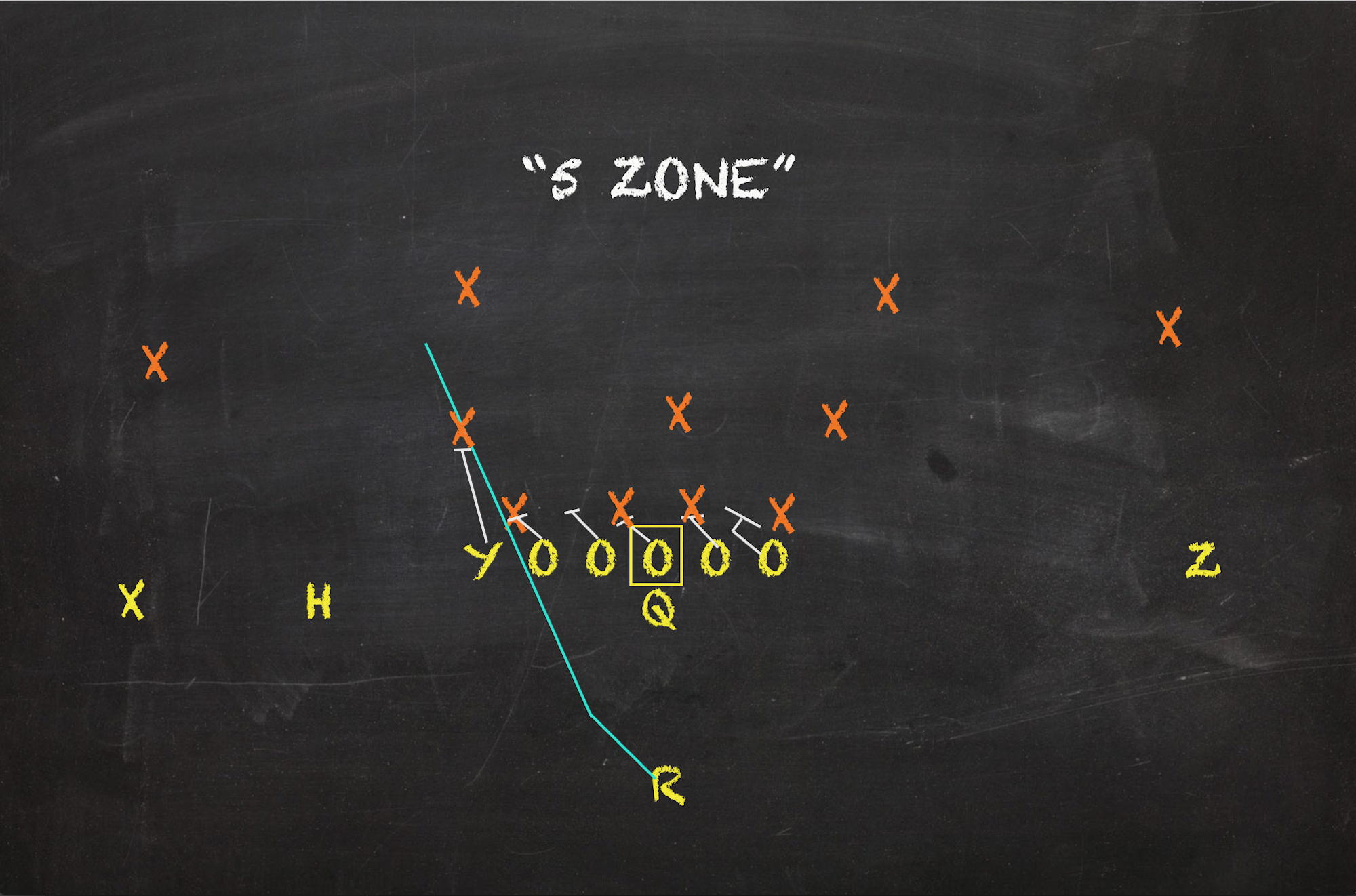
1. Outside Zone Off Tackle 6.12% Play Share 4.69 Y/A 43.1% Success Rate
A favorite drive starter and garbage time play, Alabama's OZ Off Tackle received more reps than any other look. It's a good thing they didn't dedicate more of their script towards this play considering the ho-hum 43.1% Success Rate. Lead back Najee Harris and reserve Jerome Ford far exceeded the rest of Alabama's backfield running them. While Ford's carries occurred in garbage time, Harris took care of business regularly outside of the bookends. Exactly 20% of his carries on Outside Zones went for 10 or more yards with 32% of them gaining a 1st Down. While his 5.52 yards/carry on this look isn't eye popping by any means, any team would love to have his 56% Success Rate.
Still, the team averaged under 1.7 yards before contact on Outside Zones which limited the play's ceiling. Off Tackles were mostly called on early downs. The look's 33 1st Down reps are the most of any concept by the Tide this season. But like its overall numbers, Off Tackles were rather blah to start a set of downs. While the yards/play ticked up to 5.09, its Success Rate dipped to 42.4%. In general, Off Tackles returned the worst figures of any of Alabama's Top5 most called run concepts.
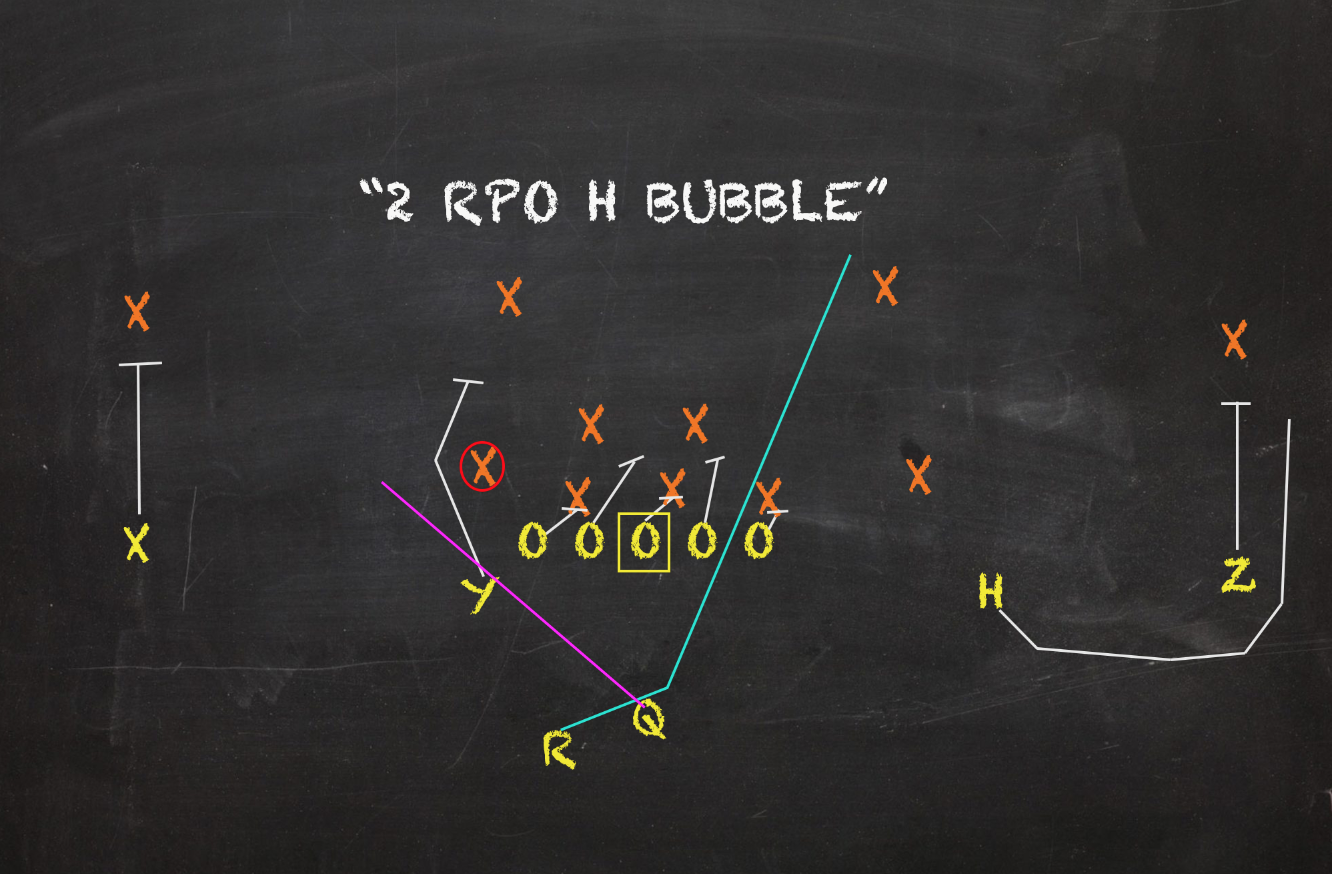
2. Inside Zone Slam Read 5.40% Play Share 6.78 Y/A 62.5% Success Rate
Like many offenses in college football, Inside Zone Slam Reads operated as a focal point for Alabama's scheme. Sure, Steve Sarkisian did a good job of balancing between concepts. But Slam Reads allowed the Tide to attack defenses like no other design allowed them to. A good portion of these plays incorporated RPO route tags, which allowed Alabama to play the numbers. If they had advantageous numbers in the box, they'd gash fronts between the tackles. If safeties lulled, Alabama made them pay with quick, manbeating routes. The big play threat often opened up run lanes that allowed the ground game to flourish.
While Tagovailoa always had an option to run in the Tide's read game, he rarely did. On Slam Reads, in fact, Tagovailoa didn't tally a single rush attempt this season. Still, that added element provided another factor that helped the look post the highest Success Rate and yards/play clip of any Alabama run concept. Slam Read's 305 yards gained were also the most of any ground look and third most overall. No other play received as many reps on the money down. The answer towhy was rather simple: Slam Reads delivered. On their 13 tries, 11 resulted in a conversion.
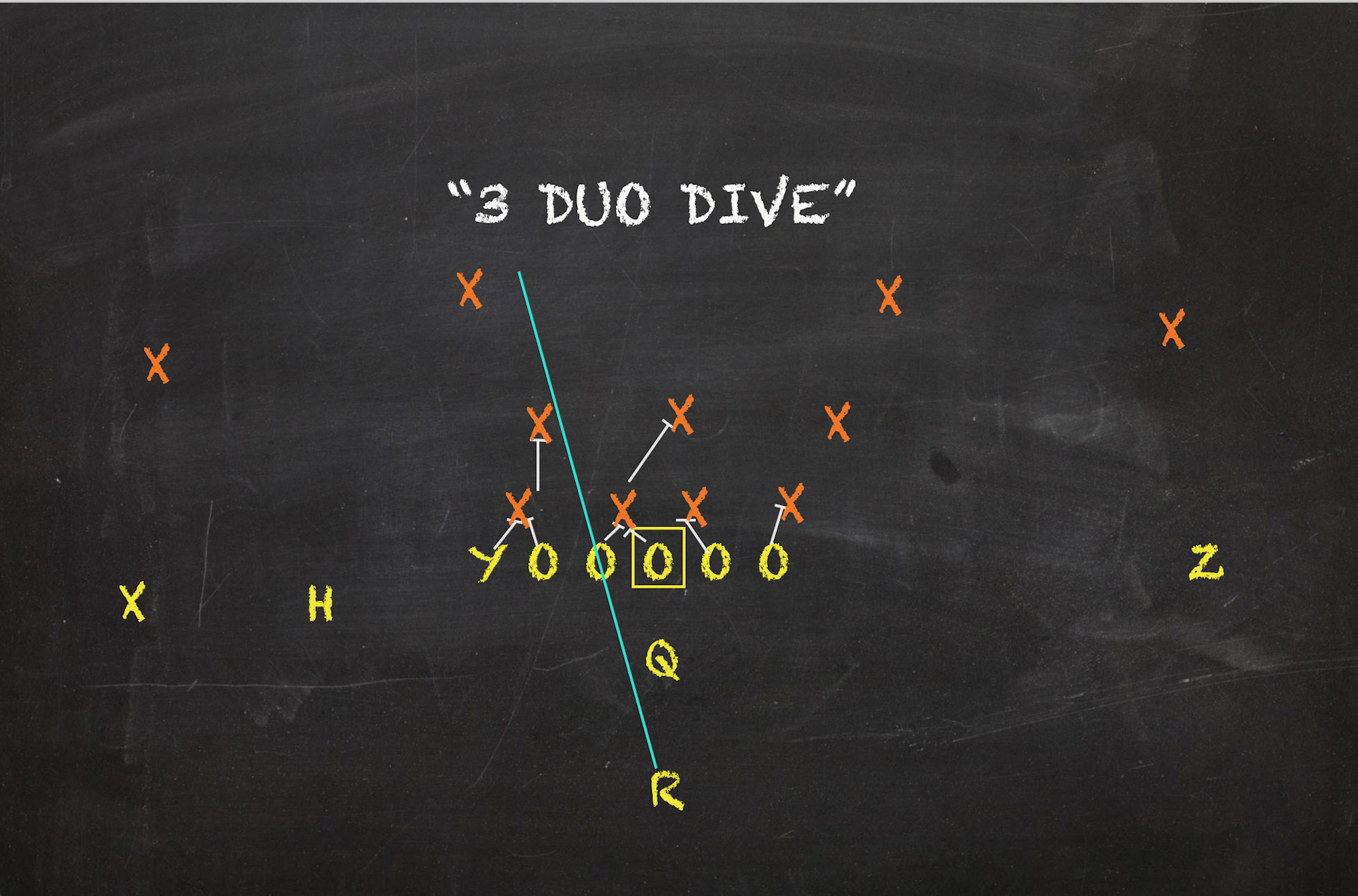
3. Duo Dive 5.28% Play Share 5.23 Y/A 61.4% Success Rate
Gap plays like Duos are natural compliments to Slams. Both initially aim to hit the B-gap between the guard and tackle, but the two plays are blocked differently. While zones like slams call for a coordinated flow working toward the hole by the OLine, gap and power plays aim to create a hard-forged run lane through double teams and hard edges. The very name "Duo" comes from this idea of maximizing double teams. Sark's goal was to disorient defenses using a variety of looks. So he smartly coupled Duo Dives with Slam Reads in the script.
A good percentage of Duo Dives' reps occurred in the second half when Alabama was trying to close out ball games. Their 33 second half chances were only topped by Off Tackles. When Tagovailoa was permanently sidelined for the season, Alabama decided to call less read options in lieu of power runs. Duo Dives along with Counters helped fill the void in those spots. Regardless of down, Dives delivered. On 3rd Downs especially, Dives earned their metal. The gap scheme sported a 77.8% Success Rate in those spots. But while this look is meant to get fronts moving backwards in a hurry, rarely did an Alabama Dives end in a explosive gain. But thanks to the volume of tries they were given, Duo Dives accumulated 230 yards - good for fifth most of any concept.
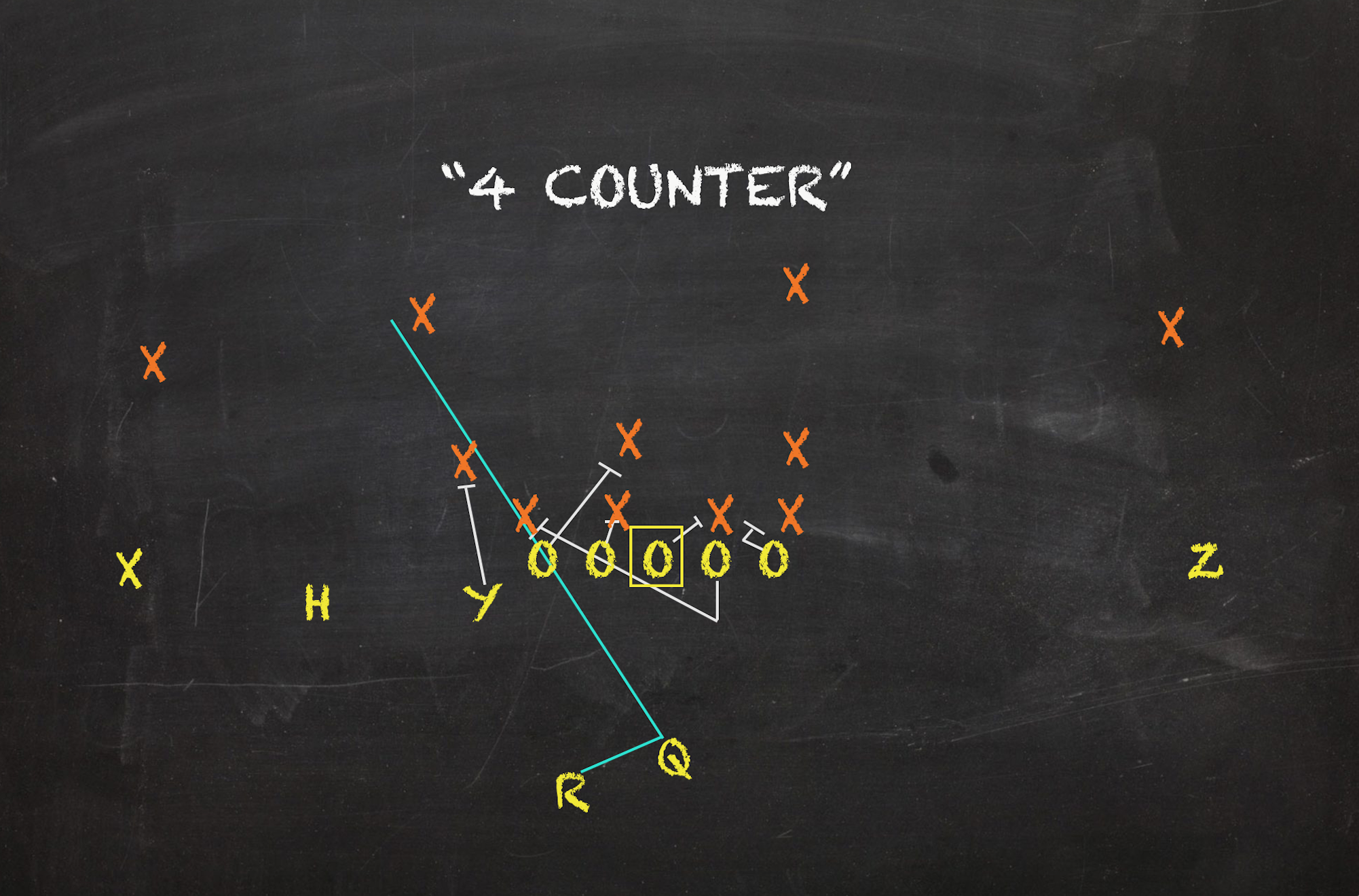
4. Counter 4.44% Play Share 5.41 Y/A 59.5% Success Rate
In a scheme that strove to get defenses guessing, misdirection plays like Counters naturally fit the bill. Counters were Alabama's second favorite run concept on 1st Downs. Despite the volume they received in those spots, Counters only averaged 3.61 yards/carry on firsts. While the look's reps on 1st Downs nearly doubled its 2nd Down chances, Counters were one of the Tides best concepts on seconds. There, the misdirection averaged 8.25 yards/carry on a sizzling 75% Success Rate.
One of the Tide's most popular plays once Tagovailoa was sidelined, Counters provided solace for Saban's squad down the stretch when power looks replaced some reads in their script. True Counters received 12 reps over the course of Alabama's last three games with an additional 10 that utilized a read aspect. While this look's Success Rate was about was it was over the course of the season, Counters averaged over 8 yards per pop since Week 12.
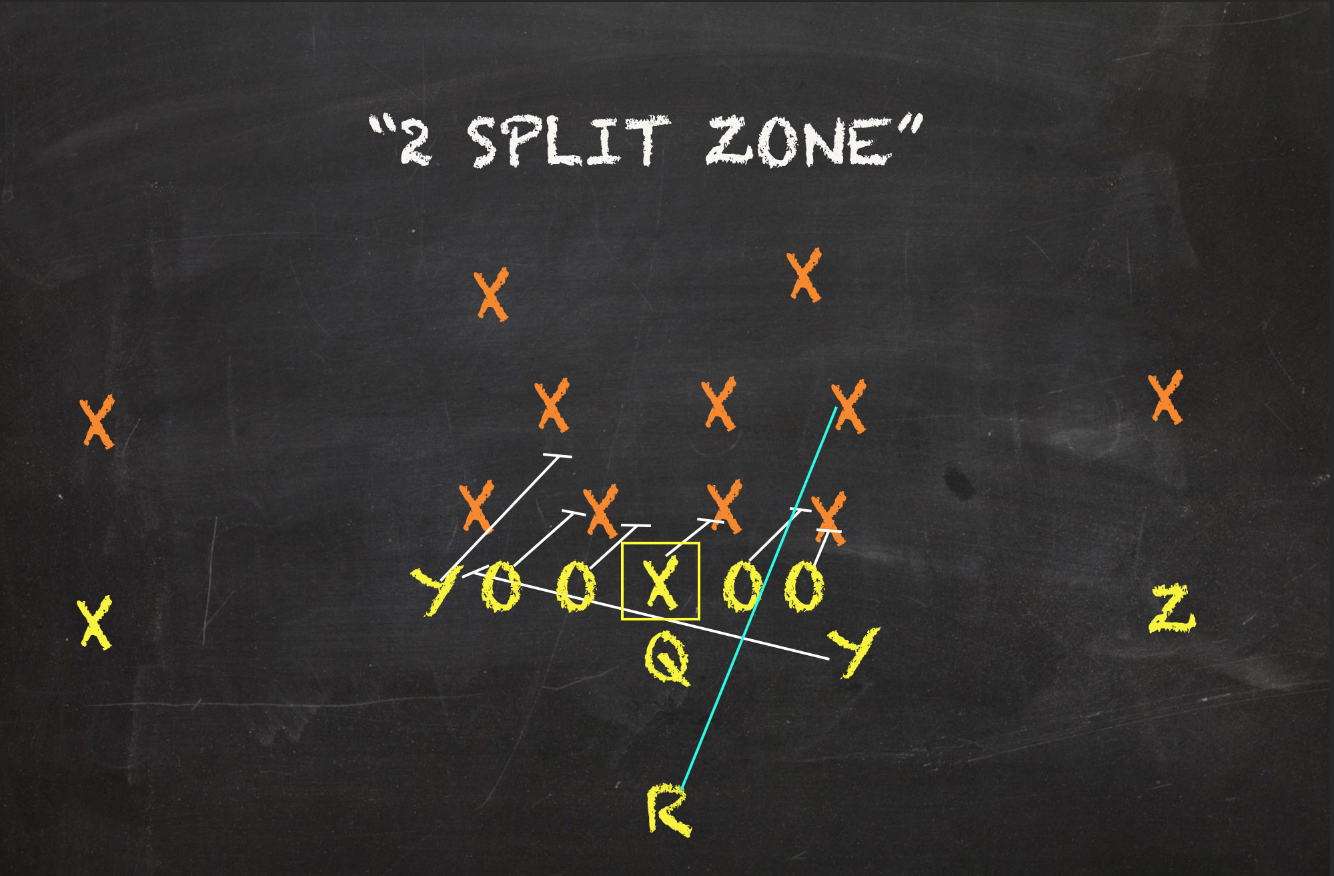
5. Split Zones 3.60% Split Zone 6.47 Y/A 53.3% Success Rate
By the nature of the blocking scheme, Split Zones provide a slight wrinkle to the normal zone flow. On these plays, an offset tight end or fullback will fire against the grain of the flow towards the other side of the formation. In case the primary run lanes are clogged frontside, this backside block creates a hard cutback alley. This wrinkle also plays with linebackers' read keys. When they are diagnosing the play, movement like this can create a brief pause especially if a man coverage is deployed by the defense. On outside split zones, a hesitation can be all the more costly if the ball carriers can gain a step towards the edge.
Split Zones were one of Alabama's favorite looks to help bleed the clock after halftime. Of the look's 30 reps, 24 of them occurred in the 3rd or 4th quarter. Alabama directed Split Zones both inside and out. Regardless of orientation, the look put up its best numbers on 1st Downs. Acting as the Tide's sixth most favorite play on firsts, Split Zones averaged 9.31 yards/carry on a 62.5% Success Rate. Overall, only its inside zone brother, Inside Zone Slam Reads, averaged more yards/carry among Alabama's five most called run concepts. Though relatively very successful, Split Zones sported the second lowest Success Rate of those five looks.
Alabama's favorite pass looks
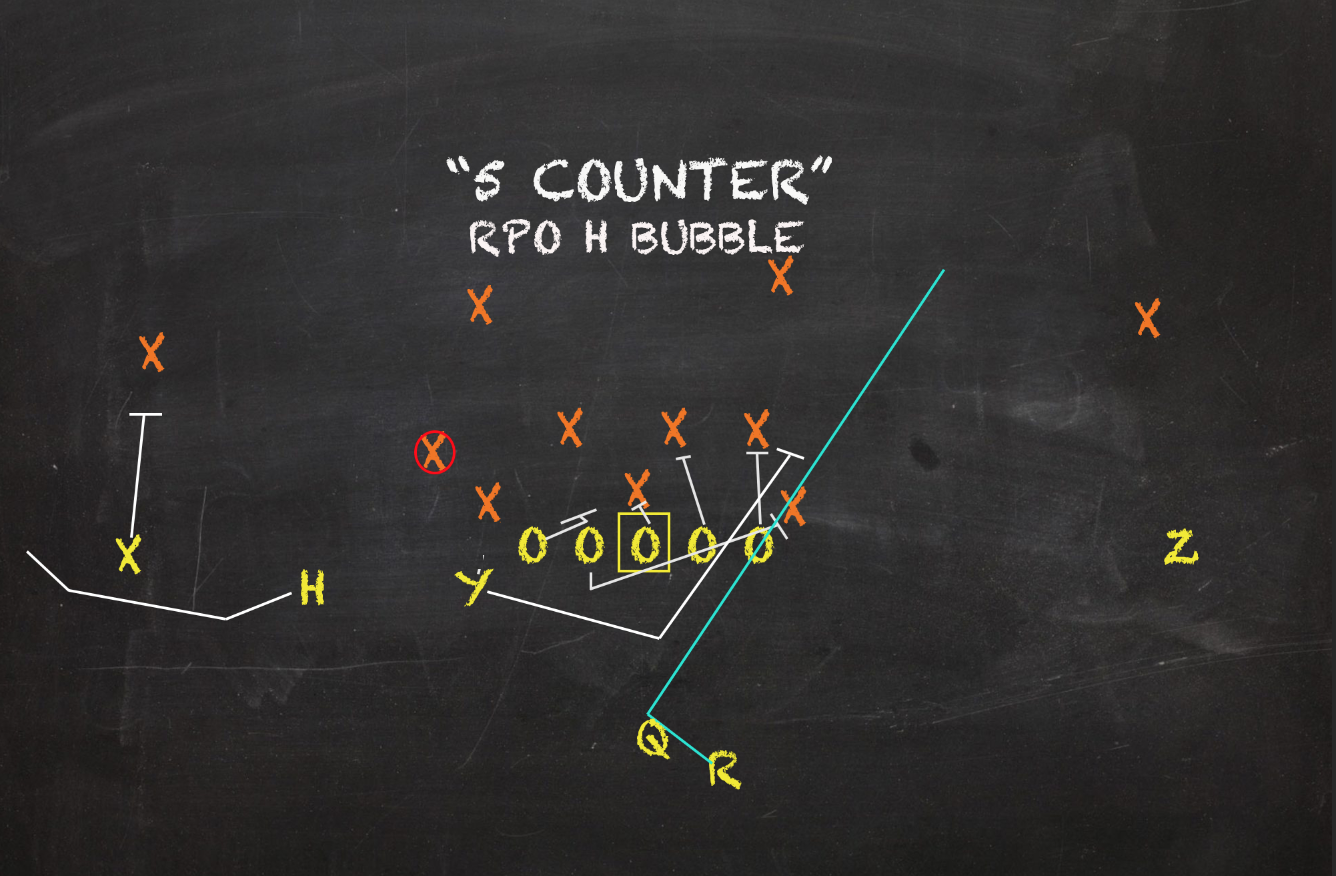
1. Outlet Screens 5.28% Play Share 9.33 Y/A 55.6% Success Rate
As you might have guessed from a scheme that increased its RPO usage this season, Outlet Screens owned a fat share of Alabama's script. When combined, targets of Bubbles, Swings, and Tunnels screens shared the Tide's fourth highest percentage of plays this season. As aforementioned, these routes when tagged onto read options allowed Alabama to utilize their blazers sideline to sideline. If one had an advantageous matchup, they'd get the ball and make a play. Despite being targeted at or behind the line of scrimmage, Outlet Screens averaged over 9 yards per pop and combined to total 420 yards, the most of any concept for Alabama this season.
Outlet Screens are often the most basic form of RPOs. Despite their simplicity and conservative nature, these turned out to be one of the Tide's most productive plays. Of their five favorite pass concepts, Outlet Screens sported the second highest Success Rate. Bubble and Tunnel screens were far more efficient than Swing screens. While the former both put up Success Rates over 62%, Swings only had a 38% clip, which obviously brought down Outlet Screens' numbers in general. In first halves when the Tide were their most pass happy, Outlet Screens led all concepts in reps with 29. In those spots, all three screens received equal targets. Only seven Outlet Screens were targeted over the course of the Tide's last three games. With Jones the likely starter and two of Alabama's quatrain of wideouts going pro, it remains to be seen if these show up as much in 2020.
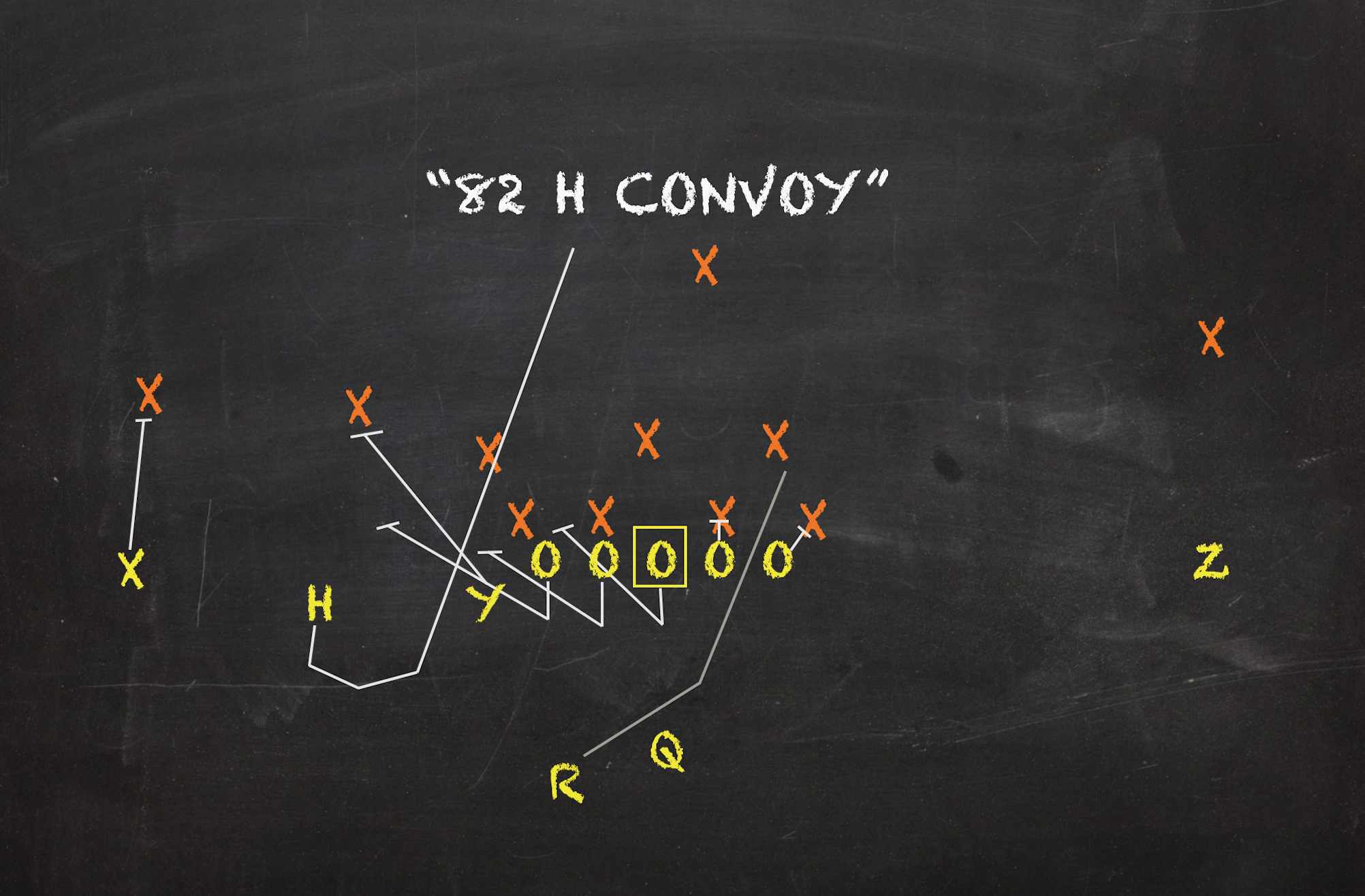
2. True Screens 3.13% Play Share 6.50 Y/A 26.9% Success Rate
Quick screens and RPO outlets weren't the only way Alabama extended its run game this season. Jailbreak and Slip screens when combined own the second most real estate among Alabama's pass concepts. True Screens were used as low-risk plays to steal cheap yards when behind the chains or if the defense provided too much cushion. But while Outlet Screens were efficient, True Screens were not in the slightest. These looks were far and away the least successful look that received regular reps for the Tide.
While Jaylen Waddle was able to make the most of his screen targets, the rest of the receiving corp failed to post desirable returns. Najee Harris was the only other Tider with at least 5 screen targets to have an above average Success Rate.
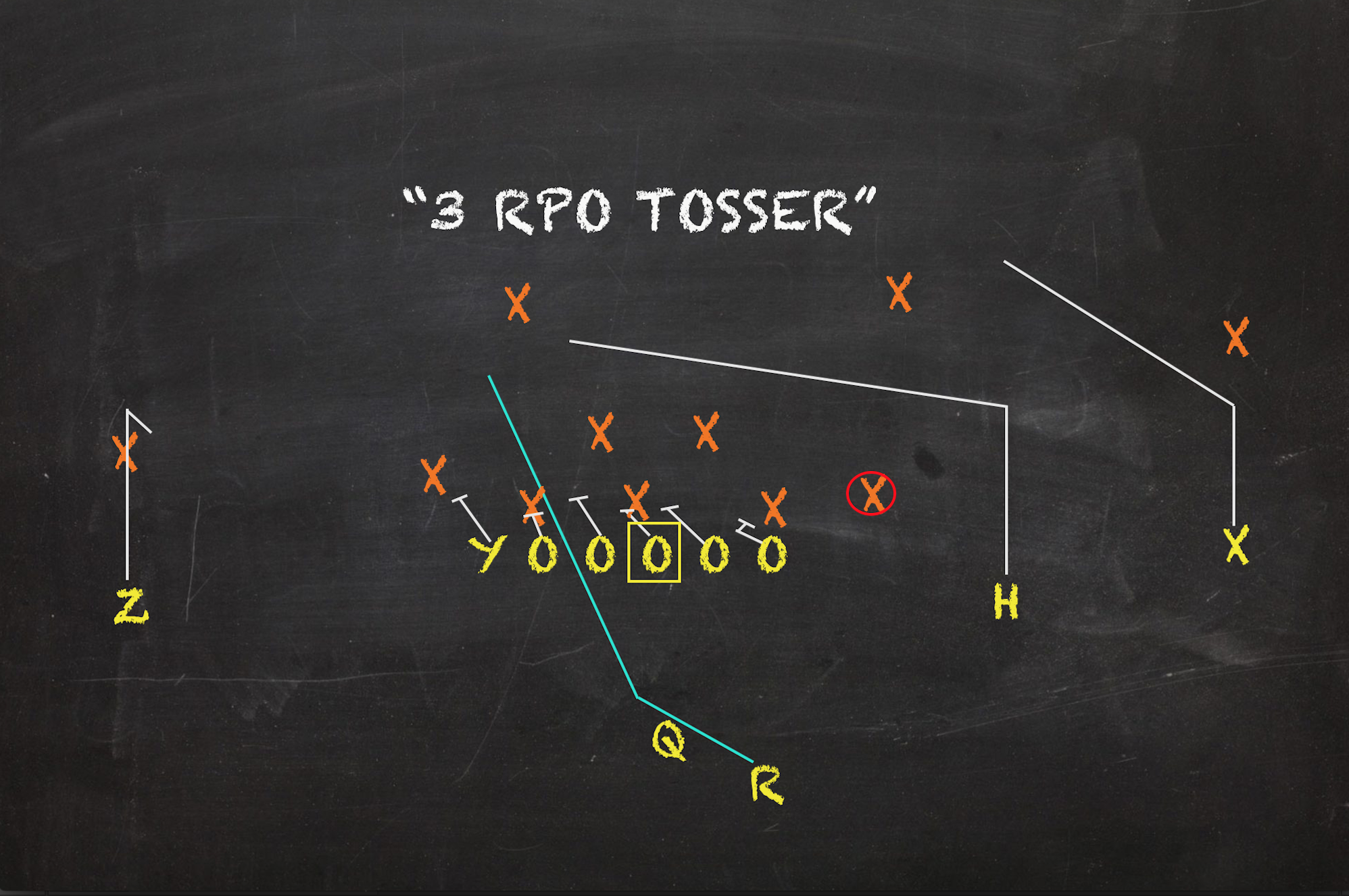
3. Tosser 3.00% Play Share 11.6 Y/A 52.0% Success Rate
While Outlet Screens can provide easy completions to playmakers in space, it can be harder for receivers to top speed on those routes. Slants, however, are naturally drawn up to help targets get north and south by helping speed win a simple one-cut route. Slants are as effective as they are basic. Dual and all slant patterns known as "Tosser" showed up all over Alabama's script. Whether in the dropback game or featured on RPOs, Tosser provided plenty of highlights for the Tide's passing game. With the speed of their receivers and quick twitch decision making of Tagovailoa, it mostly was pitch and catch.
Overall, over 5% of Alabama's plays were composed of Slant Variations. The Tosser variety was their favorite. Despite being a short to medium pattern, Tosser averaged almost 12 yards per target -- the second highest clip among the Tide's five favorite pass looks. Tosser posted its best numbers on its first half reps. Despite solid overall figures, Tosser averaged 16.9 yards/target on a 64.2% Success Rate in those spots.
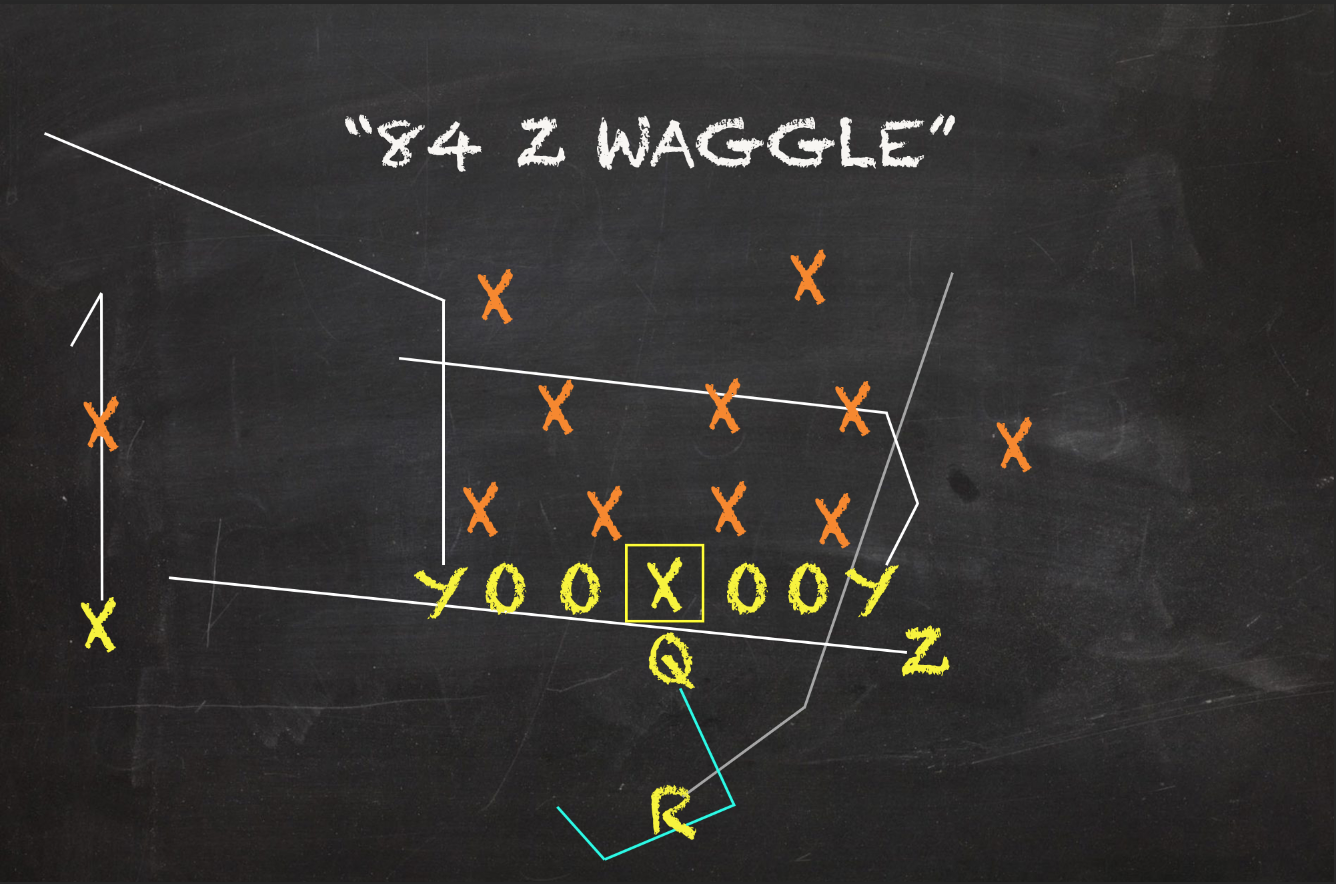
4. Play Action Boot 2.28% Play Share 3.47 Y/A 36.8% Success Rate
Though Alabama's overall Play Action Rate was about average within the conference, it was important for a scheme predicated on deception and balance to utilize regular play fakes from its zone schemes. Play Action Boots off inside and outside zones are staples in numerous offensive schemes. Obviously, they work the best in offenses with athletic passers who can make sound decisions on the move and under duress. The "original Run-Pass Option", this look provides mobile QBs a potential run lane outside the pocket along with numerous receivers in his line of sight. Play Action Boots are a member of the Flood family. Floods are passes that aim to overload a side of the defensive coverage by offering multiple vertical reads. The vast majority of the time, the QB hits his hot route, which is primarily his tight end running a slide or flat route depending on the formation and zone action. The remainder high-low read is usually towards the sideline and can either resemble Smash or Sail looks.
For whatever reason, Play Action Boots were not a good look for the Tide. None of their five favorite run or pass concepts averaged less yards per pop than them and only True Screens posted a worse Success Rate. Sark balanced out Flood designs throughout Alabama's script. While Boots were their favorite with 19 reps, Crosses and Sails ended with 18 and 17, respectfully.
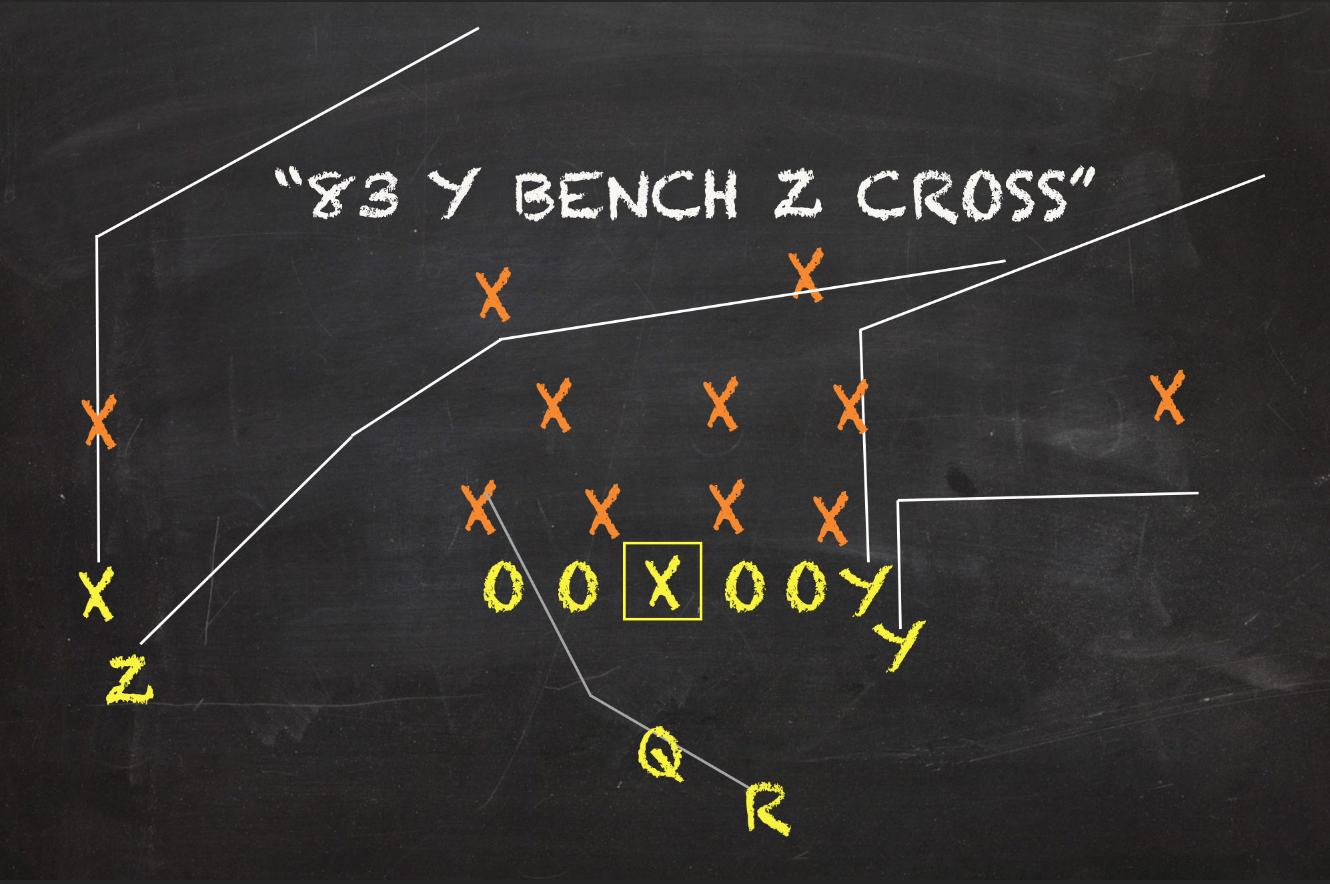
5. Cross 2.16% Play Share 12.7 Y/A 61.1% Success Rate
Weakside Floods like the Cross concept were go-tos for Alabama's passing game all season long. With roots in the BYU spread and modernization within the Air Raid offense, the Cross concept has many varieties. The Tide often paired the look with a Corners concept along with a backside dig or post to burn the defense if it over rotated. The titular deep crossing route for which the concept is named is particularly good at beating single high coverages while the dig is better suited to win versus two deep ones in general.
Among their five favorite pass concepts, Crosses own the top Success Rate and yards/play. Of the concept's 18 reps, 13 of them occurred on 1st Downs. Even though that's where the vast majority of the look's tries took place, Crosses saw a Success Rate about 15 percentage points lower and a yards/play average over three yards lower than their overall numbers. But on 2nd and 3rd Down, every target resulted in a successful rep. Crosses accumulated 229 yards on the season. That total was good for fourth most of any pass play and sixth most overall.
Chalking up Alabama's most successful looks
min 1.3% play share
1. Kelly Mesh 1.68% Play Share 12.1 Y/A 78.6% Success Rate
Named for the coach that ran this variation ad nauseum during his rise, Chip Kelly's rendition of the Mesh concept produced elite results for the Tide. Looking across each SEC offense's five best concepts, Alabama's Success Rate running the Kelly Mesh was the third best clip in the conference. Consistently successful and super explosive on early downs, this look rarely disappointed. Due to the added obstacle the sit hook provides on this wrinkle, defenders potentially have to navigate through a clusterf*ck to curb the shallow crossers. Plus, pressure is further applied to the second level of the coverage by a halfback wheel towards the sit hook side of the formation. Some folks just refer to this concept as "Wall". Others call it "Spot Mesh" because of the sit hook route. Regardless of what you call it, its a tough concept to contain in short yardage.
2. Buck Sweep Read 1.43% Play Share 9.33 Y/A 75.0% Success Rate
After a couple of games, it was fairly apparent Sark wanted Alabama's offense to pry defenses with RPOs. But power looks' rise in usage was a little more subtle. While two are among the Tide's five favorite run concepts, a few others are peppered throughout their script. The gap play that delivered the best returns was the Buck Sweep Read. The Buck -- or Lombardi -- Sweep is synonymous with power football. While no one in their right mind would run it the way it was originally drawn up, this gap play is still effective generating chunk gains outside the tackles. Who would have thought that getting two mauling guards on the edge of the formation would still be successful after all these years.
3. Inside Zone Slam 2.64% Play Share 5.41 Y/A 68.2% Success Rate
While the read variety of Inside Zone Slams are among one of the common looks in football, nonread Slams still received plenty of reps. Though Slams were consistently successful for the Tide, they weren't particularly explosive. Steady and dependable, Slams were low-risk and received equal distribution across downs. But the zone play was much more popular in the first half where 13 of its 22 reps occurred. Mostly from undercenter or from the pistol, Slams provided a no-nonsense mentality for Alabama's zone scheme. Slams were at their best on 2nd downs. There, the look averaged 6.89 yards/carry on a 88.9% Success Rate for the Tide.
4. Sail 2.04% Play Share 10.1 Y/A 64.7% Success Rate
Sail Variations are one of the most common pass patterns in the SEC and are members of the Flood family. Floods are excellent ways to overload numerous amounts of zone coverages. Sails are "strong floods", which basically means they're deployed out of unbalanced sets or towards the 3 receiver side of the formation. While Floods are horizontal in route orientation, they aim to create a vertical stack so that there is a deep, intermediate, and a short option aligned against a two level coverage. Three beat two after all. Knowing that, Sails are great at beating single-high coverages like Cover 1 man or Cover 3 zone. Alabama called a few different wrinkles to the Sail concept and didn't always go to the basic design of the play. Sark did a pretty good job at balancing out Floods throughout the year. PA Boots (18), Crosses (17), and Sails (16) are all within two reps of each other on the Tide's play share. But Sails were the most consistently successful.
5. Slant+Flat 1.31% Play Share 16.4 Y/A 63.6% Success Rate
Targeting Slant Variations was a big part of Alabama's attack this season. When all subconcepts are combined, Slants total the seventh most calls and third most yards for Sark's unit. While Outlet Screens provided easy avenues for Tagovailoa and Mac Jones to find their playmakers on the perimeter, Slants enabled a slightly more vertical option that was more suited to create a connection with a blazer downfield. While the "Tosser" - or dual or all slant - concept led the way in terms of calls, the "Slap" - or slant+flat - combo was their most incendiary. In the South Carolina game alone, this concept had gains of 81, 42, and 20. "Slap" plays' yard/target was nearly five yards better than the "Tosser" attempts. But outside of the big gainers, Slant-Flat combos were also the most consistent wrinkle when targeted. Their 63.6% Success Rate was easily tops within the Slant family.
Where Alabama's weapons ranked
Tua Tagovailoa needs no introduction. You all should be well aware of his exploits and accolades. When he was at full strength, Alabama's assault cranked it up to 11. Steve Sarkisian wanted to get more West Coast, shrink the distance of Tua's throws, and get the ball to the Tide's playmakers as soon as possible. The scheme was so sound that even when Tagovailoa was supplanted by Mac Jones, there wasn't much of a regression. Tagovailoa was elite in many areas within the SEC this season. But, Jones wasn't too far off. There's no denying Tagovailoa's abilities will be missed. Still, Jones displayed competency in this stints albeit a in more conservative scheme.
Min 74 Attempts 21 Qualifiers | Success Rate | Accuracy% | Depth Adj Accuracy% | First Down+TD Rate | Pressure Rate | Interceptable Pass Rate | Explosive Pass Rate | Yards/Attempt |
| Tagovailoa | 54.4% (2nd) | 68.3% (2nd) | 54.2% (2nd) | 44.4% (2nd) | 23.0% (9th) | 3.57% (3rd) | 20.6% (1st) | 11.3 (1st) |
| Jones | 48.4% (4th) | 66.7% (t-3rd) | 52.6% (3rd) | 38.3% (4th) | 17.7% (1st) | 3.55% (2nd) | 17.0% (2nd) | 10.7 (3rd) |
Jones faced the least amount of pressure per dropback of any other passer in the conference who took meaningful snaps. Thanks to the scheme and not trying to do too much (mostly), Jones posted numbers any offensive coordinator would take. Overall, he was directly behind his first-stringer in terms of Accuracy%, Depth Adjusted Accuracy%, and Explosive Pass Rate. Despite the jazzy stats, Jones threw short far more frequently than Tua. Still when it was all said and done, the two passers ended with similar average depth of targets. Tagovailoa's was 8.75 and Jones' was 8.66. Coincidentally, those two clips were ranked 14th and 15th in the conference respectfully. Naturally with Alabama being the SEC's second best passing offense per Success Rate, Tagovailoa only trailed Joe Burrow in meeting situational goals. Tagovailoa was second to Cool Joe in a number of spots. But Tagovailoa was prone to toss grenades. His Explosive Pass Rate -- or percentage of throws that net 20 or more yards -- easily led the conference. I mean, one out of five of his passes on average gained a fifth of the field. That's potency. Ipso facto Tagovailoa led the SEC in yards/attempt. Pressure was one aspect he didn't handle well. Paired with suffering from a decent amount of duress, his passing plummeted when pressured.
Tagovailoa was not good by any means when facing pressure. Relatively, he came out looking okay. But the reviews are undoubtedly mixed. Tagovailoa continued to make good decisions as reflected by his top5 Success Rate but his accuracy greatly suffered under duress. While being able stand tall in the face of pressure is certainly a sexy feature, there are a lot more variables involved. Meaning, pressured attempts are more susceptible to deliver random and less predictable results. Even though the Floridian faced pressure at the lowest rate in the conference, he seemingly was unbothered when defenders were barreling towards him. He stridently finished among the SEC's top4 passers when under pressure. His Depth Adjusted Accuracy clip in particular was especially impressive. Considering it doubled Tagovailoa's, that should tell you how precise his ball placement was in these spots. But that doesn't necessarily mean he was letting it fly willy nilly. Jones had the 3rd lowest average depth of target under pressure within the conference. In, fact his ADOT versus duress was two yards lower than Tua's who had the conference's eight highest clip.

Production out of clean pockets is a better indicator to gauge a passer's ceiling. After all if he can't sling the pill under perfect conditions, how can you expect him to when things break down? This is where Tagovailoa racks up his XP. It's easy to see why pro scouts are drooling over his potential. He was as good as ever being either first or second in many key metrics from clean pockets. For whatever reason, Jones didn't do so great when presented pristine pockets. As you can see from that table above, he was rather mediocre. And it wasn't because he miraculously became aggressive in these spots. His ADOT remained comfortably within the bottom10 of the conference; just like Tagovailoa's.
Jones, however, seemed to deliver his best balls outside the numbers. Despite having the SEC's second highest average depth of target on these throws, he has the seventh best Accuracy%. Despite the high degree of difficulty, Jones sported the third best Success Rate outside the numbers. But everywhere else, Jones was inconsistent. Play action was rampant on his pass attempts. No other passer in the conference used it as much as he did. In a scheme rooted in deception and balance, using plenty of play action was a smart move from Sark to help Jones once he became the starter. With two passers who throw copious amounts of Bubble, Swing, and Tunnel Screens, we need to omit their attempts to these RPO outlets to better measure their ability to pass on pure dropbacks. Tagovailoa posted numbers that you would expect from him. He was rather accurate and succesful targeting his receivers sideline to sideline.

While the two passers have comparable Depth Adjusted Accuracy clips, Tagovailoa's pass chart is more impressive; especially when zeroing-in on his throws over 20 yard downfield. Boasting a stellar 10:0 TD:INT ratio on his deep targets, nearly half of these attempts were completed. Jones had more scores come from throws behind the line of scrimmage than 20 yard downfield.
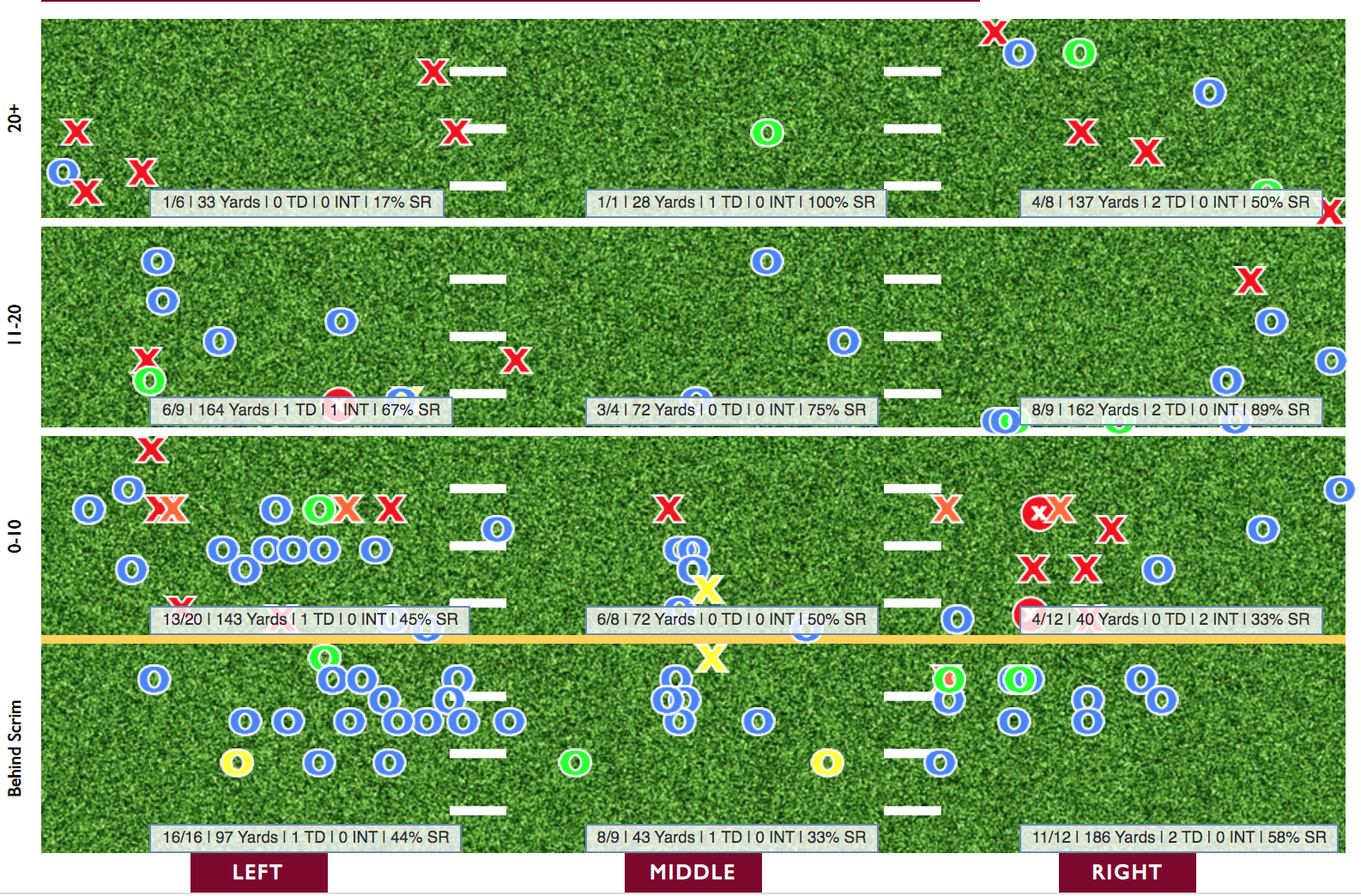
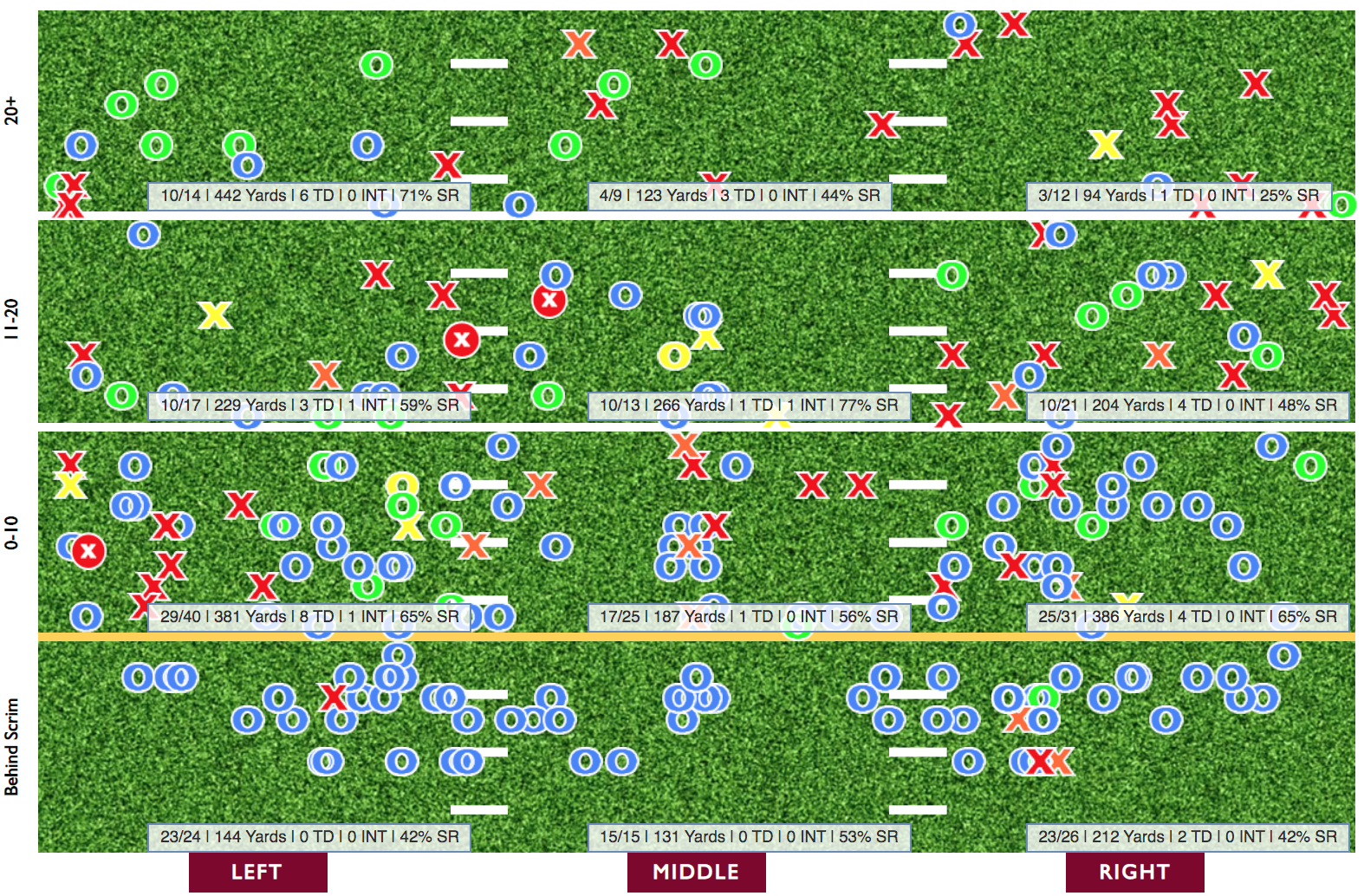
Outside of LSU, no other program could boast a more dynamic group of receivers. Some schools might have one or two game changers. But, the Crimson Tide unequivocally had four. Jerry Jeudy, Henry Ruggs, DeVonta Smith, and Jaylen Waddle were all threats to take a target to the house on any given snap they were on the field. Instead of trying to dial up a downfield shot, Alabama reigned in their tactics and focused on killing teams with yards after the catch. That isn't to say the Tide didn't take the top off of defenses every now and then, but West Coast ideologies mainly rued the day.
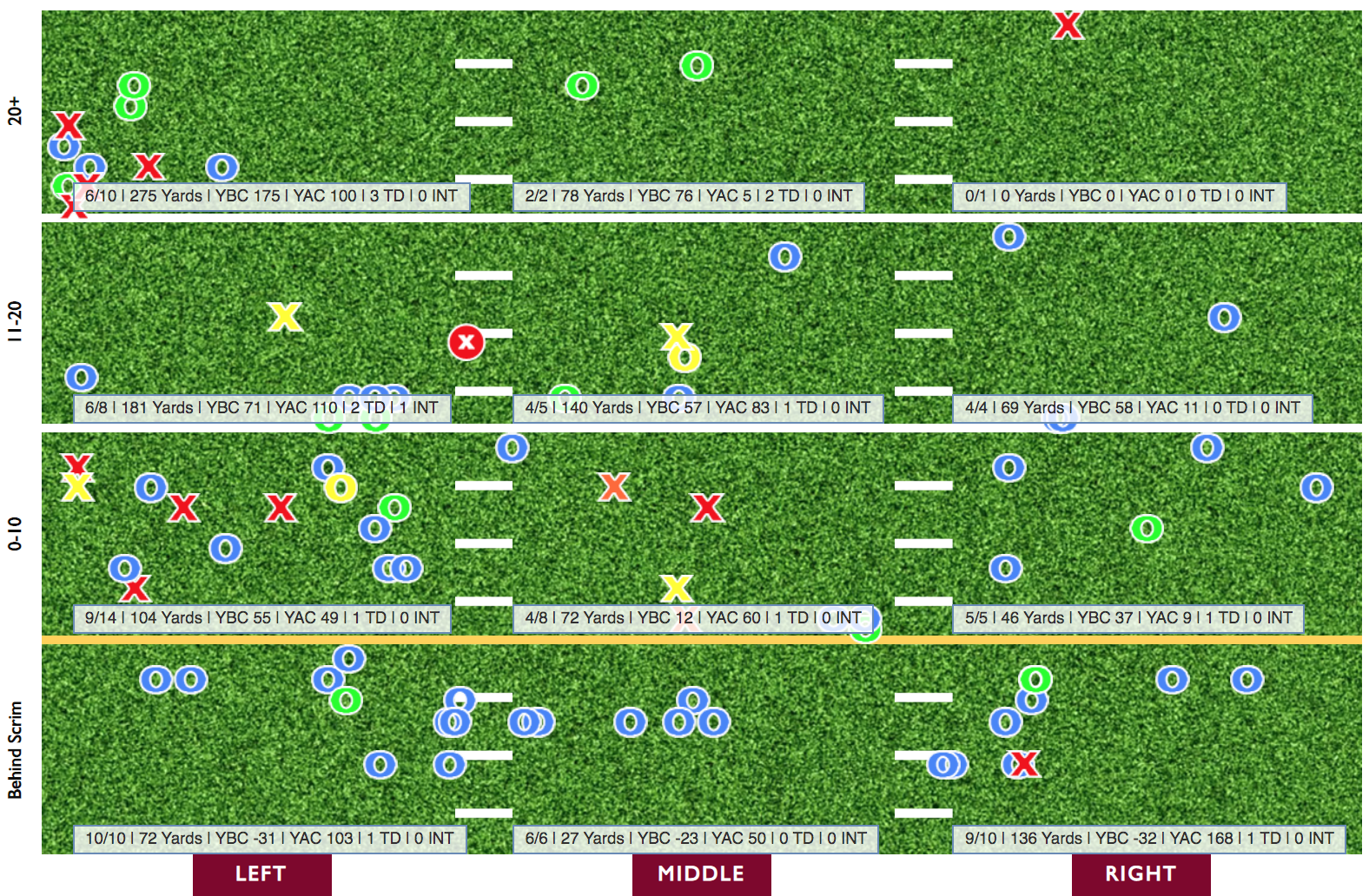
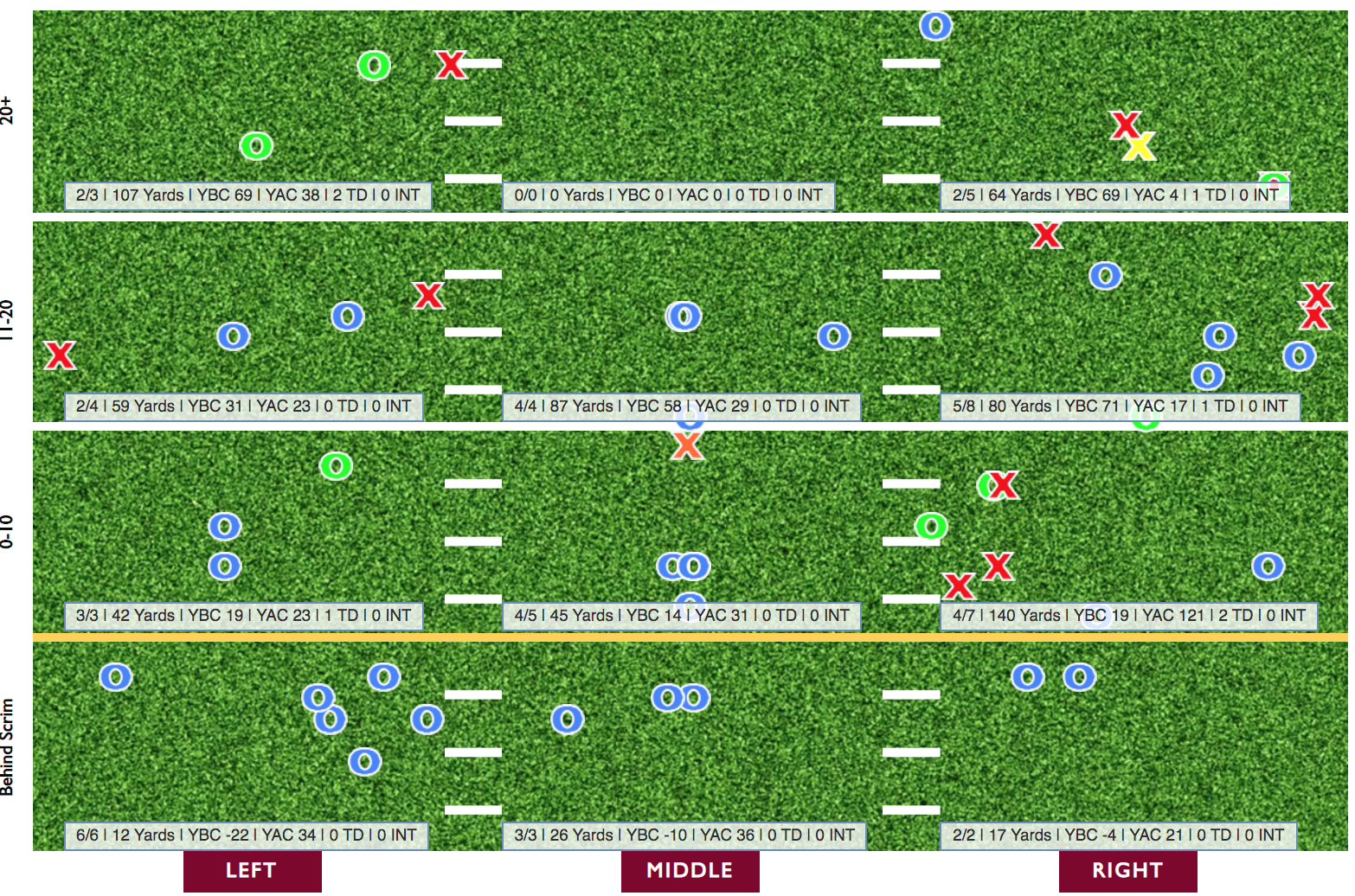
Jeudy was their clear-cut number one option. His percentage of targets was the SEC's third highest share. But the volume of chances he saw hurt his efficiency in some ways. Since he was often looked upon to make a play downfield, on 3rd Down, or within the red zone, his degree of difficulty was usually higher than his contemporaries. While his mates might produce nice analytic lines, Jeudy showed why many are considering picking him in the first round of April's draft. While his play in the bowl game said otherwise, his regular season Catch Chart (below left) shows he was prolific on short and intermediate passes. Only six of his 19 deep attempts were hauled in in the regular season.As you can tell from above, no other group of receivers was as able to go from 0 to 60 quite like the Tide's quartet. All four were in the conference's top8 in yards/target and Explosive Catch Rate. Three of them were top10 in Catch Rate and average gain after the catch. Not many defenses are equipped to neutralized - let alone slow down - a lineup of this magnitude.

Waddle was the lightning rod. Despite sporting the lowest target share and average depth of target of the group, he was the most explosive and successful on average. He was targeted less downfield than a year ago, but was still more than just a gadget player in the flat. Per his regular season Catch Chart (below right), six of his seven deep targets were completed along with three of his four intermediate targets. Four of those eleven targets resulted in a score. Still, it was obvious more short attempts facilitated his team teaming 82.5% Catch Rate. Only 2.5% of his targets were charted as uncatchable.
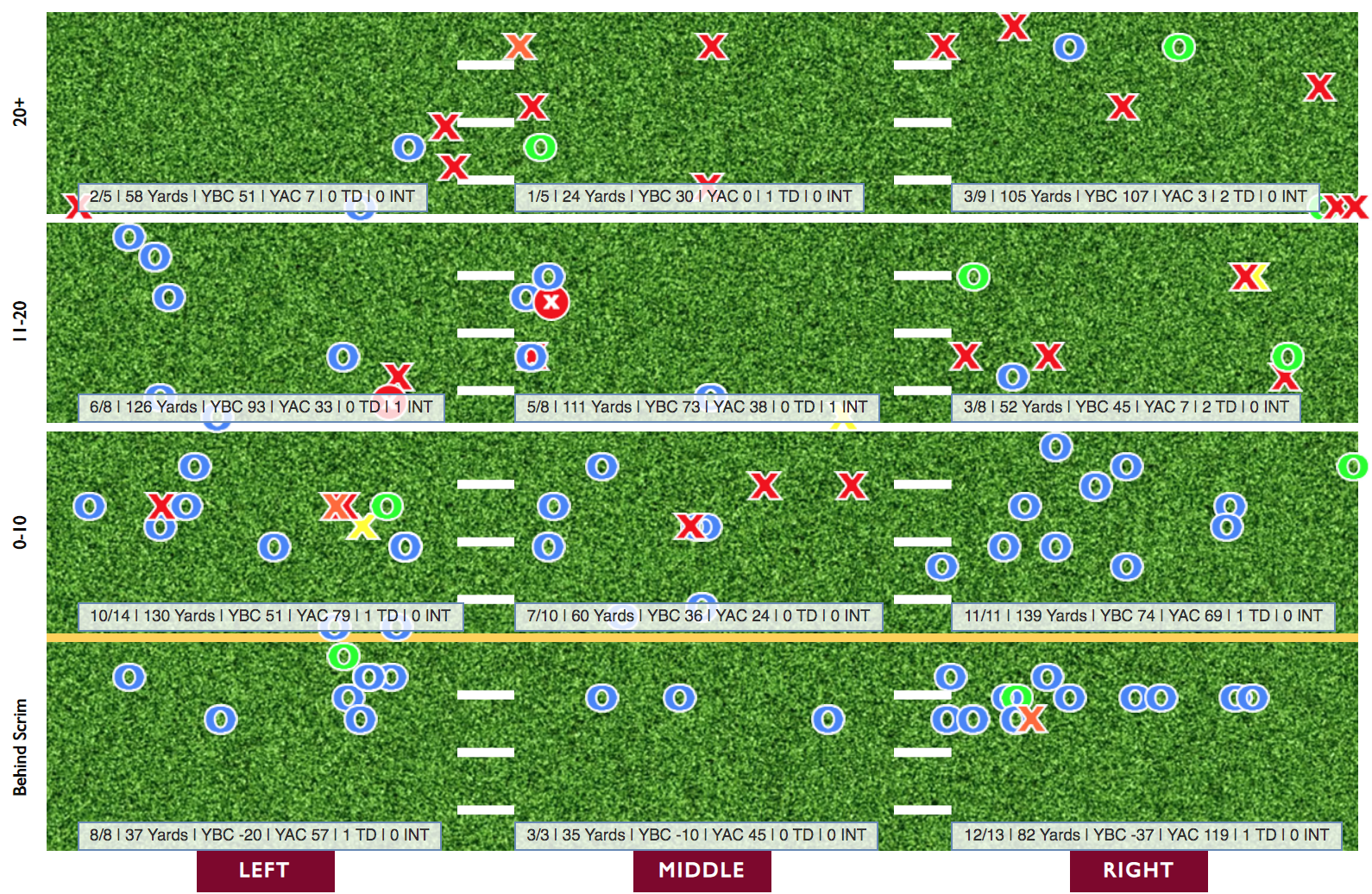
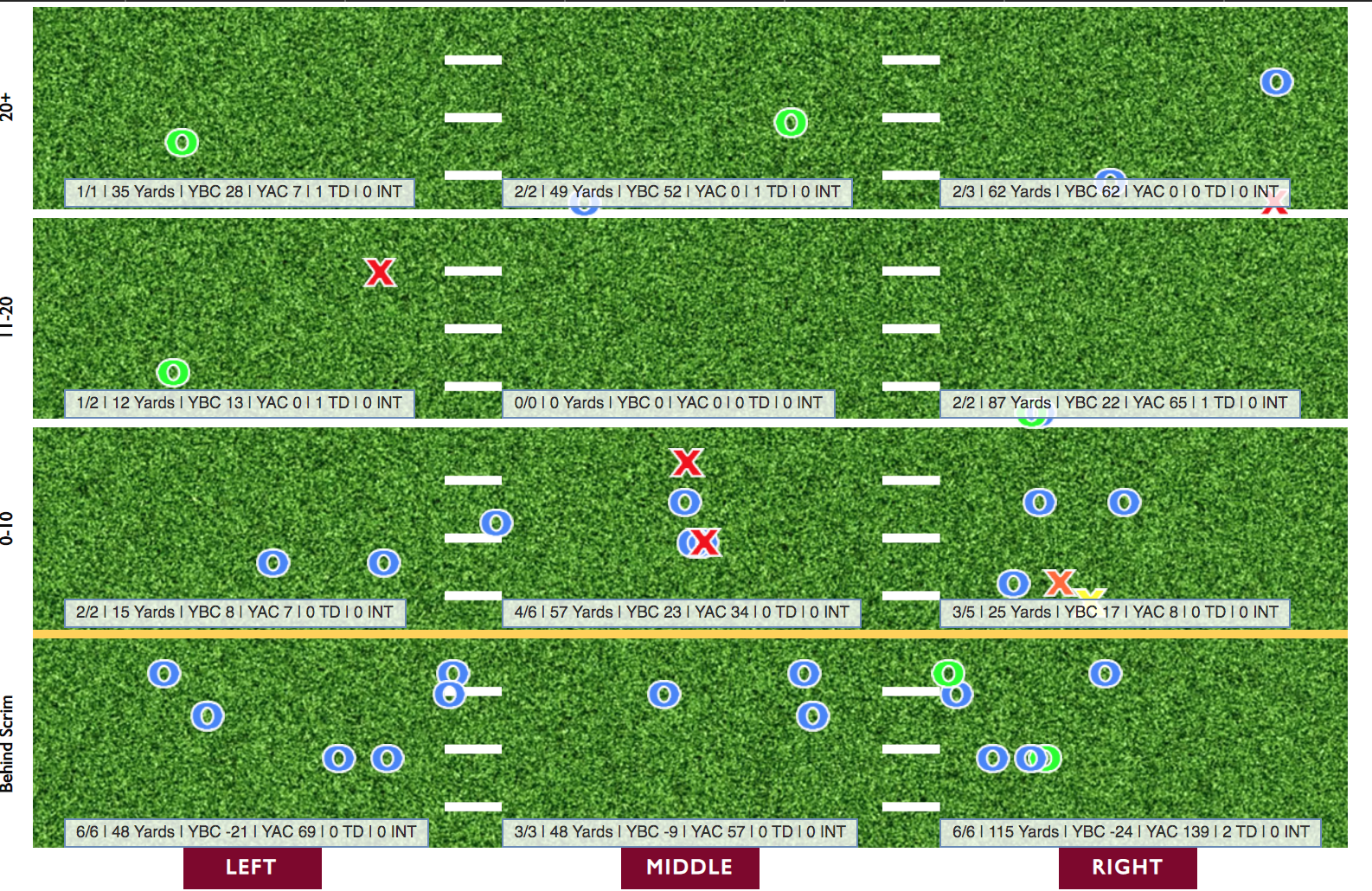
Ruggs was Alabama's least consistent option. This was mainly because he struggled to haul in contested targets consistently and had the highest average depth of target among the Tide's regular options. He was their most successful red zone option and was one of the best in the SEC on 3rd Down, but failing to win in tight windows kept his overall numbers down. But let's not pretend Ruggs was a drag in the slightest. His still had a top10 Catch Rate, Explosive Catch Rate, yards/target, First Down+Touchdown Rate, and average gain after the catch. Like you would come to expect from a guy who sealed a national championship with a game winning catch, Smith remained Alabama's most clutch receiver in 2019. His yards/target clip of 14.4 was the highest in the conference. Only LSU's Ja'Marr Chase accumulated more yards off deep targets and Smith's 64.3% Catch Rate on these chances also earned the conference's silver medal. But he was golden on the money down. Only Georgia's Lawrence Cager and Florida's Trevon Grimes topped his Catching Success Rate on thirds. Tight windows and contested targets didn't alter him too much. Owning the SEC's third best Contested Catch Rate and Depth Adjusted Catch Rate proves he knew how to come down with a ball in a crowd. He brought in 70% of his targets when he was ten yards or further downfield in the regular season (Catch Chart below right) The best capper, he sported the lowest Tide's lowest Drop Rate.

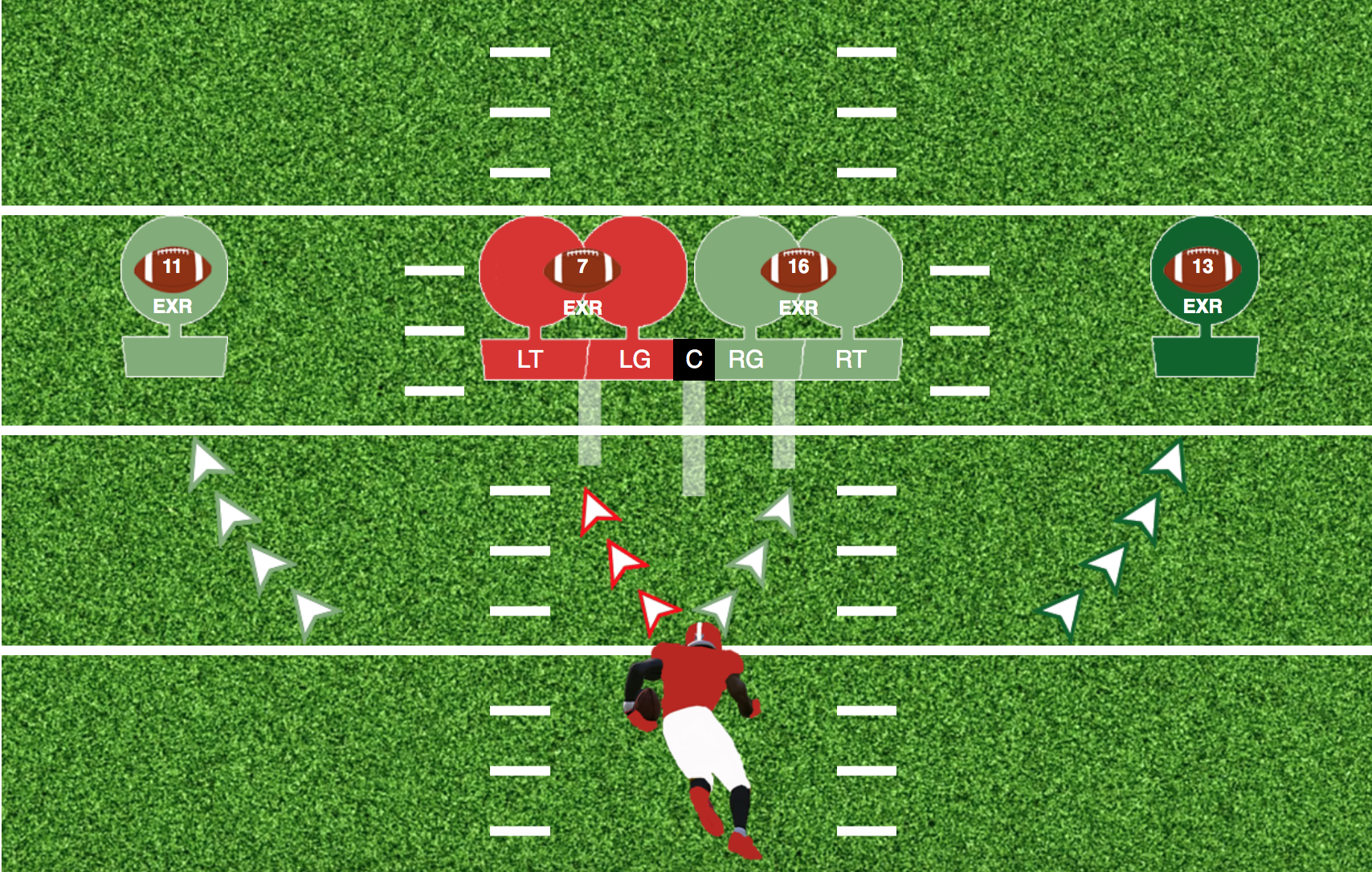
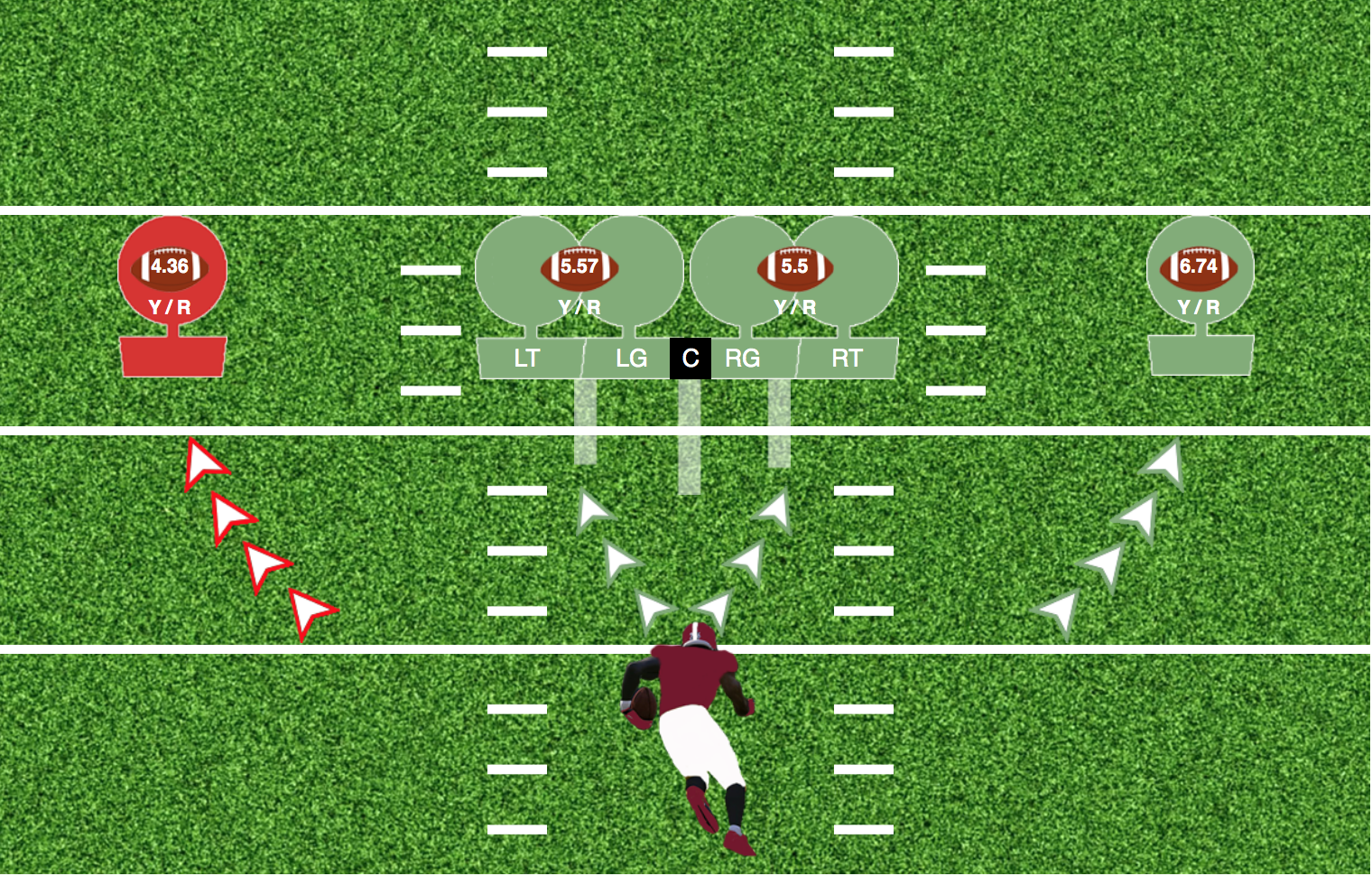
Alabama ground game was far less explosive than when the Tide dropped back to pass. Despite lacking pizazz, no other rushing attack was as consistent as Alabama's within the SEC. Others had higher yards per carry averages, but no one could top their 54.9% Rushing Success Rate. Despite the top-level efficiency, Alabama had a below average yards before contact clip. Still, Najee Harris finished with the conference's eight best Broken Tackle Rate and Brian Robinson was one of the best around turning contact behind the line of scrimmage into a positive gain. His 6.19% Gumption Run Rate was second best in the SEC.
Harris was clearly the lead back and commanded nearly 50% of the team's total designed carries. His league-leading Rushing Success Rate was a major reason why Alabama reigned supreme across the conference in that regard. While three quarterbacks can claim better clips, no other running back brag about a higher rate of runs that result in either a conversion or a touchdown. A remarkable one in four carries accomplish those goals. 30 of the Tide's explosive carries between the tackles were on Harris carries. With him back in the fold in 2020, Alabama's offense has all the ingredients necessary to make some noise.
Despite maintaining good consistency with his carries, Robinson failed to gallop as much as Harris. He suffered a worse Negative Run Rate, yards before contact average, Broken Tackle Rate, and Explosive Run Rate than his backfield mate.

2020 Vision
Alabama fans have every reason to suspect the Tide will bounce back and contend for a title after stumbling down the stretch this past fall. While losing Tagovailoa, Jeudy, Ruggs and other will certainly sting, Saban and Company should be well equipped to handle their business in the SEC West next year. An offense with Harris, Jones, Waddle, and Smith alone is enough to make an ordinary offensive coordinator envious. Defensively, the lumps and bruises the Tide took will callus over and the unit should enter the fray more battle ready.
Returning a tested passer, the conference's most successful ball carrier, and two of the best big play receivers in college football will allow the Tide to play with anyone one paper. The question remains if the defense will make the leap and return to the Saban standard. The youth not only shined through with subpar execution in terms of X'sand O's defensively; but it also came through with countless examples of failing to exhibit discipline. Like this past season, Alabama will be able to go as far as their defense allows them to.
While Pro Football Focus gave the early edge towards the Georgia Bulldogs, I will be shocked if the Tide doesn't get a preseason top5 nod from hoards of sportswriters and talking heads yammering this offseason. With plenty of intrigue and loads of time to kill, plenty of unknowns can interject themselves with Alabama's title aspirations. If last year's injury-riddled season was any indicator, who knows who eventually suits up for Saban.
Regardless of who ends up being in those positions, Alabama might enter the year under the radar. Trevor Lawrence vs. Justin Fields 2.0 is fueling offseason fervor. Seemingly everyone and their mother are expecting to the two to clash again in the playoff. Without an offseason full of rat poison rotting their egos, the Tide could enter 2020 focused and ready to rock. Early money once again says it will come down to them and Georgia fighting for the SEC crown so the Tide is still far from a dark horse. Vegas is still confident in their chances. Most books have the Tide's title chances at +450 - the third best odds behind Clemson and Ohio State.