Sideline to Sideline: CFP LSU
For this special edition series of Sideline to Sideline revolving around the 2019 College Football Playoff, SEC Statcat is tweaking it's normal structure. Instead of doing one, big long article chocked full of the advanced analytics, playcall trends, and stat nuggets you know and love, we will be presenting a number of articles geared around all three playoff games. The Sideline to Sideline pieces will consist of deep dives on each playoff offense as well as breakout articles examining certain aspects of all four teams like their quarterbacks, schedule, and offensive weapons to mention a few.
Instead of evaluating each team by their entire body of work, SEC Statcat charted each of the title contender's four best defenses faced per ESPN's SP+ metric. To be concise, this is the Worldwide Leader's blanket stat that measures potency, explosiveness, scoring, and down-to-down success relative to their opponent, field position, and a few other factors. But, I will bring this metric up from time-to-time, so keep in mind what it is.
Sure, each of these schools have varying degrees of difficulty in terms of the teams they have faced. But by looking at their "four hardest games", we're able to get a better depiction of what to expect from these guys in the playoff.
Another buzz term I will be using in great volume is "Success Rate". All yards aren't created equal, and Success Rate applies situational conditions that need to be met in order for a play to be "successful". In case you are unaware, a successful play must gain 50% of yards to gain on 1st Downs, 70% of yards to gain on 2nd Downs, and 100% of yards to gain on 3rd/4th Down.
I talk about X's and O's in terms of concepts quite often. To help educate the less savvy fan, the majority of the ones mentioned in these pieces have hyperlinks to "Gridiron 101" tutorials that explain them in further detail in a quick video.
In this piece, I will be examining the LSU Tigers. Their four toughest defenses they've faced per ESPN's SP+ are Florida, Auburn, Alabama, and Georgia.
LSU's Offense at a glance:
The Renaissance that transformed LSU's offense from an okay pro-based scheme to a bastard child of the Air Raid offense has largely been the catalyst for the Tigers' title contention. The pairing of Steve Ensmiger with Joe Brady has begat an offensive behemoth in the bayou. No other offense in the country averages more yards per game and they score a little under a 50-burger each time they hit they field. Numerous records have fallen by the wayside as has everyone who have tried to upend them thus far this season. Also, I'm sure you have heard of that one guy who plays quarterback for them. He just won a major award.
Emerging through the blood and fire of the SEC unscathed is no easy task. But five of their opponents' defenses finished outside of the Top60 in ESPN's SP+ metric, which diminished their cumulative strength of schedule. While Ohio State's overall schedule was more difficult, no other offense's four toughest games were harder than the Bayou Bengals' in 2019. Per the SP+, LSU faced off against two Top5 defenses and two others inside the Top8. Already an outstanding offense, LSU really wasn't deterred when playing its elite competition.
Against their four toughest opponents, LSU has the best "Relative Scoring Offense" of any playoff team. This is just a fancy way to say how much better an offense scores on average compared to what it's competition allows. For example: Team A scored 28 points against Team B who usually allows 14. Team A's RSO would then be 200% (28/14 x 100). Ed Orgeron's offense has a RSO of 185.7% over the course of their schedule, which is well behind Ohio State's 204.9% clip. But when looking at their performance versus the meat of their schedule, their RSO skyrockets to 230.2%. Again, this translates to the Tigers scoring basically 2-and-a-third times more points on average than what those four Top8 defenses usually allow. That's impressive AF if you ask me. For the record, Ohio State's RSO versus their top rated foes was 209.9%.
"Flipping the script" has enabled this magnificent turnaround for this offense. The general status quo for offenses is using the run to set up the pass. In order to establish the run, you need to dedicate a good amount of your early down play calling to pound the rock on the ground. Ohio State, Clemson, and Oklahoma all follow this modus operandi in the games I have charted.
Last season, LSU had the definition of an average Pass Rate by SEC standards across all downs. Outdated not only in scheme but also in tactics, LSU's early down Pass Rate was 43.3%, which was also right at the conference average. Their Success Rate in those spots was 41.1% -- third worst in the SEC. Like a good deal of Tiger offenses over the last two decades, talent was in its ranks, but LSU failed to make the most of it.
Then things started to look up -- literally. Coach O made the call to switch towards an Air Raid scheme and the rest is history. Sure running the Air Raid means more than just throwing the ball a lot, but that is still a big part of it. No other offense in the SEC is as pass-happy as LSU. Challenging the status quo, LSU now uses the pass to set up the run. In 2019, their early down Pass Rate is 59.4% and 56% of these plays have been successful, which also is tops in the SEC this season.
With the increased chances through the air, LSU has been able to pick their battles on the ground. As a result, the Tigers' ball carriers have been able to be more advantageous. Year over year, LSU's early down Rushing Success Rate increased from the conference's second worst 40.2% clip to 50.2% this season; only Alabama's 53.2% has been better in the SEC. Despite the Air Raid aura, LSU also sports the most explosive rushing offense of the title contenders. You read that right. Over 22% of LSU's carries have resulted in a gain of 10 or more yards against their hardest four game slate. Ironically, the Tigers' passing offense has the lowest Explosive Pass Rate in the playoff with a 10.1% clip against their elite competition. (NOTE: In order for a pass to be considered explosive it must gain at least 20 yards). At the end of the day, the Tigers' Overall Rushing Success Rate only trails Clemson's among the title contenders.
Another aerially inclined aspect that has aided LSU's run game has been calling more route tags on top of its read options. Perhaps you have heard of these referred to as Run-Pass Options, or RPOs if you sit at the cool table. In 2018, no SEC team used fewer RPOs in its script than the Bayou Bengals; less than 10% of their play calls were labeled as RPOs a year ago. In terms of Success Rate, LSU was the only team in the conference with a figure south of 40%. LSU struggled mightily to make these looks worthwhile. Fast forward to today and nearly a quarter of LSU's script is composed of RPOs, and their Success Rate is about 10 percentage points higher -- good for the SEC's fourth best clip.
While Joe Burrow remains adverse to throwing on them relative to the rest of the SEC, half of LSU's run plays have been off of RPO designs. While their receivers have helped open up run lanes by commanding attention via their outlets, runs without RPOs attached own a Success Rate of 58.2% compared to 46.9% of ones with them despite RPO-linked carries averaging about two yards more per attempt on average. The routes on these RPOs might help spur longer runs, but they are far less consistent down-to-down for the Tigers. Against their elite competition, however, the Tigers have found desirable efficiency. Runs off RPO looks have been successful on 50.8% of reps compared to 47.6% of ones sans pass tags. Their coaches seem to be aware of this tilt as RPO runs consist of 60% of LSU's ground plays against their top level competition. Clemson's 27.7% RPO Rate slightly edges out LSU's 27.6% clip among the four playoff offenses.
In a playoff with four Top5 offenses nationally, LSU comes in as the best one per our scouting. LSU will enter the playoff with the best Overall and Passing Success Rate with the second-best Rushing Success Rate of the four playoff teams against their toughest competition. Even casual fans know Joe Burrow has accomplished monumentous things this fall. So LSU's top 56.1% Passing Success Rate shouldn't come as a shock at all. Still, no other playoff passer has a clip north of 49% against the meat of their schedule.
While 13.3% of their plays against elite defenses were "broken", seemingly little rattled LSU's offense. They sport the lowest Negative Play Rate and are the second best playoff team at limiting HAVOC plays (NOTE: Think of HAVOC plays as anything bad that can happen to an offense; TFLs, sacks, turnovers, etc). Against their toughest foes, LSU has shown an ability to grind and sustain long drives should the situation call for it. This has caused their Explosive Play Rate to shrink despite averaging the second best yards/play of any playoff offense. That isn't to say this offense lacks any pop either. On average, over one out of seven of their plays has been a run of 10+ or a pass of 20+.
As I'm sure you can surmise by their eye-popping traditional numbers and domineering Relative Scoring Offense versus elite defenses, no playoff offense has a higher TD per play rate than LSU. All in all, only Oklahoma's offense's drives result in points more on average. But no one else can boast a such a low Turnover Rate like the Tigers. Scoring a lot and limiting turnovers is a sound recipe for any successful team, wouldn't you say?
Playoff Offense at a Glance *vs Florida, Auburn, Alabama, and UGA | Overall Success Rate | Explosive Play Rate | TD Rate | TO Rate | HAVOC Rate Allowed | Negative Play Rate | Yards/Play | Pass Rate | RPO Rate |
| LSU | 53.4% (1st) | 15.1% (3rd) | 6.81 (1st) | 0.72% (1st) | 22.6% (2nd) | 6.09% (1st) | 7.39 (2nd) | 62.0% (1st) | 27.6% (2nd) |
Their Favorite Plays
As some of you know, I have written about LSU more than any other SEC team this season. In fact, I actually wrote pregame pieces on all four of their toughest opponents this season: Florida, Auburn, Alabama, and Georgia. So much of this shouldn't be entirely new information. While their core looks remain atop of their play sheet, other looks see more reps against elite defenses. Still, I apologize if this section sounds like an echo chamber from previous entries on the Bayou Bengals' offense.
As I have written, LSU is now an Air Raid Offense. While that obviously means they throw the ball a lot, there are certain concepts associated with this philosophy. Much like the Wishbone, Wing-T, or Run-and-Shoot, certain looks simply help make up this scheme's identity. Concepts like Meshes, Shallows, Sticks, All Verts, Sails and Crosses are all Air Raid staples. Against the meat of their schedule only the two Floods (Crosses and Sails), failed to averaged at least 2 reps per game for LSU.
But even with their recent proclivity to dropback and pass, two of LSU's most called plays are runs. All year long, LSU has unapologetically streamlined their run game into two looks: Inside Zone Slam Reads and Duo Dives.
A year ago a number of hard-nosed power looks were featured regularly in addition to run-of-the-mill zones. In 2018, Six run plays possessed at least a 3% play share and an additional four others owned at least a 2% for the Tigers. Last season, LSU was firmly cemented in the old ways of doing things of letting the run set up the pass. With the conference's third-worst Rushing AND Passing Success Rates in 2018, it's safe to say that didn't work at all. A run-heavy approach with concepts by committee yielded little foundation for fruitful gains.
While LSU certainly calls more than just a pair of runs, Slam Reads and Duo Dives are the only ground looks with at least a 3% play share this season. Versus their toughest competition, Slam Reads and Duo Dives have made up just under 30% of LSU's offensive plays. LSU has a 62% Pass Rate in those games, which leaves roughly an 8% play share to the remainder of their ground looks.
Simplifying the ground game has done wonders. First, it has allowed the line to focus their energy on getting better on a manageable number of plays. Rather than trying to spin plates and master ten concepts, honing in on two predominant looks has made LSU's ground game one of the most efficient in the nation. Year over year, the Tigers's Rushing Success Rate is up 10 percentage points. They went from the SEC's third worst to second best in this regard. Secondly, their two favorite run plays are natural compliments to one another schematically. By balancing the calls between the two, defenses are forced to guess more often. Below is a formation from which LSU regularly deploys both of its two core run plays.
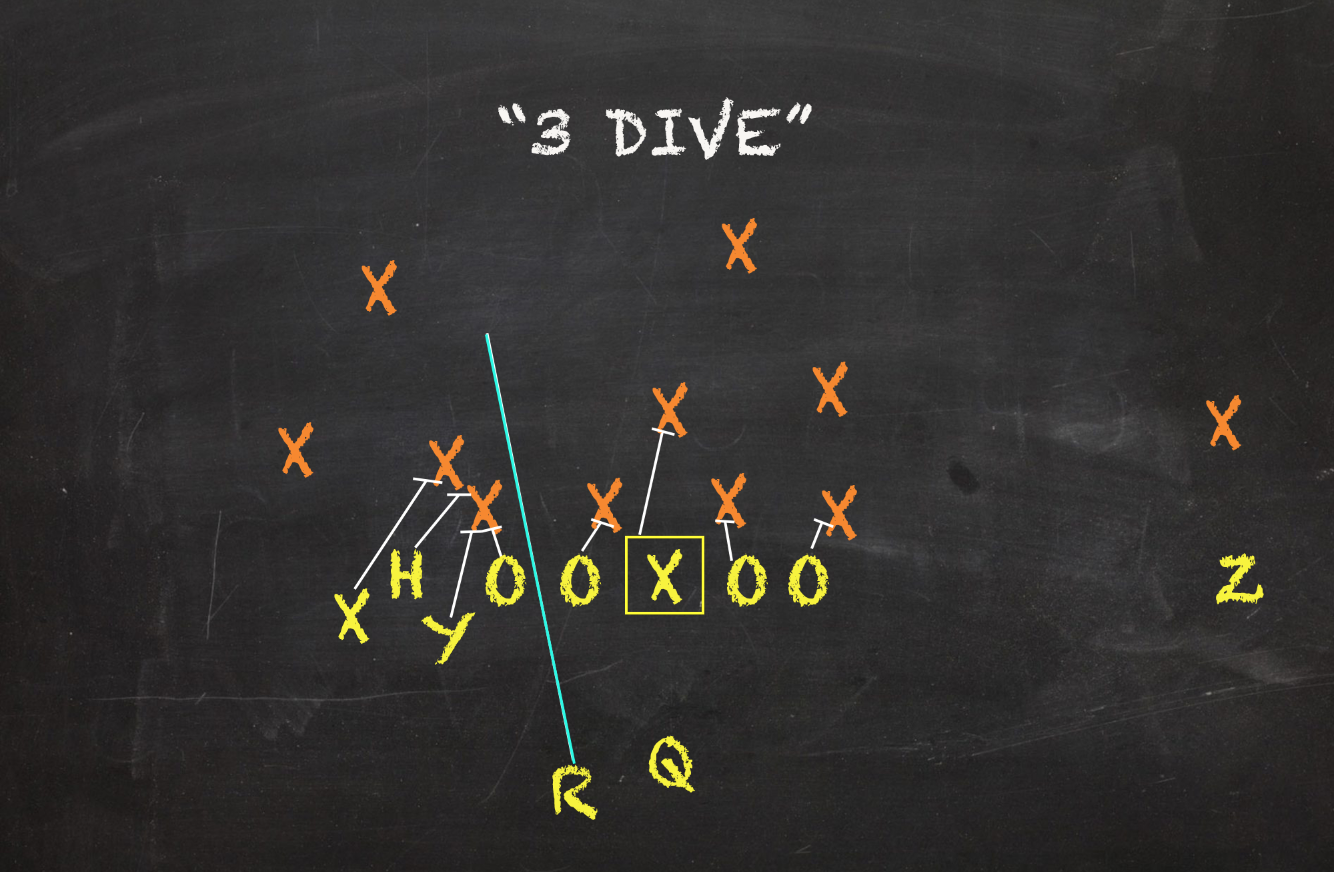
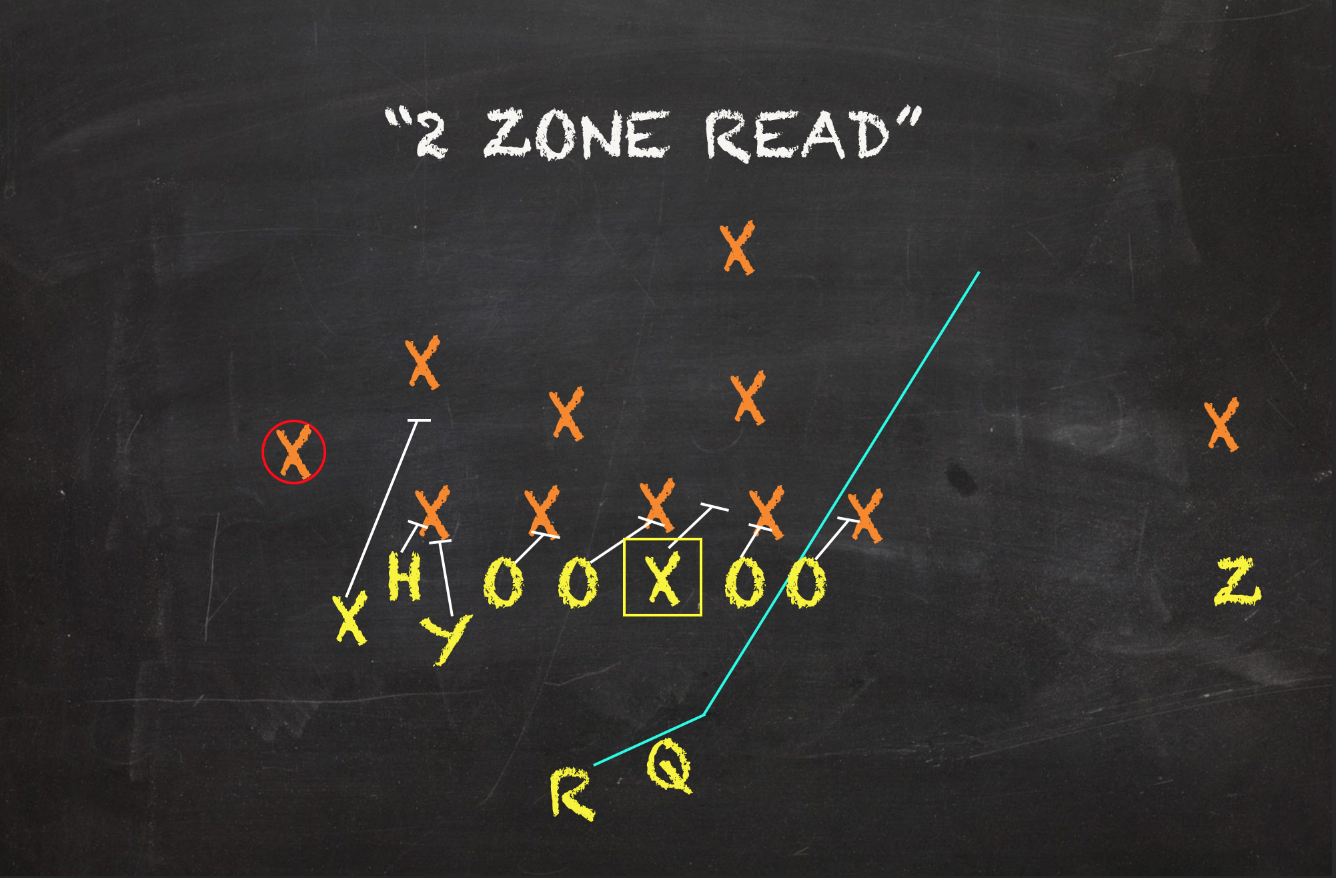
Like a majority of college offenses, LSU calls Inside Zone Slam Reads more than any other play. Against their hardest foes, these have a 48.2% Success Rate and average 4.65 yards/attempt. Though they have received basically half of the reps of Slam Reads, Duo Dives have produced better results in both aspects. Duo Dives have been successful on 52.2% of their chances on 6.78 yards per pop. Seeing those clips, it is easy to understand why LSU's run game is considered so efficient. If you are good at running certain plays, and you run said plays a lot, there's a good chance your offense will reap those rewards. With their volume, Slam Read and Duo Dives have been LSU's top2 plays in terms of accumulating yardage with 251 and 156, respectfully.
Five pass plays hold between a 4.5% and 3% play share for LSU versus elite defenses. All but one are designed to nickel and dime or to steal easy yards through the air.
Stick Variations have gotten the most reps. A notable early down concept of theirs, Sticks have helped LSU masterfully manage down and distance situations. The Tigers like to call three primary wrinkles in regards to this design. The first is an "Air Raid" Stick. These are mostly out of trip sets with three wideouts aligned on the same side of the formation. The inside and middle receivers will run hitches or quick out routes depending on the coverage with the outermost option going vertical. The other two wrinkles primarily come out of bunch or condensed sets to further play off the idea of a space snatcher. On one, The inside receivers will run hitches with quick outs coming from the outside options. On the other, the inside guys will still run hitches but the outside targets instead run towards the flats. These are better hot routes against pressure. But it's not out of the question on the latter design if the inside options run flats and outside receivers hitches.
On a such a quick developing play aimed to get speed the ball in space, it can often result something akin to shooting fish in a barrel or taking candy from a baby or some other cliche undertaking an easy task. While easier said than done, LSU has been one of the best around executing Sticks. Versus the meat of LSU's schedule, Stick Variations sport a 75% Success Rate on a 6.17 yards/target. Even the elite haven't been able to prevent the Tigers from seizing yards in this manner.
Slant Variations are also a favorite look that enables the Tigers to capture cheap yards. Either as manbeaters or to take advantage of sagging zone coverages, Slants are go-tos for Coach O's offense. When all variations are combined, they own the top play share (8.24%) and total number of yards gained (142) of any pass concepts against their toughest opponents. But when broken out, one subconcept is a clear favorite. The "Tosser" wrinkle -- dual or all slants -- possesses just under 4% of LSU's calls versus their elite foes.
Like I mentioned, LSU likes to turn to this look to get easy yards. Tossers usually come after a first down penalty or 2nd and long when the Tigers are looking to get back into manage down and distance. While some slants patterns have gone the distance, they are mostly designed to get a quick chunk gain in the underbelly of coverages. Tosser plays hold a 45.5% Success Rate on 5.27 yards/target.
Levels are next in the pecking order. Like its name suggests, this design sends two or three receivers towards the middle of the field on different plains to attack multiple levels of the coverage. Typically, the inside receiver will run a deep dig with the middle or outside options running quick ins. Since Levels are often deployed out of trips, they are often paired with complimentary concepts like Corners, Texas, or "Slap" (slant + flat combo). Since these backside concepts themselves receive a decent dose of targets, Levels have put up solid efficiency numbers when safeties have overplayed the other side of the formation. Even though they only average 5.00 yards/target, 55.6% of Levels have met their situational goals.
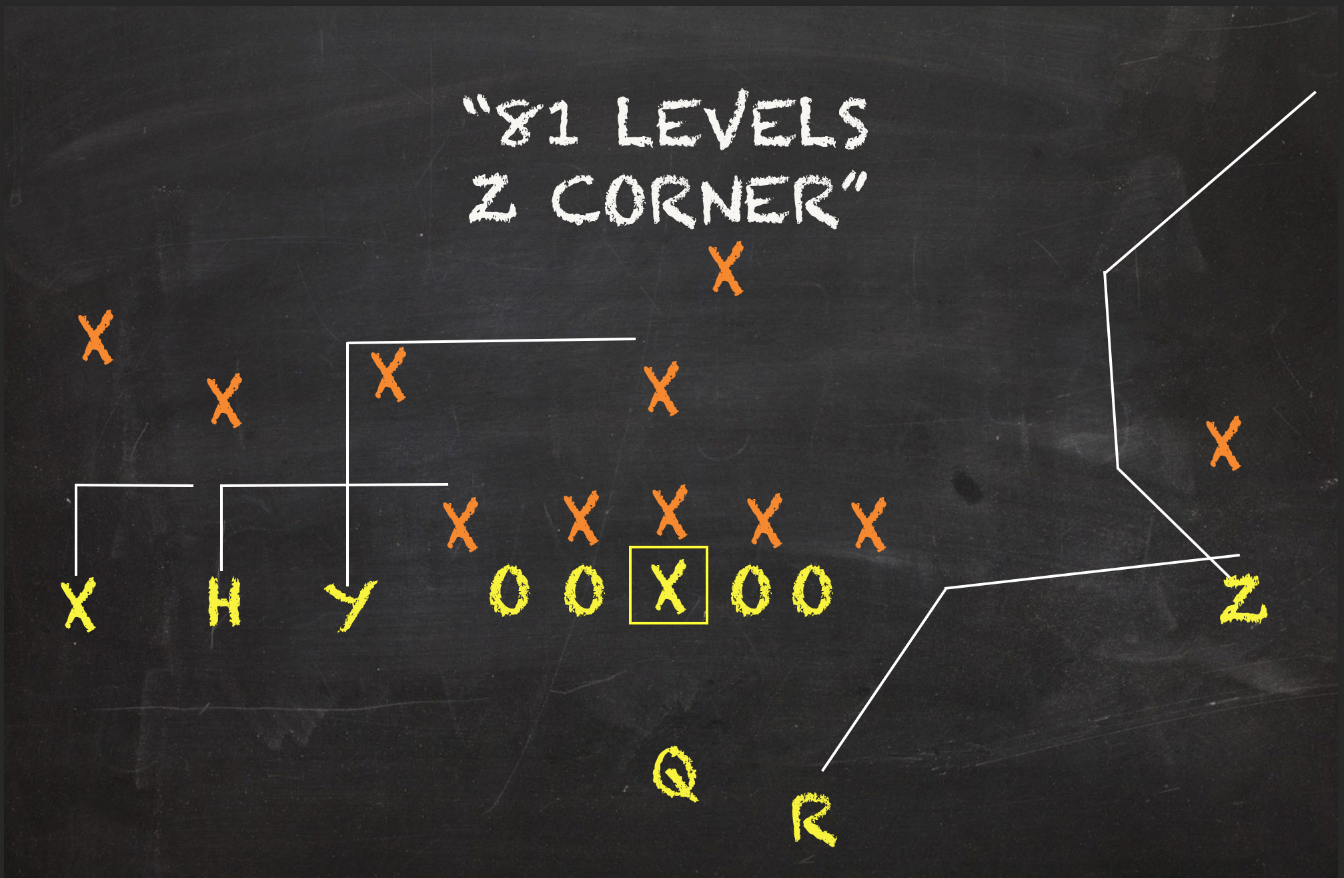
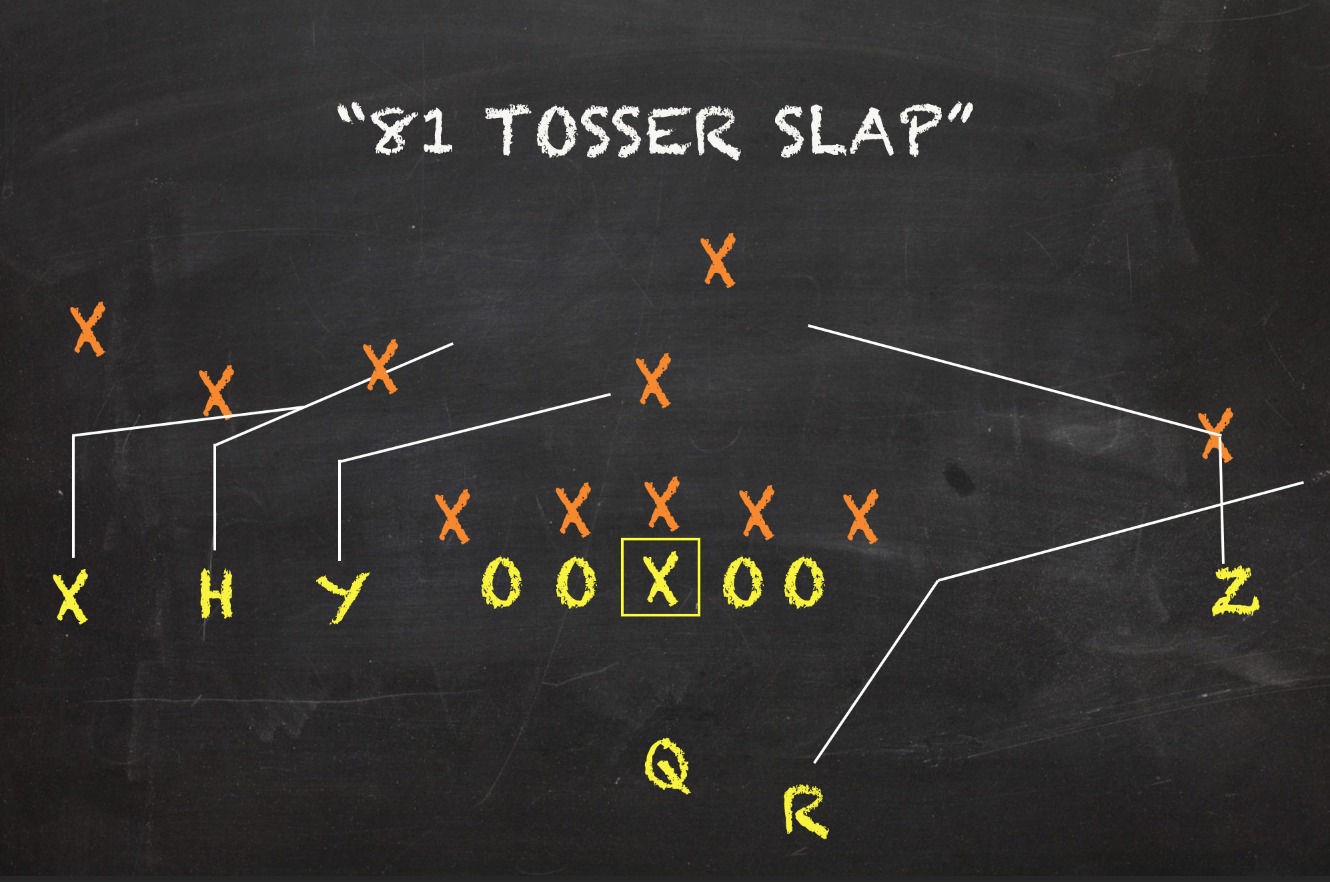
Before I crack on, I want to take a moment to point out wonderfully Tosser and Levels compliment one another. Though the post-stem angle is slightly different between slants and digs/ins, they look the exact same before the receivers make their break. There's a bit of a difference from a four-yard slant to a 12-yard dig. But with both Tosser and Levels getting a good deal of calls, more pressure is put on the backend of defenses. Only two targets separate the pair when looking at their figures when LSU has faced its hardest foes. If they play up to take away a perceived slant, the dig can find itself wide open in the middle of the field. But if they keep playing back, the slant or quick-in performs its intended purpose and steals easy yards.
Two Air Raid staples have received the same amount of reps as Levels for the Tigers: All Verts and Shallow. Few designs encapsulate the modern Air Raid more than sending four or five dudes deep. Don't believe me? Go watch some Washington State games. While it's all well and good to have dependable short passing patterns, eventually you need to take the top off of defenses to curb secondaries from cheating up and taking away cushion. It's not out of the question to see a variety of Shot plays out of LSU's offense, but their affinity for All Verts cannot be questioned.
With a loaded receiving corps and the improved downfield accuracy of Joe Burrow, the Tigers have connected on these deep patterns more times than not; 55.6% of targeted All Vert plays have been successful. These are very common on 1st Downs off of play fakes. Seven of LSU's nine targeted All Verts have been in those spots versus their elite competition.
Shallows -- like Levels -- have seen increased volume over LSU's back half of the schedule. Named for the titular route that runs a shallow cross, Shallows also call for an overtop dig route coming from the other side of the formation. Even though this look is among their top plays, the root combination is rarely targeted. The vast majority of the time, Burrow has looked towards his outside options who run vertical oriented routes like curls, streaks, corners, or posts. A number of these attempts have resulted in explosive gains whether inside the structure of the play or by playing backyard ball.
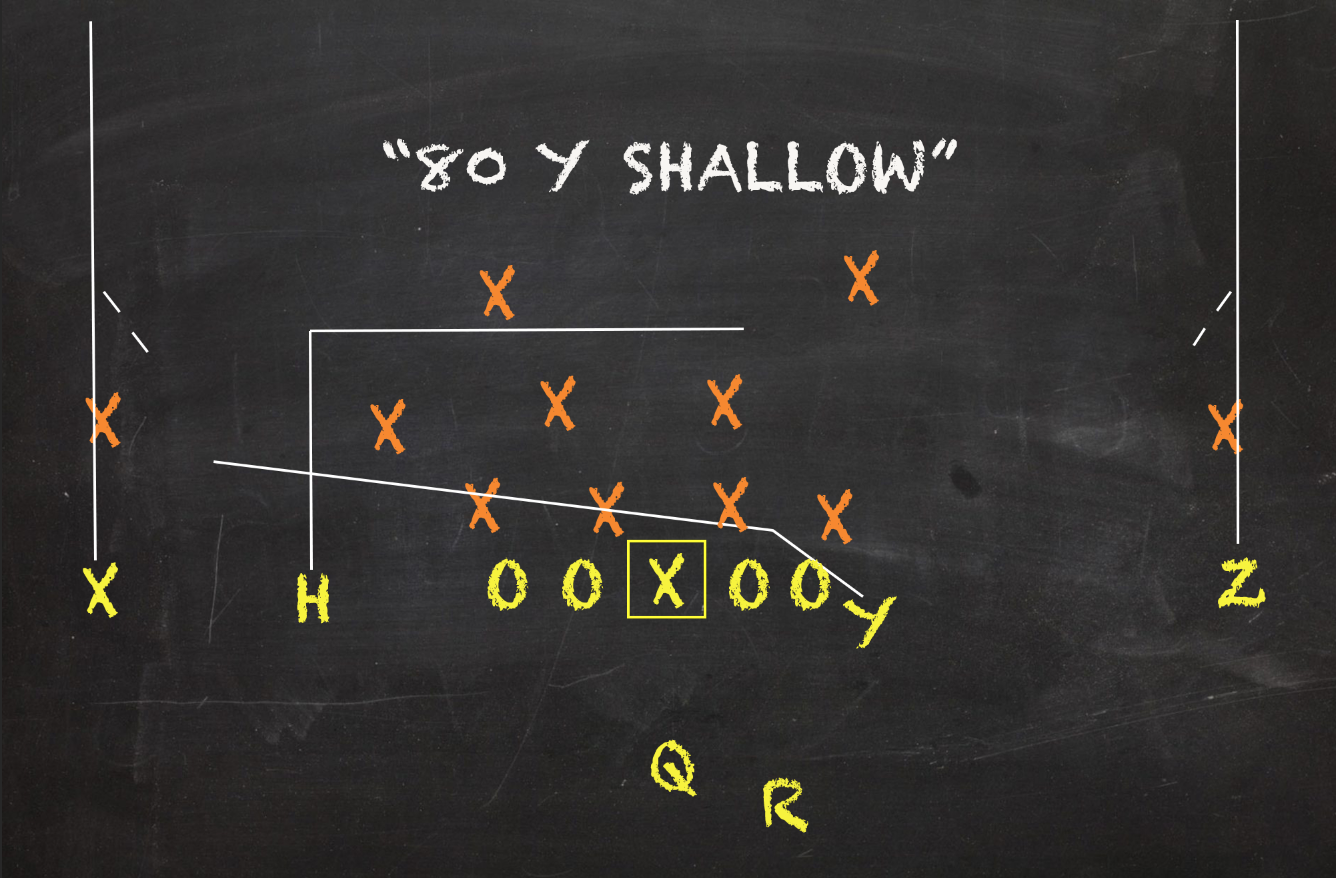
Considering the amount of volume they get, Shallows are LSU's best play. They are more successful than Stick Variations and average more yards/target than All Verts. Shallows sport a 77.8% Success Rate on a 13.6 yards/play average. Again, this wasn't against Utah State or Vanderbilt but rather Florida, Auburn, Alabama, and Georgia. No other singular pass concept has accumulated more yards for the Tigers than Shallows in those games with 122.
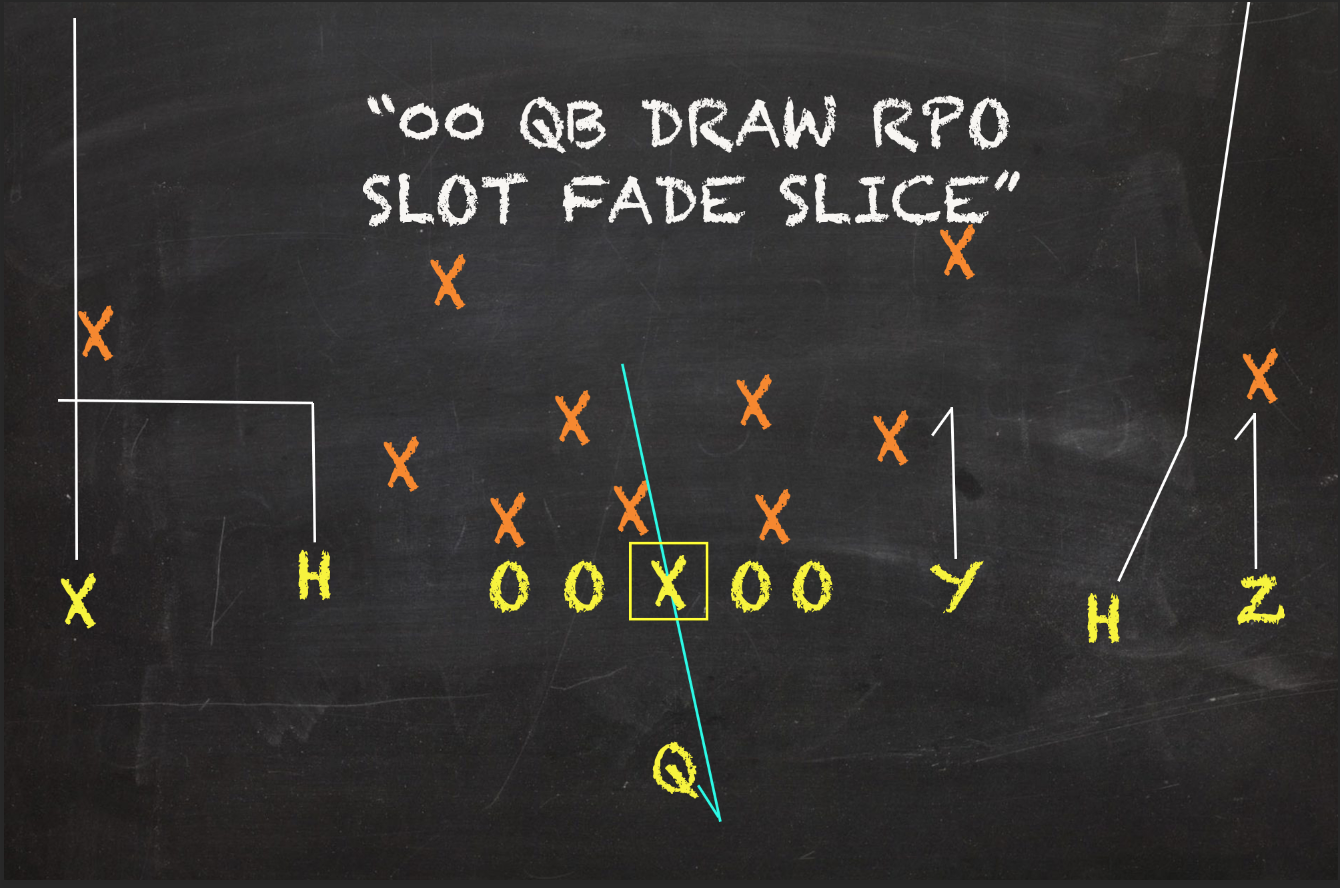
Naturally with such a great predisposition to dropback, draw plays have provided LSU another avenue to get yards when provided cushion. But even though all of their backs have been efficient in their scheme this season, Burrow is the one who they turn to to execute a draw. A modern wrinkle many offenses have started doing is molding QB Draws with RPOs. Offenses can call route tags they normally wouldn't consider doing on other RPOs due to the fact the line naturally pass sets on draws; kinda hard to be balled for illegal player downfield. While the decision still needs to be quick in regards to running or targeting an outlet, these QB Draws help offenses truly play 11 vs 11.
While LSU has run a few of these using orbit motion, their most notable variation occurs out of empty sets. Perhaps this play rings a bell. Out of five-wide formations, the two receiver side will run a "Slice" combo (quick out + streak) and the other will execute a slot fade with complimentary hitches. Presnap, Burrow simply just has to count hats. If the Tigers outman the defense inside the box, its an easy keep for Burrow. But should they not respect the spread, his targets are set up to take advantage of their match ups. Sure a few of them have created many lasting memories and were executed in key moments of ball games, but they're an otherwise inefficient look. QB Draws only have a 37.5% Success Rate against elite defenses.
Despite QB Draws being subpar, another seldom-called run play has been nothing but golden. Going to back their power run roots while still staying spread, LSU has been able to incorporate Iso/Wham/Split-Zone Inserts looks to bash fronts inside the tackles. On average, about one or two of these have been called per game against the elite defenses LSU has faced. Definitely meant as a change-of-pace play rather than a volume look, these Iso runs have a 85.7% Success Rate and average exactly 13 yards/attempt.
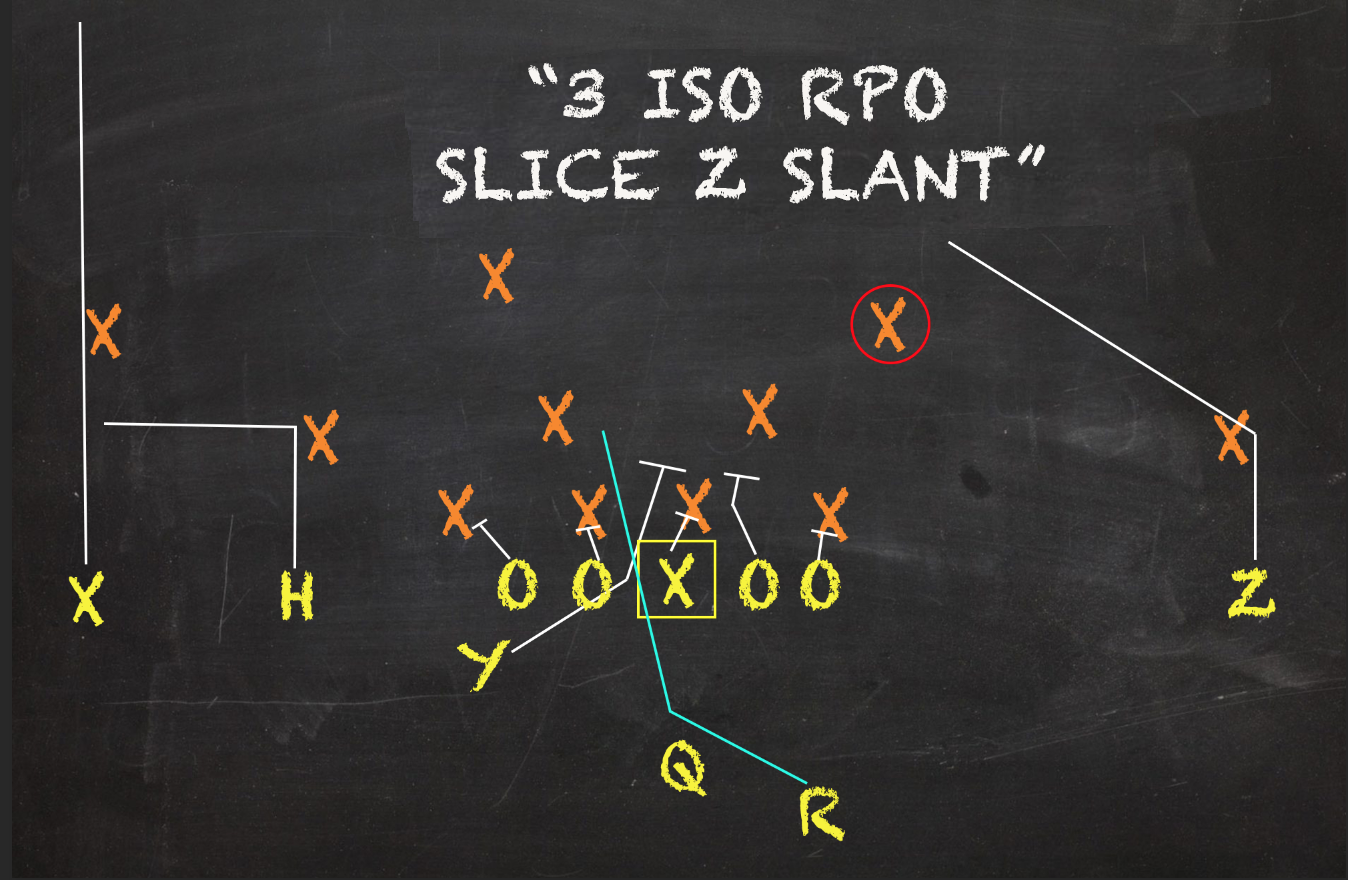
Other plays to be familiar with include Pivots, Corners, Rub Fades, and Chip Kelly's version of the Mesh as well as Portland Shots. But watch out for other nifty wrinkles to other looks like Sails, Crosses or Switches. This offense is well-designed to attack short, medium, or long in a variety of ways. As college football fans have seen over the course of this year, there appear to be little, if any, shortcomings for this offense.
| LSU's 8 Most Called Concepts | Play Share | Yards/Attempt | Success Rate |
| Inside Zone Slam Read | 19.4% | 4.65 | 48.2% |
| Duo Dive | 8.24% | 6.78 | 52.2% |
| Stick Variations | 4.30% | 6.17 | 75.0% |
| Tosser | 3.94% | 5.27 | 45.5% |
| Levels | 3.23% | 5.00 | 55.6% |
| All Verts | 3.23% | 11.2 | 55.6% |
| Shallow | 3.23% | 13.6 | 77.8% |
| QB Draw RPOs | 2.87% | 5.38 | 37.5% |
| LSU's Top 6 Yard-Gaining Concepts | Total Yards | Yards/Attempt | Success Rate |
| Inside Zone Slam Read | 251 | 4.65 | 48.2% |
| Duo Dive | 156 | 6.78 | 52.2% |
| Slant Variations | 142 | 6.17 | 47.8% |
| Shallow | 122 | 13.6 | 77.8% |
| All Verts | 101 | 11.2 | 55.6% |
| Spot | 93 | 23.3 | 50.0% |
1st Down Offense
As I mentioned above, one of the biggest changes from LSU's offense year over year has been flipping the script in their play calling. Going from a run-heavy script to a pass happy attack on early downs has vaulted the Tigers from having a ho-hum product to an all-timer.
In general and on 1st Downs, no playoff offense passes more nor is as successful as LSU. While their Overall Success Rate on firsts leads all title contenders, LSU's Passing Success Rate is in its own class. Ohio State, Clemson and Oklahoma have clips of 40.4%, 48.1%, and 52.3% versus their hardest competition, respectfully. Versus the two Top5 SP+ defenses and another inside the Top8, LSU has been successful on 65.4% of its 1st Down passes. To borrow a phrase, that is utterly scrumtrelecent. That number paired with a serviceable 48.2% Rushing Success Rate makes the Tigers the most dangerous 1st Down offense in the playoff.
Like their overall place on the play sheet , Inside Zone Slam Reads receive the lion's share of the Bayou Bengal's 1st Down Reps. Versus elite defenses, Slam Reads almost triple their next concept in number of calls. Despite the fact LSU's 1st Down Rushing Success Rate is about what it is overall, Slam Reads have mostly disappointed in terms of consistency to start a set of downs. Only 40.6% of Slam Reads are successful firsts.
Looking at the play share, it is easy to notice the Slam Read is the focal point - the one steady constant - on 1st Downs. Eleven other concepts have received between four and 11 reps on firsts for LSU versus the meat of their schedule. Of those 11 looks, Duo Dives are the only other run play and have gotten the second most calls. Already an efficient play for the Tigers, Duo Dives average over 10.5 yards/carry on a 63.6% Success Rate on 1st Downs.
Three common Air Raid concepts like Stick, All Verts, and Shallow round out their top most called looks on the down. Already top gun designs in terms of efficiency, Sticks and Shallows are even better on 1st Downs. Their Success Rates on firsts are 85.7% and 100%, respectfully. While Sticks aim to keep down and distance manageable on later downs, a number of Shallows end up as big gainers. When Shallows (or their complimentary routes) have been targeted, the Tigers have averaged 15.6 yards/attempt.
LSU likes to go deep on 1st Downs. Along with seven All Verts, eight other Shot Plays and four Portland patterns saw action on 1st Downs versus elite defenses. Though somewhat average by SEC standards connecting on All Verts 42.9% of the time, Shots plays like Divide (post+streak) and Vert+Curls have a 60% combined Success Rate. For good measure, three of the four Portland patterns targeted have profited on a 22.5 yards/target average. Only Fades have underwhelmed as far as deep patterns are concerned to start series.
LSU throws deep so often in these spots that "Checkdowns" are among their 11 most repped 1st Down looks. LSU has even done well on these safety valves when their bombs breakdown. "Checkdowns" have an 80% Success Rate and 12.0 yards/target average.
Texas Variations -- one of their favorite ways to get Clyde Edwards-Helaire involved out of the backfield, Slant Variations, Levels, and Hoss/Comebacks are also looks to be aware of on 1st Downs.
| LSU's Top 6 Most Called First Down Plays | No. of Reps | Yards/Attempt | Success Rate |
| Inside Zone Slam Reads | 32 | 4.31 | 40.6% |
| Duo Dive | 11 | 10.6 | 63.6% |
| Stick Variations | 7 | 6.71 | 85.7% |
| All Verts | 7 | 9.00 | 42.9% |
| Shallow | 6 | 15.6 | 100% |
| "Checkdowns" | 5 | 12.0 | 80.0% |
3rd Down Offense
While examining offenses on 1st Downs help diagnose tendencies and go-to looks, that is not the case on 3rd Downs. Sure over the course of the season, conclusions and nuggets of information can be found. But with reduced sample sizes, it can quickly turn into a crapshoot. But looking at LSU, we can see how "flipping the script" comes full circle.
In general, teams just pass more on 3rd Downs. That's just a fact. But by using the pass to set up the run this season, LSU ending up running the ball on thirds at the second highest clip in the SEC. Only UK's Lynnsanity Offense turned the the ground more on the money down in that conference. As far as playoff teams go, only Ohio State has a higher 3rd Down Run Rate in the games I charted. But, that's part of their greater offensive identity.
The new mentality resulted in fewer yards to gain hence easier chances on thirds. Two-thirds of LSU's 3rd Down rush attempts have resulted in moving the chains against their top rated opponents -- about 5 percentage points higher than their clip over the course of the entire season. But as good as that figure is, its still only third best behind Clemson's 90% and Ohio State's 70.8% among playoff teams.
In terms of their Overall Success Rate on thirds, LSU's offense has been about the same versus their top4 foes compared to their season-long clip. But if I were to split hairs, their clip was slightly higher against elite competition. While over half of these tries resulted in conversions, Ohio State and Clemson faired better as each sported 54.6% Success Rates. Algebra tells us, LSU's pass game has to bring down their average in these spots. While Burrow has been sensational on early downs against the meat of LSU's schedule, the Tigers' 43.8% Passing Success Rate on the do or die down is the lowest amongst the title contenders.
Slam Reads lead this down in number of calls with nine, which is almost double the next closest look. While rather lukewarm to start a set of downs, 77.8% of these tries have moved the chains.
Chip Kelly's rendition of the Mesh play is their second most favorite money down look. Due the the great number of intersecting routes creating rubs, these are nearly impossible to stop in short yard situations. The Kelly Mesh is hard enough to describe let alone defend. The two innermost receivers will run the mesh combo. Towards the strong side of the play, the outside receiver will run a sit hook overtop the crossing shallow routes with the back running a flat/wheel. What the other outside receiver does on the opposite side of the formation varies. To further accentuate the aging process on defensive coordinators, LSU sometimes line up its primary slot receiver, Justin Jefferson, in the backfield with their back in his stead. Four of its five targeted reps have resulted in a conversion averaging 11.4 yards in the process.
Duo Dives, QB Draw RPOs, and Solo Slants round out their top5 most called looks on 3rd Downs with three reps apiece. While Dives are one of LSU's most consistent looks on early downs versus elite defenses, only one carry resulted in a conversion on the money down. For what it is worth, both QB Draw RPOs and Solo Slants have a 66.7% Success Rate in their limited sample sizes. Ten other looks have received multiple 3rd Down reps. Again, it's often a crapshoot when trying to analyze playcalling with such a narrow scope.
| LSU's Top 5 Most Called Third Down Plays | No. of Reps | Yards/Attempt | Success Rate |
| Inside Zone Slam Read | 9 | 4.67 | 77.8% |
| Kelly Mesh | 5 | 11.4 | 80.0% |
| Duo Dive | 3 | 3.33 | 33.3% |
| QB Draw | 3 | 8.00 | 66.7% |
| Solo Slant | 3 | 6.00 | 66.7% |